
Qasrawı, Atef Fayez Hasan
Loading...

Profile URL
Name Variants
Qasrawi, Atef Fayez
Atef Fayez Hasan, Qasrawı
Qasrawı,A.F.H.
Qasrawi,A.F.H.
Q., Atef Fayez Hasan
Q.,Atef Fayez Hasan
Atef Fayez Hasan, Qasrawi
Qasrawi, Atef Fayez Hasan
A.F.H.Qasrawı
A.F.H.Qasrawi
A., Qasrawi
A.,Qasrawı
Qasrawı, Atef Fayez Hasan
Qasrawi, A. F.
Qasrawi,A.F.
Qasrawi, AF
Qasrawi, Atef F.
Qasrawi, Atef A.
Qasrawi, Atef Fayez
Qasrawi, Atef F.
Qasrawi, Atef A.
Qasrawi, Atef
Atef Fayez Hasan, Qasrawı
Qasrawı,A.F.H.
Qasrawi,A.F.H.
Q., Atef Fayez Hasan
Q.,Atef Fayez Hasan
Atef Fayez Hasan, Qasrawi
Qasrawi, Atef Fayez Hasan
A.F.H.Qasrawı
A.F.H.Qasrawi
A., Qasrawi
A.,Qasrawı
Qasrawı, Atef Fayez Hasan
Qasrawi, A. F.
Qasrawi,A.F.
Qasrawi, AF
Qasrawi, Atef F.
Qasrawi, Atef A.
Qasrawi, Atef Fayez
Qasrawi, Atef F.
Qasrawi, Atef A.
Qasrawi, Atef
Job Title
Doçent Doktor
Email Address
atef.qasrawi@atilim.edu.tr
Main Affiliation
Department of Electrical & Electronics Engineering
Status
Former Staff
Website
ORCID ID
Scopus Author ID
Turkish CoHE Profile ID
Google Scholar ID
WoS Researcher ID
Sustainable Development Goals
 1
1NO POVERTY
0
Research Products
 2
2ZERO HUNGER
0
Research Products
 3
3GOOD HEALTH AND WELL-BEING
0
Research Products
 4
4QUALITY EDUCATION
0
Research Products
 5
5GENDER EQUALITY
0
Research Products
 6
6CLEAN WATER AND SANITATION
0
Research Products
 7
7AFFORDABLE AND CLEAN ENERGY
17
Research Products
 8
8DECENT WORK AND ECONOMIC GROWTH
0
Research Products
 9
9INDUSTRY, INNOVATION AND INFRASTRUCTURE
0
Research Products
 10
10REDUCED INEQUALITIES
0
Research Products
 11
11SUSTAINABLE CITIES AND COMMUNITIES
0
Research Products
 12
12RESPONSIBLE CONSUMPTION AND PRODUCTION
0
Research Products
 13
13CLIMATE ACTION
0
Research Products
 14
14LIFE BELOW WATER
0
Research Products
 15
15LIFE ON LAND
0
Research Products
 16
16PEACE, JUSTICE AND STRONG INSTITUTIONS
1
Research Products
 17
17PARTNERSHIPS FOR THE GOALS
0
Research Products

This researcher does not have a Scopus ID.

This researcher does not have a WoS ID.

Scholarly Output
226
Articles
222
Views / Downloads
84/0
Supervised MSc Theses
0
Supervised PhD Theses
0
WoS Citation Count
1984
Scopus Citation Count
2000
Patents
0
Projects
0
WoS Citations per Publication
8.78
Scopus Citations per Publication
8.85
Open Access Source
17
Supervised Theses
0
| Journal | Count |
|---|---|
| Crystal Research and Technology | 16 |
| Journal of Electronic Materials | 15 |
| physica status solidi (a) | 12 |
| Materials Science in Semiconductor Processing | 11 |
| Journal of Alloys and Compounds | 11 |
Current Page: 1 / 11
Scopus Quartile Distribution
Competency Cloud
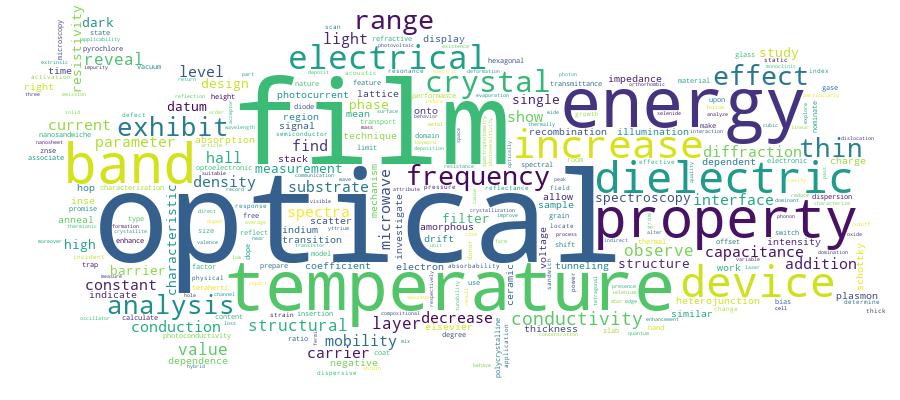
16 results
Scholarly Output Search Results
Now showing 1 - 10 of 16
Article Citation - WoS: 16Citation - Scopus: 17Dielectric Dispersion in Ga2s3< Thin Films(Springer, 2017) Alharbi, S. R.; Qasrawi, A. F.In this work, the structural, compositional, optical, and dielectric properties of Ga2S3 thin films are investigated by means of X-ray diffraction, scanning electron microscopy, energy dispersion X-ray analysis, and ultraviolet-visible light spectrophotometry. The Ga2S3 thin films which exhibited amorphous nature in its as grown form are observed to be generally composed of 40.7 % Ga and 59.3 % S atomic content. The direct allowed transitions optical energy bandgap is found to be 2.96 eV. On the other hand, the modeling of the dielectric spectra in the frequency range of 270-1,000 THz, using the modified Drude-Lorentz model for electron-plasmon interactions revealed the electrons scattering time as 1.8 (fs), the electron bounded plasma frequency as similar to 0.76-0.94 (GHz) and the reduced resonant frequency as 2.20-4.60 x10(15) (Hz) in the range of 270-753 THz. The corresponding drift mobility of electrons to the terahertz oscillating incident electric field is found to be 7.91 (cm (2)/Vs). The values are promising as they nominate the Ga2S3 thin films as effective candidates in thin-film transistor and gas sensing technologies.Article Citation - WoS: 3Citation - Scopus: 3Effect of Ionic Substitution on the Structural, Dielectric and Electrical Properties of Bismuth Zinc Niobate Ceramics(Korean Assoc Crystal Growth, inc, 2012) Qasrawi, A. F.; Abu Je'ib, Hussein A.; Mergen, A.; Mergenc, A.; Qasrawia, A.F.; Department of Electrical & Electronics EngineeringThe effects of tin substitution on the structural, dielectric and electrical properties of the Bi1.5Zn0.92Nb1.5O6.92 pyrochlore ceramics have been investigated. Tin atoms was substituted in the A (Bi1.5Zn0.46)-site instead of zinc and in the B ((Zn0.46Nb1.5)-site instead of niobium in accordance to the chemical formulae Bi1.5Zn0.92Nb1.5-xO6.92-x/2 and (Bi1.5-x/3Zn0.46-3x/2Snx)(Nb1.5Zn0.46)O-6.92, for 0.00 <= x <= 0.40 and 0.00 <= x <= 0.60, respectively. A relative single phase formation of the structures was possible for x values less than 0.25 and less than 0.10. Pronounced tunability in the dielectric constant values associated with very low dielectric loss are obtainable by Sn substitution. Furthermore, a frequency invariant but linearly varying temperature dependent dielectric constant is observed. The electrical conductivity decreased by two and one order of magnitude for the A and B-site substitutions, respectively. The temperature-dependent conductivity analysis in the temperature region of 300-500 K, reflected the existence of shallow and deep impurity energy levels being created by the doping process.Article Citation - WoS: 7Citation - Scopus: 7Plasmon-Electron Dynamics at the Au/Inse and Y/Inse Interfaces Designed as Dual Gigahertz-Terahertz Filters(Elsevier Gmbh, Urban & Fischer verlag, 2017) Alharbi, S. R.; Qasrawi, A. F.In this work, the X-ray diffraction, the Scanning electron microscopy, the energy dispersive X-ray, the Raman, The UV-vis light and the impedance spectral techniques are employed to explore the structural, vibrational, optical and electrical properties of the Au/InSe and Y/InSe thin film interfaces. It was shown that with its amorphous nature of crystallization, the InSe thin films exhibited n-type conductivity due to the 3% excess selenium. For this form of InSe, the only active Raman spectral line is 121 (cm(-1)). In addition to the design of the energy band diagram, the analysis the dielectric spectra and the optical conductivities were possible in the frequency range of 270-1000 THz. The modeling of the optical conductivities of the Au, Y, Au/InSe and Y/InSe with the help of Lorentz approach for optical conduction, assured that the conduction is dominated by the resonant plasmon-electron interactions at the metals and metals/semiconductors interfaces. It also allowed tabulating the necessary parameters for possible applications in terahertz technology: These parameters are the electron effective masses, the free electron densities, the electron bounded plasmon frequencies, the electron scattering times, the reduced resonant frequencies and the drift mobilities. On the other hand, the impedance spectral analysis of the Y/InSe/Au interfaces in the frequency range of 0.01-1.80 GHz, revealed negative capacitance effect associated with band filter features that exhibit maximum transition line at 1.17 GHz. This value nominates the interface as a member of filter classes in the gigahertz technology. (C) 2017 Elsevier GmbH. All rights reserved.Article Citation - WoS: 9Citation - Scopus: 9Effect of Ytterbium, Gold and Aluminum Transparent Metallic Substrates on the Performance of the Ga2s3< Thin Film Devices(Elsevier Science Bv, 2017) Alharbi, S. R.; Qasrawi, A. F.In the current work, the structural, optical, dielectric and electrical properties of the Ga2S3 thin films which are deposited onto transparent thin Al, Yb and Au metal substrates are characterized by means of transmittance electron microscopy, X-ray diffraction, ultraviolet visible light spectroscopy and impedance spectroscopy techniques. The effects of the metallic substrates on the crystalline nature, energy band gap and dielectric spectra are also investigated. The modeling of the dielectric spectra allowed determining the effect of the Al, Yb and Au thin layers on the electron scattering time, the plasmon frequency, free electron density and drift mobility. In addition, a Yb/Ga2S3/Au Schottky barrier and All Ga2S3/Au back to back Schottky barrier devices (metal-semiconductor-metal (MSM) device) are fabricated and characterized by means of capacitance-voltage characteristics and capacitance and conductance spectra in the frequency range of 10-1800 MHz. While the Schottky barrier device displayed three distinct positions of resonance-antiresonance phenomena, the MSM device displayed one peak with narrow bandwidth of 10 MHz. The MSM devices exhibited an inversion, depletion and accumulation modes within a voltage range of 0.25 V width at 250 MHz. The study indicates the applicability of these device as smart capacitive switches, as Plasmon devices and as wavetraps. (C) 2017 Elsevier B.V. All rights reserved.Article Citation - WoS: 7Citation - Scopus: 7Design of the Zns/Ge pn Interfaces as Plasmonic, Photovoltaic and Microwave Band Stop Filters(Elsevier Science Bv, 2017) Alharbi, S. R.; Qasrawi, A. F.In the current work, we report and discuss the features of the design of a ZnS (300 nm)/Ge (300 nm)/GaSe (300 nm) thin film device. The device is characterized by the X-ray diffraction, electron microscopy, energy dispersive X-ray spectroscopy (EDS), optical spectroscopy, microwave power spectroscopy and light power dependent photoconductivity. While the X-ray diffraction technique revealed a polycrystalline ZnS coated with two amorphous layers of Ge and GaSe, the hot probe tests revealed the formation of pn interface. The optical spectra which were employed to reveal the conduction and valence band offsets at the ZnS/Ge and Ge/GaSe interface indicated information about the dielectric dispersion at the interface. The dielectric spectra of the ZnS/Ge/GaSe heterojunction which was modeled assuming the domination of surface plasmon interactions through the films revealed a pronounced increase in the drift mobility of free carriers in the three layers compared to the single and double layers. In the scope of the fitting parameters, a wave trap that exhibit filtering properties at notch frequency of 2.30 GHz was designed and tested. The ac signals power spectrum absorption reached similar to 99%. In addition, the photocurrent analysis on the ZnS/Ge/GaSe interface has shown it is suitability for photovoltaic and photosensing applications. (C) 2017 The Authors. Published by Elsevier B.V. This is an open access article under the CC BY-NC-ND licenseArticle Citation - WoS: 17Citation - Scopus: 19Synthesis and Characterization of Bi1.5zn0.92< Pyrochlore Ceramics(Elsevier Sci Ltd, 2012) Qasrawi, A. F.; Kmail, Bayan H.; Mergen, A.The morphological, compositional, structural, dielectric and electrical properties of Bi1.5Zn0.92Nb1.5-xSnxO6.92-x/2 ceramics have been investigated by means of scanning electron microscopy (SEM), X-ray energy dispersion spectroscopy (EDS), X-ray diffraction (XRD), temperature and frequency dependent dielectric constant and temperature dependent conductivity measurements for Sn-contents in the range of 0.00 <= x <= 0.60. It was shown that single phase of the pyrochlore ceramics can only be obtained for x <= 0.25. Above this value a ZnO phase appeared in the XRD patterns and SEM micrographs as well. An increase in the lattice constant and in the temperature coefficient of dielectric constant and a decrease in the dielectric constant values with increasing Sn content was observed for the ceramics which exhibited a single phase formation. A temperature dependent but frequency invariant dielectric constant was observed for this type of ceramics. The lowest electrical conductivity and highest dielectric constant was observed for the sample which contains 0.06 Sn. The Bi1.5Zn0.92Nb1.5-xSnxO6.92-x/2 pyrochlore ceramic conductivities are thermally active above 395 K. For temperatures greater than 395 K, the conductivity activation energy which was found to be 0.415 eV for the pure sample increased to 1.371 eV when sample was doped with 0.06 Sn. (C) 2012 Elsevier Ltd and Techna Group S.r.l. All rights reserved.Article Citation - WoS: 1Citation - Scopus: 1Cobalt Doping Effects on the Mechanical and Electrical Parameters of Bi1.5zn0.92< Solid Solution(indian Ceramic Soc, 2014) Qasrawi, A. F.; Jaradat, Haneen N. M.; Mergen, A.The cobalt doping effects on the lattice constant, strain, grain size, dislocation density and electrical conduction are investigated by means of X-ray diffraction and electrical resistivity measurements on the Bi1.5Zn0.92Nb1.5-xCoxO6.92-x (x=0.03-0.20) ceramics, respectively. Increasing cobalt content sharply increases compressing strain and dislocation density and decreases both the lattice constant and the grain size of the pyrochlore. At a doping content of 0.05 new minor phase of ZnO appears. The ZnO grains increase with increasing cobalt content. When the cobalt doping is repeated in accordance with the formula Bi1.5Zn0.92Nb1.5-xCoxO6.92-x, a single phase pyrochlore is obtained with cobalt content up to 0.10. The electrical resistivity analysis reflects increasing activation energy with increasing cobalt content. The cobalt creates an impurity level in the energy gap of the pyrochlore that shifts towards the mid gap converting the extrinsic nature of conductivity to intrinsic at a cobalt content of 0.10.Article Citation - WoS: 11Citation - Scopus: 11Post Annealing Effects on the Structural, Compositional, Optical and Dielectric Properties of Cd Doped Gase Thin Films(Elsevier Science Sa, 2015) Al Garni, S. E.; Qasrawi, A. F.In this work, the heat treatment effects at temperatures (T-a) of 200, 300 and 400 degrees C on the compositional, structural, optical and dielectric properties of Cd doped GaSe are explored by means of energy dispersive X-ray spectroscopy, X-ray diffraction and UV-VIS spectrophotometry. The annealing process of the Cd doped GaSe thin films revealed a highly oriented orthorhombic structure type that exhibit a systematic increase in the grain size. While the strain, degree of orientation and dislocation density of the annealed films are weakly affected by the annealing process. The optical energy band gap of the doped films decreased from 1.23 to 0.90 eV and the exponential energy band tails rose from 0.16 to 0.23 eV when the annealing temperature is raised from 300 to 400 degrees C. In addition, the analysis of the dielectric spectral curves which were studied in the frequency range of 270-1500 THz, allowed to investigate the oscillator and dispersion energies and the static (epsilon(s)) and lattice (epsilon(l)) dielectric constants. The annealing process on the doped samples decreased the dispersion and oscillator energies as well as es. Oppositely, el values increased from 12.52 to 24.45 as a result of larger grain size and less defect density associated with annealing process when T-a is raised from 200 to 400 degrees C, respectively. (C) 2015 Elsevier B.V. All rights reserved.Article Citation - WoS: 1Citation - Scopus: 1Structural, Optical and Electrical Properties of Ybinse Thin Films(Elsevier Science Sa, 2016) Alharbi, S. R.; Qasrawi, A. F.In this work, the compositional, the structural, the vibrational, the optical and the electrical characterizations of the YbInSe compound are investigated by means of energy dispersion X-ray analysis, scanning electron microscopy and X-ray diffraction, Raman spectroscopy, ultraviolet-visible light spectrophotometry, impedance spectroscopy and temperature dependent electrical conductivity, respectively. The 300 nm thick YbInSe films which were prepared by the co-evaporation of the source materials under a vacuum pressure of 10(-5) mbar, are observed to exhibit nanocrystalline clusters of size of 27 nm regularly distributed among an amorphous structure. The most intensive Raman active lines are observed at 150 and 254 cm(-1). In addition, the optical analysis has shown that the films exhibit a direct forbidden electronic transitions type energy band gap of 1.07 eV. The optical transitions are associated with interband tail states of width of 0.28 eV. Moreover, the real and imaginary parts of dielectric spectra which were analyzed in the frequency range of 270-1000 THz, were analyzed in accordance with the single oscillator and the Lorentz models, respectively. The modeling allowed determining the oscillator and dispersion energies, the terahertz free carrier scattering time, the free holes effective mass, the carrier density, the drift mobility and the reduced resonant frequency for the YbinSe films. In the electronic part of study, the temperature dependent dc electrical conductivity analysis, indicated the domination of the variable range hopping transport mechanism below 335 K, the thermal excitation of charge carriers in the range of 337390 K and the extrinsic-intrinsic transition property at 390 K. The ac conductivity spectra which were recorded in the frequency range of 10-1500 MHz, revealed the domination of the correlated barrier hopping of free carriers between pairs of localized states at the Fermi level. (C) 2016 Elsevier B.V. All rights reserved.Article Citation - WoS: 9Citation - Scopus: 8Dielectric dispersion in InSe/CdS bilayers(Elsevier Science Bv, 2018) Qasrawi, A. F.; Shehada, Sufyan R.In the current study, the effect of the amorphous InSe thin film substrate on the structural, optical and dielectric properties of CdS are investigated. The structural analysis of the bilayers indicated a strained growth of CdS onto InSe leading to decrease in grain size and increase in the dislocation density. The optical measurements have shown that the InSe/CdS exhibits two direct allowed transitions energy band gap values of 2.04 and 1.38 eV, in the high and low absorption regions, respectively. On the other hand, the detailed analysis of the dielectric spectra for the InSe, CdS and InSe/CdS layers has shown that the presence of the InSe substrate significantly improves the optical conduction parameters. Particularly, the Drude-Lorentz modeling for these dielectric systems revealed a drift mobility value of 329 cm(2)/V for the InSe/CdS bilayer. The deposition of the CdS onto InSe is also observed to shift the plasmon frequency of CdS from 2.49 to 0.77 GHz. The general features of the InSe/ CdS as plasmon cavities are promising as it shows its usability for production of optoelectronic devices that exhibit high performance at very high frequencies.
