
Qasrawı, Atef Fayez Hasan
Loading...

Profile URL
Name Variants
Qasrawi, Atef Fayez
Atef Fayez Hasan, Qasrawı
Qasrawı,A.F.H.
Qasrawi,A.F.H.
Q., Atef Fayez Hasan
Q.,Atef Fayez Hasan
Atef Fayez Hasan, Qasrawi
Qasrawi, Atef Fayez Hasan
A.F.H.Qasrawı
A.F.H.Qasrawi
A., Qasrawi
A.,Qasrawı
Qasrawı, Atef Fayez Hasan
Qasrawi, A. F.
Qasrawi,A.F.
Qasrawi, AF
Qasrawi, Atef F.
Qasrawi, Atef A.
Qasrawi, Atef Fayez
Qasrawi, Atef F.
Qasrawi, Atef A.
Qasrawi, Atef
Atef Fayez Hasan, Qasrawı
Qasrawı,A.F.H.
Qasrawi,A.F.H.
Q., Atef Fayez Hasan
Q.,Atef Fayez Hasan
Atef Fayez Hasan, Qasrawi
Qasrawi, Atef Fayez Hasan
A.F.H.Qasrawı
A.F.H.Qasrawi
A., Qasrawi
A.,Qasrawı
Qasrawı, Atef Fayez Hasan
Qasrawi, A. F.
Qasrawi,A.F.
Qasrawi, AF
Qasrawi, Atef F.
Qasrawi, Atef A.
Qasrawi, Atef Fayez
Qasrawi, Atef F.
Qasrawi, Atef A.
Qasrawi, Atef
Job Title
Doçent Doktor
Email Address
atef.qasrawi@atilim.edu.tr
Main Affiliation
Department of Electrical & Electronics Engineering
Status
Former Staff
Website
ORCID ID
Scopus Author ID
Turkish CoHE Profile ID
Google Scholar ID
WoS Researcher ID
Sustainable Development Goals
 1
1NO POVERTY
0
Research Products
 2
2ZERO HUNGER
0
Research Products
 3
3GOOD HEALTH AND WELL-BEING
0
Research Products
 4
4QUALITY EDUCATION
0
Research Products
 5
5GENDER EQUALITY
0
Research Products
 6
6CLEAN WATER AND SANITATION
0
Research Products
 7
7AFFORDABLE AND CLEAN ENERGY
17
Research Products
 8
8DECENT WORK AND ECONOMIC GROWTH
0
Research Products
 9
9INDUSTRY, INNOVATION AND INFRASTRUCTURE
0
Research Products
 10
10REDUCED INEQUALITIES
0
Research Products
 11
11SUSTAINABLE CITIES AND COMMUNITIES
0
Research Products
 12
12RESPONSIBLE CONSUMPTION AND PRODUCTION
0
Research Products
 13
13CLIMATE ACTION
0
Research Products
 14
14LIFE BELOW WATER
0
Research Products
 15
15LIFE ON LAND
0
Research Products
 16
16PEACE, JUSTICE AND STRONG INSTITUTIONS
1
Research Products
 17
17PARTNERSHIPS FOR THE GOALS
0
Research Products

This researcher does not have a Scopus ID.

This researcher does not have a WoS ID.

Scholarly Output
226
Articles
222
Views / Downloads
677/0
Supervised MSc Theses
0
Supervised PhD Theses
0
WoS Citation Count
1894
Scopus Citation Count
1915
Patents
0
Projects
0
WoS Citations per Publication
8.38
Scopus Citations per Publication
8.47
Open Access Source
17
Supervised Theses
0
| Journal | Count |
|---|---|
| Crystal Research and Technology | 16 |
| Journal of Electronic Materials | 15 |
| physica status solidi (a) | 12 |
| Materials Science in Semiconductor Processing | 11 |
| Journal of Alloys and Compounds | 11 |
Current Page: 1 / 11
Scopus Quartile Distribution
Competency Cloud
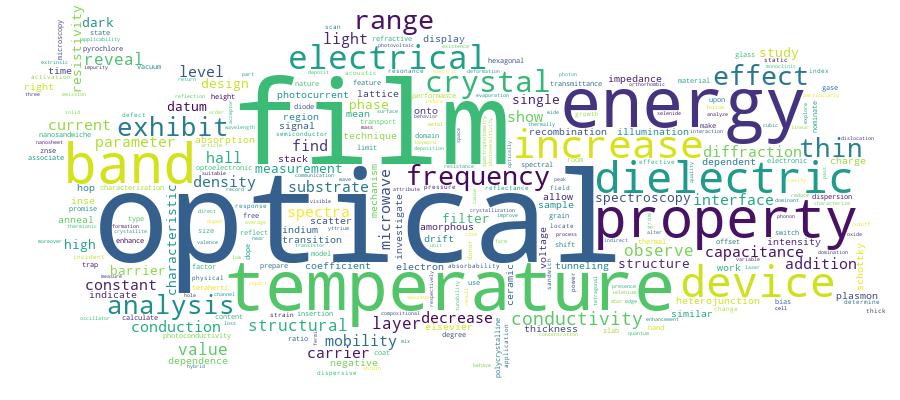
16 results
Scholarly Output Search Results
Now showing 1 - 10 of 16
Article Citation - WoS: 11Citation - Scopus: 13Structural, optical, electrical and dielectric properties of Bi1.5Zn0.92Nb1.5-xNixO6.92-3x/2 solid solution(Taylor & Francis Ltd, 2012) Qasrawi, A. F.; Nazzal, E. M.; Mergen, A.The effects of Ni content on the structural, optical, dielectric and electrical properties of Bi1.5Zn0.92Nb1.5O6.92 pyrochlore ceramics have been investigated. Nickel atoms were inserted into pure samples in accordance to the composition Bi1.5Zn0.92Nb1.5-xNixO6.92-3x/2, with x varying from 0.07 to 0.40. The structural analysis revealed that a single phase of the pyrochlore compound can be obtained for x values of 0.07 and 0.10 only. Further increase in Ni caused the appearance of multiple phases. The optical energy band gaps are determined as 3.30, 3.35 and 3.52 eV for Ni content of 0.00, 0.07 and 0.10 respectively. The temperature dependent electrical resistivity and the frequency dependent capacitance are observed to increase with increasing Ni content. The resonance frequency, which was determined from the capacitance-frequency dependence, was observed to shift from 12.14 to 10.47 kHz as the x values increase from 0.00 to 0.10 respectively.Article Citation - WoS: 3Citation - Scopus: 3Effect of Ionic Substitution on the Structural, Dielectric and Electrical Properties of Bismuth Zinc Niobate Ceramics(Korean Assoc Crystal Growth, inc, 2012) Qasrawi, A. F.; Abu Je'ib, Hussein A.; Mergen, A.; Mergenc, A.; Qasrawia, A.F.; Department of Electrical & Electronics EngineeringThe effects of tin substitution on the structural, dielectric and electrical properties of the Bi1.5Zn0.92Nb1.5O6.92 pyrochlore ceramics have been investigated. Tin atoms was substituted in the A (Bi1.5Zn0.46)-site instead of zinc and in the B ((Zn0.46Nb1.5)-site instead of niobium in accordance to the chemical formulae Bi1.5Zn0.92Nb1.5-xO6.92-x/2 and (Bi1.5-x/3Zn0.46-3x/2Snx)(Nb1.5Zn0.46)O-6.92, for 0.00 <= x <= 0.40 and 0.00 <= x <= 0.60, respectively. A relative single phase formation of the structures was possible for x values less than 0.25 and less than 0.10. Pronounced tunability in the dielectric constant values associated with very low dielectric loss are obtainable by Sn substitution. Furthermore, a frequency invariant but linearly varying temperature dependent dielectric constant is observed. The electrical conductivity decreased by two and one order of magnitude for the A and B-site substitutions, respectively. The temperature-dependent conductivity analysis in the temperature region of 300-500 K, reflected the existence of shallow and deep impurity energy levels being created by the doping process.Article Citation - WoS: 3Citation - Scopus: 4Structural, Optical and Electrical Properties of Bi1.5zn0.92< Pyrochlore Ceramics(Univ Fed Sao Carlos, dept Engenharia Materials, 2021) Qasrawi, A. F.; Abdalghafour, Mays A.; Mergen, A.Herein, the structural, morphological, compositional, optical, electrical and dielectric properties of Bi1.5Zn0.92Nb1.5-6x/5WxO6.92 (BZN) solid solutions are reported. Tungsten substituted BZN ceramics which are fabricated by the solid state reaction technique exhibited solubility limits at substitution level below x=0.18. Remarkable engineering in the structural, optical, electrical and dielectric properties of the pyrochlore ceramics is achieved via W substitution. Namely, shrinkage in both of the lattice parameters and in the energy band gap accompanied with decrease in the microstrain, in the dielectric constant and in the electrical resistivity is observed upon increasing the W content below the solubility limit. The increase in the W content in the BZN ceramics enhances the densification of the pyrochlore and leads to higher light absorbability and larger crystallites growth. The temperature dependent electrical resistivity measurements has also shown that the pyrochlore exhibit thermal stability below 380 K.Article Citation - WoS: 8Citation - Scopus: 10Structural, Electrical and Dielectric Properties of Bi1.5zn0.92< Pyrochlore Ceramics(Elsevier Sci Ltd, 2012) Qasrawi, A. F.; Mergen, A.The micro-structural, compositional, temperature dependent dielectric and electrical properties of the Bi1.5Zn0.92Nb1.5-xTaxO6.92 solid solution has been investigated. The increasing Ta content from 0.2 to 1.5 caused; single phase formation, a pronounced grain size reduction from similar to 7.0 to 2.5 mu m, sharp decrease in the dielectric constant from 198 to 88 and an increase in the electrical conductivity from 3.16 x 10(-10) to 5.0 x 10(-9) (Omega cm)(-1), respectively. The temperature dependent dielectric constant which is found to be frequency invariant in the frequency range of (0.0-2.0 MHz) exhibited a sharp change in the temperature coefficient of dielectric constant at a (doping independent) critical temperature of 395 K. The analysis of the measured data reflects a promising future for this type of pyrochlore to be used in high voltage passive device applications. (C) 2011 Elsevier Ltd and Techna Group S.r.l. All rights reserved.Article Citation - WoS: 3Citation - Scopus: 3Dielectric Dispersion and Energy Band Gap of Bi1.5-x< Solid Solution(Elsevier Science Bv, 2014) Qasrawi, A. F.; Mergen, A.The optical transmittance and reflectance spectra of samarium doped bismuth-zinc-niobium-oxide (BZN) pyrochlore ceramics are investigated in the wavelength range of 200-1050 nm (200-1500 THz). The Sm content in the Bi1.5-xSmxZn0.92Nb1.5O6.92 solid solution significantly alters the optical properties. Therefore, increasing the Sm doping ratio from x=0.10 to x=0.13 decreased the indirect forbidden energy band gap from 3.60 to 3.05 eV. In addition, above 350 THz, increasing the Sin content decreases the dielectric constant values and alters the dielectric dispersion parameters. The dielectric spectra which were evaluated in the frequency range of 200-1500 THz reflected a sharp decrease in the dielectric constant with increasing frequency clown to 358 THz. The spectra reflected a resonance peak at this frequency. Such resonance spectrum is promising for technological applications as it is close to the illumination of 870 am IR lasers that are used in optical communications. The calculated oscillator (E-o) and dispersion (E-d) energies near that critical range (375-425 THz) reflected an increase in both E-o and E-d with increasing Sm content. (C) 2014 Elsevier B.V. All rights reserved.Article Citation - WoS: 17Citation - Scopus: 19Synthesis and Characterization of Bi1.5zn0.92< Pyrochlore Ceramics(Elsevier Sci Ltd, 2012) Qasrawi, A. F.; Kmail, Bayan H.; Mergen, A.The morphological, compositional, structural, dielectric and electrical properties of Bi1.5Zn0.92Nb1.5-xSnxO6.92-x/2 ceramics have been investigated by means of scanning electron microscopy (SEM), X-ray energy dispersion spectroscopy (EDS), X-ray diffraction (XRD), temperature and frequency dependent dielectric constant and temperature dependent conductivity measurements for Sn-contents in the range of 0.00 <= x <= 0.60. It was shown that single phase of the pyrochlore ceramics can only be obtained for x <= 0.25. Above this value a ZnO phase appeared in the XRD patterns and SEM micrographs as well. An increase in the lattice constant and in the temperature coefficient of dielectric constant and a decrease in the dielectric constant values with increasing Sn content was observed for the ceramics which exhibited a single phase formation. A temperature dependent but frequency invariant dielectric constant was observed for this type of ceramics. The lowest electrical conductivity and highest dielectric constant was observed for the sample which contains 0.06 Sn. The Bi1.5Zn0.92Nb1.5-xSnxO6.92-x/2 pyrochlore ceramic conductivities are thermally active above 395 K. For temperatures greater than 395 K, the conductivity activation energy which was found to be 0.415 eV for the pure sample increased to 1.371 eV when sample was doped with 0.06 Sn. (C) 2012 Elsevier Ltd and Techna Group S.r.l. All rights reserved.Article Citation - WoS: 4Citation - Scopus: 4Physical Properties of Neodymium Tin Oxide Pyrochlore Ceramics(de Gruyter Poland Sp Zoo, 2017) Saleh, Adli A.; Qasrawi, A. F.; Yumusak, G.; Mergen, A.In this work, physical properties of neodymium tin oxide pyrochlore ceramics prepared by solid state reaction technique are investigated by means of X-ray diffraction, scanning electron microscopy, ultraviolet-visible light (UV-Vis) spectrophotometry and temperature dependent electrical resistivity measurements. The pyrochlore is observed to have a cubic FCC crystal lattice with lattice parameter of 10.578 angstrom. The planes of the cubic cell are best oriented in the [2 2 2] direction. From the X-ray, the UV-Vis spectrophotometry and the electrical resistivity data analysis, the grain size, strain, dislocation density, optical and thermal energy band gaps, localized energy band tail states and resistivity activation energies are determined and discussed. The pyrochlore is observed to have an optical energy band gap of similar to 3.40 eV. This value corresponds to 365 nm UV light spectra which nominates the neodymium tin oxide pyrochlore ceramics for the use as UV sensors.Article Citation - WoS: 4Citation - Scopus: 5Electrical Characterization of Bi1.50-x< Varactors(World Scientific Publ Co Pte Ltd, 2014) Qasrawi, A. F.; Abu Muis, Khalil O.; Abu Al Rob, Osama H.; Mergen, A.; Muis, Khalil O. Abu; Al Rob, Osama H. AbuThe electrical properties of yttrium doped bismuth zinc niobium oxide (BZN) pyrochlore ceramics are explored by means of temperature dependent electrical conductivity dielectric constant and capacitance spectra in the frequency range of 0-3 GHz. It is observed that the doped BZN exhibit a conductivity type conversion from intrinsic to extrinsic as the doping content increased from 0.04 to 0.06. The thermal energy bandgap of the intrinsic type is 3.45 eV. The pyrochlore is observed to exhibit a dielectric breakdown at 395 K. In addition, a negative capacitance (NC) spectrum with main resonance peak position of 23.2 MHz is detected. The NC effect is ascribed to the increased polarization and the availability of more free carriers in the device. When the NC signal amplitude is attenuated in the range of 0-20 dBm at 50 MHz and 150 MHz, wide tunability is monitored. Such characteristics of the Y-doped BZN are attractive for using them to cancel the positive parasitic capacitance of electronic circuits. The canceling of parasitic capacitance improves the high frequency performance of filter inductors and reduces the common mode noise of the resonance signal.Article Citation - WoS: 3Citation - Scopus: 3Investigation of the Physical Properties of Bi1.5-xcdx< Pyrochlore Ceramics(Springer, 2013) Qasrawi, A. F.; Kmail, Bayan H.; Nazzal, Eman M.; Mergen, A.For the purpose of dielectric parameters tuning Bi1.5Zn0.92Nb1.5O6.92 (BZN) pyrochlore ceramics were subject to cadmium doping in accordance to the chemical formula; Bi1.5-xCdxZn0.92Nb1.5O6.92-x/2 for 0.10 a parts per thousand currency sign x a parts per thousand currency sign 0.50. The main physical properties of the doped samples were investigated by means of X-ray diffraction, scanning electron microscopy associated with energy dispersion spectroscopy, temperature dependent dielectric constant and temperature dependent electrical resistivity to obtain the crystalline structure, the lattice parameter, the relative density, the surface morphology and chemical composition. Optimization of single phase Cd doped samples were possible for x a parts per thousand currency signaEuro parts per thousand 0.14, beyond this limit, ZnO and Zn3Nb2O8 minor phases grow through the structure of the BZN. For samples which exhibit single BZN phase, the dielectric constant, the electrical resistivity and the resistivity activation energy increased with increasing Cd content. The maximum obtainable dielectric constant as 259 and 224 with high signal quality factor of 690 and 1090 at 25 and 200 A degrees C, respectively, was for the sample doped with 0.14 Cd. These values are promising for implantation of BZN in RF and microwave technology as a resonator with high quality signal.Article Citation - WoS: 4Citation - Scopus: 4Effect of Yttrium Solubility on the Structural and Optical Properties of Bi1.5-x< Pyrochlore Ceramics(Elsevier Sci Ltd, 2013) Qasrawi, A. F.; Mergen, A.In this article, the yttrium solubility effects on the structural, dielectric and optical properties of the Bi1.5-xYxZn0.92Nb1.5O6.92 (Y-BZN) solid solutions are investigated. The yttrium content (x) was varied in the range of 0.04-0.6. The scanning electron microscopy and energy dispersion analysis have shown that the single phase of the yttrium doped pyrochlore is possible up to yttrium content of 0.06. At x=0.07 YNbO4 minor phase appears and at x=0.08 YNbO4 and ZnO dominates in the Y-BZN. Due to the very rare amount and the random distribution of the minor phases in the pyrochlore, the X-ray diffraction technique was not able to detect these minor phases at low yttrium doping levels. While the nonstoichiometric phase evaluated at x=0.07 displayed no role on the relative density, the dielectric constant, dielectric loss, the temperature coefficient of dielectric constant, the absorbance and the energy band gap are observed to be sharply altered. The energy band gap of the pure BZN widened from 3.30 eV to 3.60 eV when the BZN was doped with Y content of 0.04. It then sharply shrunk to 2.75 eV for Y content of 0.07. (C) 2013 Elsevier Ltd and Techna Group S.r.l. All rights reserved.
