
Qasrawı, Atef Fayez Hasan
Loading...

Profile URL
Name Variants
Qasrawi, Atef Fayez
Atef Fayez Hasan, Qasrawı
Qasrawı,A.F.H.
Qasrawi,A.F.H.
Q., Atef Fayez Hasan
Q.,Atef Fayez Hasan
Atef Fayez Hasan, Qasrawi
Qasrawi, Atef Fayez Hasan
A.F.H.Qasrawı
A.F.H.Qasrawi
A., Qasrawi
A.,Qasrawı
Qasrawı, Atef Fayez Hasan
Qasrawi, A. F.
Qasrawi,A.F.
Qasrawi, AF
Qasrawi, Atef F.
Qasrawi, Atef A.
Qasrawi, Atef Fayez
Qasrawi, Atef F.
Qasrawi, Atef A.
Qasrawi, Atef
Atef Fayez Hasan, Qasrawı
Qasrawı,A.F.H.
Qasrawi,A.F.H.
Q., Atef Fayez Hasan
Q.,Atef Fayez Hasan
Atef Fayez Hasan, Qasrawi
Qasrawi, Atef Fayez Hasan
A.F.H.Qasrawı
A.F.H.Qasrawi
A., Qasrawi
A.,Qasrawı
Qasrawı, Atef Fayez Hasan
Qasrawi, A. F.
Qasrawi,A.F.
Qasrawi, AF
Qasrawi, Atef F.
Qasrawi, Atef A.
Qasrawi, Atef Fayez
Qasrawi, Atef F.
Qasrawi, Atef A.
Qasrawi, Atef
Job Title
Doçent Doktor
Email Address
atef.qasrawi@atilim.edu.tr
Main Affiliation
Department of Electrical & Electronics Engineering
Status
Former Staff
Website
ORCID ID
Scopus Author ID
Turkish CoHE Profile ID
Google Scholar ID
WoS Researcher ID
Sustainable Development Goals
 1
1NO POVERTY
0
Research Products
 2
2ZERO HUNGER
0
Research Products
 3
3GOOD HEALTH AND WELL-BEING
0
Research Products
 4
4QUALITY EDUCATION
0
Research Products
 5
5GENDER EQUALITY
0
Research Products
 6
6CLEAN WATER AND SANITATION
0
Research Products
 7
7AFFORDABLE AND CLEAN ENERGY
17
Research Products
 8
8DECENT WORK AND ECONOMIC GROWTH
0
Research Products
 9
9INDUSTRY, INNOVATION AND INFRASTRUCTURE
0
Research Products
 10
10REDUCED INEQUALITIES
0
Research Products
 11
11SUSTAINABLE CITIES AND COMMUNITIES
0
Research Products
 12
12RESPONSIBLE CONSUMPTION AND PRODUCTION
0
Research Products
 13
13CLIMATE ACTION
0
Research Products
 14
14LIFE BELOW WATER
0
Research Products
 15
15LIFE ON LAND
0
Research Products
 16
16PEACE, JUSTICE AND STRONG INSTITUTIONS
1
Research Products
 17
17PARTNERSHIPS FOR THE GOALS
0
Research Products

This researcher does not have a Scopus ID.

This researcher does not have a WoS ID.

Scholarly Output
226
Articles
222
Views / Downloads
677/0
Supervised MSc Theses
0
Supervised PhD Theses
0
WoS Citation Count
1894
Scopus Citation Count
1915
Patents
0
Projects
0
WoS Citations per Publication
8.38
Scopus Citations per Publication
8.47
Open Access Source
17
Supervised Theses
0
| Journal | Count |
|---|---|
| Crystal Research and Technology | 16 |
| Journal of Electronic Materials | 15 |
| physica status solidi (a) | 12 |
| Materials Science in Semiconductor Processing | 11 |
| Journal of Alloys and Compounds | 11 |
Current Page: 1 / 11
Scopus Quartile Distribution
Competency Cloud
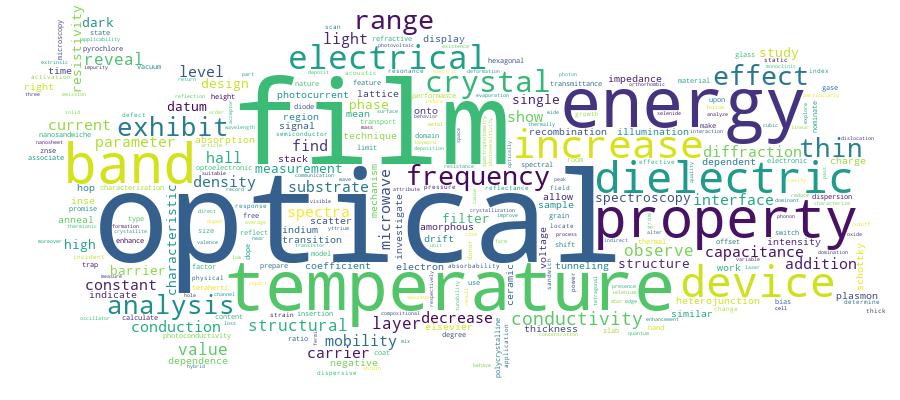
49 results
Scholarly Output Search Results
Now showing 1 - 10 of 49
Article Citation - WoS: 2Citation - Scopus: 2Properties of Tl4se3< Single Crystals and Characterization of Ag/Tl4< Schottky Barrier Diodes(Elsevier Science Bv, 2010) Qasrawi, A. F.; Gasanly, N. M.The main physical properties of Tl4Se3S single crystals were investigated for the first time. Particularly, the crystal data, Debye temperature, dark electrical resistivity and Hall effect in addition to the temperature dependent current-voltage characteristics and photosensitivity of the Ag/Tl4Se3S Schottky barrier diode were studied. The X-ray diffraction patterns have revealed that the crystal exhibited a single phase of tetragonal structure belonging to the D-4h(18) - 14mcm space group. A Debye temperature of 100 K was calculated using the results of the X-ray diffraction analysis. The dark electrical resistivity and Hall-effect measurements indicated that the samples exhibits p-type conduction with an electrical resistivity, carrier concentration and Hall mobility of 6.20 x 10(3) Omega cm, 1.16 x 10(12) cm(-3) and 873 cm(2) V-1 s(-1), respectively. The crystals were observed to have Schottky diode properties. The Ag/Tl4Se3S Schottky barrier device bias voltage was observed to depend on the crystal direction and on temperature. It was found that the calculated energy barrier height decreased and the diode ideality factor increased with temperature decreasing. The photosensitivity-light intensity dependence of this device was found to be linear reflecting the ability of using it in optoelectronics. (C) 2009 Elsevier B.V. All rights reserved.Article Citation - WoS: 5Citation - Scopus: 5Acoustic Phonons Scattering Mobility and Carrier Effective Mass in In6s7< Crystals(Elsevier Science Sa, 2006) Qasrawi, A. F.; Gasanly, N. M.Systematic dark electrical resistivity and Hall coefficient measurements have been carried out in the temperature range of 170-320 K on n-type In6S7 crystals. The analysis of the electrical resistivity and carrier concentration reveals the intrinsic type of conduction with an average energy band gap of similar to 0.75 eV The carrier effective masses of the conduction and valence bands were calculated from the intrinsic temperature-dependent carrier concentration data and were found to be 0.565m(0) and 2.020m(0), respectively. The temperature-dependent Hall mobility was observed to follow the mu alpha T-3/2 law and was analyzed assuming the domination of acoustic phonons scattering. The acoustic phonons scattering mobility was calculated from the crystal's structural data with no assumptions. The experimental Hall mobility data of In6S7 crystals coincides with the theoretical acoustic phonons scattering mobility data with acoustic deformation potential of 6.4 eV. (c) 2006 Elsevier B.V. All rights reserved.Article Citation - WoS: 2Citation - Scopus: 2Electron-Lattice Interaction Scattering Mobility in Tl2ingase4< Single Crystals(Iop Publishing Ltd, 2008) Qasrawi, A. F.; Gasanly, N. M.In this work, the dark electrical resistivity, charge carrier density and Hall mobility of Tl(2)InGaSe(4) single crystal have been recorded and analyzed to investigate the dominant scattering mechanism in the crystal. The data analyses have shown that this crystal exhibits an extrinsic n-type conduction. The temperature-dependent dark electrical resistivity analysis reflected the existence of two energy levels as 0.396 and 0.512 eV, being dominant above and below 260 K, respectively. The temperature dependence of the carrier density was analyzed by using the single-donor-single-acceptor model. The latter analysis has shown that the above maintained 0.512 eV energy level is a donor impurity level. The compensation ratio for this crystal is determined as 0.96. The Hall mobility of Tl(2)InGaSe(4) is found to be limited by the scattering of electron-acoustic phonon interactions. The calculated theoretical acoustic phonon scattering mobility agrees with the experimental one under the condition that the acoustic deformation potential is 12.5 eV.Article Citation - WoS: 2Citation - Scopus: 2Structural, Electrical and Anisotropic Properties of Tl4se3< Chain Crystals(Pergamon-elsevier Science Ltd, 2009) Qasrawi, A. F.; Gasanly, N. M.The structure, the anisotropy effect on the current transport mechanism and the space charge limited current in Tl4Se3S chain crystals have been studied by means of X-ray diffraction, electrical conductivity measurements along and perpendicular to the crystal's c-axis and the current voltage characteristics. The temperature-dependent electrical conductivity analysis in the region of 150-400 K, revealed the domination of the thermionic emission of charge carriers over the chain boundaries above 210 and 270 K along and perpendicular to the c-axis, respectively. Below these temperatures, the variable range hopping is dominant. At a consistent temperature range, the thermionic emission analysis results in conductivity activation energies of 280 and 182 meV, along and perpendicular to the c-axis, respectively. Likewise, the hopping parameters are altered significantly by the conductivity anisotropy. The current-voltage characteristics revealed the existence of hole trapping state being located at 350 meV above the valence band of the crystal. (C) 2009 Elsevier Ltd. All rights reserved.Article Citation - WoS: 2Citation - Scopus: 2Space-charge-limited currents and photoconductive properties of Tl2InGaSe4 layered crystals(Taylor & Francis Ltd, 2008) Qasrawi, A. F.; Gasanly, N. M.The extrinsic electronic parameters of Tl2InGaSe4 layered crystals were investigated through measurement of the temperature-dependent dark conductivity, space-charge-limited currents and photoconductivity. Analysis of the dark conductivity reveals the existence of two extrinsic energy levels at 0.40 and 0.51 eV below the conduction band edge, which are dominant above and below 260 K, respectively. Current-voltage characteristics show that the one at 0.51 eV is a trapping energy level with a concentration of (4.8-7.7) x 10(10) cm(3). Photoconductivity measurements reveal the existence of another energy level located at 0.16 eV. In the studied temperature range, the photocurrent increases with increasing temperature. The dependence of the photoconductivity on the incident light intensity exhibits a linear recombination character near room temperature and a supralinear character as the temperature decreases. The change in recombination mechanism is attributed to an exchange in the behavior of sensitizing and recombination centres.Article Citation - WoS: 5Citation - Scopus: 6Photoelectronic and Electrical Properties of Tl2ingas4< Layered Crystals(Pergamon-elsevier Science Ltd, 2007) Qasrawi, A. F.; Gasanly, N. M.Tl2InGaS4 layered crystals are studied through the dark electrical conductivity, space charge limited current and illumination- and temperature-dependent photoconductivity measurements in the temperature regions of 220-350 K, 300-400 K and 200-350 K, respectively. The space charge limited current measurements revealed the existence of a single discrete trapping level located at 0.44 eV. The dark electrical conductivity showed the existence of two energy levels of 0.32 eV and 0.60 eV being dominant above and below 300 K, respectively. The photoconductivity measurements reflected the existence of two other energy levels located at 0.28 eV and 0.19 eV at high and low temperatures, respectively. The photocurrent is observed to increase with increasing temperature up to a maximum temperature of 330 K. The illumination dependence of photoconductivity is found to exhibit supralinear recombination in all the studied temperature ranges. The change in recombination mechanism is attributed to exchange in the behavior of sensitizing and recombination centers. (C) 2006 Elsevier Ltd. All rights reserved.Article Citation - WoS: 9Citation - Scopus: 9Energy Band Diagram and Current Transport Mechanism in P-mgo/N-ga4<(Ieee-inst Electrical Electronics Engineers inc, 2015) Qasrawi, Atef F.; Gasanly, N. M.A p-n heterojunction made of MgO and Ga4Se3S single crystal has been successfully produced. The current-voltage curve analysis has shown that the current conduction mechanism is mostly governed by the Richardson-Schottky mechanism. The width of the effective interface region of the p-n junction was found to be 3.72x10(-5)cm. The work function and the electron affinity of the Ga4Se3S crystals were also determined as 4.32 and 3.96 eV, respectively. On the other hand, the capacitance-voltage curve analysis, which was carried out in the power range that extends from Bluetooth to WLAN power outputs, reflected a built-in voltage of 0.48 eV and density of noncompensated carriers of 8.2 x 10(16)cm(-3). The device is observed to exhibit a wide range of negative resistance associated with the tunneling of charged particles at reverse biasing down to similar to 1.28 V. At that voltage, when exposed to a He-Ne laser beam of similar to 3 mW, the device reflected a responsivity of similar to 80. The charge storability increased and the I-V characteristics are significantly shifted. These properties are promising because it indicates the applicability of these tunneling devices in optoelectronics.Article Citation - WoS: 12Citation - Scopus: 12Design and Characterization of Tlinse2 Varactor Devices(Elsevier, 2011) Qasrawi, A. F.; Aljammal, Faten G.; Taleb, Nisreen M.; Gasanly, N. M.TlInSe2 single crystal has been successfully prepared by the Bridgman crystal growth technique. The crystal, which exhibits compositional atomic percentages of 25.4%, 25.2% and 49.4% for TI, In and Se, respectively, is found to be of tetragonal structure with lattice parameters of a=0.8035 and c=0.6883 nm. The crystals were used to design radio frequency sensitive varactor device. The temperature dependence of the current-voltage characteristics of the device allowed the calculation of the room temperature barrier height and ideality factor as 0.87 eV and as 3.2, respectively. Rising the device temperature increased the barrier height and decreased the ideality factor. This behavior was attributed to the current transport across the metal-semiconductor interface. The capacitance of the device is observed to increase with increasing voltage and increasing temperature as well. The temperature activation of the capacitance starts above 82 degrees C with a temperature coefficient of capacitance being 1.08 x 10 (3) K (1). Furthermore, the capacitance of the device was observed to increase with increasing frequency up to a maximum critical frequency of 4.0 kHz, after which the capacitance decreased with increasing frequency. The behavior reflected the ability of maximum amount of charge holding being at a 4.0 kHz. The analysis of the capacitance-voltage characteristics at fixed frequencies reflected a frequency dependent barrier height and acceptors density. The decrease in the barrier height and acceptors density with increasing frequency is mainly due to the inability of the free charge to follow the ac signal. (C) 2011 Elsevier B.V. All rights reserved.Article Hopping Conduction in Ga4se3< Layered Single Crystals(Pergamon-elsevier Science Ltd, 2008) Qasrawi, A. F.; Gasanly, N. M.The conduction mechanism in Ga4Se3S single crystals has been investigated by means of dark and illuminated conductivity measurements for the first time. The temperature-dependent electrical conductivity analysis in the region of 100-350 K, revealed the dominance of the thermionic emission and the thermally assisted variable range hopping (VRH) of charged carriers above and below 170 K, respectively. The density of states near the Fermi level and the average hopping distance for this crystal in the dark were found to be 7.20 x 10(15) cm(-3) eV(-1) and 7.56 x 10(-6) cm, respectively. When the sample was illuminated, the Mott's VRH parameters are altered, particularly, the average hopping distance and the density of states near the Fermi level increase when light intensity increases. This action is attributed to the electron generation by photon absorption, which in turn leads to the Fermi level shift and/or trap density reduction by electron-hole recombination. (C) 2008 Elsevier Ltd. All rights reserved.Article Citation - WoS: 1Citation - Scopus: 1Hole-Polar Phonon Interaction Scattering Mobility in Chain Structured Tlse0.75s0.25< Crystals(Wiley-blackwell, 2009) Qasrawi, A. F.; Gasanly, N. M.In this study, the electrical resistivity, charge carriers density and Hall mobility of chain structured TlSe0.75S0.25 crystal have been measured and analyzed to establish the dominant scattering mechanism in crystal. The data analyses have shown that this crystal exhibits an extrinsic p-type conduction. The temperature-dependent dark electrical resistivity analysis reflected the existence of three energy levels located at 280 meV, 68 meV and 48 meV. The temperature dependence of carrier density was analyzed by using the single donor-single acceptor model. The carrier concentration data were best reproduced assuming the existence of an acceptor impurity level being located at 68 meV consistent with that observed from resistivity measurement, The model allowed the determination of the hole effective mass and the acceptor-donor concentration difference as 0.44m(0) and 2.2 x 10(12) cm(-3), respectively. The Hall mobility of the TlSe0.75S0.25 crystal is found to be limited by the scattering of charged carriers over the (chain) boundaries and the scattering of hole-polar phonon interactions above and below 300 K, respectively. The value of the energy barrier height at the chain boundaries was found to be 261 meV. The polar phonon scattering mobility revealed the high-frequency and static dielectric constants of 13.6 and 15.0, respectively. (C) 2009 WILEY-VCH Verlag GmbH & Co. KGaA, Weinheim
