
This item is non-discoverable
Işık, Mehmet
Loading...

Profile URL
Name Variants
Mehmet, Işık
M.,Işık
Isik, Mehmet
Mehmet, Isik
I., Mehmet
I.,Mehmet
Işık,M.
Isik,M.
I.,Mehmet
M.,Isik
Işık, Mehmet
M., Isik
Isik, M.
M.,Işık
Isik, Mehmet
Mehmet, Isik
I., Mehmet
I.,Mehmet
Işık,M.
Isik,M.
I.,Mehmet
M.,Isik
Işık, Mehmet
M., Isik
Isik, M.
Job Title
Profesör Doktor
Email Address
mehmet.isik@atilim.edu.tr
Main Affiliation
Department of Electrical & Electronics Engineering
Status
Former Staff
Website
ORCID ID
Scopus Author ID
Turkish CoHE Profile ID
Google Scholar ID
WoS Researcher ID
Sustainable Development Goals
2
ZERO HUNGER

0
Research Products
11
SUSTAINABLE CITIES AND COMMUNITIES

0
Research Products
14
LIFE BELOW WATER

1
Research Products
6
CLEAN WATER AND SANITATION

0
Research Products
1
NO POVERTY

0
Research Products
5
GENDER EQUALITY

0
Research Products
9
INDUSTRY, INNOVATION AND INFRASTRUCTURE

0
Research Products
16
PEACE, JUSTICE AND STRONG INSTITUTIONS

0
Research Products
17
PARTNERSHIPS FOR THE GOALS

0
Research Products
15
LIFE ON LAND

1
Research Products
10
REDUCED INEQUALITIES

0
Research Products
7
AFFORDABLE AND CLEAN ENERGY

11
Research Products
8
DECENT WORK AND ECONOMIC GROWTH

0
Research Products
4
QUALITY EDUCATION

0
Research Products
12
RESPONSIBLE CONSUMPTION AND PRODUCTION

0
Research Products
3
GOOD HEALTH AND WELL-BEING

1
Research Products
13
CLIMATE ACTION

0
Research Products

This researcher does not have a Scopus ID.

This researcher does not have a WoS ID.

Scholarly Output
173
Articles
169
Views / Downloads
442/792
Supervised MSc Theses
3
Supervised PhD Theses
0
WoS Citation Count
1802
Scopus Citation Count
1861
WoS h-index
20
Scopus h-index
20
Patents
0
Projects
0
WoS Citations per Publication
10.42
Scopus Citations per Publication
10.76
Open Access Source
11
Supervised Theses
3
Google Analytics Visitor Traffic
| Journal | Count |
|---|---|
| Optical Materials | 17 |
| Physica B: Condensed Matter | 16 |
| Journal of Luminescence | 15 |
| Materials Science in Semiconductor Processing | 14 |
| Journal of Materials Science: Materials in Electronics | 12 |
Current Page: 1 / 10
Scopus Quartile Distribution
Competency Cloud
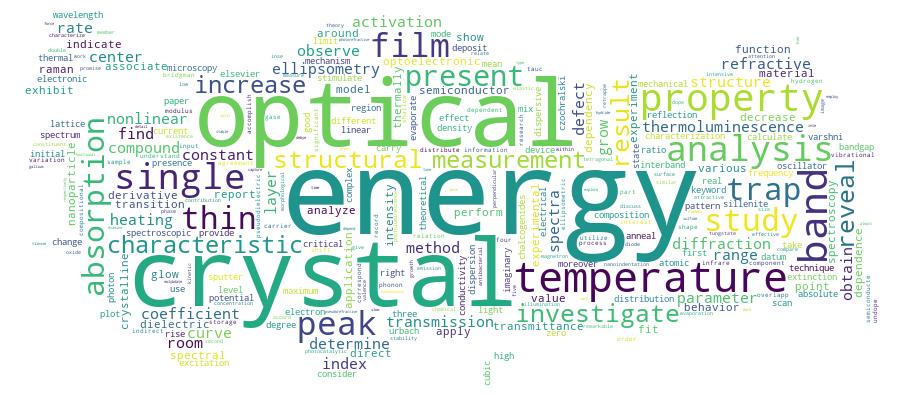
17 results
Scholarly Output Search Results
Now showing 1 - 10 of 17
Master Thesis Gas(x)se(1-x) Katmanlı Karışım Kristallerinin Yapısal ve Elipsometrik Özellikleri(2017) Habaibi, Om-alhana; Işık, Mehmet; Özkan, Filiz KorkmazGaSxSe1-x katmanlı karışım kristalleri yapısal ve optiksel karakterizasyon teknikleri kullanılarak incelendi. Bridgman metodu ile büyütülen örneklerin yapısal karakterizasyonu x-ışını kırınımı (XRD), enerji saçılım spektroskopisi (EDS) ve Fourier transform kızılötesi spektroskopisi teknikleri kullanılarak başarıldı. Karışım kristallerinin kompozisyonal bağımlılığı EDS deneyleri ile elde edildi. Ölçümlerin sonuçları, kullanılan örneklerin x değerinin 0.25 aralıklar ile 0 ile 1 arasında olduğu kompozisyona denk geldiğini gösterdi. Örneklerin kristal yapısı XRD ölçümlerinin sonuçlarını ve analiz için bir yazılım programı kullanarak açığa çıkarıldı. FTIR tayfları x=0, 0.25 ve 0.50 kompozisyonlarındaki örneklerin içerisinde çoklu fonon emiliminin var olduğunu gösterdi. XRD ve FTIR deneylerinin sonuçları kullanılan kompozisyonlar arasında ilişkilendirildi. Örneklerin optiksel karakterizasyonu 1.2-6.0 eV spektral aralıpında gerçekleştirilen elipsometri deneyleri ile tamamlandı. Ölçüm sisteminin çıkış datası optiksel parametrelerin spektraş bağımlılığını gösteren dataya çevrildi. Elipsometrik data örneklerin bant boşluğu enerjilerini elde etmek için kullanıldı. Elde edilen bant enerjisi değerleri karışım kristallerinde sülfür kompozisyonu arttıkça bant enerjisinin 2.4 eV'tan (x = 0) 2.57 eV'a (x = 1) arttığını gösterdi. Ortaya çıkarılan bant enerji değerlerine göre bant boşluğu enerjisinin kompozisyona bağlılığını gösteren bir grafik çizildi.Article Citation - WoS: 5Citation - Scopus: 5Revealing Defect Centers in Pbwo4 Single Crystals Using Thermally Stimulated Current Measurements(Aip Publishing, 2024) Isik, M.; Gasanly, N. M.The trap centers have a significant impact on the electronic properties of lead tungstate (PbWO4), suggesting their crucial role in optoelectronic applications. In the present study, we investigated and revealed the presence of shallow trap centers in PbWO4 crystals through the utilization of the thermally stimulated current (TSC) method. TSC experiments were performed in the 10-280 K range by applying a constant heating rate. The TSC spectrum showed the presence of a total of four peaks, two of which were overlapped. As a result of analyzing the TSC spectrum using the curve fit method, the activation energies of revealed centers were found as 0.03, 0.11, 0.16, and 0.35 eV. The trapping centers were associated with hole centers according to the comparison of TSC peak intensities recorded by illuminating the opposite polarity contacts. Our findings not only contribute to the fundamental understanding of the charge transport mechanisms in PbWO4 crystals but also hold great promise for enhancing their optoelectronic device performance. The identification and characterization of these shallow trap centers provide valuable insights for optimizing the design and fabrication of future optoelectronic devices based on PbWO4.Article Citation - WoS: 9Citation - Scopus: 14Bifunctional Praseodymium-Doped Sns2 Thin Films for Photocatalytic and Antibacterial Applications(Elsevier, 2024) Ech-Chergui, Abdelkader Nebatti; Bennabi, Farid; Isik, Mehmet; Khane, Yasmina; Garcia, Francisco Jose Garcia; Kadari, Ali Sadek; Amrani, BouhalouaneThis paper introduces a novel application of bifunctional Pr-doped SnS2 thin films, demonstrating their efficacy in both photocatalytic degradation of dye and antibacterial activities. The thin films were fabricated using an eco-friendly spray-coated method, encompassing undoped and Pr-doped SnS2 variations. The study comprehensively examines the structural, morphological, chemical, photocatalytic, and antibacterial characteristics of these films. The crystal structure of both undoped and Pr-doped SnS2 thin films exhibited hexagonal patterns, prominently favouring the growth in (1 0 1) orientation. Notably, an increase in crystallite size was observed with higher levels of Pr-doping. Raman spectroscopy analysis highlighted a distinct peak at 315 cm -1, corresponding to the A1 g vibrational mode associated with Sn-S bonds along the c-axis of the structure. Employing X ray Photoelectron Spectroscopy (XPS), the presence of essential components - Sn, S, and Pr - within the fabricated thin films was confirmed, consistent with experimental values of undoped and Pr -doped SnS2-x compositions. Importantly, the XPS analysis confirmed the integration of the Pr3+ oxidation state within Pr -doped SnS2 films. The photocatalytic degradation and antibacterial activities of the films were investigated. Notably, the photocatalytic potential of the synthesized materials against Congo Red exhibited a direct correlation with the Pr3+ doping percentage, indicating enhanced pollutant degradation with increasing doping levels. Similarly, the antibacterial performance against Escherichia coli displayed improvement with increasing Pr -doping content, highlighting the promising antimicrobial capabilities of the films. This study presents an innovative avenue to address both organic pollutant degradation and microbial control. By harnessing the attributes of Pr -doped SnS2 thin films, this research introduces a promising strategy for sustainable material applications in environmental purification and improvement in public health.Article Citation - WoS: 5Citation - Scopus: 5Identification of Shallow Trap Centers in Inse Single Crystals and Investigation of Their Distribution: a Thermally Stimulated Current Spectroscopy(Elsevier, 2024) Isik, M.; Gasanly, N. M.Identification of trap centers in semiconductors takes great importance for improving the performance of electronic and optoelectronic devices. In the present study, we employed the thermally stimulated current (TSC) method within a temperature range of 10-280 K to explore trap centers in InSe crystal-a material with promising applications in next-generation devices. Our findings revealed the existence of two distinct hole trap centers within the InSe crystal lattice located at 0.06 and 0.14 eV. Through the leveraging the T-stop method, we offered trap distribution parameters of revealed centers. The results obtained from the experimental methodology employed to investigate the distribution of trap centers indicated that one of the peaks extended between 0.06 and 0.13 eV, while the other spanned from 0.14 to 0.31 eV. Notably, our research uncovers a remarkable variation in trap density, spanning one order of magnitude, for every 10 and 88 meV of energy variation. The results of our research present the characteristics of shallow trap centers in InSe, providing important information for the design and optimization of InSe-based optoelectronic devices.Article Citation - WoS: 2Citation - Scopus: 2Optical Characterization of Nabi(moo4)2< Crystal by Spectroscopic Ellipsometry(Springer Heidelberg, 2024) Guler, I.; Isik, M.; Gasanly, N. M.The compound NaBi(MoO4)(2) has garnered significant interest in optoelectronic fields. This study employs spectroscopic ellipsometry to thoroughly examine the linear and nonlinear optical characteristics of NaBi(MoO4)(2) crystals, offering detailed insights into their optical behavior. Our investigation presents a precise method for discerning the crystal's spectral features, revealing the spectral variations of key optical parameters such as refractive index, extinction coefficient, dielectric function, and absorption coefficient within the 1.2-5.0 eV range. Through analysis, we determined optical attributes including bandgap energy, critical point energy, and single oscillator parameters. Additionally, we explored the nonlinear optical properties of NaBi(MoO4)(2), unveiling potential applications such as optoelectronic devices, frequency conversion, and optical sensors. This study enhances comprehension of optical properties of NaBi(MoO4)(2), underscoring its significance in future optical and electronic advancements.Article Citation - WoS: 1Citation - Scopus: 1Growth and Optical Properties of (na0.5bi0.5< (x=0.25) Single Crystal: a Potential Candidate for Optoelectronic Devices(Springer, 2024) Guler, I.; Isik, M.; Gasanly, N.Double tungstates (DT) and double molybdates (DM) have significant importance because of their optoelectronic applications. Regarding the importance of DT and DM, we investigated experimentally structural and optical properties of (Na0.5Bi0.5)(Mo1-xWx)O-4 (x = 0.25) crystal that belongs to the NaBi-DT and DM crystals group. Czochralski method was used to grow the single crystals. The structure of the crystal was identified using X-ray diffraction (XRD) measurements. Two sharp peaks associated with tetragonal crystal structure appeared in the pattern. Vibrational modes of the studied crystal were obtained from the Raman experiments. By the help of the Fourier transform infrared spectrophotometer (FTIR) measurements, infrared transmittance spectrum of the studied compound was recorded. Band gap energy wase found around 3.04 eV using two methods, Tauc and derivative analysis, based on transmission spectrum. Based on the analysis of absorption coefficient, Urbach energy was obtained as 0.22 eV. The revealed structural and optical properties of the crystal indicated that the material may be a candidate for optoelectronic devices in which NaBi(MoO4)(2) and NaBi(WO4)(2) materials are utilized.Article Citation - WoS: 6Citation - Scopus: 6Sns2 and Ho-Doped Sns2 Thin Films: Synergistic, Dft, Photocatalytic, and Antibacterial Studies(Elsevier Sci Ltd, 2024) Radja, Imane; Khane, Yasmina; Oliveira, Marisa C.; Longo, Elson; Ribeiro, Renan A. P.; Isik, Mehmit; Khan, Mohammad MansoobThis study investigates Ho-doped tin disulfide (Ho-SnS2) thin films prepared via spray coating, focusing on varying Ho doping levels (0 at. %, 2 at. %, and 4 at. %). Structural analysis through XRD and SEM showcased enhanced crystallinity and morphology in Ho-SnS2 films. Raman and XPS studies provided insight into the film's composition and chemical states. The antibacterial properties of the films were investigated using a bacterial growth inhibition assay. The results showed significant antibacterial activity against Gram-positive and Gram-negative bacteria, highlighting the potential applications of Ho-SnS2 thin films in antibacterial coatings. Ho-SnS2 films exhibited superior photocatalytic activity and antibacterial properties compared to SnS2 films, attributed to efficient charge separation. DFT analysis proposed a mechanism for the antibacterial activity. These findings highlight the efficacy of the spray coating technique in producing Ho-SnS2 films and the potential of Ho-SnS2 films for diverse applications like photocatalysis and antibacterial coatings.Article Citation - WoS: 4Citation - Scopus: 3Exploring the Thermal Stability of Sb2se3 for Potential Applications Through Advanced Thermal Analysis Methods(Amer Chemical Soc, 2025) Altuntas, Gozde; Isik, Mehmet; Surucu, Gokhan; Parlak, Mehmet; Surucu, OzgeAntimony selenide (Sb2Se3) is a promising material for energy applications, including photovoltaics, thermoelectrics, and photodetectors, due to its favorable electronic properties, availability, and low toxicity. However, its thermal stability, crucial for device efficiency and reliability, has been less explored, leaving a gap in understanding its high-temperature suitability. This study evaluates the thermal stability of Sb2Se3 using thermogravimetric analysis (TGA), differential thermal analysis (DTA), and differential scanning calorimetry (DSC). The results show that Sb2Se3 remains stable up to 500 degrees C, with two significant weight loss stages: 1.75% between 500 and 610 degrees C, and 3.50% between 610 and 775 degrees C, indicating decomposition processes. Activation energies for the decomposition phases were determined as 121.8 and 57.2 kJ/mol using the Coats-Redfern method. Additionally, an endothermic phase transition was observed between 599 and 630.6 degrees C via DSC analysis. These findings demonstrate Sb2Se3's potential for high-temperature energy applications, providing essential insights for optimizing its use in solar cells, thermoelectric devices, and other technologies.Article Citation - WoS: 2Citation - Scopus: 2Thermoluminescence Dose Response and Kinetic Parameters of Gd-Doped Zno Nanoparticles(Iop Publishing Ltd, 2024) Isik, M.; Yildirim, T.; Guner, M.; Gasanly, N. M.This study investigates the thermoluminescence (TL) properties of undoped and gadolinium (Gd)-doped zinc oxide (ZnO) nanoparticles synthesized via sol-gel method. The crystal structure of both synthesized nanoparticles was determined as hexagonal from x-ray diffraction pattern. The TL curve of undoped ZnO nanoparticles reveals two distinct peaks at 400.5 and 479.2 K, each associated with trap centers featuring activation energies of 0.84 and 1.05 eV. TL curve of the Gd:ZnO introduced three peaks associated with trap centers at 1.10, 1.18, and 1.25 eV. Notably, the absence of the 0.84 eV trap center in Gd-doped ZnO implies a modification in the defect structure. Considering the effect of Gd-doping on the band structure and potential minor errors in the analysis results, it was stated that the traps at 1.05 and 1.10 eV levels belonged to the same defect center. Dose-dependent investigations for undoped and Gd-doped ZnO nanoparticles reveal linear behaviors in the TL response, highlighting their potential for dosimetric applications. Photoluminescence spectra of both compounds exhibited emission peaks around 455 and 577 nm, which were associated with native defect centers.Article Citation - WoS: 24Citation - Scopus: 23Revealing the Effects of Defect States on the Nonlinear Absorption Properties of the Tlinsse and Tl2in2< Crystals in Near-Infrared Optical Limiting Applications(Amer Chemical Soc, 2024) Dogan, Anil; Karatay, Ahmet; Isik, Mehmet; Yildiz, Elif Akhuseyin; Gasanly, Nizami Mamed; Elmali, AyhanThe present study represents the effect of defect states on the nonlinear absorption and optical limiting performances of TlInSSe and Tl2In2S3Se single crystals with near-infrared excitations. The band gap energies were 2.2 and 2.22 eV, and the Urbach energies were 0.049 and 0.034 eV for TlInSSe and Tl2In2S3Se, respectively. The trapping time of localized defect states was found to be 8 ns by femtosecond transient absorption measurements. The analysis of open-aperture Z-scan data depends on two different fitting models to determine the effect of defect states on the nonlinear absorption (NA) properties of the studied crystals. Model 1 only considers two-photon absorption (TPA), while model 2 includes one-photon absorption (OPA), TPA, and free carrier absorption (FCA). The NA coefficients (ss(eff)) obtained from model 2 are higher than the values (ss) obtained from model 1 at the same intensities, revealing that defect states contribute to NA through OPA. The optical limiting properties of the TlInSSe and Tl2In2S3Se crystals were examined under 1064 nm wavelength excitation. The limiting thresholds were found to be 1.16 and 0.27 mJ/cm(2) at 29.8 GW/m(2) and 99.5 GW/m(2) input intensities, respectively. The results show that TlInSSe and Tl2In2S3Se crystals have promising potential for near-infrared optical limiting applications.