
Işık, Mehmet
Loading...

Profile URL
Name Variants
Mehmet, Işık
M.,Işık
Isik, Mehmet
Mehmet, Isik
I., Mehmet
I.,Mehmet
Işık,M.
Isik,M.
I.,Mehmet
M.,Isik
Işık, Mehmet
M., Isik
Isik, M.
M.,Işık
Isik, Mehmet
Mehmet, Isik
I., Mehmet
I.,Mehmet
Işık,M.
Isik,M.
I.,Mehmet
M.,Isik
Işık, Mehmet
M., Isik
Isik, M.
Job Title
Profesör Doktor
Email Address
mehmet.isik@atilim.edu.tr
Main Affiliation
Department of Electrical & Electronics Engineering
Status
Former Staff
Website
ORCID ID
Scopus Author ID
Turkish CoHE Profile ID
Google Scholar ID
WoS Researcher ID
Sustainable Development Goals
2
ZERO HUNGER

0
Research Products
11
SUSTAINABLE CITIES AND COMMUNITIES

0
Research Products
14
LIFE BELOW WATER

1
Research Products
6
CLEAN WATER AND SANITATION

0
Research Products
1
NO POVERTY

0
Research Products
5
GENDER EQUALITY

0
Research Products
9
INDUSTRY, INNOVATION AND INFRASTRUCTURE

0
Research Products
16
PEACE, JUSTICE AND STRONG INSTITUTIONS

0
Research Products
17
PARTNERSHIPS FOR THE GOALS

0
Research Products
15
LIFE ON LAND

1
Research Products
10
REDUCED INEQUALITIES

0
Research Products
7
AFFORDABLE AND CLEAN ENERGY

11
Research Products
8
DECENT WORK AND ECONOMIC GROWTH

0
Research Products
4
QUALITY EDUCATION

0
Research Products
12
RESPONSIBLE CONSUMPTION AND PRODUCTION

0
Research Products
3
GOOD HEALTH AND WELL-BEING

1
Research Products
13
CLIMATE ACTION

0
Research Products

This researcher does not have a Scopus ID.

This researcher does not have a WoS ID.

Scholarly Output
173
Articles
169
Views / Downloads
442/794
Supervised MSc Theses
3
Supervised PhD Theses
0
WoS Citation Count
1806
Scopus Citation Count
1866
WoS h-index
20
Scopus h-index
20
Patents
0
Projects
0
WoS Citations per Publication
10.44
Scopus Citations per Publication
10.79
Open Access Source
11
Supervised Theses
3
Google Analytics Visitor Traffic
| Journal | Count |
|---|---|
| Optical Materials | 17 |
| Physica B: Condensed Matter | 16 |
| Journal of Luminescence | 15 |
| Materials Science in Semiconductor Processing | 14 |
| Journal of Materials Science: Materials in Electronics | 12 |
Current Page: 1 / 10
Scopus Quartile Distribution
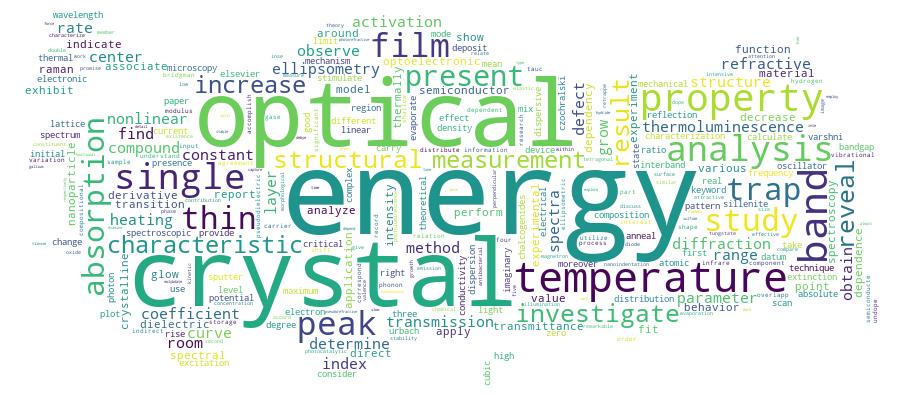
Competency Cloud
20 results
Scholarly Output Search Results
Now showing 1 - 10 of 20
Article Citation - WoS: 16Citation - Scopus: 16Temperature-Dependent Optical Characteristics of Sputtered Ga-Doped Zno Thin Films(Elsevier, 2021) Gullu, H. H.; Isik, M.; Gasanly, N. M.; Parlak, M.The present paper reports structural and optical properties of gallium (Ga) doped ZnO thin films (GZO) grown by magnetron sputtering technique. The crystalline properties were determined from X-ray diffraction measurements and analyses pointed out the crystalline structure as hexagonal, crystalline size as 43 nm and strain as 6.9 x 10(-5). Derivative spectroscopy analyses showed that band gap energy of GZO thin films decreases from 3.50 eV (10 K) to 3.45 eV (300 K). Temperature-band gap energy dependency was analyzed using Varshni and O'DonnellChen models. The absolute zero band gap energy, the rate of change of band gap energy with temperature and phonon energy were found as 3.50 eV, -2.8 x 10(-4) eV/K and 15 meV, respectively. The room temperature band gap and Urbach energies were also determined as 3.43 eV and 102 meV, respectively, from the absorption analysis.Article Citation - WoS: 20Citation - Scopus: 24Temperature Dependence of Band Gaps in Sputtered Snse Thin Films(Pergamon-elsevier Science Ltd, 2019) Delice, S.; Isik, M.; Gullu, H. H.; Terlemezoglu, M.; Surucu, O. Bayrakli; Parlak, M.; Gasanly, N. M.Temperature-dependent transmission experiments were performed for tin selenide (SnSe) thin films deposited by rf magnetron sputtering method in between 10 and 300 K and in the wavelength region of 400-1000 nm. Transmission spectra exhibited sharp decrease near the absorption edge around 900 nm. The transmittance spectra were analyzed using Tauc relation and first derivative spectroscopy techniques to get band gap energy of the SnSe thin films. Both of the applied methods resulted in existence of two band gaps with energies around 1.34 and 1.56 eV. The origin of these band gaps was investigated and it was assigned to the splitting of valence band into two bands due to spin-orbit interaction. Alteration of these band gap values due to varying sample temperature of the thin films were also explored in the study. It was seen that the gap energy values increased almost linearly with decreasing temperature as expected according to theoretical knowledge.Article Citation - WoS: 4Citation - Scopus: 4Growth and Optical Characterization of Sn0.6sb0.4< Layer Single Crystals for Optoelectronic Applications(Elsevier Sci Ltd, 2022) Bektas, T.; Terlemezoglu, M.; Surucu, O.; Isik, M.; Parlak, M.SnSe compound is an attractive semiconductor material due to its usage in photovoltaic applications. The sub-stitution of Sb in the SnSe compound presents a remarkable advantage especially in point of tuning optical characteristics. The present paper reports the structural and optical properties of Sn1-xSbxSe (x = 0.4) layered single crystals grown by the vertical Bridgman method. To the best of our knowledge, this work is the first investigation of the Sn0.6Sb0.4Se crystal grown with the vertical Bridgman technique. X-ray diffraction (XRD) pattern of the grown crystal indicated the well crystalline structure of the grown crystals. Lattice strain and interplanar spacing of the crystal structure were determined using the XRD pattern. Scanning electron micro-scope images allowed to the observation of the layer crystal structure. The layer crystalline structure shows 2D material properties and provides 2D applications. Optical properties were revealed by carrying out Raman, ellipsometry and transmission measurements. Raman modes, refractive index, extinction coefficient, and dielectric spectra, band gap energy of the crystal were presented throughout the paper. The obtained results indicated that Sn1-xSbxSe (x = 0.4) layer single crystals may be an alternative potential for photovoltaic and optoelectronic applications.Article Citation - WoS: 25Citation - Scopus: 25Temperature-Tuned Band Gap Properties of Mos2 Thin Films(Elsevier, 2020) Surucu, O.; Isik, M.; Gasanly, N. M.; Terlemezoglu, M.; Parlak, M.MoS2 is one of the fascinating members of transition metal dichalcogenides and has attracted great attention due to its various optoelectronic device applications and its characteristic as two-dimensional material. The present paper reports the structural and temperature tuned optical properties of MoS2 thin films grown by RF magnetron sputtering technique. It was observed that the atomic composition ratio of Mo:S was nearly equal to 1:2 and the deposited thin films have hexagonal crystalline structure exhibiting Raman peaks around 376 and 410 cm(-1). The band gap energies were determined as 1.66 and 1.71 eV at 300 and 10 K, respectively and temperature dependency of band gap energy was analyzed by means of Varshni and O'Donnell-Chen models. (C) 2020 Elsevier B.V. All rights reserved.Article Citation - WoS: 8Citation - Scopus: 10Temperature Effects on Optical Characteristics of Cdse Thin Films(Elsevier Sci Ltd, 2021) Gullu, H. H.; Isik, M.; Surucu, O.; Gasanly, N. M.; Parlak, M.CdSe is one of the significant members of II-VI type semiconducting family and it has a wide range of technological applications in which optoelectronic devices take a special position. The present paper reports the structural and optical characteristics of thermally evaporated CdSe thin films. XRD pattern exhibited preferential orientation along (111) plane while atomic composition analyses resulted in the ratio of Cd/Se as closer to 1.0. Temperature-dependent band gap characteristics of CdSe thin films were investigated for the first time by carrying out transmission experiments in the 10-300 K range. The analyses showed that direct band gap energy of the compound decreases from 1.750 (at 10 K) to 1.705 eV (at 300 K). Varshni model was successfully applied to the temperature-band gap energy dependency and various optical constants were determined. Raman spectrum of CdSe thin films was also presented to understand the vibrational characteristics of the compound. The present paper would provide worthwhile data to researchers especially studying on optoelectronic device applications of CdSe thin films.Article Citation - WoS: 22Citation - Scopus: 22Exploring Temperature-Dependent Bandgap and Urbach Energies in Cdte Thin Films for Optoelectronic Applications(Elsevier, 2024) Surucu, O.; Surucu, G.; Gasanly, N. M.; Parlak, M.; Isik, M.This study examines CdTe thin films deposited via RF magnetron sputtering, focusing on structural and optical properties. X-ray diffraction, Raman spectroscopy, and SEM assessed structural characteristics. Optical properties were analyzed through transmittance measurements from 10 to 300 K. Tauc plots and Varshni modeling revealed a temperature-dependent bandgap, increasing from 1.49 eV at room temperature to 1.57 eV at 10 K. Urbach energy rose from 82.7 to 93.7 meV with temperature. These results are essential for applications where temperature affects CdTe-based device performance.Article Citation - WoS: 22Citation - Scopus: 24Synthesis and Temperature-Tuned Band Gap Characteristics of Magnetron Sputtered Znte Thin Films(Elsevier, 2020) Isik, M.; Gullu, H. H.; Parlak, M.; Gasanly, N. M.Zinc telluride (ZnTe) is one of the attractive semiconducting compounds used in various optoelectronic devices. The usage of ZnTe in optoelectronic applications directs researchers to search its optical characteristics in great detail. For this purpose, structural and optical properties of magnetron sputtered ZnTe thin films were studied by means of x-ray diffraction and transmission spectroscopy measurements. Structural analyses indicated that ZnTe thin films having cubic crystalline structure were successfully grown on soda-lime glass substrates. Transmittance spectra in the 400-1000 nm were recorded in between 10 and 300 K temperature region. The analyses of absorption coefficient spectra resulted in band gap energies decreasing from around 2.31 (10 K) to 2.26 eV (300 K). Temperature dependency of gap energy was studied by Varshni and O'Donnell-Chen relations to determine various optical parameters like absolute zero temperature band gap energy, change of gap energy with temperature, phonon energy.Article Citation - WoS: 3Citation - Scopus: 4Analysis of Temperature-Dependent Transmittance Spectra of Zn0.5in0.5< (zis) Thin Films(Springer, 2019) Isik, M.; Gullu, H. H.; Delice, S.; Gasanly, N. M.; Parlak, M.Temperature-dependent transmission experiments of ZnInSe thin films deposited by thermal evaporation method were performed in the spectral range of 550-950nm and in temperature range of 10-300K. Transmission spectra shifted towards higher wavelengths (lower energies) with increasing temperature. Transmission data were analyzed using Tauc relation and derivative spectroscopy. Analysis with Tauc relation was resulted in three different energy levels for the room temperature band gap values of material as 1.594, 1.735 and 1.830eV. The spectrum of first wavelength derivative of transmittance exhibited two maxima positions at 1.632 and 1.814eV and one minima around 1.741eV. The determined energies from both methods were in good agreement with each other. The presence of three band gap energy levels were associated to valence band splitting due to crystal-field and spin-orbit splitting. Temperature dependence of the band gap energies were also analyzed using Varshni relation and gap energy value at absolute zero and the rate of change of gap energy with temperature were determined.Article Citation - WoS: 9Citation - Scopus: 9Temperature Effects on Optical Characteristics of Thermally Evaporated Cusbse2 Thin Films for Solar Cell Applications(Elsevier, 2022) Surucu, O.; Isik, M.; Terlemezoglu, M.; Bektas, T.; Gasanly, N. M.; Parlak, M.CuSbSe2 thin film was deposited by co-evaporation of binary CuSe and Sb2Se3 sources. The structural and morphological properties of the deposited thin film were investigated with X-ray diffraction (XRD), scanning electron microscopy (SEM), and energy-dispersive X-ray analysis measurements. XRD pattern indicated that deposited thin film has an orthorhombic crystalline structure with the preferential orientation of (013) direction. SEM image presented that the thin film surface is almost uniform. The optical characteristics of the deposited CuSbSe2 thin film were investigated in detail by performing room temperature Raman, temperature-dependent transmittance spectroscopy, and photoluminescence techniques. Raman spectrum exhibited one mode at around 210 cm(-1) associated with A(g) vibrational mode. The derivative spectroscopy technique was used to obtain the band gap energy of the films. Temperature dependence of band gap energy was investigated by considering the Varshni model. The rate of change of band gap energy, absolute zero value of gap energy, and Debye temperature were determined as 1.3 x 10(-4) eV/K, 1.21 eV, and 297 +/- 51 K, respectively. The photoluminescence spectrum indicated the room temperature direct band gap energy as 1.30 eV.Article Citation - WoS: 1Citation - Scopus: 1Temperature -Dependent Optical and Electrical Characterization of Cu-Ga Thin Films and Their Diode Characteristics on N-Si(Elsevier Gmbh, 2020) Gullu, H. H.; Isik, M.; Gasanly, N. M.; Parlak, M.In this paper, optical and electrical properties of thermally deposited Cu-Ga-S thin films were investigated using temperature-dependent optical transmission and electrical conductivity measurements. The analysis of the transmission spectra resulted in formation of three direct optical transitions due to the possible valence band splitting in the structure. The band gap values were calculated by means of absorption coefficient and incident photon energy was found in decreasing behavior as the temperature rises. The measured current-voltage values were used to extract the conductivity values which stand in the range of 1.73-2.62 (x104 O-1 cm-1) depending on the ambient temperature. These dark conductivity values were modeled by thermionic emission mechanism. The conductivity activation energies in the structures were calculated as 6.4, 14.5 and 40.7 meV according to the effects of grain boundary potentials. In addition, the films deposited on n-Si wafer showed a diode characteristic under the applied bias voltage between indium (In) front and silver (Ag) back contacts. From current-voltage measurements across the Si-based diode, about four orders of magnitude rectification was observed and the results were analyzed to determine the main diode parameters at dark and room temperature conditions.
