
Arıkan, Kutluk Bilge
Loading...

Profile URL
Name Variants
K.B.Arikan
Kutluk Bilge, Arıkan
K., Arikan
Arıkan,K.B.
Arıkan, Kutluk Bilge
K.B.Arıkan
Kutluk Bilge, Arikan
Arikan, Kutluk Bilge
K.,Arıkan
A., Kutluk Bilge
Arikan,K.B.
A.,Kutluk Bilge
Arikan, K. B.
Kutluk Bilge, Arıkan
K., Arikan
Arıkan,K.B.
Arıkan, Kutluk Bilge
K.B.Arıkan
Kutluk Bilge, Arikan
Arikan, Kutluk Bilge
K.,Arıkan
A., Kutluk Bilge
Arikan,K.B.
A.,Kutluk Bilge
Arikan, K. B.
Job Title
Doktor Öğretim Üyesi
Email Address
kutluk.arikan@atilim.edu.tr
Main Affiliation
Department of Mechatronics Engineering
Status
Former Staff
Website
ORCID ID
Scopus Author ID
Turkish CoHE Profile ID
Google Scholar ID
WoS Researcher ID
Sustainable Development Goals
 1
1NO POVERTY
1
Research Products
 2
2ZERO HUNGER
0
Research Products
 3
3GOOD HEALTH AND WELL-BEING
1
Research Products
 4
4QUALITY EDUCATION
0
Research Products
 5
5GENDER EQUALITY
0
Research Products
 6
6CLEAN WATER AND SANITATION
0
Research Products
 7
7AFFORDABLE AND CLEAN ENERGY
0
Research Products
 8
8DECENT WORK AND ECONOMIC GROWTH
0
Research Products
 9
9INDUSTRY, INNOVATION AND INFRASTRUCTURE
1
Research Products
 10
10REDUCED INEQUALITIES
0
Research Products
 11
11SUSTAINABLE CITIES AND COMMUNITIES
1
Research Products
 12
12RESPONSIBLE CONSUMPTION AND PRODUCTION
0
Research Products
 13
13CLIMATE ACTION
0
Research Products
 14
14LIFE BELOW WATER
0
Research Products
 15
15LIFE ON LAND
0
Research Products
 16
16PEACE, JUSTICE AND STRONG INSTITUTIONS
0
Research Products
 17
17PARTNERSHIPS FOR THE GOALS
0
Research Products

This researcher does not have a Scopus ID.

This researcher does not have a WoS ID.

Scholarly Output
38
Articles
11
Views / Downloads
226/2888
Supervised MSc Theses
14
Supervised PhD Theses
7
WoS Citation Count
158
Scopus Citation Count
206
Patents
0
Projects
0
WoS Citations per Publication
4.16
Scopus Citations per Publication
5.42
Open Access Source
3
Supervised Theses
21
| Journal | Count |
|---|---|
| Journal of Petroleum Science and Engineering | 2 |
| 20th Annual International Conference on Mechatronics and Machine Vision in Practice, M2VIP 2013 -- 20th Annual International Conference on Mechatronics and Machine Vision in Practice, M2VIP 2013 -- 20 September 2013 through 20 September 2013 -- Ankara -- 102276 | 2 |
| Adaptive Behavior | 1 |
| AIAA Modeling and Simulation Technologies Conference, 2016 -- AIAA Modeling and Simulation Technologies Conference, 2016 -- 13 June 2016 through 17 June 2016 -- Washington -- 176499 | 1 |
| AIAA SciTech Forum - 55th AIAA Aerospace Sciences Meeting -- 55th AIAA Aerospace Sciences Meeting -- 9 January 2017 through 13 January 2017 -- Grapevine -- 126423 | 1 |
Current Page: 1 / 3
Scopus Quartile Distribution
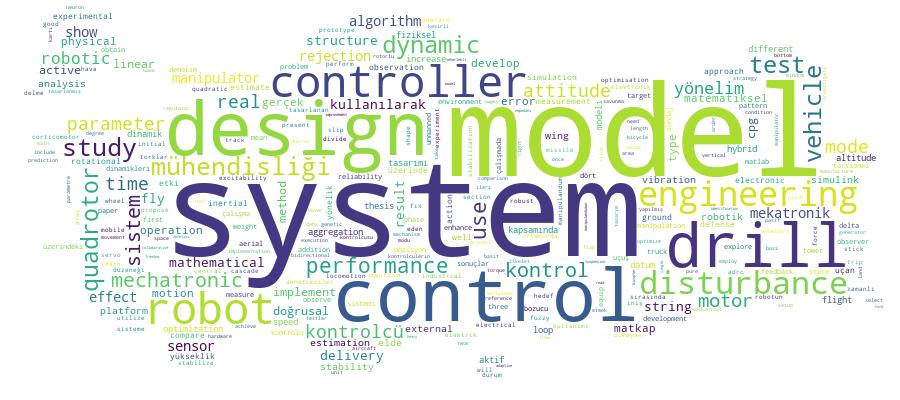
Competency Cloud
11 results
Scholarly Output Search Results
Now showing 1 - 10 of 11
Article Citation - WoS: 20Citation - Scopus: 28Modelling and Optimisation of an 8 X 8 Heavy Duty Vehicle's Hydro-Pneumatic Suspension System(inderscience Enterprises Ltd, 2016) Kucuk, Kahraman; Yurt, Hunkar Kemal; Arikan, Kutluk Bilge; Mrek, Huseyin; Imrek, HüseyinIn this paper, modelling of the hydro-pneumatic suspension (HPS) system of a heavy duty vehicle that has all-wheel steering and driving capability is studied. The prototype vehicle of concern is a mobile telescopic crane. The spring and damper effects of the HPS, which is used generally in heavy commercial vehicles and in military vehicles, have been modelled separately. First, HPS dynamics is studied on 1/8 vehicle model and then vehicle dynamics is examined on the MSC ADAMS/Car model. HPS of the prototype vehicle is assessed by some objective functions. In addition, simulation-based optimisation is performed using a 1/8 vehicle model. Various designs are obtained and their performances are compared with that of the prototype vehicle's HPS by the ADAMS/Car model simulations. Modelling and optimisation studies reveal a sound background to improve the prototype vehicle and to design active HPS system.Article Citation - WoS: 25Citation - Scopus: 34Modelling and Controlling of Drill String Stick Slip Vibrations in an Oil Well Drilling Rig(Elsevier, 2022) Sadeghi, Amir Noabahar; Arikan, Kutluk Bilge; Ozbek, Mehmet Efe; Noabahar Sadeghi, AmirMitigating of drill string vibrations, plays a distinctive role in increase of rate of penetration and consequently decrease of the operation costs, prevent of severe damages to drill string and bit, increase of drilling operation quality and safety, and enhance the performances of the controllers. This study deals with modelling and controlling of drill string vibrations with focus on stick slip vibrations in vertical wells. The approach taken to subdivide the drill string into smaller torsional sections and model the complete system dynamically and employ the extracted torsional model to model the stick slip vibrations mathematically. To mitigate and or active control of stick slip vibrations, three architectures are developed and proposed, manipulation of the rotational speed, manipulation of the weight on bit, and increasing of the damping in the bottom of the drill string. The performance of each strategy is analysed individually as well as relative to each other, using a mathematical measure when the drill string length is divided into smaller torsional sections. By the aid of the simulations and mathematical measures, it is shown that manipulation of rotational speeds at the surface may not be an effective solution to reduce the stick slip vibrations, however manipulation of weight on bit and increasing of damping at the bottom of string can be two effective solutions to mitigate these kinds of vibrations. As a general conclusion, it is proved that the manipulation of bottom side drilling parameters is more effective than the manipulation of surface drilling parameters.Article Citation - WoS: 7Citation - Scopus: 8Robust and Adaptive Control Design of a Drilling Rig During the Operating Modes(Sage Publications Ltd, 2019) Sadeghi, Amir Nobahar; Arikan, Kutluk Bilge; Ozbek, Mehmet Efe; Baranoglu, Besim; Nobahar Sadeghi, AmirOil well drilling towers have different operating modes during a real operation, like drilling, tripping, and reaming. Each mode involves certain external disturbances and uncertainties. In this study, using the nonlinear model for the modes of the operation, robust and/or adaptive control systems are designed based on the models. These control strategies include five types of controllers: cascaded proportional-integral-derivative, active disturbance rejection controller, loop shaping, feedback error learning, and sliding mode controller. The study presents the design process of these controllers and evaluates the performances of the proposed control systems to track the reference signal and reject the uncertain forces including the parametric uncertainties and the external disturbances. This comparison is based on the mathematical performance measures and energy consumption. In addition, three architectures are presented to control the weight on bit during drilling process, and also to maintain a preset constant weight on bit, two control approaches are designed and presented.Article Araç Dinamiğinin Tek İzli Araç Modeli Yardımıyla Tanılanması(2004) Arıkan, Kutluk Bilge; Ünlüsoy, Y. SamimTek izli araç modeli yapısı kullanılarak, aracın dönüş dinamiğini anlatan matematiksel modeller tanılanmıştır. ARMAX ve durum uzayı modelleri parametre kestirimlerinde kullanılmıştır. Öngörü hatası kestir imi yöntemi uygulanmıştır. Kestirilen modellerden tek izli araç modelini oluşturan fiziksel parametreler de hesaplanmıştır.Article Citation - WoS: 8Citation - Scopus: 15Identification of Linear Handling Models for Road Vehicles(Taylor & Francis Ltd, 2008) Arikan, K. B.; Unlusoy, Y. S.; Korkmaz, I.; Celebi, A. O.This study reports the identification of linear handling models for road vehicles starting from structural identifiability analysis, continuing with the experiments to acquire data on a vehicle equipped with a sensor set and data acquisition system, and ending with the estimation of parameters using the collected data. The model structure originates from the well-known linear bicycle model that is frequently used in handling analysis of road vehicles. Physical parameters of the bicycle model structure are selected as the unknown parameter set that is to be identified. Global identifiability of the model structure is analysed, in detail, and concluded according to various available sensor sets. Physical parameters of the bicycle model structure are estimated using prediction error estimation method. Genetic algorithms are used in the optimisation phase of the identification algorithm to overcome the difficulty in the selection of initial values for parameter estimates. Validation analysis of the identified model is also presented. The identified model is shown to track the system response successfully.Article Citation - WoS: 1Citation - Scopus: 1Evaluation and Optimization of Nonlinear Central Pattern Generators for Robotic Locomotion(Romanian Soc Control Tech informatics, 2018) Elbori, Abdalftah; Turan, Mehmet; Arikan, Kutluk Bilge; Department of Mechatronics Engineering; MathematicsWith regard to the optimization of Central Pattern Generators (CPGs) for bipedal locomotion in robots, this paper investigates how the different cases of CPGs such as uncoupled, unidirectional, bidirectional two CPGs are used to produce rhythmic patterns for one leg with two degrees of freedom (DOF). This paper also discusses the stability analysis of CPGs and attempts to utilize genetic algorithms with the hybrid function and adapts the CPGs to robotic systems that perform one-leg movement, by utilizing the bidirectional two CPGs. The results show far greater improvement than in the other cases. CPGs not only enhance movement but also control locomotion without any sensory feedback.Article Citation - WoS: 1Citation - Scopus: 1Anticipatory Effect of Execution on Observation: an Approach Using Exopinch Finger Robot(Tubitak Scientific & Technological Research Council Turkey, 2019) Arıkan, Kutluk Bilge; Zadeh, Hassan Gol Mohammad; Turgut, Ali Emre; Zinnuroğlu, Murat; Bayer, Gözde; Günendi, Zafer; Cengiz, BülentBackground/aim: This study aims to explore the mirror neuron system (MNS) involvement using mu (8–12 Hz)/beta (15–25 Hz) bandsuppression in an action observation-execution paradigm.Materials and methods: Electrophysiological (EEG) data from 16 electrodes were recorded while 8 participants observed video clips ofa hand squeezing a spring. Specifically, the effect of anticipated execution on observation was studied. For this purpose, a fully actuatedfinger exoskeleton robot was utilized to synchronize observation and execution and to control the execution condition for the participants. Anticipatory effect was created with a randomized robot accompany session.Results: The results showed that the observational condition (with or without anticipation) interacted with hemisphere at central channels near somatosensory cortex. Additionally, we explored the response of MNS on the kinetics features of visual stimuli (hard or softspring).Conclusion: The results showed an interaction effect of kinetics features and hemisphere at frontal channels corresponding nearly tothe ventral premotor cortex area of the brain. The activation of mirror neurons in this area plays a crucial role in observational learning.Based on our results, we propose that specific type of visual stimuli can be combined with the functional abilities of the MNS in the action observation based treatment of hand motor dysfunction of stroke patients to have a positive additional impact.Article Citation - WoS: 1Citation - Scopus: 1Performance Assessment of Tripping and Drilling Operations Controllers on an Experimental Drilling Rig Prototype(Elsevier, 2023) Nobahar, Amir; Arikan, Kutluk Bilge; Ozbek, Mehmet Efe; Naseri, BabekOil well drilling towers have different operating modes during a real operation, each mode involves certain external disturbances and uncertainties. Performance evaluation of robust or adaptive Cascade PID, Active Disturbance Rejection, Loop Shaping, Feedback Error Learning, and Sliding Mode torque controllers, during the tripping and drilling operations, and their practical comparison are studied and evaluated by constructing a drilling rig prototype. The modeling of the experimental setup is extracted by mathematical modeling, and system identification. The practical performance of the controllers and their stabilities against the uncertain forces including the parametric uncertainties and the external disturbances are studied during the operations, by loading and unloading a disturbance weight. It has been shown that the effects of uncertain forces are successfully eliminated by the controllers. The Loop Shaping controller has the best performance among all the designed controllers, and all of them roughly consume the same control energy. A desired speed profile is designed to shape the vertical speed reference during the tripping operation, then its effect on the system behavior is analyzed to prevent the slackening problem in the drilling cable. Also, the behavior of control architectures in two modes of autonomous drilling is studied and analyzed. By analyzing and optimizing the performance efficiency in a controlled environment, along with enhancing the performances of the controllers, what we learn in this research could presumably be applicable in the field to have an accurate and safe operation.Article Citation - WoS: 25Citation - Scopus: 28Analysis of Mirror Neuron System Activation During Action Observation Alone and Action Observation With Motor Imagery Tasks(Springer, 2018) Cengiz, Bulent; Vuralli, Doga; Zinnuroglu, Murat; Bayer, Gozde; Golmohammadzadeh, Hassan; Gunendi, Zafer; Arikan, Kutluk BilgeThis study aimed to explore the relationship between action observation (AO)-related corticomotor excitability changes and phases of observed action and to explore the effects of pure AO and concurrent AO and motor imagery (MI) state on corticomotor excitability using TMS. It was also investigated whether the mirror neuron system activity is muscle-specific. Fourteen healthy volunteers were enrolled in the study. EMG recordings were taken from the right first dorsal interosseous and the abductor digiti minimi muscles. There was a significant main effect of TMS timing (after the beginning of the movement, at the beginning of motor output state, and during black screen) on the mean motor evoked potential (MEP) amplitude. Mean MEP amplitudes for AO combined with MI were significantly higher than pure AO session. There was a significant interaction between session and TMS timing. There was no significant main effect of muscle on MEP amplitude. The results indicate that corticomotor excitability is modulated by different phases of the observed motor movement and this modulation is not muscle-specific. Simultaneous MI and AO enhance corticomotor excitability significantly compared to pure AO.Article Citation - WoS: 7Citation - Scopus: 7Torsional Model of the Drill String, and Real-Time Prediction of the Bit Rotational Speed and the Torque on Bit, in an Oil Well Drilling Tower(Elsevier, 2020) Sadeghi, Amir Noabahar; Arikan, Kutluk Bilge; Ozbek, Mehmet EfeIn an oil well drilling tower, the Bottom Hole Assembly (BHA) data is needed to optimize the controllable variables such as weight on bit and bit rotational speed for obtaining the optimum drilling rate. In order to acquire the data of the BHA, a simple and low-cost method, can be predicting of these parameters. In this study, first the torsional modelling of the drill string is implemented by dividing its length to some equal sections, then the effects of dividing on the estimation accuracy are evaluated. Using an ADRC (Active Disturbance Rejection Controller) in the vertical and rotational motions dynamics, some proper observers to predict the bit rotational speed, rock stiffness and torque on bit, in real-time are designed and presented. Dividing the drill string length to more sections, leads to design high order observer, so the performance of the designed observers with different orders, are compared and analysed. Employing the integral square error analysis, it is revealed, dividing the drill string length to more sections, leads more accurate in the prediction of bit rotational speed, but not more effect on the estimated rock stiffness, and torque on bit. Also it is shown that increasing of the observer bandwidth, leads to more accurate in the estimation, but concludes the estimation be more sensitive to the sensor noise. Employing the presented observers in this study to estimate the BHA data, in addition to enhance the drill quality and safety, the controllable variables are optimized, and consequently the whole drilling process can be robustly controlled, with no needs to the expensive measurement systems at the BHA.
