
Dalveren, Gonca Gökçe Menekşe
Loading...

Profile URL
Name Variants
Gonca Gökçe Menekşe, Dalveren
Dalveren, Gonca Gokce Menekse
G., Dalveren
G.,Dalveren
D.,Gonca Gökçe Menekşe
Gonca Gokce Menekse, Dalveren
Dalveren, Gonca Gökçe Menekşe
G.G.M.Dalveren
D.,Gonca Gokce Menekse
D., Gonca Gokce Menekse
Dalveren,G.G.M.
Dalveren, Gonca Gokce Menekse
G., Dalveren
G.,Dalveren
D.,Gonca Gökçe Menekşe
Gonca Gokce Menekse, Dalveren
Dalveren, Gonca Gökçe Menekşe
G.G.M.Dalveren
D.,Gonca Gokce Menekse
D., Gonca Gokce Menekse
Dalveren,G.G.M.
Job Title
Doktor Öğretim Üyesi
Email Address
gonca.menekse@atilim.edu.tr
Main Affiliation
Information Systems Engineering
Status
Former Staff
Website
ORCID ID
Scopus Author ID
Turkish CoHE Profile ID
Google Scholar ID
WoS Researcher ID
Sustainable Development Goals
 1
1NO POVERTY
0
Research Products
 2
2ZERO HUNGER
0
Research Products
 3
3GOOD HEALTH AND WELL-BEING
0
Research Products
 4
4QUALITY EDUCATION
5
Research Products
 5
5GENDER EQUALITY
0
Research Products
 6
6CLEAN WATER AND SANITATION
0
Research Products
 7
7AFFORDABLE AND CLEAN ENERGY
1
Research Products
 8
8DECENT WORK AND ECONOMIC GROWTH
0
Research Products
 9
9INDUSTRY, INNOVATION AND INFRASTRUCTURE
1
Research Products
 10
10REDUCED INEQUALITIES
0
Research Products
 11
11SUSTAINABLE CITIES AND COMMUNITIES
0
Research Products
 12
12RESPONSIBLE CONSUMPTION AND PRODUCTION
1
Research Products
 13
13CLIMATE ACTION
0
Research Products
 14
14LIFE BELOW WATER
0
Research Products
 15
15LIFE ON LAND
0
Research Products
 16
16PEACE, JUSTICE AND STRONG INSTITUTIONS
3
Research Products
 17
17PARTNERSHIPS FOR THE GOALS
0
Research Products

This researcher does not have a Scopus ID.

This researcher does not have a WoS ID.

Scholarly Output
29
Articles
19
Views / Downloads
133/992
Supervised MSc Theses
3
Supervised PhD Theses
1
WoS Citation Count
217
Scopus Citation Count
303
Patents
0
Projects
0
WoS Citations per Publication
7.48
Scopus Citations per Publication
10.45
Open Access Source
15
Supervised Theses
4
| Journal | Count |
|---|---|
| IEEE Access | 5 |
| Sustainability | 2 |
| 2018 International Symposium on Networks, Computers and Communications, ISNCC 2018 -- 2018 International Symposium on Networks, Computers and Communications, ISNCC 2018 -- 19 June 2018 through 21 June 2018 -- Rome -- 142427 | 2 |
| Journal of Eye Movement Research | 2 |
| Avrupa Bilim ve Teknoloji Dergisi | 1 |
Current Page: 1 / 4
Scopus Quartile Distribution
Competency Cloud
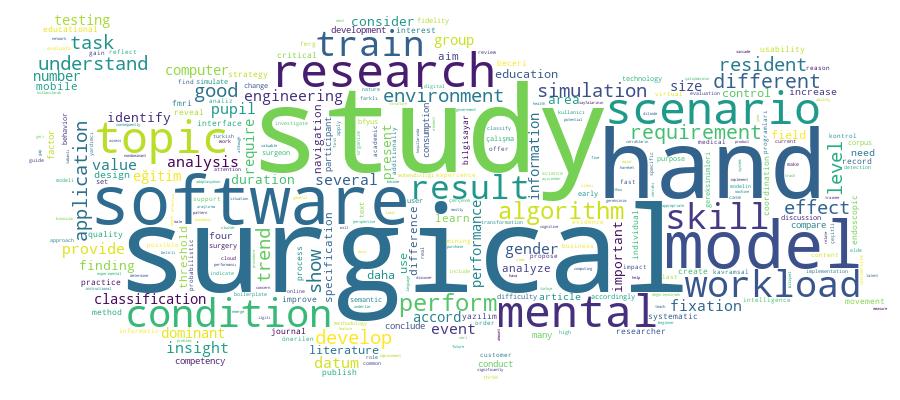
9 results
Scholarly Output Search Results
Now showing 1 - 9 of 9
Article 4b Fmrı Tabanlı Alzheimer Hastalığının Ön Tespiti için 3b-capsnet ve Rnn Modellerinin Kullanılması(2024) İsmail, Ali; Dalveren, Gonca Gökçe MenekşeAlzheimer hastalığının (AH) ilerlemesinin erken tahmini, bilişsel gerilemenin daha etkili bir şekilde yavaşlatılmasına yardımcı olabilmektedir. Dinlenme durumu fonksiyonel manyetik rezonans görüntüleme (dd-fMRG) kullanılarak otomatik AH tanısı için evrişimli sinir ağlarına (ESA) dayalı farklı yöntemlerin uygulanmasına yönelik çeşitli çalışmalar yapılmıştır. Bu çalışmalarda tanıtılan yöntemler iki büyük zorlukla karşılaşmaktadır. Birincisi, fMRG veri kümeleri küçük boyutta olduğundan aşırı uyum gözlemlenebilmektedir. İkincisi, fMRG oturumlarının 4 boyutlu (4B) bilgilerinin verimli bir şekilde modellenmesi gerekmektedir. Çalışmalardan bazıları, derin öğrenme yöntemlerini, 4B bilgiyi modellemek için fMRG verilerinden oluşturulan fonksiyonel bağlantı matrislerine veya ayrı 2B dilimler veya 3B hacimler olarak fMRG verilerine uygulamıştır. Ancak bu durumun her iki yöntem türünde de bilgi kaybına neden olduğu gözlemlenmiştir. Bu çalışmada, AD tanısı için fMRG verilerinin uzay-zamansal (4B) bilgilerini modellemek amacıyla Kapsül ağı (CapsNet) ve tekrarlayan sinir ağını (RNN) temel alan yeni bir model önerilmektedir. Önerilen modelin etkinliğini değerlendirmek için deneyler yapılmıştır. Sonuçlara göre, önerilen modelin AH’na karşı normal kontrol (NK) ve geç hafif bilişsel bozukluk (GHBB) ile erken hafif bilişsel bozukluk (EHBB) sınıflandırma görevlerinde sırasıyla %94.5 ve %61.8 doğruluk elde edebildiği görülmüştür.Article Usability Assessment of Scholarly Publishers' Online Journal Interfaces(Springernature, 2023) Peker, Serhat; Dalveren, Gonca Gokce MenekseA well-designed and user-friendly online journal interface not only enhances researchers' satisfaction but also bolsters the reputation of academic publishers within the scholarly community. Consequently, the present study undertakes an examination of the usability aspects pertaining to online journal interfaces offered by five prominent academic publishers: Wiley, Sage, Elsevier, Springer, and Taylor & Francis. This investigation encompasses a combination of user testing and post-questionnaire methodologies, aiming to accrue both quantitative and qualitative data concerning user task execution and satisfaction. The research findings spotlight the varying degrees of usability across major academic publishers and emphasize the critical role of design in enhancing researchers' experiences. By identifying both usability strengths and weaknesses, along with offering actionable areas for improvement, this study adds a valuable perspective to the enhancement of academic journal interfaces.Article Citation - WoS: 21Citation - Scopus: 26Detecting Latent Topics and Trends in Software Engineering Research Since 1980 Using Probabilistic Topic Modeling(Ieee-inst Electrical Electronics Engineers inc, 2022) Gurcan, Fatih; Dalveren, Gonca Gokce Menekse; Cagiltay, Nergiz Ercil; Soylu, AhmetThe landscape of software engineering research has changed significantly from one year to the next in line with industrial needs and trends. Therefore, today's research literature on software engineering has a rich and multidisciplinary content that includes a large number of studies; however, not many of them demonstrate a holistic view of the field. From this perspective, this study aimed to reveal a holistic view that reflects topics, trends, and trajectories in software engineering research by analyzing the majority of domain-specific articles published over the last 40 years. This study first presents an objective and systematic method for corpus creation through major publication sources in the field. A corpus was then created using this method, which includes 44 domain-specific conferences and journals and 57,174 articles published between 1980 and 2019. Next, this corpus was analyzed using an automated text-mining methodology based on a probabilistic topic-modeling approach. As a result of this analysis, 24 main topics were found. In addition, topical trends in the field were revealed. Finally, three main developmental stages of the field were identified as: the programming age, the software development age, and the software optimization age.Article Citation - WoS: 10Citation - Scopus: 20Covid-19 and E-Learning: an Exploratory Analysis of Research Topics and Interests in E-Learning During the Pandemic(Ieee-inst Electrical Electronics Engineers inc, 2022) Gurcan, Fatih; Dalveren, Gonca Gokce Menekse; Derawi, MohammadE-learning has gained further importance and the amount of e-learning research and applications has increased exponentially during the COVID-19 pandemic. Therefore, it is critical to examine trends and interests in e-learning research and applications during the pandemic period. This paper aims to identify trends and research interests in e-learning articles related to COVID-19 pandemic. Consistent with this aim, a semantic content analysis was conducted on 3562 peer-reviewed journal articles published since the beginning of the COVID-19 pandemic, using the N-gram model and Latent Dirichlet Allocation (LDA) topic modeling approach. Findings of the study revealed the high-frequency bigrams such as "online learn ", "online education ", "online teach " and "distance learn ", as well as trigrams such as "higher education institution ", "emergency remote teach ", "education online learn " and "online teach learn ". Moreover, the LDA topic modeling analysis revealed 42 topics. The topics of "Learning Needs ", "Higher Education " and "Social Impact " respectively were the most focused topics. These topics also revealed concepts, dimensions, methods, tools, technologies, applications, measurement and evaluation models, which are the focal points of e-learning field during the pandemic. The findings of the study are expected to provide insights to researchers and future studies.Article Citation - WoS: 20Citation - Scopus: 29Career in Cloud Computing: Exploratory Analysis of In-Demand Competency Areas and Skill Sets(Mdpi, 2022) Ozyurt, Ozcan; Gurcan, Fatih; Dalveren, Gonca Gokce Menekse; Derawi, MohammadThis study aims to investigate up-to-date career opportunities and in-demand competence areas and skill sets for cloud computing (CC), which plays a crucial role in the rapidly developing teleworking environments with the COVID-19 pandemic. In this paper, we conducted a semantic content analysis on 10,161 CC job postings using semi-automated text-mining and probabilistic topic-modeling procedures to discover the competency areas and skill sets as semantic topics. Our findings revealed 22 competency areas and 46 skills, which reflect the interdisciplinary background of CC jobs. The top five competency areas for CC were identified as "Engineering", "Development", "Security", "Architecture", and "Management". Besides, the top three skills emerged as "Communication Skills", "DevOps Tools", and "Software Development". Considering the findings, a competency-skill map was created that illustrates the correlations between CC competency areas and their related skills. Although there are many studies on CC, the competency areas and skill sets required to deal with cloud computing have not yet been empirically studied. Our findings can contribute to CC candidates and professionals, IT organizations, and academic institutions in understanding, evaluating, and developing the competencies and skills needed in the CC industry.Article Group Discussion in a Blended Environment in Engineering Education(Uikten - Assoc information Communication Technology Education & Science, 2021) Mishra, Deepti; Dalveren, Gonca Gokce Menekse; Volden, Frode S.; Allen, Carly GraceGroup work is a necessary element of engineering education and group members need information about one another, group process, shared attention and mutual understanding during group discussions. There are several important elements for establishing and maintaining a group discussion such as participant's role, seating arrangement, verbal and non-verbal cues, eye gaze, gestures etc. The present study investigates these elements for identifying the behavior of group members in a blend of traditional face-to-face discussion along with computer supported cooperative work (CSCW) setting. The results of this study have shown that, speaking duration is the key factor for identifying the leadership in a group and participants mostly used eye gazes for turn taking. Although this study is a mix of face-to-face and CSCW discussion setting, participants mostly behave like face-to-face group discussion. However, unlike the previous studies involving face-to-face discussion, the relation between seating arrangement and amount of attention is not apparent from the data during this study.Article Üniversite Web Sitesi Ana Sayfalarının Kullanılabilirliğinindeğerlendirilmesi: Göz İzleme Yaklaşımı(2021) Dalveren, Gonca Gökçe Menekşe; Peker, SerhatZiyaretçilerin ilk karşılandığı yer olan üniversite web sitesi ana sayfalarının iyi bir tasarıma sahip olması ve ziyaretçileri tarafındankullanışlı bulunması, aday öğrenci, araştırmacı, yerli ve yabancı akademik kuruluşlar gibi dış paydaşların üniversiteye olan ilgileriniartırmak ve sürekli kılmak adına oldukça kilit rol oynamaktadır. Bu motivasyondan yola çıkarak bu çalışma, seçilen beş Türküniversitesinin ana sayfa tasarımlarını kullanılabilirlik yönünden değerlendirmeyi amaçlamaktadır. Bu amaç doğrultusunda göz izlemeyaklaşımı kullanılmış, bir insan-bilgisayar etkileşimi laboratuvarındaki göz izleme cihazı ve diğer donanımlar vasıtasıyla katılımcılarınilgili web sayfalarıyla olan etkileşimlerini incelenmiştir. Deneklerin görüntüleme davranış verilerinin belirli göz hareketlerine gözizleme cihazı yazılımı kullanılarak odaklanma sayısı, ilk ziyarete kadar geçen süre, ve toplam ziyaret süresi olarak sınıflandırılmasındansonra, ANOVA methodu ile istatistiksel detaylı analizi yapılmıştır. Elde edilen bulgular, kullanıcıların ilgili sayfalardaki menübileşenlerini bulma görevlerini yerine getirdikleri halde, bu sayfaların kullanılabilirliğinde istenilen bileşeni kısa sürede farkedememe,farklı alanlarda arama gibi zorluklarla karşılaştıklarını göstermiştir. Bu çalışma, bu alanda çalışan araştırmacılara, üniversite websayfalarının göz izleme yöntemi ile kullanılabilirliklerinin değerlendirmesine ilişkin değerli bir referans olmasının yanı sıra paydaşlarınilgisini çeken ve daha kullanıcı merkezli üniversite web sitesi ana sayfalarının tasarlanması yönünde çıkarımlar sunmaktadır.Article Citation - WoS: 15Citation - Scopus: 27Evolution of Software Testing Strategies and Trends: Semantic Content Analysis of Software Research Corpus of the Last 40 Years(Ieee-inst Electrical Electronics Engineers inc, 2022) Gurcan, Fatih; Dalveren, Gonca Gokce Menekse; Cagiltay, Nergiz Ercil; Roman, Dumitru; Soylu, AhmetFrom the early days of computer systems to the present, software testing has been considered as a crucial process that directly affects the quality and reliability of software-oriented products and services. Accordingly, there is a huge amount of literature regarding the improvement of software testing approaches. However, there are limited reviews that show the whole picture of the software testing studies covering the topics and trends of the field. This study aims to provide a general figure reflecting topics and trends of software testing by analyzing the majority of software testing articles published in the last 40 years. A semi-automated methodology is developed for the analysis of software testing corpus created from core publication sources. The methodology of the study is based on the implementation of probabilistic topic modeling approach to discover hidden semantic patterns in the 14,684 published articles addressing software testing issues between 1980 and 2019. The results revealed 42 topics of the field, highlighting five software development ages, namely specification, detection, generation, evaluation, and prediction. The recent accelerations of the topics also showed a trend toward prediction-based software testing actions. Additionally, a higher trend on the topics concerning "Security Vulnerability", "Open Source" and "Mobile Application" was identified. This study showed that the current trend of software testing is towards prediction-based testing strategies. Therefore, the findings of this study may provide valuable insights for the industry and software communities to be prepared for the possible changes in the software testing procedures using prediction-based approaches.Article Citation - WoS: 16Citation - Scopus: 20The Effects of the Content Elements of Online Banner Ads on Visual Attention: Evidence From An-Eye Study(Mdpi, 2021) Peker, Serhat; Menekse Dalveren, Gonca Gokce; Inal, Yavuz; Dalveren, Gonca Gokce MenekseThe aim of this paper is to examine the influence of the content elements of online banner ads on customers' visual attention, and to evaluate the impacts of gender, discount rate and brand familiarity on this issue. An eye-tracking study with 34 participants (18 male and 16 female) was conducted, in which the participants were presented with eight types of online banner ads comprising three content elements-namely brand, discount rate and image-while their eye movements were recorded. The results showed that the image was the most attractive area among the three main content elements. Furthermore, the middle areas of the banners were noticed first, and areas located on the left side were mostly noticed earlier than those on the right side. The results also indicated that the discount areas of banners with higher discount rates were more attractive and eye-catching compared to those of banners with lower discount rates. In addition to these, the participants who were familiar with the brand mostly concentrated on the discount area, while those who were unfamiliar with the brand mostly paid attention to the image area. The findings from this study will assist marketers in creating more effective and efficient online banner ads that appeal to customers, ultimately fostering positive attitudes towards the advertisement.
