
Dalveren, Gonca Gökçe Menekşe
Loading...

Profile URL
Name Variants
Gonca Gökçe Menekşe, Dalveren
Dalveren, Gonca Gokce Menekse
G., Dalveren
G.,Dalveren
D.,Gonca Gökçe Menekşe
Gonca Gokce Menekse, Dalveren
Dalveren, Gonca Gökçe Menekşe
G.G.M.Dalveren
D.,Gonca Gokce Menekse
D., Gonca Gokce Menekse
Dalveren,G.G.M.
Dalveren, Gonca Gokce Menekse
G., Dalveren
G.,Dalveren
D.,Gonca Gökçe Menekşe
Gonca Gokce Menekse, Dalveren
Dalveren, Gonca Gökçe Menekşe
G.G.M.Dalveren
D.,Gonca Gokce Menekse
D., Gonca Gokce Menekse
Dalveren,G.G.M.
Job Title
Doktor Öğretim Üyesi
Email Address
gonca.menekse@atilim.edu.tr
Main Affiliation
Information Systems Engineering
Status
Former Staff
Website
ORCID ID
Scopus Author ID
Turkish CoHE Profile ID
Google Scholar ID
WoS Researcher ID
Sustainable Development Goals
 1
1NO POVERTY
0
Research Products
 2
2ZERO HUNGER
0
Research Products
 3
3GOOD HEALTH AND WELL-BEING
0
Research Products
 4
4QUALITY EDUCATION
5
Research Products
 5
5GENDER EQUALITY
0
Research Products
 6
6CLEAN WATER AND SANITATION
0
Research Products
 7
7AFFORDABLE AND CLEAN ENERGY
1
Research Products
 8
8DECENT WORK AND ECONOMIC GROWTH
0
Research Products
 9
9INDUSTRY, INNOVATION AND INFRASTRUCTURE
1
Research Products
 10
10REDUCED INEQUALITIES
0
Research Products
 11
11SUSTAINABLE CITIES AND COMMUNITIES
0
Research Products
 12
12RESPONSIBLE CONSUMPTION AND PRODUCTION
1
Research Products
 13
13CLIMATE ACTION
0
Research Products
 14
14LIFE BELOW WATER
0
Research Products
 15
15LIFE ON LAND
0
Research Products
 16
16PEACE, JUSTICE AND STRONG INSTITUTIONS
3
Research Products
 17
17PARTNERSHIPS FOR THE GOALS
0
Research Products

This researcher does not have a Scopus ID.

This researcher does not have a WoS ID.

Scholarly Output
29
Articles
19
Views / Downloads
133/992
Supervised MSc Theses
3
Supervised PhD Theses
1
WoS Citation Count
217
Scopus Citation Count
303
Patents
0
Projects
0
WoS Citations per Publication
7.48
Scopus Citations per Publication
10.45
Open Access Source
15
Supervised Theses
4
| Journal | Count |
|---|---|
| IEEE Access | 5 |
| Sustainability | 2 |
| 2018 International Symposium on Networks, Computers and Communications, ISNCC 2018 -- 2018 International Symposium on Networks, Computers and Communications, ISNCC 2018 -- 19 June 2018 through 21 June 2018 -- Rome -- 142427 | 2 |
| Journal of Eye Movement Research | 2 |
| Avrupa Bilim ve Teknoloji Dergisi | 1 |
Current Page: 1 / 4
Scopus Quartile Distribution
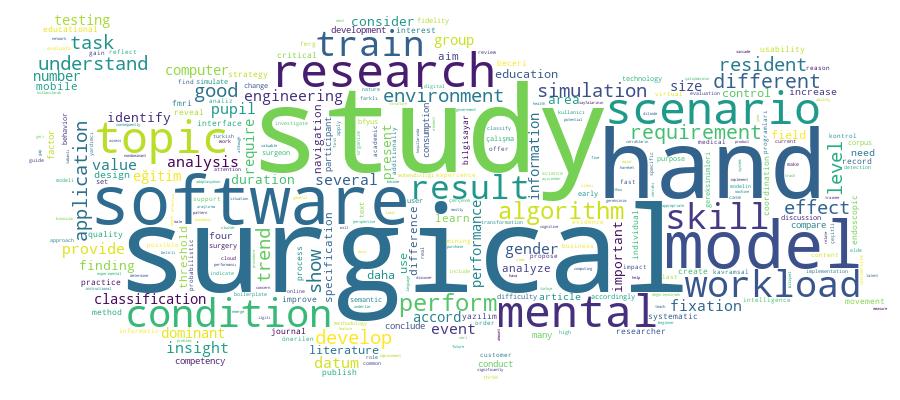
Competency Cloud
13 results
Scholarly Output Search Results
Now showing 1 - 10 of 13
Article Citation - WoS: 8Citation - Scopus: 10Evaluation of Ten Open-Source Eye-Movement Classification Algorithms in Simulated Surgical Scenarios(Ieee-inst Electrical Electronics Engineers inc, 2019) Dalveren, Gonca Gokce Menekse; Cagiltay, Nergiz ErcilDespite providing several insights into visual attention and evidence regarding certain brain states and psychological functions, classifying eye movements is a highly demanding process. Currently, there are several algorithms to classify eye movement events which use different approaches. However, to date, only a limited number of studies have assessed these algorithms under specific conditions, such as those required for surgical training programmes. This study presents an investigation of ten open-source eye-movement classification algorithms using the Eye Tribe eye-tracker. The algorithms were tested on the eye-movement records obtained from 23 surgical residents, who performed computer-based surgical simulation tasks under different hand conditions. The aim was to offer data for the improvement of surgical training programmes. According to the results, due to the different classification methods and default threshold values, the ten algorithms produced different results. Considering the fixation duration, the only common event for all of the investigated algorithms, the binocular-individual threshold (BIT) algorithm resulted in a different clustering compared to the other algorithms. Based on the other set of common events, three clusters were determined by eight algorithms (except BIT and event detection (ED)), distinguishing dispersion-based, velocity-based and modified versions of velocity-based algorithms. Accordingly, it was concluded that dispersion-based and velocity-based algorithms provided different results. Additionally, as it individually specifies the threshold values for the eye-movement data, when there is no consensus about the threshold values to be set, the BIT algorithm can be selected. Especially for such cases like simulation-based surgical skill-training, the use of individualised threshold values in the BIT algorithm can be more beneficial in classifying the raw eye data and thus evaluating the individual progress levels of trainees based on their eye movement behaviours. In conclusion, the threshold values had a critical effect on the algorithm results. Since default values may not always be suitable for the unique features of different data sets, guidelines should be developed to indicate how the threshold values are set for each algorithm.Doctoral Thesis Bağlam-farkında Uyarlamalı Yazılım Sistemlerinde Göz-hareketi Verisi ile Gözlemleme: Endoskopik-nöroşirurji Eğitim Programları için Bir Durum Çalışması(2017) Dalveren, Gonca Gökçe Menekşe; Dalveren, Gonca Gökçe Menekşe; Çağıltay, Nergiz; Dalveren, Gonca Gökçe Menekşe; Çağıltay, Nergiz; Çağıltay, Nergiz; Software Engineering; Information Systems Engineering; Software Engineering; Information Systems EngineeringGünümüzde modern yazılımlar, ortamdaki sürekli değişimlerle uyumlu olmaları gerektiğinden dolayı çok karmaşık hale gelmektedir. Çevreyle ilgili olguları izleyebilmek ve çevredeki değişikliklerin olası sonuçlarını daha iyi anlayabilmek için toplanan verileri analiz etme yeteneği aracılığıyla otonomik davranışları desteklemeleri gerekmektedir. Başka bir deyişle, bağlam-farkında uyarlamalı yazılım sistemi (BFYUS), çalışma ortamındaki bu değişikliklere cevaben kendisini çalışma zamanında ayarlamayı amaçlamaktadır. Bağlam, son kullanıcı, programlama, birincil özellikler (ör. kimlik, yer ve zaman) ve fiziksel koşullar gibi yazılım sistemi tarafından gözlemlenen herhangi bir şey olarak tanımlanır. Bu nedenle BFYUS mimarisi, geniş bir veri yelpazesini izleyerek farklı amaçlar için çeşitli seviyelerde uygulanabilir. Bununla birlikte, şu anda bu sistemlerin uyguladığı adaptasyonun seviyesini ve kapsamını gösteren hiçbir kavramsal çerçeve yoktur. Bu çalışmada, öncelikle BFYUS'ın ana boyutlarını daha iyi anlamak için ilgili literatür incelenmiştir. Daha sonra, belirli bir BFYUS tarafından gerçekleştirilen adaptasyonun seviyesine ve kapsamına daha iyi hitap edebilmek için kavramsal bir çerçeve önerilmektedir. Önerilen çerçeve üç boyuta sahiptir: adaptasyon bağlamının tanımı, uyarlanması planlanan olayın tanımı ve nihayetinde adaptasyonun nasıl gerçekleştirileceğini gösteren plan. Ek olarak, önerilen kavramsal çerçeve aracılığıyla endo-nöroşirurji eğitim programları için bir durum çalışması yürütülmüştür. Sonuçlar, cerrahların göz hareket olaylarını izleyerek, yetenek seviyelerinin yüksek hassasiyetle (%91.3) tahmin edilebileceğini göstermiştir. Buna göre, bu özel durum için, cerrahların göz hareketi olaylarıyla, içeriğin cerrahların davranışlarına göre uyarlanabileceği görülmüştür. Örneğin, beceri düzeylerini düzenli olarak ölçerek ve öğrencilerin göz hareket olaylarıyla her bir senaryonun zorluk seviyelerini değerlendirerek, müfredattaki bilgisayar tabanlı simülasyon senaryolarının düzeni, farklı el koşullarındaki kullanıcı beceri seviyelerine ve davranışlarına göre uyarlanabilir. Bu, her stajyer için beceri ve bilgiye dinamik olarak adapte edilmiş özel bir müfredat oluşturulmasına yardımcı olacaktır. Bu çalışmanın iki ana katkısı vardır. İlk olarak, BFYUS'ın kapsam ve seviyesini değerlendirmek için kullanılabilecek bir kavramsal model önermektedir. Bu bilgi araştırmacılara ve geliştiricilere BFYUS'ı daha iyi değerlendirip karşılaştırmalarına yardımcı olabilir. Bu tez çalışmasının ikinci katkısı önerilen modelin endo-nöroşirürji alanına uygulanmasıdır. Endo-nöroşirurji alanındaki eğitim programları çeşitli problemlere sahiptir. Bu programların asıl problemi, beceri temelli eğitim fırsatlarıdır. Eğitim ve beceri gelişiminin ameliyathanede sağlanması gerektiğinden dolayı, bu eğitim programlarının, hastaların bakış açısından etik hususlar, sınırlı zaman ve hasta güvenliği riski gibi pek çok dezavantajı vardır. Şu anda, cerrahi eğitim programları için pek fazla alternatif eğitim olanağı bulunmamaktadır. Bu programlarda beceri geliştirme çok kritik olduğu için, bireysel beceri temelli eğitim olanakları gerekmektedir. Cerrahi eğitim programlarını desteklemek için bilgisayar tabanlı simülasyonlara örnekler olsa bile, müfredata entegre modeller sınırlıdır. Ek olarak, özellikle endo-nöroşirurji eğitim programlarında cerrahi eğitim için BFYUS'ın herhangi bir öğretim modeli yoktur. Doğası gereği, BFYUS yaklaşımının endo-nöroşirurji eğitim programlarına çeşitli avantajlar sağlayabileceğine inanıyoruz. Bununla birlikte, endo-nöroşirurji eğitim programları için BFYUS oluşturma süreci çok karmaşıktır, bu tez çalışmasında bir BFYUS kavramsal modeli önerilmektedir. Bu tez çalışmasının bulguları, endo-nöroşirurji eğitim programları için daha iyi BFYUS oluşturmak üzere gelecekteki çalışmalara yardımcı olmak ve bu sistemleri mevcut eğitim programlarına daha iyi entegre etmek amacıyla hazırlanmıştır.Conference Object Citation - WoS: 2Citation - Scopus: 2Software Engineering in Medical Informatics: a Systematic Literature Review(Assoc Computing Machinery, 2019) Dalveren, Gonca Gokce Menekse; Mishra, DeeptiThis study presents a systematic literature review to provide overall view of the application of Software Engineering (SE) in Medical Informatics (MI) field. Articles published from 2010 to 2019 from seven selected databases ( Emerald, PubMed, IEEE, ACM, Taylor Francis, SAGE and Wiley) were investigated. The existing literature was analyzed, and the emerging areas of research in the medical informatics field have been identified. According to the findings of this study, medical informatics research has been applied in many fields but there is still potential of further research in different areas. Most of the reviewed studies were conducted on data mining, decision support, deep learning and IoT. Also, it can be said that most of the applications are provided as web-based instead of mobile applications. To conclude, the results of this study provides insights to the researchers about the research directions and the gaps in the literature in the MI and SE fields.Conference Object Citation - Scopus: 8Simulation-Based Environments for Surgical Practice(Institute of Electrical and Electronics Engineers Inc., 2017) Dalveren,G.G.M.; Çağıltay,N.E.; Özçelik,E.; Maraş,H.Modeling and simulation environments provide several insights about the real situations such as endoscopic surgery. Endoscopic surgery requires both hand skills, so, understanding the effect of using dominant or non dominant hand on mental workload is important to better design, develop and implement modeling and simulation environments to support real-life implementations of surgical procedures. This experimental study presents a simulation application of eye-tracking approach to understand mental workload in different hand conditions: dominant hand, non-dominant hand and both hand. The results of the study show that, performing simulated surgical tasks by both hands compared to dominant hand, increases mental workload which is evident by higher pupil size. Accordingly, to manage the mental-load problems of surgeons while performing complex tasks that require both hand usage simulation-based environments can be used. Consequently, collection of detailed information such as eye-data, can give several insights about the behaviors of the surgeons. Also, their required skills can be improved by development of simulation and training environments. © 2017 IEEE.Conference Object Citation - WoS: 6Simulation-Based Environments for Surgical Practice(Ieee, 2017) Dalveren, Gonca Gokce Menekse; Cagiltay, Nergiz Ercil; Ozcelik, Erol; Maras, HakanModeling and simulation environments provide several insights about the real situations such as endoscopic surgery. Endoscopic surgery requires both hand skills, so, understanding the effect of using dominant or non dominant hand on mental workload is important to better design, develop and implement modeling and simulation environments to support real-life implementations of surgical procedures. This experimental study presents a simulation application of eye-tracking approach to understand mental workload in different hand conditions: dominant hand, non-dominant hand and both hand. The results of the study show that, performing simulated surgical tasks by both hands compared to dominant hand, increases mental workload which is evident by higher pupil size. Accordingly, to manage the mental-load problems of surgeons while performing complex tasks that require both hand usage simulation-based environments can be used. Consequently, collection of detailed information such as eye-data, can give several insights about the behaviors of the surgeons. Also, their required skills can be improved by development of simulation and training environments.Article Citation - WoS: 9Citation - Scopus: 7The Underlying Reasons of the Navigation Control Effect on Performance in a Virtual Reality Endoscopic Surgery Training Simulator(Taylor & Francis inc, 2019) Cagiltay, Nergiz Ercil; Ozcelik, Erol; Berker, Mustafa; Dalveren, Gonca Gokce Menekse; Menekse Dalveren, Gonca GokceNavigation control skills of surgeons become very critical for surgical procedures. Strategies improving these skills are important for developing higher-quality surgical training programs. In this study, the underlying reasons of the navigation control effect on performance in a virtual reality-based navigation environment are evaluated. The participants' performance is measured in conditions: navigation control display and paper-map display. Performance measures were collected from 45 beginners and experienced residents. The results suggest that navigation display significantly improved performance of the participants. Also, navigation was more beneficial for beginners than experienced participants. The underlying reason of the better performance in the navigation condition was due to lower number of looks to the map, which causes attention shifts between information sources. Accordingly, specific training scenarios and user interfaces can be developed to improve the navigation skills of the beginners considering some strategies to lower their number of references to the information sources.Conference Object Insights From Eye-Movement Events in an Educational Computer-Based Environment (ece) for Endo-Neurosurgery Training Considering Gender, Hand Condition and Scenario Effects(Ieee, 2018) Dalveren, Gonca Gokce Menekse; Cagiltay, Nergiz ErcilSurgical residents of endo-neurosurgery are required to develop several surgical skills such as eye-hand coordination, ability to use both hand coordination, and depth perception. During the process of gaining these skills, there are several effective factors on the individual performance such as gender, nature of the scenarios and hand condition that can be important to better organize appropriate training programs. Earlier studies show that, surgeons' mental workload show differences according to the difficulty levels of the tasks and hand conditions during the operations. Also there are some evidences showing that male surgeons performing the surgical tasks with a better performance compared to the females. However, in the literature there are not many studies conducted to better understand these effects by analyzing the eye-movements on simulation-based surgical training environments. This study aims to understand the mental workload and gender differences from fixation number and fixation duration eye-movement events. In this study four different computer-based-simulation scenarios which are developed for an Educational Computer-based-simulation Environment (ECE) for endo-neurosurgery training have been performed by 23 (3 female) surgical residents. Participants have performed each scenario in different hand conditions (dominant, non-dominant and both hand). While surgical residents were performing the scenarios their eye-movements were recorded by an eye-tracker. The Binocular Individual Threshold (BIT) classification algorithm was used for eye-movement event classification. According to the results of fixation number and fixation duration events in these four scenarios, hand conditions, scenario fidelity levels and gender are found to be important factors that make changes on mental workload of surgical residents. It can be concluded that, in non-dominant and both hand conditions mental workload increases according to the dominant hand condition. Additionally results show that scenario fidelity levels and gender have an effect on the eye-movements of surgical residents.Conference Object Insights From Eye-Movement Events in an Educational Computer-Based Environment (ece) for Endo-Neurosurgery Training Considering Gender, Hand Condition and Scenario Effects(Institute of Electrical and Electronics Engineers Inc., 2018) Dalveren,G.G.M.; Cagiltay,N.E.Surgical residents of endo-neurosurgery are required to develop several surgical skills such as eye-hand coordination, ability to use both hand coordination, and depth perception. During the process of gaining these skills, there are several effective factors on the individual performance such as gender, nature of the scenarios and hand condition that can be important to better organize appropriate training programs. Earlier studies show that, surgeons' mental workload show differences according to the difficulty levels of the tasks and hand conditions during the operations. Also there are some evidences showing that male surgeons performing the surgical tasks with a better performance compared to the females. However, in the literature there are not many studies conducted to better understand these effects by analyzing the eye-movements on simulation-based surgical training environments. This study aims to understand the mental workload and gender differences from fixation number and fixation duration eye-movement events. In this study four different computer-based-simulation scenarios which are developed for an Educational Computer-based-simulation Environment (ECE) for endo-neurosurgery training have been performed by 23 (3 female) surgical residents. Participants have performed each scenario in different hand conditions (dominant, non-dominant and both hand). While surgical residents were performing the scenarios their eye-movements were recorded by an eye-tracker. The Binocular Individual Threshold (BIT) classification algorithm was used for eye-movement event classification. According to the results of fixation number and fixation duration events in these four scenarios, hand conditions, scenario fidelity levels and gender are found to be important factors that make changes on mental workload of surgical residents. It can be concluded that, in non-dominant and both hand conditions mental workload increases according to the dominant hand condition. Additionally results show that scenario fidelity levels and gender have an effect on the eye-movements of surgical residents. © 2018 IEEE.Article Citation - WoS: 6Citation - Scopus: 7Are Left- and Right-Eye Pupil Sizes Always Equal?(int Group Eye Movement Research, 2019) Cagiltay, Nergiz Ercil; Dalveren, Gonca Gokce MenekseEye movements provide very critical information about the cognitive load and behaviors of human beings. Earlier studies report that under normal conditions, the left- and right-eye pupil sizes are equal. For this reason, most studies undertaking eye-movement analysis are conducted by only considering the pupil size of a single eye or taking the average size of both eye pupils. This study attempts to offer a better understanding concerning whether there are any differences between the left- and right-eye pupil sizes of the right-handed surgical residents while performing surgical tasks in a computer-based simulation environment under different conditions (left-hand, right-hand and both hands). According to the results, in many cases, the right-eye pupil sizes of the participants were larger than their left-eye pupil sizes while performing the tasks under right-hand and both hands conditions. However, no significant difference was found in relation to the tasks performed under left-hand condition in all scenarios. These results are very critical to shed further light on the cognitive load of the surgical residents by analyzing their left-eye and right-eye pupil sizes. Further research is required to investigate the effect of the difficulty level of each scenario, its appropriateness with the skill level of the participants, and handedness on the differences between the leftand right-eye pupil sizes.Conference Object Citation - Scopus: 2Insights From Eye-Movement Events in an Educational Computer-Based Environment (ece) for Endo-Neurosurgery Training Considering Gender, Hand Condition and Scenario Effects(Institute of Electrical and Electronics Engineers Inc., 2018) Dalveren,G.G.M.; Cagiltay,N.E.Surgical residents of endo-neurosurgery are required to develop several surgical skills such as eye-hand coordination, ability to use both hand coordination, and depth perception. During the process of gaining these skills, there are several effective factors on the individual performance such as gender, nature of the scenarios and hand condition that can be important to better organize appropriate training programs. Earlier studies show that, surgeons' mental workload show differences according to the difficulty levels of the tasks and hand conditions during the operations. Also there are some evidences showing that male surgeons performing the surgical tasks with a better performance compared to the females. However, in the literature there are not many studies conducted to better understand these effects by analyzing the eye-movements on simulation-based surgical training environments. This study aims to understand the mental workload and gender differences from fixation number and fixation duration eye-movement events. In this study four different computer-based-simulation scenarios which are developed for an Educational Computer-based-simulation Environment (ECE) for endo-neurosurgery training have been performed by 23 (3 female) surgical residents. Participants have performed each scenario in different hand conditions (dominant, non-dominant and both hand). While surgical residents were performing the scenarios their eye-movements were recorded by an eye-tracker. The Binocular Individual Threshold (BIT) classification algorithm was used for eye-movement event classification. According to the results of fixation number and fixation duration events in these four scenarios, hand conditions, scenario fidelity levels and gender are found to be important factors that make changes on mental workload of surgical residents. It can be concluded that, in non-dominant and both hand conditions mental workload increases according to the dominant hand condition. Additionally results show that scenario fidelity levels and gender have an effect on the eye-movements of surgical residents. © 2018 IEEE.
