
Kılıç, Özkan
Loading...

Profile URL
Name Variants
K.,Ozkan
Kilic,O.
K.,Özkan
Özkan, Kılıç
Kilic, Ozkan
Kılıç,Ö.
Ö.,Kılıç
O.,Kilic
O., Kilic
Kılıç, Özkan
Ozkan, Kilic
K., Ozkan
Kilic,O.
K.,Özkan
Özkan, Kılıç
Kilic, Ozkan
Kılıç,Ö.
Ö.,Kılıç
O.,Kilic
O., Kilic
Kılıç, Özkan
Ozkan, Kilic
K., Ozkan
Job Title
Öğretim Görevlisi
Email Address
Main Affiliation
Computer Engineering
Status
Former Staff
Website
ORCID ID
Scopus Author ID
Turkish CoHE Profile ID
Google Scholar ID
WoS Researcher ID
Sustainable Development Goals
SDG data is not available

This researcher does not have a Scopus ID.

This researcher does not have a WoS ID.

Scholarly Output
5
Articles
3
Views / Downloads
5/4
Supervised MSc Theses
0
Supervised PhD Theses
1
WoS Citation Count
38
Scopus Citation Count
60
Patents
0
Projects
0
WoS Citations per Publication
7.60
Scopus Citations per Publication
12.00
Open Access Source
1
Supervised Theses
1
| Journal | Count |
|---|---|
| European Journal of Engineering Education | 1 |
| Journal of Systems and Software | 1 |
| Proceedings of the IADIS International Conference Information Systems 2012, IS 2012 -- IADIS International Conference on Information Systems 2012, IS 2012 -- 10 March 2012 through 12 March 2012 -- Berlin -- 114445 | 1 |
| TEM Journal | 1 |
Current Page: 1 / 1
Scopus Quartile Distribution
Competency Cloud
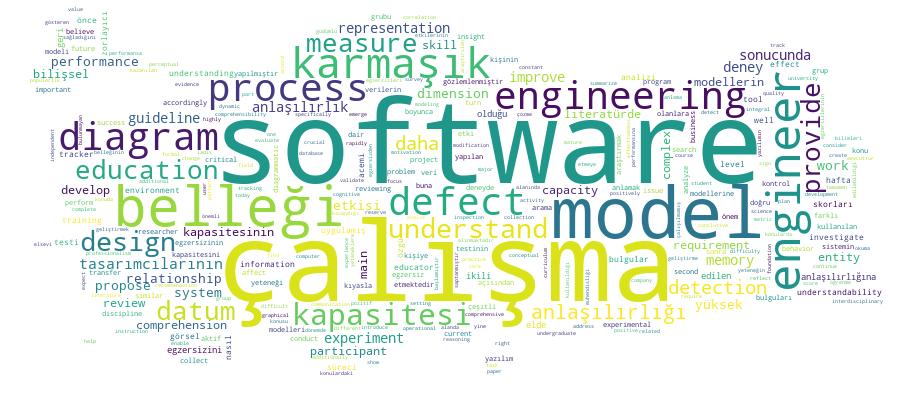
5 results
Scholarly Output Search Results
Now showing 1 - 5 of 5
Conference Object Citation - Scopus: 1How Engineers Understand Entity Relationship Diagrams (erd): Insights From Eye Tracker Data(IADIS, 2012) Tokdemir,G.; Cagiltay,N.E.; Kilic,O.Entity Relationship Diagram (ERD) is one of the main tools used in software design process. This representation enables software engineers to understand system data requirements at a more comprehensive level. Designing and understanding of ERD and hence system data requirements is a critical issue for the success of software projects. In this study we are introducing an experiment environment which would be used to understand the behaviors of software engineers during designing and understanding these representations. This experimental setting is planned to be used to measure the software engineers' performance during ERD defect detection process. We believe such an environment can be used to develop some reviewing guidelines for the software engineers to improve their reviewing process in ERD which in turn will provide some tools for the educators to improve design and review skills of future software engineers. The results of this study would also provide recommendations for the researchers in similar experiments. © 2012 IADIS.Article Citation - WoS: 15Citation - Scopus: 21Software Engineering Education: Some Important Dimensions(Taylor & Francis Ltd, 2007) Mishra, Alok; Cagiltay, Nergiz Ercil; Kilic, Ozkan; Ercil Cagiltay, NergizSoftware engineering education has been emerging as an independent and mature discipline. Accordingly, various studies are being done to provide guidelines for curriculum design. The main focus of these guidelines is around core and foundation courses. This paper summarizes the current problems of software engineering education programs. It also proposes some important dimensions as integral parts of software engineering education: interdisciplinary skills, practice experience, communication, skills on continuing education and professionalism. In the current guidelines and studies these dimensions are not addressed specifically. Although there could be other dimensions to be considered in software engineering education, we believe that the proposed ones are very crucial as software engineering is evolving more rapidly than any other engineering discipline. This study also provides a survey of some major universities' undergraduate software engineering programs to evaluate these dimensions.Article Citation - WoS: 1Citation - Scopus: 1An Experimental Study Towards Investigating the Effect of Working Memory Capacity on Complex Diagram Understandability(Assoc information Communication Technology Education & Science, 2020) Sozen, Nergiz; Say, Bilge; Kilic, OzkanThis study investigates whether working memory (WM) capacity affects the understandability of complex diagrams and if so, whether WM training has a positive effect on their comprehensibility. Two experiments were conducted with computer science students. In the first experiment, we collected eye-tracking data while participants performed comprehension tasks on an activity diagram. In the second experiment, the participants completed WM training, before and after their comprehension scores were measured. The results showed that working memory capacity can positively affect the understandability of complex diagrams, but it provided no conclusive evidence for the effectiveness of working memory training.Doctoral Thesis Çalışma belleği kapasitesinin karmaşık yazılım modellerini anlamaya etkisinin araştırılması(2021) Sözen, Nergiz; Say, Bilge; Kılıç, ÖzkanÇalışma belleği kapasitesi, problem çözme, okuma, anlama, öğrenme ve dil yeteneği geliştirme gibi bilişsel olarak zorlayıcı konulardaki performansa olan etkisi açısından literatürde önemli bir konu olarak ele alınmaktadır. Çalışma belleği kapasitesini geliştirmek için kullanılan çalışma belleği egzersizlerinin bu bilişsel olarak zorlayıcı konularda kişinin performansına pozitif etki sağladığını gösteren pek çok çalışma mevcuttur. Çalışma belleği egzersizleri ile kazanılan yeteneğin, bu egzersizden tamamen farklı ama yine bilişsel olarak zorlayıcı ve çalışma belleğinin aktif olarak kullanıldığı yeteneklere transfer edilebildiği gözlemlenmiştir. Pek çok konuda ve alanda araştırılan çalışma belleği kapasitesinin etkilerinin, yazılım mühendisliği alanında çok kullanılan karmaşık modellerin anlaşılırlığına etkisi daha önce hiç çalışılmamış, literatürde bulunmayan bir konu olduğu saptanmıştır. Model güdümlü yazılımın popülerlik kazandığı son dönemde, bu karmaşık modellerin anlaşılırlığı konusu da önem arz etmeye başlamıştır. Karmaşık modellerin anlaşılırlığı da yüksek bilişsel beceri gerektiren bir konudur. Daha sonra uygulamaya geçirilecek ve kodlanacak bir sistemin mimarisini ve işlevini anlamak, sistemin nasıl çalıştığını, verilerin nasıl tutulduğunu, sistemle kimlerin nasıl etkileşim içerisinde olduğunu ve buna dair diğer konuları görsel olarak ifade eden modelleri tam ve doğru olarak anlamak önem arz etmektedir. Bunun yanı sıra tüm iştirakçilerin ve özellikle acemi model tasarımcılarının karmaşık modelleri anlaması, yazılım sürecinin başarılı bir şekilde işlemesi için çok önemlidir. Karmaşık modellerin anlaşılırlığının çeşitli etkenlere bağlı olduğu tartışılmaktadır. Literatürde bu etkenler; modele özgü ve kişiye özgü faktörler olmak üzere iki grup altında toplanmıştır. Bu tezde, kişiye özgü faktörlerden olan çalışma belleği kapasitesinin iş süreci yönetim modellerine ve veri modellerine olan etkisi araştırılmaktadır. Acemi model tasarımcılarının çalışma belleği kapasitesi ile karmaşık model anlaşılırlığı arasındaki ilişkiyi araştırmak için ve buna ek olarak uygun bir çalışma belleği egzersizinin karmaşık model anlaşılırlığına etki edip etmeyeceğini araştırmak için farklı bilgisayar bilimi lisans öğrencileri ile iki deney yapılmıştır. İlk yapılan deneydeki model anlaşılırlığı ve çalışma belleği kapasitesi verilerine ek olarak, bulguları pekiştirmek ve daha iyi yorumlayabilmek için, göz takibi metodu kullanılarak acemi model tasarımcılarının iş süreci modeli anlaşılırlık testi sırasındaki göz hareketleri kaydedilmiş ve çalışma belleği kapasitesi ile model anlaşılırlığı hakkında çeşitli metrikler hesaplanmıştır. İlk deney sonuçlarının detaylı analizi sonucunda elde edilen bulgular gösteriyor ki karmaşık iş süreci modellerinin anlaşılırlığı kişinin çalışma belleği kapasitesi ile ilişkilidir. Göz verileri incelenerek hesaplanan metriklerin analizi sonucunda elde edilen bulgular, çalışma belleği kapasitesi yüksek olan model tasarımcılarının model anlaşılırlık testinde problemleri daha etkili şekilde çözdüklerine işaret etmektedir. Benzer şekilde, çalışma belleği kapasitesi yüksek olan model tasarımcılarının sorulara doğru yanıt vermek için daha motive ve ısrarcı olduğu ortaya çıkmıştır. Genel olarak bakıldığında yüksek çalışma belleği kapasitesi olan model tasarımcılarının model anlaşılırlık test skorlarının ve performanslarının çalışma belleği kapasitesi düşük olanlara kıyasla daha yüksek olduğu gözlemlenmiştir. Çalışma belleği kapasitesini arttırmak için tasarlanmış 'ikili n-geri (İng. dual nback)' egzersizinin sonucunda gelişen performansın karmaşık model anlaşılırlığına aktarılıp aktarılamadığını tespit etmek amacıyla ikinci deney yapılmıştır. Bu deneyde aktif kontrol grubu, literatürde bir plasebo egzersiz olarak varsayılan 'görsel arama (İng. visual search)' egzersizini uygularken, deney grubu ise ikili n-geri çalışma belleği egzersizini 7 hafta boyunca uygulamıştır. 7 hafta, 20 oturum süren egzersizlerden hem önce hem de sonra deney katılımcılarının çalışma belleği kapasitesi ve model anlaşılırlık testindeki performansları ölçülmüştür. Deneyde elde edilen verilerin analizi sonucunda elde edilen bulgular göstermiştir ki, ikili n-geri egzersizini 7 hafta boyunca uygulamış model tasarımcılarının karmaşık veri modeli anlaşılırlığı testinin ortalama skorları, görsel arama testi uygulamış olanlara göre daha yüksektir. Grup içi karşılaştırma sonucunda ise, ikili n-geri egzersizini uygulamış olan deney grubunun model anlaşılırlık testi skorları, deneyden önce yapılan teste kıyasla yükselmiş, kontrol grubunda ise egzersiz sonucunda hiçbir artış gözlemlenmemiştir. Her ne kadar karmaşık model anlaşılırlığı skorları üzerinde çalışma belleği kapasitesinin etkisi görülse de çalışma belleği kapasitesi testinin model anlaşılırlık yeteneğine transfer edilebileceğine ve bu yeteneği istatistiksel olarak anlamlı bir şekilde arttıracağına dair kesin bir kanıt bulunamamıştır. Bu orijinal tez çalışması, çalışma belleği kapasitesinin karmaşık model anlaşılırlığına olan etkisi ile ilgili ilk bulguları sunması açısından literatüre katkı sağlamaktadır.Article Citation - WoS: 22Citation - Scopus: 37Performing and Analyzing Non-Formal Inspections of Entity Relationship Diagram (erd)(Elsevier Science inc, 2013) Cagiltay, Nergiz Ercil; Tokdemir, Gul; Kilic, Ozkan; Topalli, DamlaDesigning and understanding of diagrammatic representations is a critical issue for the success of software projects because diagrams in this field provide a collection of related information with various perceptual signs and they help software engineers to understand operational systems at different levels of information system development process. Entity relationship diagram (ERD) is one of the main diagrammatic representations of a conceptual data model that reflects users' data requirements in a database system. In today's business environment, the business model is in a constant change which creates highly dynamic data requirements which also requires additional processes like modifications of ERD. However, in the literature there are not many measures to better understand the behaviors of software engineers during designing and understanding these representations. Hence, the main motivation of this study is to develop measures to better understand performance of software engineers during their understanding process of ERD. Accordingly, this study proposes two measures for ERD defect detection process. The defect detection difficulty level (DF) measures how difficult a defect to be detected according to the other defects for a group of software engineers. Defect detection performance (PP) measure is also proposed to understand the performance of a software engineer during the defect detection process. The results of this study are validated through the eye tracker data collected during the defect detection process of participants. Additionally, a relationship between the defect detection performance (PP) of a software engineer and his/her search patterns within an ERD is analyzed. Second experiment with five participants is also conducted to show the correlation between the proposed metric results and eye tracker data. The results of experiment-2 also found to be similar for DF and PP values. The results of this study are expected to provide insights to the researchers, software companies, and to the educators to improve ERD reasoning process. Through these measures several design guidelines can be developed for better graphical representations and modeling of the information which would improve quality of these diagrams. Moreover, some reviewing instructions can be developed for the software engineers to improve their reviewing process in ERD. These guidelines in turn will provide some tools for the educators to improve design and review skills of future software engineers. (c) 2013 Elsevier Inc. All rights reserved.
