
Şengül, Gökhan
Loading...
Profile URL
Name Variants
Gokhan, Sengul
Sengul, Gokhan
Sengul,G.
Gökhan, Şengül
Engul G.
Şengül G.
Şengül, Gökhan
G.,Sengul
Sengul, G.
S.,Gokhan
Sengul G.
Ş., Gökhan
G.,Şengül
G., Sengul
Şengül,G.
G., Şengül
S., Gokhan
Ş.,Gökhan
Sengul, Gokhan
Sengul,G.
Gökhan, Şengül
Engul G.
Şengül G.
Şengül, Gökhan
G.,Sengul
Sengul, G.
S.,Gokhan
Sengul G.
Ş., Gökhan
G.,Şengül
G., Sengul
Şengül,G.
G., Şengül
S., Gokhan
Ş.,Gökhan
Job Title
Profesor Doktor
Email Address
gokhan.sengul@atilim.edu.tr
Main Affiliation
Computer Engineering
Status
Website
ORCID ID
Scopus Author ID
Turkish CoHE Profile ID
Google Scholar ID
WoS Researcher ID
Sustainable Development Goals
 1
1NO POVERTY
0
Research Products
 2
2ZERO HUNGER
0
Research Products
 3
3GOOD HEALTH AND WELL-BEING
4
Research Products
 4
4QUALITY EDUCATION
1
Research Products
 5
5GENDER EQUALITY
1
Research Products
 6
6CLEAN WATER AND SANITATION
0
Research Products
 7
7AFFORDABLE AND CLEAN ENERGY
1
Research Products
 8
8DECENT WORK AND ECONOMIC GROWTH
0
Research Products
 9
9INDUSTRY, INNOVATION AND INFRASTRUCTURE
2
Research Products
 10
10REDUCED INEQUALITIES
0
Research Products
 11
11SUSTAINABLE CITIES AND COMMUNITIES
1
Research Products
 12
12RESPONSIBLE CONSUMPTION AND PRODUCTION
0
Research Products
 13
13CLIMATE ACTION
0
Research Products
 14
14LIFE BELOW WATER
1
Research Products
 15
15LIFE ON LAND
0
Research Products
 16
16PEACE, JUSTICE AND STRONG INSTITUTIONS
1
Research Products
 17
17PARTNERSHIPS FOR THE GOALS
0
Research Products

Documents
40
Citations
343
h-index
12

Documents
17
Citations
105

Scholarly Output
83
Articles
49
Views / Downloads
104/171
Supervised MSc Theses
9
Supervised PhD Theses
3
WoS Citation Count
216
Scopus Citation Count
331
Patents
0
Projects
0
WoS Citations per Publication
2.60
Scopus Citations per Publication
3.99
Open Access Source
18
Supervised Theses
12
| Journal | Count |
|---|---|
| Biomedical Research (India) | 5 |
| UBMK 2018 - 3rd International Conference on Computer Science and Engineering -- 3rd International Conference on Computer Science and Engineering, UBMK 2018 -- 20 September 2018 through 23 September 2018 -- Sarajevo -- 143560 | 4 |
| 3rd International Conference on Computer Science and Engineering (UBMK) -- SEP 20-23, 2018 -- Sarajevo, BOSNIA & HERCEG | 2 |
| 2016 24th Signal Processing and Communication Application Conference, SIU 2016 - Proceedings -- 24th Signal Processing and Communication Application Conference, SIU 2016 -- 16 May 2016 through 19 May 2016 -- Zonguldak -- 122605 | 2 |
| International Journal of Engineering Education | 2 |
Current Page: 1 / 9
Scopus Quartile Distribution
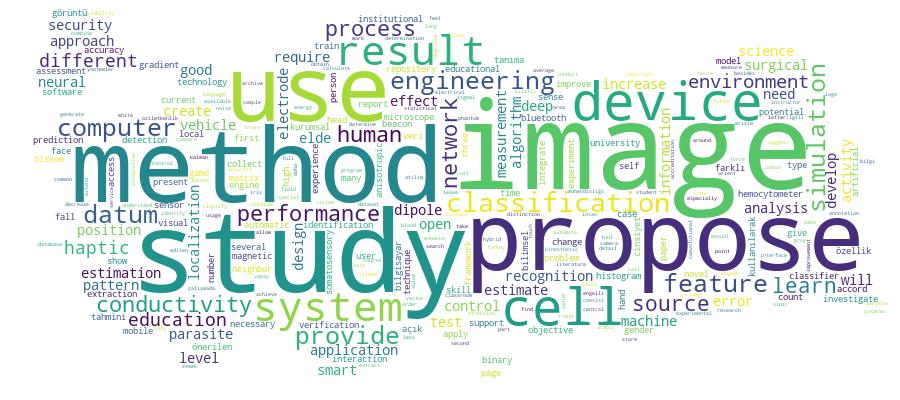
Competency Cloud
22 results
Scholarly Output Search Results
Now showing 1 - 10 of 22
Conference Object Citation - WoS: 1An Undergraduate Curriculum for Deep Learning(Ieee, 2018) Tirkes, Guzin; Ekin, Cansu Cigdem; Sengul, Gokhan; Bostan, Atila; Karakaya, MuratDeep Learning (DL) is an interesting and rapidly developing field of research which has been currently utilized as a part of industry and in many disciplines to address a wide range of problems, from image classification, computer vision, video games, bioinformatics, and handwriting recognition to machine translation. The starting point of this study is the recognition of a big gap between the sector need of specialists in DL technology and the lack of sufficient education provided by the universities. Higher education institutions are the best environment to provide this expertise to the students. However, currently most universities do not provide specifically designed DL courses to their students. Thus, the main objective of this study is to design a novel curriculum including two courses to facilitate teaching and learning of DL topic. The proposed curriculum will enable students to solve real-world problems by applying DL approaches and gain necessary background to adapt their knowledge to more advanced, industry-specific fields.Conference Object Citation - WoS: 1Citation - Scopus: 3Gender Prediction by Using Local Binary Pattern and K Nearest Neighbor and Discriminant Analysis Classifications;(Institute of Electrical and Electronics Engineers Inc., 2016) Camalan,S.; Sengul,G.In this study, gender prediction is investigated for the face images. To extract the features of the images, Local Binary Pattern (LBP) is used with its different parameters. To classify the images male or female, K-Nearest Neighbors (KNN) and Discriminant Analysis (DA) methods are used. Their performances according to the LBP parameters are compared. Also classification methods' parameters are changed and the comparison results are shown. These methods are applied on FERET database with 530 female and 731 male images. To have better performance, the face parts of the images are cropped then feature extraction and classification methods applied on the face part of the images. © 2016 IEEE.Conference Object The Effect of Split Attention in Surgical Education(Springer Verlag, 2014) Özçelik,E.; Ercil Cagiltay,N.; Sengul,G.; Tuner,E.; Unal,B.Surgical education through simulation is an important area to improve the level of education and to decrease the risks, ethical considerations and cost of the educational environments. In the literature there are several studies conducted to better understand the effect of these simulation environments on learning. However among those studies the human-computer interaction point of view is very limited. Surgeons need to look at radiological images such as magnetic resonance images (MRI) to be sure about the location of the patient's tumor during a surgical operation. Thus, they go back and forth between physically separated places (e.g. the operating table and light screen display for MRI volume sets). This study is conducted to investigate the effect of presenting different information sources in close proximity on human performance in surgical education. For this purpose, we have developed a surgical education simulation scenario which is controlled by a haptic interface. To better understand the effect of split attention in surgical education, an experimental study is conducted with 27 subjects. The descriptive results of study show that even the integrated group performed the tasks with a higher accuracy level (by traveling less distance, entering less wrong directions and hitting less walls), the results are not statistically significant. Accordingly, even there are some evidences about the effect of split attention on surgical simulation environments, the results of this study need to be validated by controlling students' skill levels on controlling the haptic devices and 2D/3D space perception skills. The results of this study may guide the system developers to better design the HCI interface of their designs especially for the area of surgical simulation. © 2014 Springer International Publishing.Conference Object A Comparison of Pattern Recognition Approaches for Recognizing Handwriting in Arabic Letters(Institute of Electrical and Electronics Engineers Inc., 2021) Douma,A.; Ahmed,A.A.; Sengul,G.; Santhosh,J.; Jomah,O.S.M.; Ibrahim Salem,F.G.For Arabic letters recognition, we achieve three of pattern recognition approaches namely gray level co-occurrence matrix (GLCM), local binary pattern recognition (LBP) and artificial neural network (ANN) and compare between them to result best performance. Two of these methods level co-occurrence matrix and local binary pattern recognition are used for feature extraction whereas in artificial neural network (ANN) we use the intensity values of pixels for input of the neural network. Two classifiers are used, the K-Nearest Neighbor classifier (KNN) for the LBP, GLCM and neural network classifier for (ANN) artificial neural network. Also, we evaluate the results by using leave one person out approach, fold classification and leave one out. © 2021 IEEE.Conference Object Citation - WoS: 1Haptic User Interface Integration for 3d Game Engines(Springer-verlag Berlin, 2014) Sengul, Gokhan; Cagiltay, Nergiz Ercil; Ozcelik, Erol; Tuner, Emre; Erol, BatuhanTouch and feel senses of human beings provide important information about the environment. When those senses are integrated with the eyesight, we may get all the necessary information about the environment. In terms of human-computer-interaction, the eyesight information is provided by visual displays. On the other hand, touch and feel senses are provided by means of special devices called "haptic" devices. Haptic devices are used in many fields such as computer-aided design, distance-surgery operations, medical simulation environments, training simulators for both military and medical applications, etc. Besides the touch and sense feelings haptic devices also provide force-feedbacks, which allows designing a realistic environment in virtual reality applications. Haptic devices can be categorized into three classes: tactile devices, kinesthetic devices and hybrid devices. Tactile devices simulate skin to create contact sensations. Kinesthetic devices apply forces to guide or inhibit body movement, and hybrid devices attempt to combine tactile and kinesthetic feedback. Among these kinesthetic devices exerts controlled forces on the human body, and it is the most suitable type for the applications such as surgical simulations. The education environments that require skill-based improvements, the touch and feel senses are very important. In some cases providing such educational environment is very expensive, risky and may also consist of some ethical issues. For example, surgical education is one of these fields. The traditional education is provided in operating room on real patients. This type of education is very expensive, requires long time periods, and does not allow any error-and-try type of experiences. It is stressfully for both the educators and the learners. Additionally there are several ethical considerations. Simulation environments supported by such haptic user interfaces provide an alternative and safer educational alternative. There are several studies showing some evidences of educational benefits of this type of education (Tsuda et al 2009; Sutherland et al 2006). Similarly, this technology can also be successfully integrated to the physical rehabilitation process of some diseases requiring motor skill improvements (Kampiopiotis & Theodorakou, 2003). Hence, today simulation environments are providing several opportunities for creating low cost and more effective training and educational environment. Today, combining three dimensional (3D) simulation environments with these haptic interfaces is an important feature for advancing current human-computer interaction. On the other hand haptic devices do not provide a full simulation environment for the interaction and it is necessary to enhance the environment by software environments. Game engines provide high flexibility to create 3-D simulation environments. Unity3D is one of the tools that provides a game engine and physics engine for creating better 3D simulation environments. In the literature there are many studies combining these two technologies to create several educational and training environments. However, in the literature, there are not many researches showing how these two technologies can be integrated to create simulation environment by providing haptic interfaces as well. There are several issues that need to be handled for creating such integration. First of all the haptic devices control libraries need to be integrated to the game engine. Second, the game engine simulation representations and real-time interaction features need to be coordinately represented by the haptic device degree of freedom and force-feedback speed and features. In this study, the integration architecture of Unity 3D game engine and the PHANToM Haptic device for creating a surgical education simulation environment is provided. The methods used for building this integration and handling the synchronization problems are also described. The algorithms developed for creating a better synchronization and user feedback such as providing a smooth feeling and force feedback for the haptic interaction are also provided. We believe that, this study will be helpful for the people who are creating simulation environment by using Unity3D technology and PHANToM haptic interfaces.Conference Object Deep Learning and Current Trends in Machine Learning(Ieee, 2018) Bostan, Atila; Sengul, Gokhan; Tirkes, Guzin; Ekin, Cansu; Karakaya, MuratAcademic interest and commercial attention can be used to identify how much potential a novel technology may have. Since the prospective advantages in it may help solving some problems that are not solved yet or improving the performance of readily available ones. In this study, we have investigated the Web of Science (WOS) indexing service database for the publications on Deep Learning (DL), Machine Learning (ML), Convolutional Neural Networks (CNN), and Image Processing to reveal out the current trend. The figures indicate the strong potential in DL approach especially in image processing domain.Conference Object Citation - Scopus: 1Method Proposal for Distinction of Microscope Objectives on Hemocytometer Images;(Institute of Electrical and Electronics Engineers Inc., 2016) Ozkan,A.; Isgor,S.B.; Sengul,G.Hemocytometer is a special glass plate apparatus used for cell counting that has straight lines (counting chamber) in certain size. Leveraging this special lam and microscope, a cell concentration on an available cell suspension can be estimated. The automation process of hemocytometer images will assist several research disciplines to improve consistency of results and to reduce human labor. Different objective measurements can be utilized to analyze a cell sample on microscope. These differences affect the detail of image content. Basically, while the objective value is getting increased, image scale and detail level taken from image will increase, yet visible area becomes narrower. Due to this variation, different self-cell counting approaches should be developed for images taken with different objective values. In this paper, using the hemocytometer images gathered from a microscope, a novel approach is introduced for which can estimate objective values of a microscope with machine learning methods automatically. For this purpose, a frequency-based visual feature is proposed which embraces hemocytometer structure well. As a result of the conducted tests, %100 distinction accuracy is achieved with the proposed method. © 2016 IEEE.Conference Object Citation - Scopus: 3Self Archiving in Atilim University(2012) Ertürk,K.L.; Şengül,G.Self archiving is defined as storing the scientific research outputs in researchers' own web pages/sites, organizational web sites or institutional repositories. In this study the self archiving activities of academicians of AtIlIm University are investigated. For the purpose of the study the web pages of the university, personal web pages of the academicians and open repository of the university are explored. We found the details of 2176 academic activities of the instructors in web pages. More than half of these activities (1147 - 53%) consist of refereed journal papers. Almost a quarter of the instructors saved their research outputs in the university's open repository. Yet, those instructors have not published their works in their personal web pages or institutional web pages. Only 4% of the works are published in personal/organizational web pages. According to the results obtained, the usage of institutional repository is the common self archiving method in the AtIlIm University. On the other hand, the personal/organizational web pages should be as a point of attraction in self archiving. While discussing the efficient usage of the institutional repository, we suggest that the social networks as a meeting point should include links to personal/institutional web pages containing academicians' papers. © 2012 Springer-Verlag.Conference Object Citation - Scopus: 2An Undergraduate Curriculum for Deep Learning(Institute of Electrical and Electronics Engineers Inc., 2018) Tirkes,G.; Ekin,C.C.; Engul,G.; Bostan,A.; Karakaya,M.Deep Learning (DL) is an interesting and rapidly developing field of research which has been currently utilized as a part of industry and in many disciplines to address a wide range of problems, from image classification, computer vision, video games, bioinformatics, and handwriting recognition to machine translation. The starting point of this study is the recognition of a big gap between the sector need of specialists in DL technology and the lack of sufficient education provided by the universities. Higher education institutions are the best environment to provide this expertise to the students. However, currently most universities do not provide specifically designed DL courses to their students. Thus, the main objective of this study is to design a novel curriculum including two courses to facilitate teaching and learning of DL topic. The proposed curriculum will enable students to solve real-world problems by applying DL approaches and gain necessary background to adapt their knowledge to more advanced, industry-specific fields. © 2018 IEEE.Conference Object An Iot Application for Locating Victims Aftermath of an Earthquake(Ieee, 2017) Karakaya, Murat; Sengul, Gokhan; Gokcay, ErhanThis paper presents an Internet of Things (IoT) framework which is specially designed for assisting the research and rescue operations targeted to collapsed buildings aftermath of an earthquake. In general, an IoT network is used to collect and process data from different sources called things. According to the collected data, an IoT system can actuate different mechanisms to react the environment. In the problem at hand, we exploit the IoT capabilities to collect the data about the victims before the building collapses and when it falls down the collected data is processed to generate useful reports which will direct the search and rescue efforts. The proposed framework is tested by a pilot implementation with some simplifications. The initial results and experiences are promising. During the pilot implementation, we observed some issues which are addressed in the proposed IoT framework properly.

- «
- 1 (current)
- 2
- 3
- »