Dursun, Ali Doğan

Loading...
Profile Picture
Name Variants
Dursun, Ali D. D.
D. Dursun
D.,Ali Dogan
Dursun A.
A., Dursun
Dursun, Ali
Ali Doan
Dursun, Ali Dogan
Dursun, A. D.
A.,Dursun
Dursun,A.D.
D., Ali Doğan
Dursun, Ali Doğan
D.,Ali Doğan
A.D.Dursun
Ali Doğan, Dursun
A. D. Dursun
Dursun, Ali D.
Ali Dogan, Dursun
D., Ali Dogan
Job Title
Doçent Doktor
Email Address
ali.dursun@atilim.edu.tr
Main Affiliation
Basic Sciences
Status
Website
Scopus Author ID
Turkish CoHE Profile ID
Google Scholar ID
WoS Researcher ID

Sustainable Development Goals

9

INDUSTRY, INNOVATION AND INFRASTRUCTURE
INDUSTRY, INNOVATION AND INFRASTRUCTURE Logo

1

Research Products

5

GENDER EQUALITY
GENDER EQUALITY Logo

1

Research Products

2

ZERO HUNGER
ZERO HUNGER Logo

0

Research Products

4

QUALITY EDUCATION
QUALITY EDUCATION Logo

0

Research Products

11

SUSTAINABLE CITIES AND COMMUNITIES
SUSTAINABLE CITIES AND COMMUNITIES Logo

0

Research Products

17

PARTNERSHIPS FOR THE GOALS
PARTNERSHIPS FOR THE GOALS Logo

0

Research Products

16

PEACE, JUSTICE AND STRONG INSTITUTIONS
PEACE, JUSTICE AND STRONG INSTITUTIONS Logo

1

Research Products

3

GOOD HEALTH AND WELL-BEING
GOOD HEALTH AND WELL-BEING Logo

17

Research Products

12

RESPONSIBLE CONSUMPTION AND PRODUCTION
RESPONSIBLE CONSUMPTION AND PRODUCTION Logo

0

Research Products

15

LIFE ON LAND
LIFE ON LAND Logo

0

Research Products

8

DECENT WORK AND ECONOMIC GROWTH
DECENT WORK AND ECONOMIC GROWTH Logo

0

Research Products

14

LIFE BELOW WATER
LIFE BELOW WATER Logo

2

Research Products

10

REDUCED INEQUALITIES
REDUCED INEQUALITIES Logo

0

Research Products

7

AFFORDABLE AND CLEAN ENERGY
AFFORDABLE AND CLEAN ENERGY Logo

1

Research Products

1

NO POVERTY
NO POVERTY Logo

0

Research Products

6

CLEAN WATER AND SANITATION
CLEAN WATER AND SANITATION Logo

1

Research Products

13

CLIMATE ACTION
CLIMATE ACTION Logo

0

Research Products
This researcher does not have a Scopus ID.
Documents

71

Citations

530

Scholarly Output

41

Articles

38

Views / Downloads

10/0

Supervised MSc Theses

1

Supervised PhD Theses

0

WoS Citation Count

240

Scopus Citation Count

251

WoS h-index

10

Scopus h-index

11

Patents

0

Projects

0

WoS Citations per Publication

5.85

Scopus Citations per Publication

6.12

Open Access Source

25

Supervised Theses

1

Google Analytics Visitor Traffic

JournalCount
International Journal of General Medicine4
Drug Design, Development and Therapy3
Medicina3
Gazi Medical Journal2
Bratislava Medical Journal2
Current Page: 1 / 6

Scopus Quartile Distribution

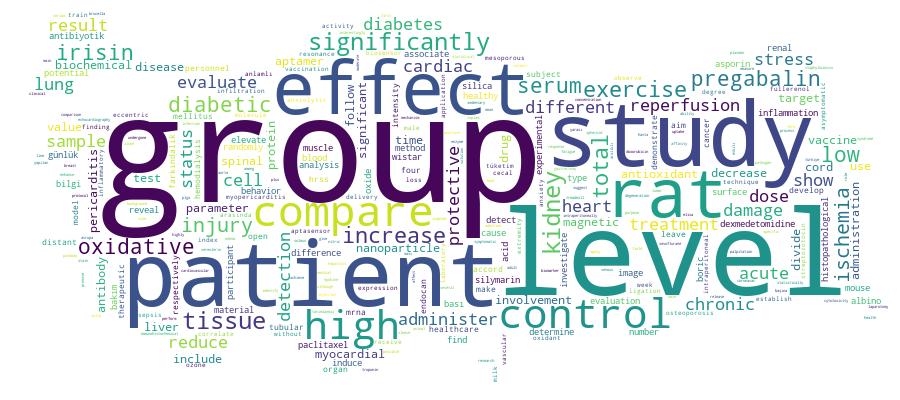
Competency Cloud

GCRIS Competency Cloud

Scholarly Output Search Results

Now showing 1 - 5 of 5
  • Article
    Citation - WoS: 7
    Citation - Scopus: 7
    Surface Plasmon Resonance Aptasensor for Soluble Icam-1 Protein in Blood Samples
    (Royal Soc Chemistry, 2022) Dursun, Ali Dogan; Dogan, Soner; Kavruk, Murat; Tasbasi, B. Busra; Sudagidan, Mert; Yilmaz, M. Deniz; Tuna, Bilge G.
    Intercellular Adhesion Molecule-1 (ICAM-1) is considered to be a cancer biomarker in the assessment of metastatic potential in patients and an early indicator of atherosclerosis. A labelless biosensor based on the surface plasmon resonance (SPR) signal from the specific affinity interaction of an aptamer and a soluble ICAM-1 protein was developed for blood samples. The developed aptasensor provided real-time information on the concentration of the ICAM-1 protein in blood when integrated to a purification step based on a magnetic pull-down separation. The SPR aptasensor was highly specific with a limit of detection of 1.4/0.2 ng ml(-1), which was achieved through aptamer-functionalized silica-coated magnetic nanoparticles.
  • Article
    Citation - WoS: 10
    Citation - Scopus: 12
    Detection of Viruses by Probe-Gated Silica Nanoparticles Directly From Swab Samples
    (Elsevier, 2022) Tuna, Bilge Guvenc; Durdabak, Dilara Buse; Ercan, Meltem Kazak; Dogan, Soner; Kavruk, Murat; Dursun, Ali Dogan; Ozalp, Veli Cengiz
    Viral infection has been one of the major health issues for human life. The real-time reverse transcription polymerase chain reaction (RT-PCR)-based detection has primarily been used for virus detection as a highly reliable procedure. However, it is a relatively long and multi-stage process. In addition, required skilled personnel and complex instrumentation presents difficulties in large scale monitoring efforts. Therefore, we report here a direct and fast detection method for CoV-2 genome as applied in the nose-throat swab samples without any further processing. The detection principle is based on fluorescein-loaded mesoporous silica nanoparticles capped by specific gene sequences probes immobilized on the surface of the nanoparticles. Upon hybridization with the target viral genome, the fluorescein molecules were released from the mesopores. Testing with synthetic oligonucleotides, the NSP12 gene-based detection resulted in a strong signal. Target detection time could be optimized to 15 min and the limit of detection was 1.4 RFU with 84% sensitivity with clinical samples (n = 43).
  • Article
    Enhanced Doxorubicin Cytotoxicity on Breast Cancer Spheroids by Aptamer Targeted Co-Delivery With Hyaluronidase
    (Wiley, 2025) Kavruk, Murat; Demirel, Dide Su; Bonyadi, Farzaneh; Guner, Buket Cakmak; Dursun, Ali Dogan; Vakifahmetoglu, Cekdar; Ozalp, Veli Cengiz
    Breast cancer is one of the most prevalent solid tumors in women and can be classified into subtypes based on molecular characteristics, such as hormone receptor status and HER2 expression. Aptamers, highly specific affinity molecules, are extensively studied for targeted drug delivery using nanocarriers to enhance anti-cancer efficacy. This study focused on HER2-responsive co-delivery of doxorubicin and hyaluronidase via aptamer-gated mesoporous silica nanoparticles to improve therapeutic outcomes in solid tumors. SK-BR-3 spheroids are employed as a model for resistant tumor environments in solid tumors. Previous research is shown that conjugating cytotoxic drugs with nanoparticles or cells enhances drug penetration into tumor spheroids. In this work, doxorubicin is loaded into mesoporous silica nanoparticles and capped with HER2-specific aptamers, while the particle surface is functionalized with hyaluronidase. This dual-functionalized nanocarrier system achieves an approximate to 8.5-fold increase in cytotoxicity compared to aptamer-targeted delivery lacking hyaluronidase. The enhanced effect is attributed to hyaluronidase-mediated loosening of the spheroid structure, facilitating nanoparticle penetration and localized release of doxorubicin at high concentrations on HER2-positive cells.
  • Article
    Avrupa Birliği Ülkeleri ve Türkiye’nin 2010-2021 Dönemi Toplam Antibiyotik Tüketiminin Karşılaştırılması: Akılcı İlaç Kullanımı ve Pandeminin Etkileri
    (Bilimsel Tip Yayinevi, 2023) Kavruk, Murat; Uçak, Samet; Sapmaz, Burcu; Demir, Canan Çiçek; Dursun, Ali Doğan
    Giriş: Antibiyotik tüketimini düşürmek adına dünya genelinde pek çok uygulama yapılmaktadır fakat bu uygulamaların karşılaştırmalı analizi ve pandemi gibi geniş çaplı değişkenler karşısındaki durumu yeterince analiz edilmemektedir. Bu kapsamda; Türkiye ve Avrupa ülkelerinin ATC grubu J01 toplam antibiyotik tüketim eğilimleri ve ülkeler arasındaki farklılıklar incelenmiş olup son dönemde yaşanan pandeminin antibiyotik tüketim verilerindeki değişime etkisi sorgulanmıştır. Materyal ve Metod: Türkiye ve 19 Avrupa ülkesinin 2010-2021 yılları arasındaki ATC grubu J01 toplam antibiyotik tüketimi (hastane + toplum) verileri birleştirilerek karşılaştırıldı. Çalışma için Avrupa Hastalık Önleme ve Kontrol Merkezi (ECDC) ve Türkiye İlaç ve Tıbbi Cihaz Kurumu (TICKK) verileri kullanılmıştır. Antibiyotik tüketim verileri, günlük 1000 hasta başına tanımlanmış günlük doz (DDD) cinsinden temsil edildi. Bulgular: Türkiye, odaklanılan dönemde en yüksek antibiyotik tüketimine sahip olmasına rağmen 2010-2015 tarihleri arasında 41.43 günlük 1000 hasta başına tanımlanmış günlük doz (DDD) ve 2016-2021 tarihleri arasında 32.24 günlük 1000 hasta başına tanım- lanmış günlük doz (DDD) antibiyotik tüketim verisi ile istatistiksel olarak (p= 0.05) anlamlı bir düşüş gösterdi. COVID-19 pandemisinin etkili olduğu 2021 yılında Avrupa’da, çalışmaya konu olan 2010-2021 yılları arasındaki en düşük düzeyi olan 14.91 günlük 1000 hasta başına tanımlanmış günlük doz (DDD)’a gerilerken Türkiye’de 2020 yılındaki kaydedilen 24.39 günlük 1000 hasta başına tanımlanmış günlük doz (DDD) seviyesine düşen antibiyotik tüketimi, 2021 yılında 26.97 günlük 1000 hasta başına tanımlanmış günlük doz (DDD) seviyesine yükseldi. Sonuç: Akılcı ilaç kullanımı uygulamaları, Türkiye için antibiyotik tüketimini azaltmada etkili olmakla birlikte, 2021 tüketim verileri ile trendin bozulduğu gözlemlenmiştir. Avrupa ülkeleri antibiyotik tüketim miktarlarında farklılık gösterse de toplamda COVID-19 pandemisi ile azalan bir tüketim durumuna girdiği tespit edilmiştir.
  • Review
    Citation - WoS: 27
    Citation - Scopus: 25
    Real-Time Biosensing Bacteria and Virus With Quartz Crystal Microbalance: Recent Advances, Opportunities, and Challenges
    (Taylor & Francis inc, 2023) Bonyadi, Farzaneh; Kavruk, Murat; Ucak, Samet; Cetin, Barbaros; Bayramoglu, Gulay; Dursun, Ali D. D.; Ozalp, Veli C. C.
    Continuous monitoring of pathogens finds applications in environmental, medical, and food industry settings. Quartz crystal microbalance (QCM) is one of the promising methods for real-time detection of bacteria and viruses. QCM is a technology that utilizes piezoelectric principles to measure mass and is commonly used in detecting the mass of chemicals adhering to a surface. Due to its high sensitivity and rapid detection times, QCM biosensors have attracted considerable attention as a potential method for detecting infections early and tracking the course of diseases, making it a promising tool for global public health professionals in the fight against infectious diseases. This review first provides an overview of the QCM biosensing method, including its principle of operation, various recognition elements used in biosensor creation, and its limitations and then summarizes notable examples of QCM biosensors for pathogens, focusing on microfluidic magnetic separation techniques as a promising tool in the pretreatment of samples. The review explores the use of QCM sensors in detecting pathogens in various samples, such as food, wastewater, and biological samples. The review also discusses the use of magnetic nanoparticles for sample preparation in QCM biosensors and their integration into microfluidic devices for automated detection of pathogens and highlights the importance of accurate and sensitive detection methods for early diagnosis of infections and the need for point-of-care approaches to simplify and reduce the cost of operation.