Boyacıoğlu, Özge

Loading...
Profile Picture
Name Variants
Boyacioglu,Ozge
Boyacioglu,Ö.
Boyacioglu, Ozge
Özge Boyacıoğlu
B., Özge
Boyacioglu,O.
Ö.,Boyacıoğlu
B.,Özge
Ozge, Boyacioglu
Boyacıoğlu, Özge
Ö., Boyacıoğlu
B.,Ozge
B., Ozge
Boyacioglu O.
O.,Boyacioglu
Boyacıoğlu,Ö.
O., Boyacioglu
Özge, Boyacıoğlu
Boyacioglu, OEzge
Job Title
Araştırma Görevlisi
Email Address
ozge.boyacioglu@atilim.edu.tr
Main Affiliation
Basic Sciences
Status
Website
Scopus Author ID
Turkish CoHE Profile ID
Google Scholar ID
WoS Researcher ID

Sustainable Development Goals

NO POVERTY1
NO POVERTY
0
Research Products
ZERO HUNGER2
ZERO HUNGER
0
Research Products
GOOD HEALTH AND WELL-BEING3
GOOD HEALTH AND WELL-BEING
9
Research Products
QUALITY EDUCATION4
QUALITY EDUCATION
0
Research Products
GENDER EQUALITY5
GENDER EQUALITY
0
Research Products
CLEAN WATER AND SANITATION6
CLEAN WATER AND SANITATION
0
Research Products
AFFORDABLE AND CLEAN ENERGY7
AFFORDABLE AND CLEAN ENERGY
0
Research Products
DECENT WORK AND ECONOMIC GROWTH8
DECENT WORK AND ECONOMIC GROWTH
0
Research Products
INDUSTRY, INNOVATION AND INFRASTRUCTURE9
INDUSTRY, INNOVATION AND INFRASTRUCTURE
0
Research Products
REDUCED INEQUALITIES10
REDUCED INEQUALITIES
0
Research Products
SUSTAINABLE CITIES AND COMMUNITIES11
SUSTAINABLE CITIES AND COMMUNITIES
0
Research Products
RESPONSIBLE CONSUMPTION AND PRODUCTION12
RESPONSIBLE CONSUMPTION AND PRODUCTION
0
Research Products
CLIMATE ACTION13
CLIMATE ACTION
0
Research Products
LIFE BELOW WATER14
LIFE BELOW WATER
1
Research Products
LIFE ON LAND15
LIFE ON LAND
0
Research Products
PEACE, JUSTICE AND STRONG INSTITUTIONS16
PEACE, JUSTICE AND STRONG INSTITUTIONS
0
Research Products
PARTNERSHIPS FOR THE GOALS17
PARTNERSHIPS FOR THE GOALS
0
Research Products
Documents

13

Citations

109

h-index

5

Documents

9

Citations

62

Scholarly Output

13

Articles

9

Views / Downloads

71/321

Supervised MSc Theses

0

Supervised PhD Theses

0

WoS Citation Count

46

Scopus Citation Count

109

Patents

0

Projects

0

WoS Citations per Publication

3.54

Scopus Citations per Publication

8.38

Open Access Source

3

Supervised Theses

0

JournalCount
Advances in Experimental Medicine and Biology2
Biotechnic & Histochemistry1
Cell Death & Disease1
Comparative Kinesiology of the Human Body: Normal and Pathological Conditions1
International Journal of Biological Macromolecules1
Current Page: 1 / 3

Scopus Quartile Distribution

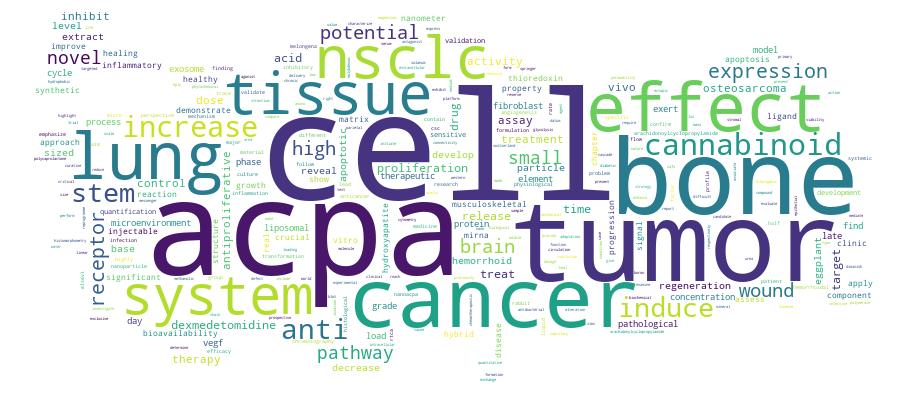
Competency Cloud

GCRIS Competency Cloud

Scholarly Output Search Results

Now showing 1 - 4 of 4
  • Book Part
    Citation - Scopus: 6
    Cannabinoids as Prospective Anti-Cancer Drugs: Mechanism of Action in Healthy and Cancer Cells
    (Springer, 2023) Boyacıoğlu,Ö.; Korkusuz,P.
    Endogenous and exogenous cannabinoids modulate many physiological and pathological processes by binding classical cannabinoid receptors 1 (CB1) or 2 (CB2) or non-cannabinoid receptors. Cannabinoids are known to exert antiproliferative, apoptotic, anti-migratory and anti-invasive effect on cancer cells by inducing or inhibiting various signaling cascades. In this chapter, we specifically emphasize the latest research works about the alterations in endocannabinoid system (ECS) components in malignancies and cancer cell proliferation, migration, invasion, angiogenesis, autophagy, and death by cannabinoid administration, emphasizing their mechanism of action, and give a future perspective for clinical use. © 2022, The Author(s), under exclusive license to Springer Nature Switzerland AG.
  • Book Part
    Citation - Scopus: 2
    Trace Element Containing Nano-HAp for Preventing Musculoskeletal Infections
    (Springer Science and Business Media B.V., 2021) Gizer,M.; Boyacıoğlu,Ö.; Korkusuz,P.; Korkusuz,F.
    Musculoskeletal infections are difficult to diagnose and rapidly reach the chronic phase that is difficult to treat. Osteomyelitis and septic arthritis are inflammatory musculoskeletal diseases and their recovery should contain bone or joint regeneration approaches. Nanometer-sized hydroxyapatite is the main inorganic component of the bone tissue that resembles its extracellular matrix. Nanometer-sized hydroxyapatite composite is also an efficient carrier for various regenerative molecules and medicine. Trace elements on the other hand enhance bone formation, mineralization and have antibacterial properties. Bioactivity, biocompatibility, and antibacterial properties of nanometer-sized hydroxyapatite can be gained and improved with trace elements such as zinc, boron, magnesium, strontium, and molybdenum. This chapter summarizes studies on the effects of zinc, boron, magnesium, strontium, and/or molybdenum-doped nanometer-sized hydroxyapatite that can be used to treat musculoskeletal infections. © 2021, The Author(s), under exclusive license to Springer Nature Switzerland AG.
  • Book Part
    Citation - Scopus: 33
    Architecture of Bone Tissue and Its Adaptation To Pathological Conditions
    (Elsevier, 2020) Bilgiç,E.; Boyacıoğlu,Ö.; Gizer,M.; Korkusuz,P.; Korkusuz,F.
    Bone tissue is a mineralized and viscous-elastic connective tissue, which exerts crucial functions in our body such as support and protection of other tissues and mineral storage. Bone can adapt itself through a remodeling process, which is controlled by its cells, various local and systemic factors. It is a very complicated process composed of both cellular reactions and its effects on the internal structure of the bone. An imbalance between bone resorption and formation due to disease may alter its structure and mechanics. Mechanical properties of bone tissue are affected by different loading grades. Collagen material found in the extracellular matrix gives bone its elasticity. Bone is, nevertheless, a fragile structure depending on the loading and mineral content that also strengthens the bone. In this chapter, the structure of the bone in micro and macro scale, its mechanical properties in physiological circumstances and adaptation to pathological conditions will be discussed. © 2020 Elsevier Inc. All rights reserved.
  • Book Part
    A Niche-Based Perspective to Stem and Cancer Stem Cells of the Lung
    (Springer, 2025) Boyacıoğlu, Özge; Kalali, Berfin Deniz; Tongün, Ege; Korkusuz, Petek
    Lungs carry the principle function for the conduction and exchange of air through the primary, secondary, tertiary bronchi, bronchioles, and alveoli, resulting in the exchange of oxygen to carbon dioxide within the human tissues. Lung stem and progenitor cells enable differentiation of parenchymal and stromal elements and provide homeostasis and regeneration in the microenvironment against pulmonary diseases. Tumor-initiating cancer cells (TICs) refer to a subpopulation named as cancer stem cells (CSCs) of lung cancer exhibiting high self-renewal and proliferation capacity by Notch, Hippo, Hedgehog, and Wnt signaling pathways that leads to tumor development or recurrence. Lung cancer stem cells (LCSCs) are characterized by distinct genotypic or phenotypic alterations compared to healthy lung stem cells (LSCs) that provide a potential target to treat lung cancer. Therefore, understanding the cascades responsible for the transformation of healthy to CSCs is essential to develop new targeted therapy approaches. In this chapter, we precisely highlight the latest researches on LSCs and CSCs, key signaling mechanisms within the perspective of novel targeted therapy strategies. © 2025 Elsevier B.V., All rights reserved.