Boyacıoğlu, Özge

Loading...
Profile Picture
Name Variants
Boyacioglu,Ozge
Boyacioglu,Ö.
Boyacioglu, Ozge
Özge Boyacıoğlu
B., Özge
Boyacioglu,O.
Ö.,Boyacıoğlu
B.,Özge
Ozge, Boyacioglu
Boyacıoğlu, Özge
Ö., Boyacıoğlu
B.,Ozge
B., Ozge
Boyacioglu O.
O.,Boyacioglu
Boyacıoğlu,Ö.
O., Boyacioglu
Özge, Boyacıoğlu
Boyacioglu, OEzge
Job Title
Araştırma Görevlisi
Email Address
ozge.boyacioglu@atilim.edu.tr
Main Affiliation
Basic Sciences
Status
Website
Scopus Author ID
Turkish CoHE Profile ID
Google Scholar ID
WoS Researcher ID

Sustainable Development Goals

NO POVERTY1
NO POVERTY
0
Research Products
ZERO HUNGER2
ZERO HUNGER
0
Research Products
GOOD HEALTH AND WELL-BEING3
GOOD HEALTH AND WELL-BEING
9
Research Products
QUALITY EDUCATION4
QUALITY EDUCATION
0
Research Products
GENDER EQUALITY5
GENDER EQUALITY
0
Research Products
CLEAN WATER AND SANITATION6
CLEAN WATER AND SANITATION
0
Research Products
AFFORDABLE AND CLEAN ENERGY7
AFFORDABLE AND CLEAN ENERGY
0
Research Products
DECENT WORK AND ECONOMIC GROWTH8
DECENT WORK AND ECONOMIC GROWTH
0
Research Products
INDUSTRY, INNOVATION AND INFRASTRUCTURE9
INDUSTRY, INNOVATION AND INFRASTRUCTURE
0
Research Products
REDUCED INEQUALITIES10
REDUCED INEQUALITIES
0
Research Products
SUSTAINABLE CITIES AND COMMUNITIES11
SUSTAINABLE CITIES AND COMMUNITIES
0
Research Products
RESPONSIBLE CONSUMPTION AND PRODUCTION12
RESPONSIBLE CONSUMPTION AND PRODUCTION
0
Research Products
CLIMATE ACTION13
CLIMATE ACTION
0
Research Products
LIFE BELOW WATER14
LIFE BELOW WATER
1
Research Products
LIFE ON LAND15
LIFE ON LAND
0
Research Products
PEACE, JUSTICE AND STRONG INSTITUTIONS16
PEACE, JUSTICE AND STRONG INSTITUTIONS
0
Research Products
PARTNERSHIPS FOR THE GOALS17
PARTNERSHIPS FOR THE GOALS
0
Research Products
Documents

13

Citations

112

h-index

5

Documents

9

Citations

64

Scholarly Output

13

Articles

9

Views / Downloads

42/25

Supervised MSc Theses

0

Supervised PhD Theses

0

WoS Citation Count

47

Scopus Citation Count

112

Patents

0

Projects

0

WoS Citations per Publication

3.62

Scopus Citations per Publication

8.62

Open Access Source

3

Supervised Theses

0

JournalCount
Advances in Experimental Medicine and Biology2
Biotechnic & Histochemistry1
Cell Death & Disease1
Comparative Kinesiology of the Human Body: Normal and Pathological Conditions1
International Journal of Biological Macromolecules1
Current Page: 1 / 3

Scopus Quartile Distribution

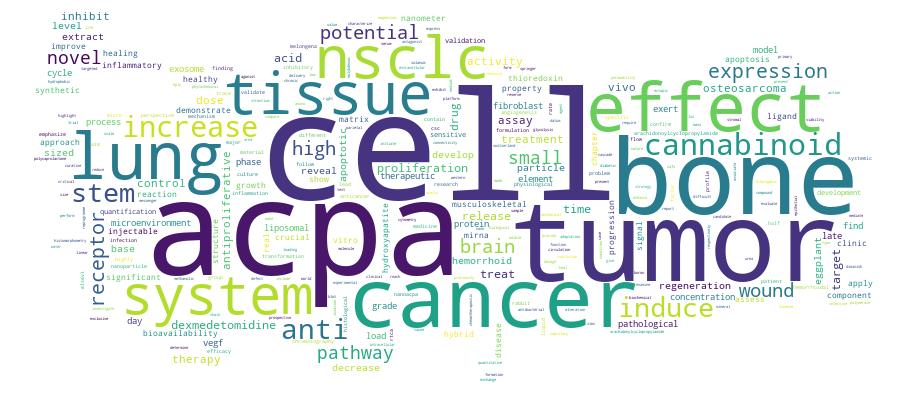
Competency Cloud

GCRIS Competency Cloud

Scholarly Output Search Results

Now showing 1 - 1 of 1
  • Article
    Citation - WoS: 28
    Citation - Scopus: 30
    Acpa Decreases Non-Small Cell Lung Cancer Line Growth Through Akt/Pi3k and Jnk Pathways in Vitro
    (Springernature, 2021) Boyacioglu, OEzge; Bilgic, Elif; Varan, Cem; Bilensoy, Erem; Nemutlu, Emirhan; Sevim, Duygu; Korkusuz, Petek
    Therapeutic agents used for non-small cell lung cancer (NSCLC) have limited curative efficacy and may trigger serious adverse effects. Cannabinoid ligands exert antiproliferative effect and induce apoptosis on numerous epithelial cancers. We confirmed that CB1 receptor (CB1R) is expressed in NSCLC cells in this study. Arachidonoylcyclopropylamide (ACPA) as a synthetic, CB1R-specific ligand decreased proliferation rate in NSCLC cells by WST-1 analysis and real-time proliferation assay (RTCA). The half-maximal inhibitory concentration (IC50) dose of ACPA was calculated as 1.39x10(-12)M. CB1 antagonist AM281 inhibited the antiproliferative effect of ACPA. Flow cytometry and ultrastructural analyzes revealed significant early and late apoptosis with diminished cell viability. Nano-immunoassay and metabolomics data on activation status of CB1R-mediated pro-apoptotic pathways found that ACPA inhibited Akt/PI3K pathway, glycolysis, TCA cycle, amino acid biosynthesis, and urea cycle and activated JNK pathway. ACPA lost its chemical stability after 24hours tested by liquid chromatography-mass spectrometry (LC-MS/MS) assay. A novel ACPA-PCL nanoparticle system was developed by nanoprecipitation method and characterized. Sustained release of ACPA-PCL nanoparticles also reduced proliferation of NSCLC cells. Our results demonstrated that low dose ACPA and ACPA-PCL nanoparticle system harbor opportunities to be developed as a novel therapy in NSCLC patients that require further in vivo studies beforehand to validate its anticancer effect.