
Cihaner, Atilla
Loading...
Profile URL
Name Variants
C.,Atilla
A., Cihaner
C., Atilla
Cihaner A.
A.,Cihaner
Cihaner, Atilla
Cihaner,A.
Atilla Cihaner
Atilla, Cihaner
Cihaner,Atilla
Cihaner, A.
Cihaner, A
A., Cihaner
C., Atilla
Cihaner A.
A.,Cihaner
Cihaner, Atilla
Cihaner,A.
Atilla Cihaner
Atilla, Cihaner
Cihaner,Atilla
Cihaner, A.
Cihaner, A
Job Title
Profesör Doktor
Email Address
atilla.cihaner@atilim.edu.tr
Main Affiliation
Chemical Engineering
Status
Website
ORCID ID
Scopus Author ID
Turkish CoHE Profile ID
Google Scholar ID
WoS Researcher ID
Sustainable Development Goals
5
GENDER EQUALITY

0
Research Products
14
LIFE BELOW WATER

0
Research Products
10
REDUCED INEQUALITIES

0
Research Products
3
GOOD HEALTH AND WELL-BEING

1
Research Products
2
ZERO HUNGER

0
Research Products
9
INDUSTRY, INNOVATION AND INFRASTRUCTURE

0
Research Products
16
PEACE, JUSTICE AND STRONG INSTITUTIONS

0
Research Products
11
SUSTAINABLE CITIES AND COMMUNITIES

0
Research Products
8
DECENT WORK AND ECONOMIC GROWTH

0
Research Products
13
CLIMATE ACTION

0
Research Products
4
QUALITY EDUCATION

0
Research Products
6
CLEAN WATER AND SANITATION

1
Research Products
1
NO POVERTY

0
Research Products
15
LIFE ON LAND

0
Research Products
17
PARTNERSHIPS FOR THE GOALS

0
Research Products
7
AFFORDABLE AND CLEAN ENERGY

3
Research Products
12
RESPONSIBLE CONSUMPTION AND PRODUCTION

0
Research Products

Documents
101
Citations
2366
h-index
28

Documents
103
Citations
2258

Scholarly Output
121
Articles
108
Views / Downloads
61/0
Supervised MSc Theses
12
Supervised PhD Theses
0
WoS Citation Count
2257
Scopus Citation Count
2347
WoS h-index
27
Scopus h-index
28
Patents
0
Projects
13
WoS Citations per Publication
18.65
Scopus Citations per Publication
19.40
Open Access Source
6
Supervised Theses
12
Google Analytics Visitor Traffic
| Journal | Count |
|---|---|
| Electrochimica Acta | 15 |
| Journal of Electroanalytical Chemistry | 13 |
| Turkish Journal of Chemistry | 6 |
| Dyes and Pigments | 6 |
| Organic Electronics | 6 |
Current Page: 1 / 8
Scopus Quartile Distribution
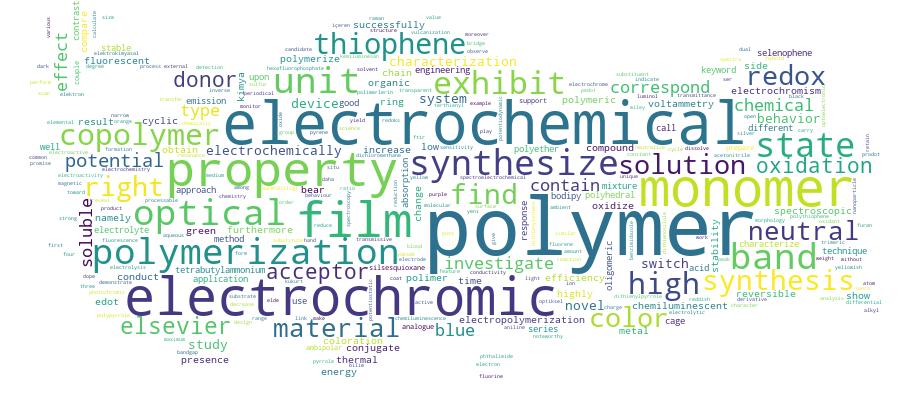
Competency Cloud
17 results
Scholarly Output Search Results
Now showing 1 - 10 of 17
Article Citation - WoS: 7Citation - Scopus: 9Pyrrole Coupling Chemistry: Investigation of Electroanalytic, Spectroscopic and Thermal Properties of N-Substituted Poly(bis-Pyrrole) Films(Royal Soc Chemistry, 2013) Mert, Olcay; Demir, Ayhan S.; Cihaner, AtillaAn etheric member of N-linked polybispyrroles (PolybisPy) based on 1-(3-(2-(2-(3-(1H-pyrrol-1-yl)propoxy)ethoxy)ethoxy)propyl)-1H-pyrrole (1) was electrochemically synthesized for the versatile investigation of its exciting electrochromic and ion receptor properties. It has been fully characterized by electroanalytic, spectroscopic, thermal, and four-probe techniques. It was thereby found that P1 shows strong stability, and a reversible redox process as well as a good electrochromic material property; transparent yellow in the neutral state, light pink in the intermediate state, and blue in the oxidized state. Also, the corresponding polymer (P1) exhibited a selective voltammetric response towards Na+ among the alkali series in an organic medium. Moreover, P1 film was employed for the detection of Ag+ ions in the solution with cyclic voltammetry without precipitants or complexing ligands, and SEM images confirmed the deposition of metallic silver on the film surface. These prominent features also make P1 a good candidate for many practical uses, such as the recovery of metals and ion sensors.Article Citation - WoS: 1Citation - Scopus: 1Synthesis and Characterization of New Dithienosilole Based Copolymers(Electrochemical Soc inc, 2016) Karabay, Lutfiye Canan; Al-Jumaili, Mohammed; Cihaner, Atilla2-Ethylhexyl substituted dithienosilole based soluble polymers including thiophene (1) and bithiophene (2) units were synthesized via Stille coupling reaction. The presence of 2-ethylhexyl substituents on the silole ring gave solubility property to the polymers in common solvents. According to gel permeation chromatography measurements, the weight average molecular weights of the polymers 1 and 2 were found to be as 70,977 with a polydispersity index of 2.30 and 110,439 with a PDI of 1.42, respectively. Fluorescent polymers in toluene solution have maximum emisssion bands at 634 nm for the polymer 1 and 613 nm for the polymer 2. Chemical and electrochemical doping of the polymers in the solution and in the film forms were monitored by using ultraviolet-visible spectroscopic technique. The polymers exhibited chromic (chemochromic and electrochromic) properties. While the colors of the neutral polymer films are purple for the polymer 1 and reddish brown for the polymer 2, both polymers are transparent sky blue at their oxidized states. The bandgaps of polymers in film forms were calculated as 1.81 eV for the polymer 1 and 1.92 eV for the polymer 2. Also, electrochromic device applications of the polymers were done. Electrochemical and optical behaviors of the polymers demonstrated that they can be good candidates for optoelectronic applications. (C) 2016 The Electrochemical Society. All rights reserved.Article Citation - WoS: 52Citation - Scopus: 57Members of Cmy Color Space: Cyan and Magenta Colored Polymers Based on Oxadiazole Acceptor Unit(Amer Chemical Soc, 2012) Ozkut, Merve Icli; Algi, Melek Pamuk; Oztas, Zahide; Algi, Fatih; Onal, Ahmet M.; Cihaner, AtillaIn this study, three novel oxadiazole-based polymers were synthesized and their electrochemical and optical properties were investigated. The polymers were found to have both p- and n-type doping properties accompanied by electrochromic response. Two polymer films exhibit cyan and magenta colors, which constitute two legs of CMY color spaces, in their neutral states and they are soluble in common-organic solvents. According to the color mixing theory, all colors in the visible spectrum including black color can be obtained by using these polymers with a yellow colored electrochromic polymer. Among these polymers, the polymer bearing propyledioxythiophene donor units has some superior properties like high stability (it retains 94% of its electroactivity after 2000 cycles), solubility, and high coloration efficiency (230 cm(2)/C), whereas as expected ethylenedioxythiophene containing one has the lowest band gap as 1.08 eV.Article Citation - WoS: 7Citation - Scopus: 6Side Chain Effect on the Electrochemical and Optical Properties of Thieno[3,4-c]pyrrole-4,6-dione Based Donor-Acceptor Donor Type Monomers and Polymers(Royal Soc Chemistry, 2023) Cakal, Deniz; Arabaci, Elif Demir; Yildirim, Erol; Cihaner, Atilla; Onal, Ahmet M.In organic pi-conjugated materials, side chains play great roles that impact far beyond solubility. In this work, we mainly focused on the synthesis of new donor-acceptor-donor (D-A-D) type conjugated monomers and their corresponding polymers appending thieno[3,4-c]pyrrole-4,6-dione (TPD) acceptor with a new side chain, fluorene (Fl), to investigate the side chain effect. In this context, to reveal the precise effect of the side chains on the optical and electrochemical properties of the monomers and polymers synthesized in this work, four series of D-A-D monomers, each containing a TPD core unit with a different side chain, are compared and discussed in relation to each other. Notably, it was discovered that the TPD acceptor unit can be modified with any functional group other than common alkyl chains to impart new functionalities by maintaining their superior optoelectronic properties. New types of side chains can be used to tune the physical characteristics, such as solubility, absorption, emission, and molecular packing. In this work, Fl-appended monomers as a new class of D-A-D type pi-conjugated molecules containing 3,4-ethylenedioxythiophene (EDOT (E)) and 3,4-propylenedioxythiophene (ProDOT (P)) donor units were studied and it was found that 1,3-bis(2,3-dihydrothieno[3,4-b][1,4]dioxin-5-yl)-5-(9H-fluoren-2-yl)-4H-thieno[3,4-c]pyrrole-4,6(5H)-dione (E(Fl)) and 1,3-bis(3,3-didecyl-3,4-dihydro-2H-thieno[3,4-b][1,4]dioxepin-6-yl)-5-(9H-fluoren-2-yl)-4H-thieno[3,4-c]pyrrole-4,6(5H)-dione (P(Fl)) exhibited reasonable quantum yields and their corresponding polymers revealed ambipolar character with slightly lower band gap as compared to the previous analogues containing other side chains. Observed experimental results were elucidated by first principle calculations. In this paper, we discussed that using side chain engineering is an effective strategy for improving next-generation organic pi-conjugated materials with the desired properties.Article Citation - WoS: 5Citation - Scopus: 5Designing a Solution Processable Poly(3,4-Ethylenedioxyselenophene) Analogue(Amer Chemical Soc, 2018) Ertan, Salih; Cihaner, AtillaA new derivative (EDOS-POSS) of 3,4-ethylenedioxyselenophene integrated with alkyl-substituted polyhedral oligomeric silsesquioxane (POSS) cage was synthesized and characterized. The electroactive monomer was successfully polymerized via both chemical and electrochemical methods. The obtained polymer called PEDOS-POSS was solution-processable and soluble in common organic solvents like tetrahydrofuran, toluene, dichloromethane, and chloroform. PEDOS-POSS polymer exhibited electrochromic behavior: pure blue when neutralized and highly transparent when oxidized. When compared to the parent PEDOS (1.40 eV with lambda(max) = 673 nm), PEDOS-POSS polymer film has a somewhat higher band gap (1.50 eV with lambda(max) = 668 and 724 nm). Also, PEDOS POSS exhibited high optical contrast ratio (59%) and coloration efficiency (593 cm(2)/C for 95% switching) with a low switching time (0.7 s) due to the presence of POSS cage in the polymer backbone. In addition, PEDOS-POSS polymer film was highly robust and stable under ambient conditions (without purging the electrolyte solution with inert gas). Polymer films demonstrated high electrochemical stability; for example, it retained 76% of its electroactivity after 5000 cycles. Furthermore, the polymers exhibited fluorescent properties and exhibited a reddish orange emission centered about at 640 nm. Based on the findings, to the best of our knowledge, it can be concluded that the polymers are the first examples of soluble and fluorescent PEDOS derivatives. These promising properties make PEDOS-POSS polymer a potential material for bioapplications like imaging the cancer cells as well as optoelectronic applications.Article Citation - WoS: 9Citation - Scopus: 11Propylenedioxy and Benzimidazole Based Electrochromic Polymers(Electrochemical Soc inc, 2016) Cansu-Ergun, E. G.; Onal, A. M.; Cihaner, A.In this study, three acceptor units were synthesized by substituting cyclohexane, cycloheptane and cyclooctane rings at 2-C position of benzimidazole. These acceptor units were coupled with dihexyl substituted 3,4-propylenedioxythiophene (PRODOT-C6) donor segments and the resulting donor-acceptor-donor monomers were polymerized via potentiostatic and potentiodynamic methods to obtain their corresponding conjugated polymers (CP). Monomers and their polymers were investigated in terms of the ring size of the substituent on the acceptor unit and their electrochemical and optical behaviors were reported. The monomers exhibited dual absorption bands (at about 310 nm and 520 nm) due to their donor-acceptor pattern. CP films on indium tin oxide conducting substrate were investigated in a monomer free electrolytic solution. The polymer films exhibited quasi-reversible redox behavior due to doping/dedoping which was accompanied by a reversible electrochromic behavior. All three polymer films showed similar multichromic behaviors: green color in the neutral state, gray in the oxidized state, and brick-red in the reduced state. Band gap values (E-g) were elucidated via both electrochemical and optical methods. Moreover, electrochromic device (ECD) was constructed with one of the polymer films (cyclohexane ring bearing benzimidazole and PRODOT-C6 containing polymer) with poly(3,4-ethylenedioxythiophene) (PEDOT). (C) 2016 The Electrochemical Society. All rights reserved.Article Citation - WoS: 52Citation - Scopus: 59Furan and benzochalcogenodiazole based multichromic polymers via a donor-acceptor approach(Royal Soc Chemistry, 2013) Icli-Ozkut, Merve; Ipek, Halil; Karabay, Baris; Cihaner, Atilla; Onal, Ahmet M.Two new furan and benzochalcogenodiazole based monomers, namely 4,7-di(furan-2-yl) benzo[c][1,2,5]-selenadiazole (FSeF) and 4,7-di(furan-2-yl) benzo[c][1,2,5]thiadiazole (FSF), were designed and synthesized via a donor-acceptor-donor approach. The monomers were electrochemically polymerized via potentiodynamic or potentiostatic methods. The monomers and their polymers exhibited lower oxidation potentials (1.16 V and 1.06 V for monomers; 0.93 V and 0.80 V for polymers vs. Ag/AgCl) and red shifts of the whole dual-band absorption spectra upon moving from S to Se. Intramolecular charge transfer properties of the monomers and the polymers were demonstrated by using electroanalytical and optical methods. Also, the polymers PFSeF and PFSF were multicolored at different redox states and have low band gaps of 1.43 eV and 1.61 eV, respectively.Article Citation - WoS: 10Citation - Scopus: 10Electroinitiated Polymerization of 2-Allylphenol(Springer-verlag, 2000) Cihaner, A; Önal, AMRedox behaviour of 2-allylphenol (2APhOH) was studied by using cyclic voltammetry (CV) and electroinitiated polymerization was conducted at the measured peak potentials. Constant potential electrolysis (CPE) of the monomer was carried out in acetonitrile-sodium perchlorate, solvent-electrolyte couple, at room temperature. Polymerization of the monomer yielded insoluble polymer films on the surface of the electrode together with the low molecular weight polymers in the bulk of the solution. The structural analysis of the polymers were carried by H-1-NMR and FTIR spectroscopy. Molecular weight of the soluble polymer was determined by GPC. Thermal properties of the polymer film and soluble polymer were studied by DSC. The course of electroinitiated polymerization was monitored by in-situ UV-VIS spectroscopy.Article Citation - WoS: 61Citation - Scopus: 72A Blue To Highly Transmissive Soluble Electrochromic Polymer Based on Poly(3,4-Propylenedioxyselenophene) With a High Stability and Coloration Efficiency(Royal Soc Chemistry, 2011) Ozkut, Merve Icli; Atak, Samed; Onal, Ahmet M.; Cihaner, AtillaThe optical and electrochemical properties of a regioregular and soluble alkylenedioxyselenophene-based electrochromic polymer, namely poly(3,3-didecyl-3,4-dihydro-2H-selenopheno[3,4-b][1,4] dioxepine (PProDOS-C-10), which is synthesized by electrochemical polymerization, are highlighted. It is noted that this unique polymer has a low band gap (1.58 eV) and is exceptionally stable under ambient atmospheric conditions. Polymer films retain 97% of their electroactivity after 40 000 cycles. The percentage transmittance of a PProDOS-C10 film was found to be 56.4% at 638 nm and 55.8% at 700 nm. Furthermore, this novel soluble PProDOS-C10 polymer shows an electrochromic behavior: a color change from pure blue to a highly transparent state in a low switching time (1.0 s) during oxidation, with high coloration efficiencies (328 cm 2 C-1 at 638 nm and 319 cm(2) C-1 at 700 nm) when compared to its thiophene analogue.Article Citation - WoS: 9Citation - Scopus: 10From Narrow To Narrower: a Very Low Band Gap [1,2,5]thiadiazolo[3,4-G]quinoxaline Donor-Acceptor Type Electrochromic Polymer(Electrochemical Soc inc, 2017) Gokce, Gurcan; Karabay, Baris; Cihaner, Atilla; Ozkut, Merve IcliThe development of low bandgap polymers (or zero bandgap polymers) is still one of the main goals of scientists and many viable paths have been formulated in order to accomplish this. In this study, a donor-acceptor-donor type electrochromic polymer based on [1,2,5]thiadiazolo[3,4-g]quinoxaline acceptor and selenophene donor units with extremely low bandgap (ranging from 0.21 to 0.60 eV depending on bandgap determination method) is synthesized and characterized electrochemically, optically and colorimetrically. Electrochemical and optical studies showed that the polymer film was susceptible to both n- and p-type doping and has a mustard color in its neutral state, and upon oxidation its color changed to brown, and upon reduction the color is light purple. (C) 2017 The Electrochemical Society. All rights reserved.
