
Cihaner, Atilla
Loading...
Profile URL
Name Variants
C.,Atilla
A., Cihaner
C., Atilla
Cihaner A.
A.,Cihaner
Cihaner, Atilla
Cihaner,A.
Atilla Cihaner
Atilla, Cihaner
Cihaner,Atilla
Cihaner, A.
Cihaner, A
A., Cihaner
C., Atilla
Cihaner A.
A.,Cihaner
Cihaner, Atilla
Cihaner,A.
Atilla Cihaner
Atilla, Cihaner
Cihaner,Atilla
Cihaner, A.
Cihaner, A
Job Title
Profesör Doktor
Email Address
atilla.cihaner@atilim.edu.tr
Main Affiliation
Chemical Engineering
Status
Website
ORCID ID
Scopus Author ID
Turkish CoHE Profile ID
Google Scholar ID
WoS Researcher ID
Sustainable Development Goals
 1
1NO POVERTY
0
Research Products
 2
2ZERO HUNGER
0
Research Products
 3
3GOOD HEALTH AND WELL-BEING
1
Research Products
 4
4QUALITY EDUCATION
0
Research Products
 5
5GENDER EQUALITY
0
Research Products
 6
6CLEAN WATER AND SANITATION
1
Research Products
 7
7AFFORDABLE AND CLEAN ENERGY
3
Research Products
 8
8DECENT WORK AND ECONOMIC GROWTH
0
Research Products
 9
9INDUSTRY, INNOVATION AND INFRASTRUCTURE
0
Research Products
 10
10REDUCED INEQUALITIES
0
Research Products
 11
11SUSTAINABLE CITIES AND COMMUNITIES
0
Research Products
 12
12RESPONSIBLE CONSUMPTION AND PRODUCTION
0
Research Products
 13
13CLIMATE ACTION
0
Research Products
 14
14LIFE BELOW WATER
0
Research Products
 15
15LIFE ON LAND
0
Research Products
 16
16PEACE, JUSTICE AND STRONG INSTITUTIONS
0
Research Products
 17
17PARTNERSHIPS FOR THE GOALS
0
Research Products

Documents
101
Citations
2366
h-index
28

Documents
103
Citations
2258

Scholarly Output
121
Articles
108
Views / Downloads
558/1849
Supervised MSc Theses
12
Supervised PhD Theses
0
WoS Citation Count
2257
Scopus Citation Count
2347
Patents
0
Projects
13
WoS Citations per Publication
18.65
Scopus Citations per Publication
19.40
Open Access Source
6
Supervised Theses
12
| Journal | Count |
|---|---|
| Electrochimica Acta | 15 |
| Journal of Electroanalytical Chemistry | 13 |
| Turkish Journal of Chemistry | 6 |
| Dyes and Pigments | 6 |
| Organic Electronics | 6 |
Current Page: 1 / 8
Scopus Quartile Distribution
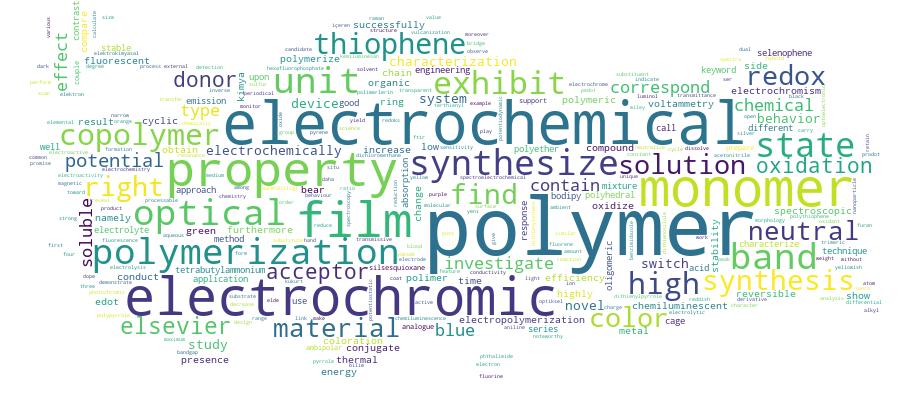
Competency Cloud
12 results
Scholarly Output Search Results
Now showing 1 - 10 of 12
Article Synthesis and Electropolymerization of a Selenophene Based Chemiluminescent Monomer and Its Use in Blood Detection(Elsevier Sci Ltd, 2025) Balci, Burcu; Cakal, Deniz; Cihaner, AtillaA new selenophene based trimeric chemiluminescent compound, namely 5,7-di(selenophen-2-yl)-2,3-dihydrothieno[3,4-d]pyridazine-1,4-dione (S2T-Lum), was synthesized in two steps via electron donor-acceptor-donor approach. Its chemiluminescent reaction with hydrogen peroxide was investigated in an alkaline solution in the presence of various catalysts such as different metal ions, hemin and blood samples and the results were compared with its thiophene analogue (T2T-Lum) and luminol. It was found that S2T-Lum was very sensitive to copper(II) and iron(III) ions, and blood samples. Also, it can be easily concluded that S2T-Lum as a new member of luminol type compounds is a potential candidate for the detection of blood findings in forensic science. Furthermore, S2T-Lum has an irreversible oxidation peak at 1.28 V vs Ag/AgCl, which is responsible from its electropolymerization. S2T-Lum was successfully polymerized electrochemically via potentiodynamic electrolysis without cleavage of its chemiluminescent active appendage. To the best of our knowledge, its corresponding polymer PS2T-Lum film is the first member of selenophene based luminol type electroactive polymers.Article Citation - WoS: 8Citation - Scopus: 8Improvement of Optical Properties and Redox Stability of Poly(3,4-Ethylenedioxythiophene)(Elsevier Sci Ltd, 2018) Ertan, Salih; Cihaner, AtillaIn order to improve the optical properties and redox stability of poly(3,4-ethylenedioxythiophene) (PEDOT) without changing its electrochemical and electrochromic behaviour, it was supported with alkyl-substituted polyhedral oligomeric silsesquioxane (POSS) cage. The corresponding copolymers were obtained electrochemically via potentiostatic or potentiodynamic methods and compared to the parent homopolymers. Electrochemical polymerization of EDOT and POSS containing EDOT called EDOT-POSS in various monomer feed ratios was performed in an electrolyte solution of 0.1 M TBAPF(6) dissolved in a mixture of dichloromethane and acetonitrile (1/3: v/v). Just as PEDOT, the copolymers represented the similar band gap (1.61 eV), redox and electrochromic behaviors. On the other hand, when compared to the parent PEDOT, the presence of POSS cages in the copolymer backbone improved the redox stability and optical properties of PEDOT such as higher percent transmittance change (65% at 621 nm), higher transparency at oxidized state, lower switching time (similar to 1.0 s) and higher coloration efficiency (463 cm(2)/C for 95% switching) as well as higher electrochemical stability (86% of its electroactivity retains after 1750 cycles under ambient conditions).Article Citation - WoS: 11Citation - Scopus: 13A Low Band Gap Polymer Based on Selenophene and Benzobis (thiadiazole)(Pergamon-elsevier Science Ltd, 2017) Abdulrazzaq, Mohammed; Ozkut, Merve Icli; Gokce, Gurcan; Ertan, Salih; Tutuncu, Esra; Cihaner, AtillaA new derivative of benzobis(thiadiazole) based donor-acceptor-donor type monomers, namely 4,7-di (selenophen-2-yl)benzo[1,2-c;4,5-c']bis[1,2,5]thiadiazole (SeBTSe), was synthesized and its polymerization was carried out successfully via electrochemical polymerization in an electrolyte solution of 0.1 M tetrabutylammonium hexafluorophosphate dissolved in dichloromethane. The monomer SeBTSe is a deep red chromophore and it has four redox states: one oxidation, one neutral and two reduction states. The electrochemical behaviour of the corresponding polymer called PSeBTSe was studied by cyclic and differential pulse voltammetry. There is a good agreement between electrochemical (0.62-0.66 eV) and optical (0.63 eV) bandgaps of the polymer. Like the monomer, the ambipolar polymer has four redox states and electrochromic properties: gray beige at neutral state, smoky azurite at oxidized state, beige at first reduced state and dark beige at second reduced state. (C) 2017 Elsevier Ltd. All rights reserved.Article Citation - WoS: 11Citation - Scopus: 11Electrochemical and Optical Properties of Substituted Phthalimide Based Monomers and Electrochemical Polymerization of 3,4-Ethylenedioxythiophene Oligomeric Silsesquioxane (poss) Analogue(Elsevier Sci Ltd, 2019) Cakal, Deniz; Ertan, Salih; Cihaner, Atilla; Onal, Ahmet M.A new series of donor-acceptor-donor type trimeric monomers bearing substituted phthalimide units as acceptor units and thiophene and 3,4-ethylenedioxythiophene (EDOT) as donor units was synthesized and characterized. The strength of acceptor units and intramolecular charge transfer between donor and acceptor units were investigated by using electrochemical and optical methods. The main advantage of phthalimide unit over other acceptor units is the ease of its functionalizability. Thus, utilizing this property, a phthalimide derivative (E2P-POSS) bearing polyhedral oligomeric silsesquioxane (POSS) cage was introduced successfully with EDOT and polymerized electrochemically. The corresponding electroactive polymer, PE2P-POSS, has a band gap of 1.72 eV and is an electrochromic polymer: gray when neutralized and eggplant purple when oxidized.Article Citation - WoS: 16Citation - Scopus: 16Electrochemical and Optical Characterization of a Multielectrochromic Copolymer Based on 3,4-Ethylenedioxythiophene and Functionalized Dithienylpyrrole Derivative(Pergamon-elsevier Science Ltd, 2019) Tutuncu, Esra; Ozkut, Merve Icli; Balci, Burcu; Berk, Hasan; Cihaner, Atilla; Icli Ozkut, MerveA novel conjugated copolymer, namely poly(3,4-ethylenedioxythiophene-co-1-(3,5-bis(trifluoromethyl)phenyl)-2,5-di(thiophen-2-yl)-1H-pyrrole) (P(EDOT-co-1)) was synthesized via electropolymerization method from a mixture of 3,4-ethylenedioxythiophene and 1-(3,5-bis(trifluoromethyl)phenyl)-2,5-di(thiophen-2-yl)-1H-pyrrole comonomers. The corresponding copolymer has an optical band gap of 1.7 eV and 41% optical contrast at 525 nm with a coloration efficiency of 258 cm(2)/C and 1.4 s switching time. The copolymer has a multi-electrochromic behavior: It has dark purple, purple, gray, green and cyan colors at different oxidation states. Electrochemical stability of P(EDOT-co-1) copolymer was also investigated and it was observed that the copolymer retained 86% of its stability under ambient conditions in the presence of oxygen (without purging the electrolyte solution with any inert gas) according to the current density and 83% according to the deposited charge even after 1000 redox cycles.Article Citation - WoS: 16Citation - Scopus: 17A New Carborane Based Polymeric Electrochrome(Elsevier Science Sa, 2013) Cansu-Ergun, Emine Gul; Cihaner, AtillaNew electrochromic copolymers of 3,4-ethylenedioxythiophene and di(m-carboranyl thiophene) were synthesized, characterized and their electro-optical properties were reported. The copolymers were successfully prepared from various monomer feed ratios using electrochemical polymerization technique. It can be conjectured that electrochemical and optical properties of the copolymers can be adjusted by playing with monomer feed ratios. For example, the maximum wavelength of poly(3,4-ethylenedioxythiophene) at 600 nm can be shifted to lower values (i.e., 522 nm) by increasing the ratio of di(m-carboranyl thiophene) in the monomer mixture. The copolymer films also have low band gap values between 1.69 and 1.82 eV and showed electrochromic properties; purple when neutralized and transparent sky blue when oxidized. Also, during redox switching the films exhibited a percent transmittance change between 32% and 46% with a switching time between 1.0 s and 1.3 s. (C) 2013 Elsevier B.V. All rights reserved.Article Citation - WoS: 94Citation - Scopus: 100A New Soluble Neutral State Black Electrochromic Copolymer Via a Donor-Acceptor Approach(Elsevier, 2010) Icli, Merve; Pamuk, Melek; Algi, Fatih; Onal, Ahmet M.; Cihaner, AtillaTwo donor-acceptor systems, 2-decyl-4,7-bis(3,3-didecyl-3,4-dihydro-2H-thieno[3,4-b][1,4]dioxepin-6-yl)-2H-benzo[d][1,2,3]triazole (1) and 4,7-bis(3,3-didecyl-3,4-dihydro-2H-thieno[3,4-b][1,4]dioxepin-6-yl)-2,1,3-benzoselenadiazole (2) are explored in order to attain a low bandgap black polymer electrochrome, which is highly difficult to attain due to the complexity of designing such materials. Electrochemical polymerization of 1 and 2 in 1:4 monomer feed ratio was performed in a mixture of acetonitrile and dichloromethane solution containing 0.1 M tetrabutylammonium hexafluorophosphate. It was found that electropolymerization provides a processable neutral state black copolymer, (P(1-co-2)), which absorbs virtually the whole visible spectrum (400-800 nm). (P(1-co-2)) is the first low bandgap (1.45 eV) electropolymerized material, which switches from black color (L = 14.3, a = 0.29, b = 0.35) in the neutral state to transmissive grey (L = 39.2, a = 0.29, b = 0.33) in the oxidized state with 15.3% of the transmittance change at 522 nm. Furthermore, it exhibits excellent operational and/or environmental stability under ambient conditions. (c) 2010 Elsevier B.V. All rights reserved.Master Thesis Selenofen ve Benzobis (tiyadiazol) Esaslı Düşük Bant Aralıklı Bir Polimerin Sentezi ve Karakterizasyonu(2018) Abdulrazzaq, Mohammed; Cihaner, Atilla; Cihaner, Atilla; Cihaner, Atilla; Chemical Engineering; Chemical Engineering4,7-di(selenofen-2-il)benzo[1,2-c;4,5-c']bis[1,2,5]tiyadiazol (SeBTSe) olarak isimlendirilen benzo(bistiyadiazol) esaslı elektron verici-alıcı-verici tipi monomerlerin yeni bir türevi sentezlendi ve polimerizasyonu diklorometan içinde çözülmüş 0,1 M tetrabütilamonyum heksaflorofosfatın elektrolit çözeltisinde elektrokimyasal polimerizasyon yoluyla başarıyla gerçekleştirildi. Monomer SeBTSe koyu kırmızı bir kromofordur ve dört redoks haline sahiptir: bir yükseltgenme, bir nötr ve iki indirgenme hali. PSeBTSe adı verilen ilgili polimerin elektrokimyasal davranışı, döngüsel ve diferansiyel puls voltametrisi ile incelenmiştir. Polimerin elektrokimyasal (0.62-0.66 eV) ve optik (0.63 eV) bant aralıkları arasında iyi bir uyum vardır. Monomer gibi, ambipolar polimer de dört redoks haline ve elektrokromik özelliklere sahiptir: nötr halinde gri bej, yükseltgenmiş halde dumanlı azürit, ilk indirgenmiş halinde bej ve ikinci indirgenmiş halinde koyu bej.Article Citation - WoS: 13Citation - Scopus: 13Effect of the Donor Units on the Properties of Fluorinated Acceptor Based Systems(Elsevier Sci Ltd, 2021) Cakal, Deniz; Akdag, Akin; Cihaner, Atilla; Onal, Ahmet M.A new series of monomers in the donor-acceptor-donor array, namely 5-fluoro-4,7-di(furan-2-yl)benzo[c][1,2,5] thiadiazole (F2BT-F), and 5-fluoro-4,7-di(selenophen-2-yl)benzo[c][1,2,5] thiadiazole (S2BT-F), bearing 5-fluorobenzo[c][1,2,5]-thiadiazole as the acceptor moiety and furan and selenophene as the electron donating groups was synthesized and polymerized electrochemically. To compare heteroatom effect, thiophene analogue of newly synthesized (FBT)-B-2-F and S2BT-F namely, (5-fluoro-4,7-di(thiophen-2-yl)benzo[c][1,2,5] thiadiazole (T2BT-F)) and its corresponding polymer were also synthesized. Effect of donor units on the electrochemical and optical properties of fluorinated acceptor based systems was investigated in terms of the effect of different sized heteroatoms in five-membered rings on the dihedral angle and planarity. Theoretical calculations also suggested a deviation from planarity upon fluorination. Moreover, electrochemically obtained polymers possess low bandgap values (1.62 eV-1.68 eV for PF2BT-F and PS2BT-F, respectively) and exhibited electrochromic properties with relatively low switching times.Article Citation - WoS: 2Citation - Scopus: 2New electrochromic copolymers based on spiro bipropylenedioxythiophene and 3,4-ethylenedioxythiophene(Elsevier Science Sa, 2014) Pekel, Lutfiye Canan; Karabay, Bads; Cihaner, AtillaTwo alkylenedioxythiophene derivatives, Spiro bipropylenedioxythiophene (Spiro-BiProDOT) and 3,4-ethylenedioxythiophene (EDOT), were integrated electrochemically in order to attain low band gap electrochromic copolymers. EDOT has a functionality of two, which causes a linear polymer, whereas Spiro-BiProDOT has a functionality of four and its polymerization results in a network polymer. Therefore, by playing the monomer feed ratio, the crosslink degree can be adjusted for the copolymers obtained electrochemically from EDOT and Spiro-BiProDOT monomers in an electrolyte solution of 0.1 M tetrabutyl ammonium hexafluorophosphate dissolved in dichloromethane. It was found that copolymers showed different electrochemical and optical properties at their various redox states when compared to their homopolymers. For example, they could be switched from dark blue in the neutral state to reddish blue at intermediate state and finally to transparent blue in the oxidized state with 45-51% of the transmittance change at 575-595 nm. pi-pi* transition bands of the copolymers can be shifted to higher wavelengths when compared to poly(Spiro-BiProDOT) by increasing the amount of the EDOT units in the polymer backbone. They have low band gaps in the range of 1.65 and 1.73 eV. (C) 2014 Elsevier B.V. All rights reserved.
