
Cihaner, Atilla
Loading...
Profile URL
Name Variants
C.,Atilla
A., Cihaner
C., Atilla
Cihaner A.
A.,Cihaner
Cihaner, Atilla
Cihaner,A.
Atilla Cihaner
Atilla, Cihaner
Cihaner,Atilla
Cihaner, A.
Cihaner, A
A., Cihaner
C., Atilla
Cihaner A.
A.,Cihaner
Cihaner, Atilla
Cihaner,A.
Atilla Cihaner
Atilla, Cihaner
Cihaner,Atilla
Cihaner, A.
Cihaner, A
Job Title
Profesör Doktor
Email Address
atilla.cihaner@atilim.edu.tr
Main Affiliation
Chemical Engineering
Status
Website
ORCID ID
Scopus Author ID
Turkish CoHE Profile ID
Google Scholar ID
WoS Researcher ID
Sustainable Development Goals
 1
1NO POVERTY
0
Research Products
 2
2ZERO HUNGER
0
Research Products
 3
3GOOD HEALTH AND WELL-BEING
1
Research Products
 4
4QUALITY EDUCATION
0
Research Products
 5
5GENDER EQUALITY
0
Research Products
 6
6CLEAN WATER AND SANITATION
1
Research Products
 7
7AFFORDABLE AND CLEAN ENERGY
3
Research Products
 8
8DECENT WORK AND ECONOMIC GROWTH
0
Research Products
 9
9INDUSTRY, INNOVATION AND INFRASTRUCTURE
0
Research Products
 10
10REDUCED INEQUALITIES
0
Research Products
 11
11SUSTAINABLE CITIES AND COMMUNITIES
0
Research Products
 12
12RESPONSIBLE CONSUMPTION AND PRODUCTION
0
Research Products
 13
13CLIMATE ACTION
0
Research Products
 14
14LIFE BELOW WATER
0
Research Products
 15
15LIFE ON LAND
0
Research Products
 16
16PEACE, JUSTICE AND STRONG INSTITUTIONS
0
Research Products
 17
17PARTNERSHIPS FOR THE GOALS
0
Research Products

Documents
101
Citations
2366
h-index
28

Documents
103
Citations
2258

Scholarly Output
121
Articles
108
Views / Downloads
558/1849
Supervised MSc Theses
12
Supervised PhD Theses
0
WoS Citation Count
2257
Scopus Citation Count
2347
Patents
0
Projects
13
WoS Citations per Publication
18.65
Scopus Citations per Publication
19.40
Open Access Source
6
Supervised Theses
12
| Journal | Count |
|---|---|
| Electrochimica Acta | 15 |
| Journal of Electroanalytical Chemistry | 13 |
| Turkish Journal of Chemistry | 6 |
| Dyes and Pigments | 6 |
| Organic Electronics | 6 |
Current Page: 1 / 8
Scopus Quartile Distribution
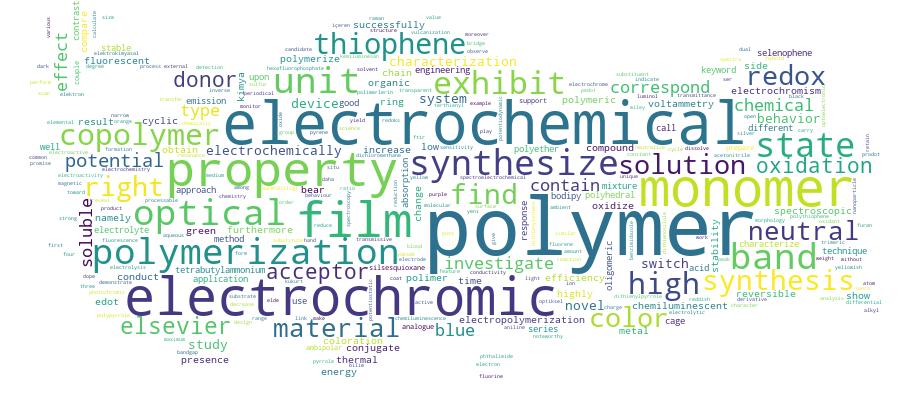
Competency Cloud
107 results
Scholarly Output Search Results
Now showing 1 - 10 of 107
Article Citation - WoS: 5Citation - Scopus: 6An Electrochromic Polymer Based on Cyclopenta[2,1-B;3,4 Effect of a Single Atom Alteration on the Electrochemical and Optical Properties of the Polymer Backbone(Elsevier Science Sa, 2020) Tutuncu, Esra; Varlik, Bengisu; Kesimal, Busra; Cihaner, Atilla; Ozkut, Merve Icli; Icli Ozkut, MerveAn electrochromic polymer, namely "poly(2,6-(3,3-didecyl-3,4-dihydro-2H-thieno [3,4-b] [1,4]dioxepin-6-yl)-4,4-dioctyl-4H-cyclopenta[2,1-b;3,4-b']dithiophene)" (P1), was electrochemically synthesized successfully, and its electrochemical and optical properties were investigated. The band gap of the polymer P1 was calculated as 1.77 eV with -5.45 eV Highest Occupied Molecular Orbital (HOMO) and -3.68 eV Lowest Unoccupied Molecular Orbital (LUMO) energy levels. The polymer P1 is bluish purple when neutralized and highly transparent greenish purple when oxidized. This color change was observed around 1.4 s between its redox states and optical contrast ratio was found to be as 49 % and 53 % with 234 cm(2)/C and 239 cm(2)/C coloration efficiencies at 590 nm and 634 nm, respectively. Moreover, the properties of this polymer were compared to its analogues and also during this comparison the effect of alteration of a single atom in the pendant unit was tried to be understood.Article Citation - WoS: 44Citation - Scopus: 45A Novel Electrochromic and Fluorescent Polythienylpyrrole Bearing 1,1′-Bipyrrole(Pergamon-elsevier Science Ltd, 2009) Cihaner, Atilla; Mert, Olcay; Demir, Ayhan S.A novel conducting polymer was successfully synthesized via electropolymerization of 1-(1H-pyrrol-1-yl)-2,5-di(thiophen-2-yl)-1H-pyrrole. The electrochemical and electro-optical properties of the corresponding polymer, which was the first example of polymer containing 1,1'-bipyrrole units, were elaborated using electroanalytical and spectroscopic techniques. Cyclic voltammograms and electro-optical studies showed that the polymer has a stable and well-defined reversible redox process as well as electrochromic behavior. The processable polymer film also possessed a yellowish orange light emitter property. (C) 2008 Elsevier Ltd. All rights reserved.Article Citation - WoS: 94Citation - Scopus: 95A New Conducting Polymer Bearing 4,4-difluoro-4-bora-3a,4a-diaza-s-indacene (bodipy) Subunit: Synthesis and Characterization(Pergamon-elsevier Science Ltd, 2008) Cihaner, Atilla; Algi, FatihA new monomer system based on thiophene, pyrrole and 4,4-difluoro-4-bora-3a,4a-diaza-s-indacene dye (SNS-BODIPY) was synthesized and its corresponding polymer (PSNS-BODIPY) was obtained via repetitive cycling or constant potential electrolysis in 0.1 M tetrabutylammonium hexafluorophosphate dissolved in dichloromethane. The PSNS-BODIPY film has very stable and well-defined reversible redox couples during p-doping process. Multi-electrochromic polymer film has a band gap of 2.9 eV with two absorption bands in its neutral state at 351 and 525 nm, attributed to the polymer backbone and BODIPY subunits, respectively. The percentage transmittance changes between both states (neutral and oxidized) were found as 12.1% for 351 nm and 17.7% for 525 nm in the visible region as well as 46.2% for 1050 nm in the near-infrared region. Beyond the robustness, the PSNS-BODIPY film has high redox stability (retaining 53.3% of its electroactivity at 351 nm after 2000 switching) with a low response time of 1.0 s. (C) 2008 Elsevier Ltd. All rights reserved.Article Catalyst-Free Synthesis of Thiourea-Linked Dumbbell-Shaped POSS for Ultrasensitive Determination of Prilocaine in Human Blood With Computational Insights(Elsevier, 2026) Bilge, Selva; Bayraktar, Ece Nur; Erkmen, Cem; Balci, Burcu; Abofoul, Anas; Ozkut, Merve Icli; Cihaner, AtillaAlthough various electrochemical sensors have been reported for the determination of local anesthetic drugs, most existing platforms suffer from limited sensitivity, insufficient surface stability, or inadequate electron-transfer efficiency, particularly when applied to complex biological matrices. Moreover, the potential of hybrid polyhedral oligomeric silsesquioxane (POSS)-based nanostructures combined with metal oxide nano-particles for improving electroanalytical performance has not yet been thoroughly explored. In this study, a high-sensitivity electrochemical nanosensor was developed for the determination of prilocaine (PC), an amide-type local anesthetic, using a glassy carbon (GC) electrode modified with POSS-titanium dioxide (TiO2) nano-particles (Nps). The combination of modifications provided a unique electrode surface by combining the high stability of POSS with the strong adsorption properties of TiO2 Nps, thereby increasing both surface loading and adsorption capacity. To elucidate the structure of the modification combination, 1H and 13C nuclear magnetic resonance (NMR) and Fourier transform infrared (FTIR) spectroscopic techniques, as well as Brunauer-Emmett-Teller (BET), X-Ray diffraction (XRD), Electrochemical impedance spectroscopy (EIS), and high-resolution transmission electron microscopy (HRTEM) analysis techniques were used, respectively. The analytical performance of the developed nanosensor was systematically optimized using differential pulse voltammetry (DPV), adsorptive stripping differential pulse voltammetry (AdSDPV), square wave voltammetry (SWV), and adsorptive stripping square wave voltammetry (AdSSWV) techniques. As a result of the optimization studies, the lowest limit of detection (LOD) was 3.66 x 10⁻⁸ M with the AdSSWV technique. DFT results corroborated the mechanism, indicating ring-centered electron donation (HOMO) and adsorption-favored N/O regions (MEP). Low LOD values were also recorded with other techniques, demonstrating the method's high sensitivity in analyte detection. In real sample analysis tests, PC recovery value in human blood samples was determined to be 98.69% using the AdSDPV technique. Despite the matrix effect, the nanosensor demonstrated high accuracy and reproducibility. The results indicate that the developed POSS-TiO2 Nps modified GC electrode sensor offers a high-performance, reliable, and good electrochemical detection platform suitable for use in biological and clinical applications.Article Synthesis, Properties, and Electrochemistry of a Photochromic Compound Based on Dithienylethene and Prodot(2015) Algı, Melek Pamuk; Cihaner, Atilla; Algı, FatihAbstract: The synthesis, photochromic features, and electrochemistry of a novel material based on dithienylethene (DTE) and 3,3-didecyl-3,4-dihydro-2H-thieno[3,4-b][1,4]dioxepine (didecyl-ProDOT) units are described. It is noteworthy that 1,2-bis(5-(3,3-didecyl-3,4-dihydro-2H-thieno[3,4-b][1,4]dioxepin-6-yl)-2-methylthiophen-3-yl)cyclopent-1-ene can be efficiently switched between open and closed states by light in both solution and in the solid poly(methyl metacrylate) (PMMA) matrix. It is also found that the emission of this novel compound can be switched on and off upon irradiation.Article Citation - WoS: 7Citation - Scopus: 6Side Chain Effect on the Electrochemical and Optical Properties of Thieno[3,4-c]pyrrole-4,6-dione Based Donor-Acceptor Donor Type Monomers and Polymers(Royal Soc Chemistry, 2023) Cakal, Deniz; Arabaci, Elif Demir; Yildirim, Erol; Cihaner, Atilla; Onal, Ahmet M.; Demir Arabacı, ElifIn organic pi-conjugated materials, side chains play great roles that impact far beyond solubility. In this work, we mainly focused on the synthesis of new donor-acceptor-donor (D-A-D) type conjugated monomers and their corresponding polymers appending thieno[3,4-c]pyrrole-4,6-dione (TPD) acceptor with a new side chain, fluorene (Fl), to investigate the side chain effect. In this context, to reveal the precise effect of the side chains on the optical and electrochemical properties of the monomers and polymers synthesized in this work, four series of D-A-D monomers, each containing a TPD core unit with a different side chain, are compared and discussed in relation to each other. Notably, it was discovered that the TPD acceptor unit can be modified with any functional group other than common alkyl chains to impart new functionalities by maintaining their superior optoelectronic properties. New types of side chains can be used to tune the physical characteristics, such as solubility, absorption, emission, and molecular packing. In this work, Fl-appended monomers as a new class of D-A-D type pi-conjugated molecules containing 3,4-ethylenedioxythiophene (EDOT (E)) and 3,4-propylenedioxythiophene (ProDOT (P)) donor units were studied and it was found that 1,3-bis(2,3-dihydrothieno[3,4-b][1,4]dioxin-5-yl)-5-(9H-fluoren-2-yl)-4H-thieno[3,4-c]pyrrole-4,6(5H)-dione (E(Fl)) and 1,3-bis(3,3-didecyl-3,4-dihydro-2H-thieno[3,4-b][1,4]dioxepin-6-yl)-5-(9H-fluoren-2-yl)-4H-thieno[3,4-c]pyrrole-4,6(5H)-dione (P(Fl)) exhibited reasonable quantum yields and their corresponding polymers revealed ambipolar character with slightly lower band gap as compared to the previous analogues containing other side chains. Observed experimental results were elucidated by first principle calculations. In this paper, we discussed that using side chain engineering is an effective strategy for improving next-generation organic pi-conjugated materials with the desired properties.Article Citation - WoS: 20Citation - Scopus: 22Electrochemical and Optical Properties of an Azo Dye Based Conducting Copolymer(Tubitak Scientific & Technological Research Council Turkey, 2009) Cihaner, Atilla; Algi, FatihThe electrochemical and optical properties of a novel conducting copolymer called poly(2,5'-dimethyl-[4-(2,5-di-thiophen-2-yl-pyrrol-1-yl)-phenyl]azobenzene-co-(3,4-ethylenedioxythiophene)) (poly(1-co-EDOT)) are reported. Electrochemically synthesized poly(1-co-EDOT) based on the azo dye has a well-defined and reversible redox couple (0.37 V vs. Ag/AgCl) with good cycle stability. The copolymer film exhibits high conductivity (13 S/cm) as well as electrochromic behavior (magenta when neutralized and transmissive sky blue when oxidized). Furthermore, electro-optically active copolymer film has a low band gap of 1.79 eV with a pi-pi* transition at 555 nm.Article Side Chain Effect on the Electrochemical and Optical Properties of Tpd Based Donor Acceptor Donor Type Monomers and Polymers(Molecular Systems Design and Engineering, 2023) Çakal, Deniz; Demir Arabacı, Elif; Yıldırım, Erol; Cihaner, Atilla; Önal, Ahmet M.In organic π-conjugated materials, side chains play great roles that are far beyond solubility. In this work, we mainly focused on the synthesis of new donor-acceptor-donor (D-A-D) type conjugated monomers and their corresponding polymers appending TPD acceptor with a new side chain, fluorene, to investigate the side chain effect. In this context, to reveal the precise effect of the side chains on the optical and electrochemical properties of the monomers and polymers synthesized in this work, four series of D-A-D monomers, each containing a TPD core unit with a different side chain, have been discussed in comparison to each other. Notably, it was discovered that TPD acceptor unit can be modified by any functional group other than common alkyl chains to impart new functionalities by keeping their superior optoelectronic properties. New kind of side chains can be used to tune the physical characteristics such as solubility, absorption, emission and molecular packing. In this paper, fluorene-appended monomers as a new class of D-A-D type π-conjugated molecules were studied and it was found that E(Fl) and P(Fl) exhibited resonable quantum yields and their corresponding polymers revealed ambipolar character with slightly lower band gap as compared to the previous analougs containing other side chains. Observed experimental results were elucidated by first principle calculations. In this paper, we discussed that using side chain engineering is an effective strategy to improve next-generation organic π-conjugated materials with the desired properties.Article Citation - WoS: 5Citation - Scopus: 5Electrochemical Polymerization of 4-Allylanisole(Pergamon-elsevier Science Ltd, 2001) Cihaner, A; Testereci, HN; Önal, AMElectrochemical polymerization of 3-allylanisole (4AA). via constant potential electrolysis, has been investigated in acetonitrile using two different supporting electrolytes. Redox behavior of the monomer was also studied in the same solvent-electrolyte couples at room temperature. Electrochemical polymerization of the monomer yielded insoluble polymer films on the electrode surface, which bears a very low conductivity, together with the low molecular weight polymers in the bulk of the solution. The decrease in the monomer concentration, during the electrochemical polymerization. was monitored by taking the cyclic voltammogram of the electrolysis solution. The effect of temperature on the rate of electrochemical polymerization was: also studied. The polymers were characterized by taking the H-1-NMR and FTIR spectra. Molecular weight of the soluble polymer was determined by vapor pressure osmometry. Thermal analysis of the polymer film and soluble polymer were done by DSC. (C) 2001 Elsevier Science Ltd. All rights reserved.Article Citation - WoS: 8Citation - Scopus: 8Improvement of Optical Properties and Redox Stability of Poly(3,4-Ethylenedioxythiophene)(Elsevier Sci Ltd, 2018) Ertan, Salih; Cihaner, AtillaIn order to improve the optical properties and redox stability of poly(3,4-ethylenedioxythiophene) (PEDOT) without changing its electrochemical and electrochromic behaviour, it was supported with alkyl-substituted polyhedral oligomeric silsesquioxane (POSS) cage. The corresponding copolymers were obtained electrochemically via potentiostatic or potentiodynamic methods and compared to the parent homopolymers. Electrochemical polymerization of EDOT and POSS containing EDOT called EDOT-POSS in various monomer feed ratios was performed in an electrolyte solution of 0.1 M TBAPF(6) dissolved in a mixture of dichloromethane and acetonitrile (1/3: v/v). Just as PEDOT, the copolymers represented the similar band gap (1.61 eV), redox and electrochromic behaviors. On the other hand, when compared to the parent PEDOT, the presence of POSS cages in the copolymer backbone improved the redox stability and optical properties of PEDOT such as higher percent transmittance change (65% at 621 nm), higher transparency at oxidized state, lower switching time (similar to 1.0 s) and higher coloration efficiency (463 cm(2)/C for 95% switching) as well as higher electrochemical stability (86% of its electroactivity retains after 1750 cycles under ambient conditions).
