
Cihaner, Atilla
Loading...
Profile URL
Name Variants
C.,Atilla
A., Cihaner
C., Atilla
Cihaner A.
A.,Cihaner
Cihaner, Atilla
Cihaner,A.
Atilla Cihaner
Atilla, Cihaner
Cihaner,Atilla
Cihaner, A.
Cihaner, A
A., Cihaner
C., Atilla
Cihaner A.
A.,Cihaner
Cihaner, Atilla
Cihaner,A.
Atilla Cihaner
Atilla, Cihaner
Cihaner,Atilla
Cihaner, A.
Cihaner, A
Job Title
Profesör Doktor
Email Address
atilla.cihaner@atilim.edu.tr
Main Affiliation
Chemical Engineering
Status
Website
ORCID ID
Scopus Author ID
Turkish CoHE Profile ID
Google Scholar ID
WoS Researcher ID
Sustainable Development Goals
2
ZERO HUNGER

0
Research Products
11
SUSTAINABLE CITIES AND COMMUNITIES

0
Research Products
14
LIFE BELOW WATER

0
Research Products
6
CLEAN WATER AND SANITATION

1
Research Products
1
NO POVERTY

0
Research Products
5
GENDER EQUALITY

0
Research Products
9
INDUSTRY, INNOVATION AND INFRASTRUCTURE

0
Research Products
16
PEACE, JUSTICE AND STRONG INSTITUTIONS

0
Research Products
17
PARTNERSHIPS FOR THE GOALS

0
Research Products
15
LIFE ON LAND

0
Research Products
10
REDUCED INEQUALITIES

0
Research Products
7
AFFORDABLE AND CLEAN ENERGY

3
Research Products
8
DECENT WORK AND ECONOMIC GROWTH

0
Research Products
4
QUALITY EDUCATION

0
Research Products
12
RESPONSIBLE CONSUMPTION AND PRODUCTION

0
Research Products
3
GOOD HEALTH AND WELL-BEING

1
Research Products
13
CLIMATE ACTION

0
Research Products

Documents
101
Citations
2363
h-index
28

Documents
103
Citations
2256

Scholarly Output
121
Articles
108
Views / Downloads
531/1823
Supervised MSc Theses
12
Supervised PhD Theses
0
WoS Citation Count
2256
Scopus Citation Count
2342
WoS h-index
27
Scopus h-index
28
Patents
0
Projects
13
WoS Citations per Publication
18.64
Scopus Citations per Publication
19.36
Open Access Source
6
Supervised Theses
12
Google Analytics Visitor Traffic
| Journal | Count |
|---|---|
| Electrochimica Acta | 15 |
| Journal of Electroanalytical Chemistry | 13 |
| Turkish Journal of Chemistry | 6 |
| Dyes and Pigments | 6 |
| Organic Electronics | 6 |
Current Page: 1 / 8
Scopus Quartile Distribution
Competency Cloud
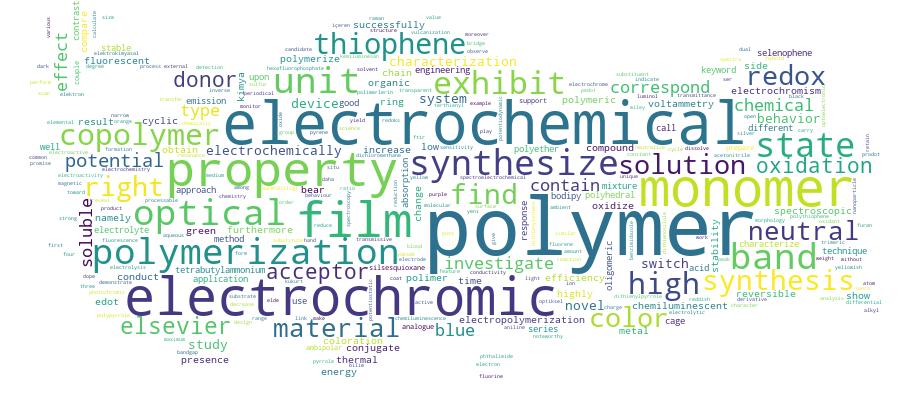
107 results
Scholarly Output Search Results
Now showing 1 - 10 of 107
Article Citation - WoS: 21Citation - Scopus: 21Synthesis and Properties of a Novel Redox Driven Chemiluminescent Material Built on a Terthienyl System(Pergamon-elsevier Science Ltd, 2009) Atilgan, Nurdan; Algi, Fatih; Onal, Ahmet M.; Cihaner, AtillaA novel redox driven chemiluminescent material built on a terthienyl system, namely 5,7-di-ethylenedioxythiophen-2-yl-2,3-dihydro-thieno[3,4-d]pyridazine-1,4-dione (ETE-Lum), which is soluble in both organic media and basic aqueous solution was synthesized and characterized. Furthermore, its polymer, PETE-Lum, which is one of the most rare examples of chemiluminescent polymeric materials bearing a pyridazine unit, was obtained successfully by electrochemical means. Both of the materials give chemiluminescence either by treatment with oxidants (H2O2 and/or KMnO4) or by the application of a potential pulse. (C) 2009 Elsevier Ltd. All rights reserved.Article Citation - WoS: 30Citation - Scopus: 31A New Low-Voltage Polymeric Electrochromic(Elsevier Sci Ltd, 2010) Pamuk, Melek; Tirkes, Seha; Cihaner, Atilla; Algi, FatihDesign, synthesis, and properties of a novel donor-acceptor-donor type low-voltage-driven green polymeric electrochrome, P1, which is based on 8-(2,3-dihydrothieno[3,4-b][1,4]dioxin-5-yl)-11-(2,3-dihydrothieno[3,4-b][l,4]dioxin-7-yl)acenaphtho[1,2-b]quinoxaline (1) are highlighted. It is noted that P1 has an ambipolar (n- and p-doping processes) character in 0.1 M tetrabutylammonium hexafluorophosphate/dichloromethame solution and switches to a transmissive blue state upon oxidation. Furthermore, this new polymeric electrochromic candidate exhibits high redox stability, high coloration efficiency and/or contrast ratio, high percent transmittance (%T) and low response time (1.0 s) with a band gap of 1.10 eV-1.25 eV. (C) 2009 Elsevier Ltd. All rights reserved.Article Citation - WoS: 5Citation - Scopus: 5Electrochemical Polymerization of Para-Substituted Haloanilines(Taylor & Francis inc, 2006) Cihaner, A; Önal, AMPolyhaloanilines: poly(4-fluoroaniline) (P4FAN), poly(4-chloroaniline) (P4CAN), and poly(4-bromoaniline) (P4BAN), are synthesized from para-substituted haloaniline monomers; 4-fluoroaniline (4FAN), 4-chloroaniline (4CAN), and 4-bromoaniline (4BAN), respectively, via constant potential electrolysis (CPE) in acetonitrile-water mixture (1:1 v/v) with NaClO4 as supporting electrolyte. Prior to CPE, electrochemical behavior of the monomers were investigated in organic medium utilizing cyclic voltammetry (CV). The course of CPE was monitored using in-situ UV-VIS spectroscopic technique. Characterization of polymer products have been carried out using FT-IR and NMR spectroscopic techniques and thermal behaviors were studied using differential scanning calorimeter (DSC). Polyhaloanilines synthesized by electrochemical oxidation were doped using iodine and the change in the paramagnetic behavior was monitored by ESR, UV-VIS, and FT-IR.Article Citation - WoS: 7Citation - Scopus: 9Electrochemical Copolymerization of 2-Substituted Thiophene Derivative Linked by Polyether Bridge With Thiophene(Elsevier Science Sa, 2005) Cihaner, A; Önal, AMNew conducting copolymers have been synthesized via electrochemical oxidation of thiophene (Th) in the presence of monomer bis(2-thienyl)ethyl (1). Cyclic voltammetry (CV) studies showed that the presence of monomer I in the electrolytic solution greatly changes the CV behaviour of the formation of the polythiophene films. It is found that the increasing ratio of I was found to decrease electroactivity of copoly(I-Th). Electrochemical synthesis of copolymer films was achieved via constant potential electrolysis (CPE) in an electrolytic solution containing 0.1 M tetrabutylammonium hexafluorophosphate (TBAPF(6)) dissolved in CH3CN. Spectroelectrochemical (SPEL) properties of the films were investigated using UV-vis spectroscopic technique. (C) 2005 Elsevier B.V. All rights reserved.Article Citation - WoS: 20Citation - Scopus: 21Electrochemical Behaviour and Electrochemical Polymerization of Fluoro-Substituted Anilines(Wiley, 2002) Cihaner, A; Önal, AMThe electrochemical behaviour of three fluoro-substituted aniline monomers, 2-fluoroaniline (2FAN), 3-fluoroaniline (3FAN) and 4-fluoroaniline (4FAN), was investigated in aqueous acidic and organic media by means of cyclic voltammetry (CV) studies. Constant potential electrolysis (CPE) of the monomers in acetonitrile-water mixture (1: 1 by volume) using NaClO4 as supporting electrolyte yielded soluble polymers. The mechanism of electrochemical polymerization was investigated using in situ electron spin resonance (ESR) and in situ UV-VIS spectroscopic techniques for one of the monomers (4FAN). Both CV and in situ LTV-VIS measurements indicated that the polymers obtained are in the emeraldine base form. In situ ESR studies indicated that electrochemical polymerization involves a radical-cation as an intermediate. Characterization of polymer products have been carried out using FTIR and NMR spectroscopic techniques, and thermal behaviour was studied using differential scanning calorimetry (DSC). It was found that conductivity can be imparted to assynthesized polyfluoroanilines via iodine doping. (C) 2002 Society of Chemical Industry.Article Citation - WoS: 5Citation - Scopus: 6An Electrochromic Polymer Based on Cyclopenta[2,1-B;3,4 Effect of a Single Atom Alteration on the Electrochemical and Optical Properties of the Polymer Backbone(Elsevier Science Sa, 2020) Tutuncu, Esra; Varlik, Bengisu; Kesimal, Busra; Cihaner, Atilla; Ozkut, Merve IcliAn electrochromic polymer, namely "poly(2,6-(3,3-didecyl-3,4-dihydro-2H-thieno [3,4-b] [1,4]dioxepin-6-yl)-4,4-dioctyl-4H-cyclopenta[2,1-b;3,4-b']dithiophene)" (P1), was electrochemically synthesized successfully, and its electrochemical and optical properties were investigated. The band gap of the polymer P1 was calculated as 1.77 eV with -5.45 eV Highest Occupied Molecular Orbital (HOMO) and -3.68 eV Lowest Unoccupied Molecular Orbital (LUMO) energy levels. The polymer P1 is bluish purple when neutralized and highly transparent greenish purple when oxidized. This color change was observed around 1.4 s between its redox states and optical contrast ratio was found to be as 49 % and 53 % with 234 cm(2)/C and 239 cm(2)/C coloration efficiencies at 590 nm and 634 nm, respectively. Moreover, the properties of this polymer were compared to its analogues and also during this comparison the effect of alteration of a single atom in the pendant unit was tried to be understood.Article Citation - WoS: 94Citation - Scopus: 95A New Conducting Polymer Bearing 4,4-difluoro-4-bora-3a,4a-diaza-s-indacene (bodipy) Subunit: Synthesis and Characterization(Pergamon-elsevier Science Ltd, 2008) Cihaner, Atilla; Algi, FatihA new monomer system based on thiophene, pyrrole and 4,4-difluoro-4-bora-3a,4a-diaza-s-indacene dye (SNS-BODIPY) was synthesized and its corresponding polymer (PSNS-BODIPY) was obtained via repetitive cycling or constant potential electrolysis in 0.1 M tetrabutylammonium hexafluorophosphate dissolved in dichloromethane. The PSNS-BODIPY film has very stable and well-defined reversible redox couples during p-doping process. Multi-electrochromic polymer film has a band gap of 2.9 eV with two absorption bands in its neutral state at 351 and 525 nm, attributed to the polymer backbone and BODIPY subunits, respectively. The percentage transmittance changes between both states (neutral and oxidized) were found as 12.1% for 351 nm and 17.7% for 525 nm in the visible region as well as 46.2% for 1050 nm in the near-infrared region. Beyond the robustness, the PSNS-BODIPY film has high redox stability (retaining 53.3% of its electroactivity at 351 nm after 2000 switching) with a low response time of 1.0 s. (C) 2008 Elsevier Ltd. All rights reserved.Article Catalyst-Free Synthesis of Thiourea-Linked Dumbbell-Shaped POSS for Ultrasensitive Determination of Prilocaine in Human Blood with Computational Insights(Elsevier Inc., 2026) Bilge, S.; Bayraktar, E.N.; Erkmen, C.; Balci, B.; Abofoul, A.; Içli-Özkut, M.I.; Cihaner, A.Although various electrochemical sensors have been reported for the determination of local anesthetic drugs, most existing platforms suffer from limited sensitivity, insufficient surface stability, or inadequate electron-transfer efficiency, particularly when applied to complex biological matrices. Moreover, the potential of hybrid polyhedral oligomeric silsesquioxane (POSS)-based nanostructures combined with metal oxide nanoparticles for improving electroanalytical performance has not yet been thoroughly explored. In this study, a high-sensitivity electrochemical nanosensor was developed for the determination of prilocaine (PC), an amide-type local anesthetic, using a glassy carbon (GC) electrode modified with POSS‑titanium dioxide (TiO2) nanoparticles (Nps). The combination of modifications provided a unique electrode surface by combining the high stability of POSS with the strong adsorption properties of TiO2 Nps, thereby increasing both surface loading and adsorption capacity. To elucidate the structure of the modification combination, 1H and 13C nuclear magnetic resonance (NMR) and Fourier transform infrared (FTIR) spectroscopic techniques, as well as Brunauer–Emmett–Teller (BET), X-Ray diffraction (XRD), Electrochemical impedance spectroscopy (EIS), and high-resolution transmission electron microscopy (HRTEM) analysis techniques were used, respectively. The analytical performance of the developed nanosensor was systematically optimized using differential pulse voltammetry (DPV), adsorptive stripping differential pulse voltammetry (AdSDPV), square wave voltammetry (SWV), and adsorptive stripping square wave voltammetry (AdSSWV) techniques. As a result of the optimization studies, the lowest limit of detection (LOD) was 3.66 × 10⁻⁸ M with the AdSSWV technique. DFT results corroborated the mechanism, indicating ring-centered electron donation (HOMO) and adsorption-favored N/O regions (MEP). Low LOD values were also recorded with other techniques, demonstrating the method's high sensitivity in analyte detection. In real sample analysis tests, PC recovery value in human blood samples was determined to be 98.69% using the AdSDPV technique. Despite the matrix effect, the nanosensor demonstrated high accuracy and reproducibility. The results indicate that the developed POSS-TiO2 Nps modified GC electrode sensor offers a high-performance, reliable, and good electrochemical detection platform suitable for use in biological and clinical applications. © 2024Article Citation - WoS: 11Citation - Scopus: 12Ag Nanostructures on a Poly(3,4-Ethylenedioxythiophene) Film Prepared With Electrochemical Route: a Controllable Roughened Sers Substrate With High Repeatability and Stability(Pergamon-elsevier Science Ltd, 2012) Dogan, Uzeyir; Kaya, Murat; Cihaner, Atilla; Volkan, MurvetA simple, reliable and reproducible one-step electrochemical method for the preparation of surface-enhanced Raman-active polymer-mediated silver nanoparticles (Ag NPs) on planar indium tin oxide (ITO) coated glass substrates was reported. Poly(3,4-ethylenedioxythiophene) (PEDOT) film was used as a support material for dispersing nanostructured silver nanostructures on the surface homogeneously, since 3,4-ethylenedioxythiophene (EDOT) monomer polymerizes regioregularly. The optical properties and morphologies of the silver substrates have been investigated by ultraviolet-visible (UV-vis) spectroscopy and field emission scanning electron microscopy (FE-SEM). The UV-vis and FE-SEM results revealed that the Ag nanostructures separately appeared on the PEDOT coated ITO after reduction. The effect of the thickness of PEDOT polymer film, reduction potential of silver, the concentration of silver ion solution and the amount of silver particle on the polymer film on the SERS response were studied as well as repeatability and temporal stability of prepared substrates. Brilliant cresyl blue (BCB) has been used as Raman probes to evaluate the properties of the new SERS substrates. Signals collected over multiple spots within the same substrate resulted in a relative standard deviation (RSD) of 9.34%, while an RSD of 11.05% was measured in signals collected from different substrates. The SERS-active substrates were robust and stable which lost only 5.71% of initial intensity after 1 month. (C) 2012 Elsevier Ltd. All rights reserved.Article Citation - WoS: 7Citation - Scopus: 9Pyrrole Coupling Chemistry: Investigation of Electroanalytic, Spectroscopic and Thermal Properties of N-Substituted Poly(bis-Pyrrole) Films(Royal Soc Chemistry, 2013) Mert, Olcay; Demir, Ayhan S.; Cihaner, AtillaAn etheric member of N-linked polybispyrroles (PolybisPy) based on 1-(3-(2-(2-(3-(1H-pyrrol-1-yl)propoxy)ethoxy)ethoxy)propyl)-1H-pyrrole (1) was electrochemically synthesized for the versatile investigation of its exciting electrochromic and ion receptor properties. It has been fully characterized by electroanalytic, spectroscopic, thermal, and four-probe techniques. It was thereby found that P1 shows strong stability, and a reversible redox process as well as a good electrochromic material property; transparent yellow in the neutral state, light pink in the intermediate state, and blue in the oxidized state. Also, the corresponding polymer (P1) exhibited a selective voltammetric response towards Na+ among the alkali series in an organic medium. Moreover, P1 film was employed for the detection of Ag+ ions in the solution with cyclic voltammetry without precipitants or complexing ligands, and SEM images confirmed the deposition of metallic silver on the film surface. These prominent features also make P1 a good candidate for many practical uses, such as the recovery of metals and ion sensors.
