
Cihaner, Atilla
Loading...
Profile URL
Name Variants
C.,Atilla
A., Cihaner
C., Atilla
Cihaner A.
A.,Cihaner
Cihaner, Atilla
Cihaner,A.
Atilla Cihaner
Atilla, Cihaner
Cihaner,Atilla
Cihaner, A.
Cihaner, A
A., Cihaner
C., Atilla
Cihaner A.
A.,Cihaner
Cihaner, Atilla
Cihaner,A.
Atilla Cihaner
Atilla, Cihaner
Cihaner,Atilla
Cihaner, A.
Cihaner, A
Job Title
Profesör Doktor
Email Address
atilla.cihaner@atilim.edu.tr
Main Affiliation
Chemical Engineering
Status
Website
ORCID ID
Scopus Author ID
Turkish CoHE Profile ID
Google Scholar ID
WoS Researcher ID
Sustainable Development Goals
5
GENDER EQUALITY

0
Research Products
14
LIFE BELOW WATER

0
Research Products
10
REDUCED INEQUALITIES

0
Research Products
3
GOOD HEALTH AND WELL-BEING

1
Research Products
2
ZERO HUNGER

0
Research Products
9
INDUSTRY, INNOVATION AND INFRASTRUCTURE

0
Research Products
16
PEACE, JUSTICE AND STRONG INSTITUTIONS

0
Research Products
11
SUSTAINABLE CITIES AND COMMUNITIES

0
Research Products
8
DECENT WORK AND ECONOMIC GROWTH

0
Research Products
13
CLIMATE ACTION

0
Research Products
4
QUALITY EDUCATION

0
Research Products
6
CLEAN WATER AND SANITATION

1
Research Products
1
NO POVERTY

0
Research Products
15
LIFE ON LAND

0
Research Products
17
PARTNERSHIPS FOR THE GOALS

0
Research Products
7
AFFORDABLE AND CLEAN ENERGY

3
Research Products
12
RESPONSIBLE CONSUMPTION AND PRODUCTION

0
Research Products

Documents
101
Citations
2366
h-index
28

Documents
103
Citations
2258

Scholarly Output
121
Articles
108
Views / Downloads
61/0
Supervised MSc Theses
12
Supervised PhD Theses
0
WoS Citation Count
2257
Scopus Citation Count
2347
WoS h-index
27
Scopus h-index
28
Patents
0
Projects
13
WoS Citations per Publication
18.65
Scopus Citations per Publication
19.40
Open Access Source
6
Supervised Theses
12
Google Analytics Visitor Traffic
| Journal | Count |
|---|---|
| Electrochimica Acta | 15 |
| Journal of Electroanalytical Chemistry | 13 |
| Turkish Journal of Chemistry | 6 |
| Dyes and Pigments | 6 |
| Organic Electronics | 6 |
Current Page: 1 / 8
Scopus Quartile Distribution
Competency Cloud
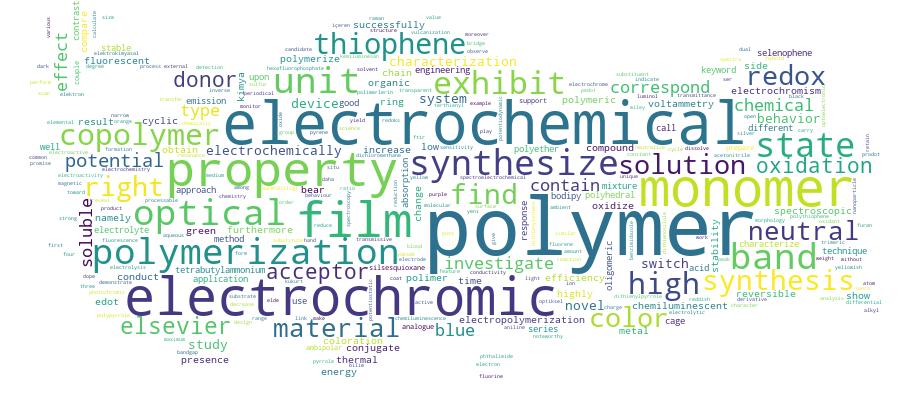
108 results
Scholarly Output Search Results
Now showing 1 - 10 of 108
Article Citation - WoS: 65Citation - Scopus: 67An Electrochromic and Fluorescent Polymer Based on 1-(1(Elsevier Science Sa, 2008) Cihaner, Atilla; Algi, FatihA novel polymer was synthesized by electrochemical polymerization of 1-(1-naphthyl)-2,5-di-2-thienyl-1H-pyrrole (SNS-1-NAPH). The corresponding polymer (PSNS-1-NAPH) was characterized by cyclic voltammetry, FT-IR and UV-vis spectroscopy. The polymer has a very well-defined and reversible redox process in both organic and aqueous solutions. Furthermore, it shows stable electrochromic behavior; yellow in the neutral state, green in the intermediate state and violet in the oxidized state. PSNS-1-NAPH is soluble in common solvents. Although SNS-1-NAPH is almost nonfluorescent, its polymer is a yellow and/or green light emitter. (c) 2007 Elsevier B.V. All rights reserved.Article Citation - WoS: 5Citation - Scopus: 5Designing a Solution Processable Poly(3,4-Ethylenedioxyselenophene) Analogue(Amer Chemical Soc, 2018) Ertan, Salih; Cihaner, AtillaA new derivative (EDOS-POSS) of 3,4-ethylenedioxyselenophene integrated with alkyl-substituted polyhedral oligomeric silsesquioxane (POSS) cage was synthesized and characterized. The electroactive monomer was successfully polymerized via both chemical and electrochemical methods. The obtained polymer called PEDOS-POSS was solution-processable and soluble in common organic solvents like tetrahydrofuran, toluene, dichloromethane, and chloroform. PEDOS-POSS polymer exhibited electrochromic behavior: pure blue when neutralized and highly transparent when oxidized. When compared to the parent PEDOS (1.40 eV with lambda(max) = 673 nm), PEDOS-POSS polymer film has a somewhat higher band gap (1.50 eV with lambda(max) = 668 and 724 nm). Also, PEDOS POSS exhibited high optical contrast ratio (59%) and coloration efficiency (593 cm(2)/C for 95% switching) with a low switching time (0.7 s) due to the presence of POSS cage in the polymer backbone. In addition, PEDOS-POSS polymer film was highly robust and stable under ambient conditions (without purging the electrolyte solution with inert gas). Polymer films demonstrated high electrochemical stability; for example, it retained 76% of its electroactivity after 5000 cycles. Furthermore, the polymers exhibited fluorescent properties and exhibited a reddish orange emission centered about at 640 nm. Based on the findings, to the best of our knowledge, it can be concluded that the polymers are the first examples of soluble and fluorescent PEDOS derivatives. These promising properties make PEDOS-POSS polymer a potential material for bioapplications like imaging the cancer cells as well as optoelectronic applications.Article Citation - WoS: 21Citation - Scopus: 21Synthesis and Properties of a Novel Redox Driven Chemiluminescent Material Built on a Terthienyl System(Pergamon-elsevier Science Ltd, 2009) Atilgan, Nurdan; Algi, Fatih; Onal, Ahmet M.; Cihaner, AtillaA novel redox driven chemiluminescent material built on a terthienyl system, namely 5,7-di-ethylenedioxythiophen-2-yl-2,3-dihydro-thieno[3,4-d]pyridazine-1,4-dione (ETE-Lum), which is soluble in both organic media and basic aqueous solution was synthesized and characterized. Furthermore, its polymer, PETE-Lum, which is one of the most rare examples of chemiluminescent polymeric materials bearing a pyridazine unit, was obtained successfully by electrochemical means. Both of the materials give chemiluminescence either by treatment with oxidants (H2O2 and/or KMnO4) or by the application of a potential pulse. (C) 2009 Elsevier Ltd. All rights reserved.Article Citation - WoS: 30Citation - Scopus: 31A New Low-Voltage Polymeric Electrochromic(Elsevier Sci Ltd, 2010) Pamuk, Melek; Tirkes, Seha; Cihaner, Atilla; Algi, FatihDesign, synthesis, and properties of a novel donor-acceptor-donor type low-voltage-driven green polymeric electrochrome, P1, which is based on 8-(2,3-dihydrothieno[3,4-b][1,4]dioxin-5-yl)-11-(2,3-dihydrothieno[3,4-b][l,4]dioxin-7-yl)acenaphtho[1,2-b]quinoxaline (1) are highlighted. It is noted that P1 has an ambipolar (n- and p-doping processes) character in 0.1 M tetrabutylammonium hexafluorophosphate/dichloromethame solution and switches to a transmissive blue state upon oxidation. Furthermore, this new polymeric electrochromic candidate exhibits high redox stability, high coloration efficiency and/or contrast ratio, high percent transmittance (%T) and low response time (1.0 s) with a band gap of 1.10 eV-1.25 eV. (C) 2009 Elsevier Ltd. All rights reserved.Article Synthesis, Properties, and Electrochemistry of a Photochromic Compound Based on Dithienylethene and Prodot(2015) Algı, Melek Pamuk; Cihaner, Atilla; Algı, FatihAbstract: The synthesis, photochromic features, and electrochemistry of a novel material based on dithienylethene (DTE) and 3,3-didecyl-3,4-dihydro-2H-thieno[3,4-b][1,4]dioxepine (didecyl-ProDOT) units are described. It is noteworthy that 1,2-bis(5-(3,3-didecyl-3,4-dihydro-2H-thieno[3,4-b][1,4]dioxepin-6-yl)-2-methylthiophen-3-yl)cyclopent-1-ene can be efficiently switched between open and closed states by light in both solution and in the solid poly(methyl metacrylate) (PMMA) matrix. It is also found that the emission of this novel compound can be switched on and off upon irradiation.Article Citation - WoS: 7Citation - Scopus: 6Side Chain Effect on the Electrochemical and Optical Properties of Thieno[3,4-c]pyrrole-4,6-dione Based Donor-Acceptor Donor Type Monomers and Polymers(Royal Soc Chemistry, 2023) Cakal, Deniz; Arabaci, Elif Demir; Yildirim, Erol; Cihaner, Atilla; Onal, Ahmet M.In organic pi-conjugated materials, side chains play great roles that impact far beyond solubility. In this work, we mainly focused on the synthesis of new donor-acceptor-donor (D-A-D) type conjugated monomers and their corresponding polymers appending thieno[3,4-c]pyrrole-4,6-dione (TPD) acceptor with a new side chain, fluorene (Fl), to investigate the side chain effect. In this context, to reveal the precise effect of the side chains on the optical and electrochemical properties of the monomers and polymers synthesized in this work, four series of D-A-D monomers, each containing a TPD core unit with a different side chain, are compared and discussed in relation to each other. Notably, it was discovered that the TPD acceptor unit can be modified with any functional group other than common alkyl chains to impart new functionalities by maintaining their superior optoelectronic properties. New types of side chains can be used to tune the physical characteristics, such as solubility, absorption, emission, and molecular packing. In this work, Fl-appended monomers as a new class of D-A-D type pi-conjugated molecules containing 3,4-ethylenedioxythiophene (EDOT (E)) and 3,4-propylenedioxythiophene (ProDOT (P)) donor units were studied and it was found that 1,3-bis(2,3-dihydrothieno[3,4-b][1,4]dioxin-5-yl)-5-(9H-fluoren-2-yl)-4H-thieno[3,4-c]pyrrole-4,6(5H)-dione (E(Fl)) and 1,3-bis(3,3-didecyl-3,4-dihydro-2H-thieno[3,4-b][1,4]dioxepin-6-yl)-5-(9H-fluoren-2-yl)-4H-thieno[3,4-c]pyrrole-4,6(5H)-dione (P(Fl)) exhibited reasonable quantum yields and their corresponding polymers revealed ambipolar character with slightly lower band gap as compared to the previous analogues containing other side chains. Observed experimental results were elucidated by first principle calculations. In this paper, we discussed that using side chain engineering is an effective strategy for improving next-generation organic pi-conjugated materials with the desired properties.Article Citation - WoS: 20Citation - Scopus: 22Electrochemical and Optical Properties of an Azo Dye Based Conducting Copolymer(Tubitak Scientific & Technological Research Council Turkey, 2009) Cihaner, Atilla; Algi, FatihThe electrochemical and optical properties of a novel conducting copolymer called poly(2,5'-dimethyl-[4-(2,5-di-thiophen-2-yl-pyrrol-1-yl)-phenyl]azobenzene-co-(3,4-ethylenedioxythiophene)) (poly(1-co-EDOT)) are reported. Electrochemically synthesized poly(1-co-EDOT) based on the azo dye has a well-defined and reversible redox couple (0.37 V vs. Ag/AgCl) with good cycle stability. The copolymer film exhibits high conductivity (13 S/cm) as well as electrochromic behavior (magenta when neutralized and transmissive sky blue when oxidized). Furthermore, electro-optically active copolymer film has a low band gap of 1.79 eV with a pi-pi* transition at 555 nm.Article Side Chain Effect on the Electrochemical and Optical Properties of Tpd Based Donor Acceptor Donor Type Monomers and Polymers(Molecular Systems Design and Engineering, 2023) Çakal, Deniz; Demir Arabacı, Elif; Yıldırım, Erol; Cihaner, Atilla; Önal, Ahmet M.In organic π-conjugated materials, side chains play great roles that are far beyond solubility. In this work, we mainly focused on the synthesis of new donor-acceptor-donor (D-A-D) type conjugated monomers and their corresponding polymers appending TPD acceptor with a new side chain, fluorene, to investigate the side chain effect. In this context, to reveal the precise effect of the side chains on the optical and electrochemical properties of the monomers and polymers synthesized in this work, four series of D-A-D monomers, each containing a TPD core unit with a different side chain, have been discussed in comparison to each other. Notably, it was discovered that TPD acceptor unit can be modified by any functional group other than common alkyl chains to impart new functionalities by keeping their superior optoelectronic properties. New kind of side chains can be used to tune the physical characteristics such as solubility, absorption, emission and molecular packing. In this paper, fluorene-appended monomers as a new class of D-A-D type π-conjugated molecules were studied and it was found that E(Fl) and P(Fl) exhibited resonable quantum yields and their corresponding polymers revealed ambipolar character with slightly lower band gap as compared to the previous analougs containing other side chains. Observed experimental results were elucidated by first principle calculations. In this paper, we discussed that using side chain engineering is an effective strategy to improve next-generation organic π-conjugated materials with the desired properties.Article Synthesis and Electropolymerization of a Selenophene Based Chemiluminescent Monomer and Its Use in Blood Detection(Elsevier Sci Ltd, 2025) Balci, Burcu; Cakal, Deniz; Cihaner, AtillaA new selenophene based trimeric chemiluminescent compound, namely 5,7-di(selenophen-2-yl)-2,3-dihydrothieno[3,4-d]pyridazine-1,4-dione (S2T-Lum), was synthesized in two steps via electron donor-acceptor-donor approach. Its chemiluminescent reaction with hydrogen peroxide was investigated in an alkaline solution in the presence of various catalysts such as different metal ions, hemin and blood samples and the results were compared with its thiophene analogue (T2T-Lum) and luminol. It was found that S2T-Lum was very sensitive to copper(II) and iron(III) ions, and blood samples. Also, it can be easily concluded that S2T-Lum as a new member of luminol type compounds is a potential candidate for the detection of blood findings in forensic science. Furthermore, S2T-Lum has an irreversible oxidation peak at 1.28 V vs Ag/AgCl, which is responsible from its electropolymerization. S2T-Lum was successfully polymerized electrochemically via potentiodynamic electrolysis without cleavage of its chemiluminescent active appendage. To the best of our knowledge, its corresponding polymer PS2T-Lum film is the first member of selenophene based luminol type electroactive polymers.Article Citation - WoS: 8Citation - Scopus: 8Improvement of Optical Properties and Redox Stability of Poly(3,4-Ethylenedioxythiophene)(Elsevier Sci Ltd, 2018) Ertan, Salih; Cihaner, AtillaIn order to improve the optical properties and redox stability of poly(3,4-ethylenedioxythiophene) (PEDOT) without changing its electrochemical and electrochromic behaviour, it was supported with alkyl-substituted polyhedral oligomeric silsesquioxane (POSS) cage. The corresponding copolymers were obtained electrochemically via potentiostatic or potentiodynamic methods and compared to the parent homopolymers. Electrochemical polymerization of EDOT and POSS containing EDOT called EDOT-POSS in various monomer feed ratios was performed in an electrolyte solution of 0.1 M TBAPF(6) dissolved in a mixture of dichloromethane and acetonitrile (1/3: v/v). Just as PEDOT, the copolymers represented the similar band gap (1.61 eV), redox and electrochromic behaviors. On the other hand, when compared to the parent PEDOT, the presence of POSS cages in the copolymer backbone improved the redox stability and optical properties of PEDOT such as higher percent transmittance change (65% at 621 nm), higher transparency at oxidized state, lower switching time (similar to 1.0 s) and higher coloration efficiency (463 cm(2)/C for 95% switching) as well as higher electrochemical stability (86% of its electroactivity retains after 1750 cycles under ambient conditions).
