
Mıshra, Alok
Loading...
Profile URL
Name Variants
Mishra, A.
Mishra, A
Mishra A.
Alok, Mishra
Mıshra, Alok
A., Mishra
Alok M.
M., Alok
M.,Alok
Mishra, Alok
Mishra,A.
A.,Mıshra
A.,Mishra
Alok, Mıshra
A., Mıshra
Mıshra,A.
Mishra, A
Mishra A.
Alok, Mishra
Mıshra, Alok
A., Mishra
Alok M.
M., Alok
M.,Alok
Mishra, Alok
Mishra,A.
A.,Mıshra
A.,Mishra
Alok, Mıshra
A., Mıshra
Mıshra,A.
Job Title
Profesor Doktor
Email Address
alok.mishra@atilim.edu.tr
Main Affiliation
Software Engineering
Status
Website
ORCID ID
Scopus Author ID
Turkish CoHE Profile ID
Google Scholar ID
WoS Researcher ID
Sustainable Development Goals
 1
1NO POVERTY
0
Research Products
 2
2ZERO HUNGER
1
Research Products
 3
3GOOD HEALTH AND WELL-BEING
9
Research Products
 4
4QUALITY EDUCATION
6
Research Products
 5
5GENDER EQUALITY
1
Research Products
 6
6CLEAN WATER AND SANITATION
1
Research Products
 7
7AFFORDABLE AND CLEAN ENERGY
0
Research Products
 8
8DECENT WORK AND ECONOMIC GROWTH
0
Research Products
 9
9INDUSTRY, INNOVATION AND INFRASTRUCTURE
8
Research Products
 10
10REDUCED INEQUALITIES
0
Research Products
 11
11SUSTAINABLE CITIES AND COMMUNITIES
4
Research Products
 12
12RESPONSIBLE CONSUMPTION AND PRODUCTION
4
Research Products
 13
13CLIMATE ACTION
4
Research Products
 14
14LIFE BELOW WATER
4
Research Products
 15
15LIFE ON LAND
0
Research Products
 16
16PEACE, JUSTICE AND STRONG INSTITUTIONS
10
Research Products
 17
17PARTNERSHIPS FOR THE GOALS
2
Research Products

This researcher does not have a Scopus ID.

Documents
165
Citations
2516

Scholarly Output
197
Articles
103
Views / Downloads
696/2397
Supervised MSc Theses
13
Supervised PhD Theses
8
WoS Citation Count
2022
Scopus Citation Count
3009
Patents
0
Projects
0
WoS Citations per Publication
10.26
Scopus Citations per Publication
15.27
Open Access Source
42
Supervised Theses
21
| Journal | Count |
|---|---|
| Sensors | 7 |
| TEM Journal | 7 |
| Computers in Human Behavior | 4 |
| Applied Sciences | 4 |
| Electronics Information and Planning | 4 |
Current Page: 1 / 22
Scopus Quartile Distribution
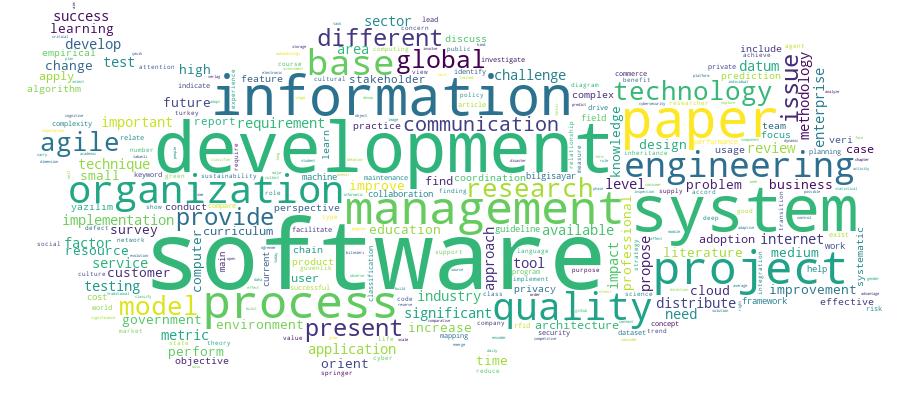
Competency Cloud
25 results
Scholarly Output Search Results
Now showing 1 - 10 of 25
Book Part Citation - Scopus: 1Web Privacy: Issues, Legislations, and Technological Challenges(IGI Global, 2008) Mishra,A.; Mishra,D.People all over the world increasingly are concerned about the privacy issues surrounding the personal information collected by private organizations, governments and employers. Privacy relates to issues regarding collection, secure transmission, storage, authorized access, usage, and disclosure of personal information. This information is used for commercial gain by many organizations. Individual privacy concerns significantly affects consumer willingness to engage in electronic commerce over the Internet. The increased use of the Internet and Web for everyday activities is bringing new threats to personal privacy. This chapter assessed various issues related to individual privacy on the Web, growing concerns among the Web users, technologies employed for collecting and protecting information on the Web, privacy-enhancing technologies and the legal provisions to curb the Web privacy. This chapter also reported detailed discussion about Platform for Privacy Preferences (P3P), its structure, present scenario of its implementation and its future success. Global consistency on Internet privacy protection is important to promote the growth of electronic commerce. To protect consumers in a globally consistent manner, legislation, self-regulation, technical solutions and combination solutions are different ways that can be implemented. © 2008, IGI Global.Article Citation - WoS: 7Citation - Scopus: 10Efficient Software Review Process for Small and Medium Enterprises(inst Engineering Technology-iet, 2007) Mishra, D.; Mishra, A.A considerable amount of software is produced world-wide by small and medium enterprises (SMEs). These organisations do not have enough resources to implement a rigorous quality plan. It has been established that reviews of various artifacts play a very important role in ensuring the quality of software. Traditional review methods are rigorous and their implementation is cumbersome for SMEs. A new review process which is easy to implement and requires almost no documentation is introduced. It is based on reviewers' efforts to produce high-quality software while minimising the inspection cost. Additionally, people who are conducting this review need not be present at the same place during most phases of the review process. This process has been successfully implemented in a CMM level 3 software development company intending to achieve CMMI level 5 and results are found to be quite encouraging.Book Part E-mentoring in global software development teams: Success factors to develop a common culture(IGI Global, 2012) Colomo-Palacios,R.; Mishra,A.; Casado-Lumbreras,C.; Soto-Acosta,P.Global Software Development (GSD) teams face communication and coordination problems due to spatial, temporal, and cultural separation between team members. Cultural diversity and cross-cultural management are significant issues among GSD teams. In software development projects, mentoring dramatically reduces the learning curve for novice human resources. Due to the large amount of electronic communication instruments, a remarkable number of different e-Mentoring concepts have emerged, which provides opportunity for mentoring that would not otherwise be possible. This chapter presents key success factors to enable e-Mentoring as a tool to develop a common culture in GSD scenarios. These success factors enable the correct application of mentoring programmes and the use of this to build a common culture in organizations that perform GSD. © 2013, IGI Global.Conference Object Citation - WoS: 1Sustainable Software Engineering: a Move Towards Future(Ieee, 2017) Mishra, Alok[No Abstract Available]Editorial Citation - Scopus: 1Quality and Reliability Engineering: Trends and Future Directions(Graz Univ Technolgoy, inst information Systems Computer Media-iicm, 2018) Mishra, Alok; Khatri, Sunil Kumar; Kapur, P. K.; Kumar, Uday; Software Engineering[No Abstract Available]Conference Object Üniversite Yazilim Mühendisligi Programlari Müfredatinin Swebok Kilavuzu Kullanilarak Degerlendirme ve İyilestirilmesi: Türkiye'de Bir Vaka Çalismasi(CEUR-WS, 2015) Garousi,V.; Mishra,A.; Yazici,A.[No abstract available]Book Part Citation - Scopus: 2A Study of Software Process Improvement in Small and Medium Organizations(IGI Global, 2008) Mishra,D.; Mishra,A.Presently, the majority of software development, including outsourcing, is carried out by small and medium size software development organizations all over the world. These organizations are not capable to bear the cost of implementing available software process improvement models like CMMI, SPICE, ISO, and so forth. Therefore, there is a need to address this problem. In this chapter, various software process assessment and software process improvement models for small and medium scale organizations are discussed and compared. This will lead towards development of standardized software process improvement model for small and medium sized software development organizations in the future. © 2008, IGI Global.Book Part E-mentoring in global software development teams: Success factors to develop a common culture(IGI Global, 2013) Colomo-Palacios,R.; Mishra,A.; Casado-Lumbreras,C.; Soto-Acosta,P.Global Software Development (GSD) teams face communication and coordination problems due to spatial, temporal, and cultural separation between team members. Cultural diversity and cross-cultural management are significant issues among GSD teams. In software development projects, mentoring dramatically reduces the learning curve for novice human resources. Due to the large amount of electronic communication instruments, a remarkable number of different e-Mentoring concepts have emerged, which provides opportunity for mentoring that would not otherwise be possible. This chapter presents key success factors to enable e-Mentoring as a tool to develop a common culture in GSD scenarios. These success factors enable the correct application of mentoring programmes and the use of this to build a common culture in organizations that perform GSD. © 2014, IGI Global.Book Part Citation - Scopus: 12Sustainable Software Engineering: Curriculum Development Based on Acm/Ieee Guidelines(Springer International Publishing, 2021) Mishra,A.; Mishra,D.Climate change risk and environmental degradation are the most critical issues of our society. Our technology-influenced daily lifestyle involves many types of software and apps which are used by society at large, and their use is increasing more than ever before. Sustainability is a significant topic for future professionals and more so for software engineers due to its impact on society. It is crucial to motivate and raise concern among students and faculty members regarding sustainability by including it in the Software Engineering (SE) curriculum. This chapter discusses how sustainability can be included in various courses of the SE curriculum by considering ACM/IEEE curriculum guidelines for the SE curriculum, literature review, and various viewpoints so that SE students can attain knowledge on sustainable software engineering. It also includes an assessment of key competences in sustainability for proposed units in the SE curriculum. © Springer Nature Switzerland AG 2021. All rights reserved.Conference Object ISDE 2011 PC Co-chairs' Message(Springer-verlag Berlin, 2011) Mishra, Alok; Muench, Juergen; Colomo-Palacios, Ricardo; Mishra, Deepti[No Abstract Available]

- «
- 1 (current)
- 2
- 3
- »