
Mıshra, Alok
Loading...
Profile URL
Name Variants
Mishra, A.
Mishra, A
Mishra A.
Alok, Mishra
Mıshra, Alok
A., Mishra
Alok M.
M., Alok
M.,Alok
Mishra, Alok
Mishra,A.
A.,Mıshra
A.,Mishra
Alok, Mıshra
A., Mıshra
Mıshra,A.
Mishra, A
Mishra A.
Alok, Mishra
Mıshra, Alok
A., Mishra
Alok M.
M., Alok
M.,Alok
Mishra, Alok
Mishra,A.
A.,Mıshra
A.,Mishra
Alok, Mıshra
A., Mıshra
Mıshra,A.
Job Title
Profesor Doktor
Email Address
alok.mishra@atilim.edu.tr
Main Affiliation
Software Engineering
Status
Website
ORCID ID
Scopus Author ID
Turkish CoHE Profile ID
Google Scholar ID
WoS Researcher ID
Sustainable Development Goals
 1
1NO POVERTY
0
Research Products
 2
2ZERO HUNGER
1
Research Products
 3
3GOOD HEALTH AND WELL-BEING
9
Research Products
 4
4QUALITY EDUCATION
6
Research Products
 5
5GENDER EQUALITY
1
Research Products
 6
6CLEAN WATER AND SANITATION
1
Research Products
 7
7AFFORDABLE AND CLEAN ENERGY
0
Research Products
 8
8DECENT WORK AND ECONOMIC GROWTH
0
Research Products
 9
9INDUSTRY, INNOVATION AND INFRASTRUCTURE
8
Research Products
 10
10REDUCED INEQUALITIES
0
Research Products
 11
11SUSTAINABLE CITIES AND COMMUNITIES
4
Research Products
 12
12RESPONSIBLE CONSUMPTION AND PRODUCTION
4
Research Products
 13
13CLIMATE ACTION
4
Research Products
 14
14LIFE BELOW WATER
4
Research Products
 15
15LIFE ON LAND
0
Research Products
 16
16PEACE, JUSTICE AND STRONG INSTITUTIONS
10
Research Products
 17
17PARTNERSHIPS FOR THE GOALS
2
Research Products

This researcher does not have a Scopus ID.

Documents
165
Citations
2516

Scholarly Output
197
Articles
103
Views / Downloads
696/2397
Supervised MSc Theses
13
Supervised PhD Theses
8
WoS Citation Count
2022
Scopus Citation Count
3009
Patents
0
Projects
0
WoS Citations per Publication
10.26
Scopus Citations per Publication
15.27
Open Access Source
42
Supervised Theses
21
| Journal | Count |
|---|---|
| Sensors | 7 |
| TEM Journal | 7 |
| Computers in Human Behavior | 4 |
| Applied Sciences | 4 |
| Electronics Information and Planning | 4 |
Current Page: 1 / 22
Scopus Quartile Distribution
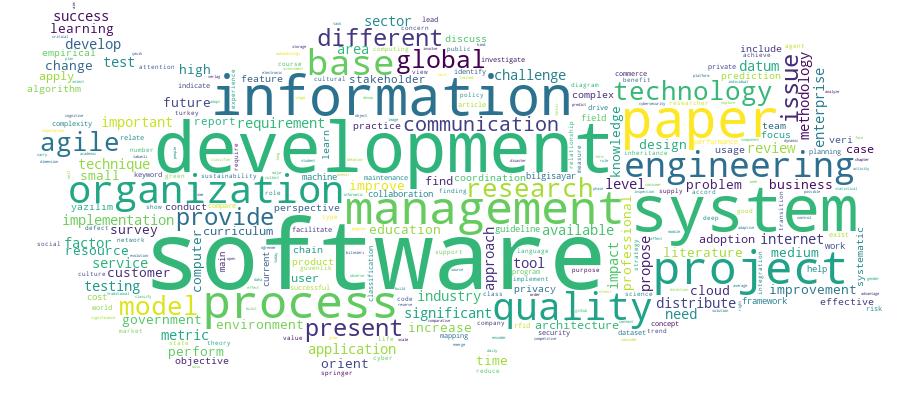
Competency Cloud
197 results
Scholarly Output Search Results
Now showing 1 - 10 of 197
Conference Object Software Quality Management Improvement Through Mentoring: an Exploratory Study From Gsd Projects(Springer-verlag Berlin, 2011) Colomo-Palacios, Ricardo; Soto-Acosta, Pedro; Mishra, Alok; Garcia-Crespo, AngelSoftware Quality Management (SQM) is a set of processes and procedures designed to assure the quality of software artifacts along with their development process. In an environment in which software development is evolving to a globalization, SQM is seen as one of its challenges. Global Software Development is a way to develop software across nations, continents, cultures and time zones. The aim of this paper is to detect if mentoring, one of the lead personnel development tools, can improve SQM of projects developed under GSD. The results obtained in the study reveal that the influence of mentoring on SQM is just temperate.Article Citation - WoS: 22Citation - Scopus: 32Organizational Issues in Embracing Agile Methods: an Empirical Assessment(Springer india, 2021) Mishra, Alok; Abdalhamid, Samia; Mishra, Deepti; Ostrovska, SofiyaThis study provides empirical evidence to the body of knowledge in Agile methods adoption in small, medium and large organizations in international context. This research explores the factors involved in the adoption of Agile methods in software development organizations. A survey was conducted among Agile professionals to gather survey data from 52 software organizations in seven countries across the world. Statistical techniques are applied towards empirical assessment. Organizational culture, team structure and management support are found to be crucial success factors whereas lack of management support, a large organization size and traditional organizational culture are found to be detrimental for the adoption of Agile approach in an organization. The selection of an appropriate Agile method depends on the project size and, for each size, there are specific methods preferred by different enterprises. Providing better control over the work is viewed as the primary advantage of the Agile methods within large and small organizations, while for the medium-size organizations, the priority is switched to coping with changing user requirements. Majority of the respondents did not consider embracing agile methods as a reason for project failure which indicates that Agile methods are, indeed, beneficial.Article Citation - WoS: 36Citation - Scopus: 66Cybersecurity Enterprises Policies: a Comparative Study(Mdpi, 2022) Mishra, Alok; Alzoubi, Yehia Ibrahim; Gill, Asif Qumer; Anwar, Memoona JaveriaCybersecurity is a critical issue that must be prioritized not just by enterprises of all kinds, but also by national security. To safeguard an organization's cyberenvironments, information, and communication technologies, many enterprises are investing substantially in cybersecurity these days. One part of the cyberdefense mechanism is building an enterprises' security policies library, for consistent implementation of security controls. Significant and common cybersecurity policies of various enterprises are compared and explored in this study to provide robust and comprehensive cybersecurity knowledge that can be used in various enterprises. Several significant common security policies were identified and discussed in this comprehensive study. This study identified 10 common cybersecurity policy aspects in five enterprises: healthcare, finance, education, aviation, and e-commerce. We aimed to build a strong infrastructure in each business, and investigate the security laws and policies that apply to all businesses in each sector. Furthermore, the findings of this study reveal that the importance of cybersecurity requirements differ across multiple organizations. The choice and applicability of cybersecurity policies are determined by the type of information under control and the security requirements of organizations in relation to these policies.Conference Object Citation - WoS: 12An Architectural Model for System of Information Systems(Springer int Publishing Ag, 2015) Majd, Saleh; Marie-Helene, Abel; Mishra, AlokOne of the most important aspects when designing and constructing an Information System is its architecture. This also applies to complex systems such as System of Information Systems (SoIS). Thus, we aim to propose an architectural model of System of Information Systems (SoIS). Though Architecture-based approaches have been promoted as a means of controlling the complexity of systems construction and evolution, what we really look for in this paper is an architectural model to aggregate services from already constructed systems. Nevertheless, it would be a good practice to compare the presented architecture of SoIS to other architecture-based approaches such as Service Oriented Architecture (SOA). Also, it is beneficial to examine how we can use the well-established standards of SOA for the designing of SoIS. In this paper we present an architectural model for System of Information Systems, and highlight the standards of Service Oriented Architecture that might help us in this task.Book Part Citation - Scopus: 1Web Privacy: Issues, Legislations, and Technological Challenges(IGI Global, 2008) Mishra,A.; Mishra,D.People all over the world increasingly are concerned about the privacy issues surrounding the personal information collected by private organizations, governments and employers. Privacy relates to issues regarding collection, secure transmission, storage, authorized access, usage, and disclosure of personal information. This information is used for commercial gain by many organizations. Individual privacy concerns significantly affects consumer willingness to engage in electronic commerce over the Internet. The increased use of the Internet and Web for everyday activities is bringing new threats to personal privacy. This chapter assessed various issues related to individual privacy on the Web, growing concerns among the Web users, technologies employed for collecting and protecting information on the Web, privacy-enhancing technologies and the legal provisions to curb the Web privacy. This chapter also reported detailed discussion about Platform for Privacy Preferences (P3P), its structure, present scenario of its implementation and its future success. Global consistency on Internet privacy protection is important to promote the growth of electronic commerce. To protect consumers in a globally consistent manner, legislation, self-regulation, technical solutions and combination solutions are different ways that can be implemented. © 2008, IGI Global.Article Citation - WoS: 20Citation - Scopus: 26Simplified software inspection process in compliance with international standards(Elsevier Science Bv, 2009) Mishra, Deepti; Mishra, AlokA significant amount of software is developed all over the world by small and medium size software organizations. These organizations do not have enough infrastructures and resources to implement an austere quality plan. Software inspection is a fundamental component of the software quality assurance process. Formal review methods are rigorous and their implementation is cumbersome for small and medium enterprises. In this paper, we have presented a new simplified inspection process which is easy to implement. requires fewer resource and almost no documentation. Also, people who are conducting this inspection need not be present at the same place during most stages of the inspection process. We have also compared this process with IEEE and NASA standards for software inspection and found that it meets almost 99% of both standards. While there has been much research on inspection, little attention is paid towards compliance with international standards. These results could be used as a basis for further research in software inspection and process towards aligning with international standards. This process has been successfully implemented in a CMM level 3 software development organization which is striving to accomplish higher maturity levels to establish at the international level. (C) 2008 Elsevier B.V. All rights reserved.Article Citation - WoS: 21Citation - Scopus: 36Deep Learning-Based Computer-Aided Diagnosis (cad): Applications for Medical Image Datasets(Mdpi, 2022) Kadhim, Yezi Ali; Khan, Muhammad Umer; Mishra, AlokComputer-aided diagnosis (CAD) has proved to be an effective and accurate method for diagnostic prediction over the years. This article focuses on the development of an automated CAD system with the intent to perform diagnosis as accurately as possible. Deep learning methods have been able to produce impressive results on medical image datasets. This study employs deep learning methods in conjunction with meta-heuristic algorithms and supervised machine-learning algorithms to perform an accurate diagnosis. Pre-trained convolutional neural networks (CNNs) or auto-encoder are used for feature extraction, whereas feature selection is performed using an ant colony optimization (ACO) algorithm. Ant colony optimization helps to search for the best optimal features while reducing the amount of data. Lastly, diagnosis prediction (classification) is achieved using learnable classifiers. The novel framework for the extraction and selection of features is based on deep learning, auto-encoder, and ACO. The performance of the proposed approach is evaluated using two medical image datasets: chest X-ray (CXR) and magnetic resonance imaging (MRI) for the prediction of the existence of COVID-19 and brain tumors. Accuracy is used as the main measure to compare the performance of the proposed approach with existing state-of-the-art methods. The proposed system achieves an average accuracy of 99.61% and 99.18%, outperforming all other methods in diagnosing the presence of COVID-19 and brain tumors, respectively. Based on the achieved results, it can be claimed that physicians or radiologists can confidently utilize the proposed approach for diagnosing COVID-19 patients and patients with specific brain tumors.Article Citation - WoS: 7Citation - Scopus: 10Efficient Software Review Process for Small and Medium Enterprises(inst Engineering Technology-iet, 2007) Mishra, D.; Mishra, A.A considerable amount of software is produced world-wide by small and medium enterprises (SMEs). These organisations do not have enough resources to implement a rigorous quality plan. It has been established that reviews of various artifacts play a very important role in ensuring the quality of software. Traditional review methods are rigorous and their implementation is cumbersome for SMEs. A new review process which is easy to implement and requires almost no documentation is introduced. It is based on reviewers' efforts to produce high-quality software while minimising the inspection cost. Additionally, people who are conducting this review need not be present at the same place during most phases of the review process. This process has been successfully implemented in a CMM level 3 software development company intending to achieve CMMI level 5 and results are found to be quite encouraging.Article Citation - WoS: 11Citation - Scopus: 13Challenges in Agile Software Maintenance for Local and Global Development: an Empirical Assessment(Mdpi, 2023) Almashhadani, Mohammed; Mishra, Alok; Yazici, Ali; Younas, MuhammadAgile methods have gained wide popularity recently due to their characteristics in software development. Despite the success of agile methods in the software maintenance process, several challenges have been reported. In this study, we investigate the challenges that measure the impact of agile methods in software maintenance in terms of quality factors. A survey was conducted to collect data from agile practitioners to establish their opinions about existing challenges. As a result of the statistical analysis of the data from the survey, it has been observed that there are moderately effective challenges in manageability, scalability, communication, collaboration, and transparency. Further research is required to validate software maintenance challenges in agile methods.Conference Object Informatics Engineering Education in Turkey and Expectations of Software Industry;(Institute of Electrical and Electronics Engineers Inc., 2018) Yazici,A.; Mishra,A.; Karakaya,Z.; Ustunkok,T.In this study, using the ÖSYM data, the number of intakes in Informatics Engineering programs in Turkey, accreditation data and the medium of instruction of the program are summarized for the years 2016 and 2017. In addition, the software sector's expectations from the informatics engineering graduates are reassessed based on the academic studies. The developed knowledge-skill gap set was used to evaluate the situation in Turkish informatics engineering programs. Sector expectations are discussed in the context of 2017-2019 Turkey Software Sector Strategy and Action Plan prepared by the Ministry of Science, Industry and Technology of Turkey and some proposals are made for the academia. As a result, it was observed that the expectations of the software industry were similar in all studies. Additionally, the expectations were changed in the direction of developing technologies and this change should be reflected in the informatics engineering programs. © 2018 IEEE.
