
Mıshra, Alok
Loading...
Profile URL
Name Variants
Mishra, A.
Mishra, A
Mishra A.
Alok, Mishra
Mıshra, Alok
A., Mishra
Alok M.
M., Alok
M.,Alok
Mishra, Alok
Mishra,A.
A.,Mıshra
A.,Mishra
Alok, Mıshra
A., Mıshra
Mıshra,A.
Mishra, A
Mishra A.
Alok, Mishra
Mıshra, Alok
A., Mishra
Alok M.
M., Alok
M.,Alok
Mishra, Alok
Mishra,A.
A.,Mıshra
A.,Mishra
Alok, Mıshra
A., Mıshra
Mıshra,A.
Job Title
Profesor Doktor
Email Address
alok.mishra@atilim.edu.tr
Main Affiliation
Software Engineering
Status
Website
ORCID ID
Scopus Author ID
Turkish CoHE Profile ID
Google Scholar ID
WoS Researcher ID
Sustainable Development Goals
 1
1NO POVERTY
0
Research Products
 2
2ZERO HUNGER
1
Research Products
 3
3GOOD HEALTH AND WELL-BEING
9
Research Products
 4
4QUALITY EDUCATION
6
Research Products
 5
5GENDER EQUALITY
1
Research Products
 6
6CLEAN WATER AND SANITATION
1
Research Products
 7
7AFFORDABLE AND CLEAN ENERGY
0
Research Products
 8
8DECENT WORK AND ECONOMIC GROWTH
0
Research Products
 9
9INDUSTRY, INNOVATION AND INFRASTRUCTURE
8
Research Products
 10
10REDUCED INEQUALITIES
0
Research Products
 11
11SUSTAINABLE CITIES AND COMMUNITIES
4
Research Products
 12
12RESPONSIBLE CONSUMPTION AND PRODUCTION
4
Research Products
 13
13CLIMATE ACTION
4
Research Products
 14
14LIFE BELOW WATER
4
Research Products
 15
15LIFE ON LAND
0
Research Products
 16
16PEACE, JUSTICE AND STRONG INSTITUTIONS
10
Research Products
 17
17PARTNERSHIPS FOR THE GOALS
2
Research Products

Scopus data could not be loaded because of an error. Please refresh the page or try again later.

Documents
170
Citations
2558

Scholarly Output
197
Articles
103
Views / Downloads
163/271
Supervised MSc Theses
13
Supervised PhD Theses
8
WoS Citation Count
2079
Scopus Citation Count
3045
Patents
0
Projects
0
WoS Citations per Publication
10.55
Scopus Citations per Publication
15.46
Open Access Source
42
Supervised Theses
21
| Journal | Count |
|---|---|
| Sensors | 7 |
| TEM Journal | 7 |
| Computers in Human Behavior | 4 |
| Applied Sciences | 4 |
| Electronics Information and Planning | 4 |
Current Page: 1 / 22
Scopus Quartile Distribution
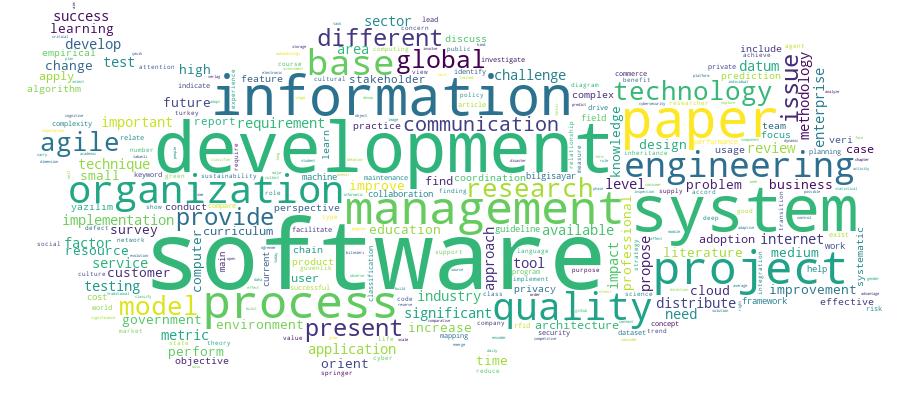
Competency Cloud
3 results
Scholarly Output Search Results
Now showing 1 - 3 of 3
Article Citation - WoS: 6Citation - Scopus: 7Predictive Effect of Gender and Sector Differences on Internet Usage Among Employees(Kaunas Univ Technol, 2010) Akman, Ibrahim; Mishra, Alok; Software Engineering; Computer EngineeringInternet has become the foundation for the world's new information infrastructure. This impact could be attributed to the Internet's universal access to information as well as its applications in all walks of life. Various services of the Internet and tools (chat rooms, e-mails, etc.) provide users with a wide range of benefits. In their study, Colley and Maltby (2008) indicated that one important research area over the last decade has been the impact of the Internet upon different social groups in the society. The differences in various aspects of Internet usage across demographic groups have also become an interesting research area (Yang and Tung, 2007; Jaeger, 2003) because demographic attributes were found to influence individuals' actions before they engage in a given behaviour (Ajzen and Fishbein, 1980; Zhang, 2005; Jaeger, 2003). Zhang (2005) reported that although studies of computer and Internet attitudes are abundant, the majority of these researches use college students (Zhang, 2005; Hwang et al., 2006; Li and Kirkup, 2007; Chen, 2008) or ordinary citizens (Fisher and Jacob, 2006; Fang and Yen, 2006; Colley and Maltby, 2008) as samples. However, employee populations constitute one of the largest groups and play a very important role in the adoption of new technologies. Additionally, employees' use of Internet services may show entirely different patterns than other groups in the society (Jin et al., 2007). Furthermore, the basic concepts of the Internet have been developed in the Western World and most of the empirical research focusing on Internet usage is either US/EU or Far East based (Teo and Lim, 2000; Usiner, 2005). Although they cover very valuable territory and provide useful insights that can provide direction in the examination of the issues from a global perspective, the results of these studies may not be applicable to other parts of the world due to the existence of social and economic differences (Bertot, McClure and Owens, 1999; Zhang, 2005). Nowadays, there is a growing divide between Western countries and the developing countries and, comparatively, very little has been researched in the field of ICT in the latter. Keeping these in view, the present study was undertaken to investigate the predictive effect of employees' gender and sector in their Internet usage and purpose of using the Internet. For the purpose of this study, "public sector" refers to national government departments and "private sector" comprises private corporations (Akman et al., 2005). Here, it is important to note that institutions providing nonprofit public services (e. g. universities, local government, etc.) have been categorized as a public sector. Our study focused on employees from private and public sector organizations. A sample of employees was used for this purpose. The independent (decision) variables were gender and sector of employees. The dependent variables were categorized into two empirical factors: (i) usage profile (average daily use of Internet and reason for using Internet) and (ii) usage pattern (average daily use of Internet for communication services, average daily use of Internet for information services and average daily use of Internet for electronic services). For this purpose, a survey was conducted among employees from public and private sector organizations. Interestingly, the results indicated that gender and sector both have significant impact on average daily use of Internet for communication services. This impact is significant for gender on average daily use of Internet for information services and for sector on average daily use of Internet. Another interesting finding is that there is no significant predictive effect of gender and sector on the reason for using Internet.Article Citation - WoS: 67Citation - Scopus: 89Gender, Age and Income Differences in Internet Usage Among Employees in Organizations(Pergamon-elsevier Science Ltd, 2010) Akman, Ibrahim; Mishra, AlokThis paper reviews and discusses Internet issues and reports the findings of a survey concerning the impact of gender, age and income on employees' Internet usage in Turkey. Internet usage was categorized in two empirical factors, namely usage profile (reason for using the Internet, average daily use of the Internet) and usage patterns (average daily use of the Internet for communication/e-mailing/chat, information access/downloading/entertainment and electronic services). The survey was conducted among 200 employees from public and private sector organizations. The results indicated that gender has a positive impact on average daily time spent on the use of the Internet for communication/e-mailing/chat and information access/downloading/entertainment. Age has a positive impact on average daily use of the Internet in general and a negative impact on the use of the Internet for information access/downloading/entertainment. Income was not found to have an impact on empirical factors. Finally, gender, age and income do not have any significant impact on average daily use of Internet for electronic services such as e-commerce/e-shopping/e-banking/e-government. (C) 2009 Elsevier Ltd. All rights reserved.Article Citation - WoS: 16Citation - Scopus: 17Organizational Software Piracy: an Empirical Assessment(Taylor & Francis Ltd, 2007) Mishra, Alok; Akman, Ibrahim; Yazici, AliApplication of Information Technology (IT) has had a significant impact on all aspects of business. Due to technology, the ease with which software can be pirated is increasing and is leading to increased concern for copyright protection. This paper reviews and discusses software piracy issues from a global perspective and reports the findings of a survey concerning the impact of sectors like government, private and academic in Turkey. Although software piracy has long been attracting the interest of academics, no quantitative research has ever been realized in this field in the country. Elsewhere also, most of the software piracy-related studies are from individuals' perspectives and are limited to students, academics, cost, and attitudes. Very few have reported findings related to IT professionals and organizations. The survey was conducted among IT managers of large-scale organizations from different sectors such as the government, private and academic community. Based on the survey of 162 IT managers, the results indicated that sectors have significant impact on software piracy to some extent.
