Korkusuz, Süleyman

Loading...
Profile Picture
Name Variants
K., Suleyman
K.,Suleyman
Korkusuz, Suleyman
Korkusuz, Süleyman
K., Süleyman
K.,Süleyman
S.,Korkusuz
S., Korkusuz
Süleyman, Korkusuz
Suleyman, Korkusuz
Korkusuz,S.
Korkusuz S.
Job Title
Araştırma Görevlisi
Email Address
suleyman.korkusuz@atilim.edu.tr
Main Affiliation
Department of Therapy and Rehabilitation
Status
Website
ORCID ID
Scopus Author ID
Turkish CoHE Profile ID
Google Scholar ID
WoS Researcher ID

Sustainable Development Goals

2

ZERO HUNGER
ZERO HUNGER Logo

0

Research Products

11

SUSTAINABLE CITIES AND COMMUNITIES
SUSTAINABLE CITIES AND COMMUNITIES Logo

1

Research Products

14

LIFE BELOW WATER
LIFE BELOW WATER Logo

0

Research Products

6

CLEAN WATER AND SANITATION
CLEAN WATER AND SANITATION Logo

0

Research Products

1

NO POVERTY
NO POVERTY Logo

0

Research Products

5

GENDER EQUALITY
GENDER EQUALITY Logo

0

Research Products

9

INDUSTRY, INNOVATION AND INFRASTRUCTURE
INDUSTRY, INNOVATION AND INFRASTRUCTURE Logo

0

Research Products

16

PEACE, JUSTICE AND STRONG INSTITUTIONS
PEACE, JUSTICE AND STRONG INSTITUTIONS Logo

0

Research Products

17

PARTNERSHIPS FOR THE GOALS
PARTNERSHIPS FOR THE GOALS Logo

0

Research Products

15

LIFE ON LAND
LIFE ON LAND Logo

0

Research Products

10

REDUCED INEQUALITIES
REDUCED INEQUALITIES Logo

0

Research Products

7

AFFORDABLE AND CLEAN ENERGY
AFFORDABLE AND CLEAN ENERGY Logo

0

Research Products

8

DECENT WORK AND ECONOMIC GROWTH
DECENT WORK AND ECONOMIC GROWTH Logo

0

Research Products

4

QUALITY EDUCATION
QUALITY EDUCATION Logo

0

Research Products

12

RESPONSIBLE CONSUMPTION AND PRODUCTION
RESPONSIBLE CONSUMPTION AND PRODUCTION Logo

0

Research Products

3

GOOD HEALTH AND WELL-BEING
GOOD HEALTH AND WELL-BEING Logo

5

Research Products

13

CLIMATE ACTION
CLIMATE ACTION Logo

0

Research Products
Documents

9

Citations

23

h-index

3

Documents

0

Citations

0

Scholarly Output

10

Articles

10

Views / Downloads

33/354

Supervised MSc Theses

0

Supervised PhD Theses

0

WoS Citation Count

18

Scopus Citation Count

16

WoS h-index

3

Scopus h-index

3

Patents

0

Projects

0

WoS Citations per Publication

1.80

Scopus Citations per Publication

1.60

Open Access Source

1

Supervised Theses

0

Google Analytics Visitor Traffic

JournalCount
Journal of the American Podiatric Medical Association2
Neurological Sciences2
Gait & Posture1
American Journal of Physical Medicine & Rehabilitation1
Neurological Research1
Current Page: 1 / 2

Scopus Quartile Distribution

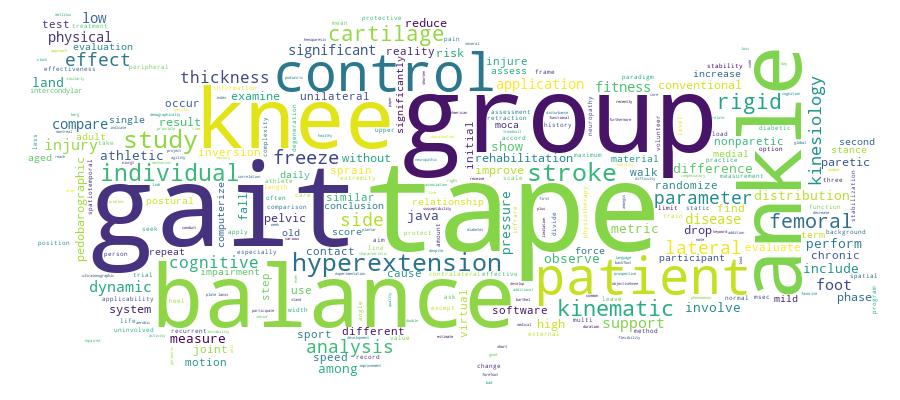
Competency Cloud

GCRIS Competency Cloud

Scholarly Output Search Results

Now showing 1 - 3 of 3
  • Article
    Citation - WoS: 3
    Citation - Scopus: 3
    Effect of Knee Hyperextension on Femoral Cartilage Thickness in Stroke Patients
    (Lippincott Williams & Wilkins, 2024) Korkusuz, Suleyman; Kibar, Sibel; Ozgoren, Nihat; Aritan, Serdar; Seckinogullari, Busra; Balkan, Ayla Fil
    ObjectiveKnee hyperextension is one of the most common compensatory mechanisms in stroke patients. The first aim of the study was to measure knee hyperextension and femoral cartilage thickness in stroke patients. The second aim was to compare the femoral cartilage thickness of the paretic and nonparetic limbs in stroke patients with and without knee hyperextension.DesignForty stroke patients were included in the study. The patients were divided into two groups according to the presence of knee hyperextension based on kinematic analyses performed during walking with a three-dimensional motion analysis system. The medial femoral cartilage, lateral femoral cartilage, and intercondylar cartilage thicknesses of the paretic and nonparetic sides of the patients were measured by ultrasonography.ResultsIn the study group, medial femoral cartilage, intercondylar, and lateral femoral cartilage thicknesses were less on the paretic side than on the nonparetic side, while the femoral cartilage thicknesses on the paretic and nonparetic sides were similar in the control group. Paretic side medial femoral cartilage and intercondylar thicknesses were less in the study group compared with the control group, and lateral femoral cartilage thickness was similar between the two groups.ConclusionsKnee hyperextension during walking causes femoral cartilage degeneration in stroke patients.Clinical Trial code: NCT05513157ConclusionsKnee hyperextension during walking causes femoral cartilage degeneration in stroke patients.Clinical Trial code: NCT05513157
  • Article
    Citation - WoS: 5
    Citation - Scopus: 6
    Balance and Gait in Individuals With Diabetic Peripheral Neuropathy
    (Taylor & Francis Ltd, 2024) Korkusuz, Suleyman; Seckinogullari, Busra; Yuruk, Zeliha Ozlem; Ulug, Naime; Kibar, Sibel
    Background: Diabetic Peripheral Neuropathy (DPN) causes various physical problems such as the increased risk of falling, loss of balance and coordination while standing or walking, susceptibility to injuries due to sensory loss.Aims: The aim of the study was to evaluate and compare the effects of neuropathic pain (NP) in individuals with DPN on balance and gait.Methods: This prospective controlled study was conducted on 42 adults aged between 40-65 years. The participants were divided into three groups; individuals with DPN and NP (DPN+NP/n = 14), individuals with DPN without NP (DPN-NP/n = 14), and the control group (n = 14), respectively. The Force Plate system and Core Balance System measured static and dynamic postural balance and stability limits. Gait and dynamic plantar pressure distribution analyses were performed with a computerized gait evaluation system.Results: The score of LANSS, and VAS during gait were higher in DPN+NP group than in DPN-NP (p < 0.05). No significant difference was observed between the groups in balance parameters (p > 0.05). The right-left heel maximum forces were lower in both groups with DPN compared to the control group (p < 0.05). In terms of spatiotemporal parameters of the gait, there was a difference between the groups only in step width and left single support line parameters (p < 0.05).Conclusions: The results of this study indicate that the individuals with DPN have an increased step width, their left single support line was shortened, and the maximum force on the heel decreased. The NP did not cause any change in balance and gait parameters.
  • Article
    Citation - WoS: 2
    Comparison of the Effectiveness of Kinesiology Taping and Rigid Taping on Ankle Kinematics During Drop Landing in Individuals With Lateral Ankle Injury
    (Amer Podiatric Med Assoc, 2022) Korkusuz, Suleyman; Kilic, Rabia Tugba; Aritan, Serdar; Ozgoren, Nihat; Sozay, Seyhan; Kibar, Sibel; Yosmaoglu, Hayri Baran
    Background: Lateral ankle sprain is an injury that often occurs during sports or daily life activities. Athletic tape and kinesiology tape applications are among the external support treatment options especially for athletes to support the ankle and protect it from recurrent sprains. We sought to compare the kinematic stabilization effects of different ankle taping applications on the ankle joint during drop landing in individuals with a history of unilateral lateral ankle injury.Methods: In this randomized controlled study, 30 volunteers with unilateral ankle injury were evaluated. The participants were asked to land on one leg on the involved side and the contralateral side from a 30-cm-high platform. The same practice was repeated after applying kinesiology tape and rigid tape to the injured foot. Kinematic analysis of the foot and ankle was performed by recording three-dimensional spatial position information at a speed of 240 frames per second using infrared cameras.Results: The highest inversion angles of the involved foot at initial contact and 150 msec after initial contact were higher than those of the uninvolved side (P = .03 and P = .04, respectively). There was no significant difference in ankle kinematic values in the involved foot among kinesiology taping, athletic taping, and no taping applications (P = .74).Conclusions: People with lateral ankle sprains show reduced inversion during landing. There were no significant differences among kinesiology taping, athletic taping, and no taping on the injured foot in terms of ankle kinematics. Care should be taken when using taping materials as protective measures for sports activities.