
This item is non-discoverable
Çağıltay, Nergiz
Loading...

Profile URL
Name Variants
Çağıltay, Nergis E.
Nergiz, Çağıltay
Çağıltay, Nergiz
Nergiz, Cagiltay
Ç.,Nergiz
C.,Nergiz
N., Cagiltay
N.,Çağıltay
Cagiltay, Nergiz
Cagiltay,N.
Çağıltay,N.
N.,Cagiltay
C., Nergiz
Çağıltay, Nergiz Ercil
Cagiltay, Nergiz Ercil
Çağıltay, Nergiz E.
Nergiz, Çağıltay
Çağıltay, Nergiz
Nergiz, Cagiltay
Ç.,Nergiz
C.,Nergiz
N., Cagiltay
N.,Çağıltay
Cagiltay, Nergiz
Cagiltay,N.
Çağıltay,N.
N.,Cagiltay
C., Nergiz
Çağıltay, Nergiz Ercil
Cagiltay, Nergiz Ercil
Çağıltay, Nergiz E.
Job Title
Profesör Doktor
Email Address
nergiz.cagiltay@atilim.edu.tr
Main Affiliation
Software Engineering
Status
Former Staff
Website
ORCID ID
Scopus Author ID
Turkish CoHE Profile ID
Google Scholar ID
WoS Researcher ID
Sustainable Development Goals
4
QUALITY EDUCATION

33
Research Products
7
AFFORDABLE AND CLEAN ENERGY

1
Research Products
9
INDUSTRY, INNOVATION AND INFRASTRUCTURE

1
Research Products
11
SUSTAINABLE CITIES AND COMMUNITIES

1
Research Products
16
PEACE, JUSTICE AND STRONG INSTITUTIONS

3
Research Products
17
PARTNERSHIPS FOR THE GOALS

3
Research Products

This researcher does not have a Scopus ID.

This researcher does not have a WoS ID.

Scholarly Output
137
Articles
79
Views / Downloads
544/3630
Supervised MSc Theses
26
Supervised PhD Theses
3
WoS Citation Count
1157
Scopus Citation Count
1469
WoS h-index
17
Scopus h-index
20
Patents
0
Projects
0
WoS Citations per Publication
8.45
Scopus Citations per Publication
10.72
Open Access Source
17
Supervised Theses
29
Google Analytics Visitor Traffic
| Journal | Count |
|---|---|
| 18th IEEE International Symposium on Personal, Indoor and Mobile Radio Communication -- SEP 03-07, 2007 -- Athens, GREECE | 7 |
| IEEE Access | 5 |
| Computers & Education | 3 |
| International Journal of Human–Computer Interaction | 3 |
| Surgical Innovation | 3 |
Current Page: 1 / 10
Scopus Quartile Distribution
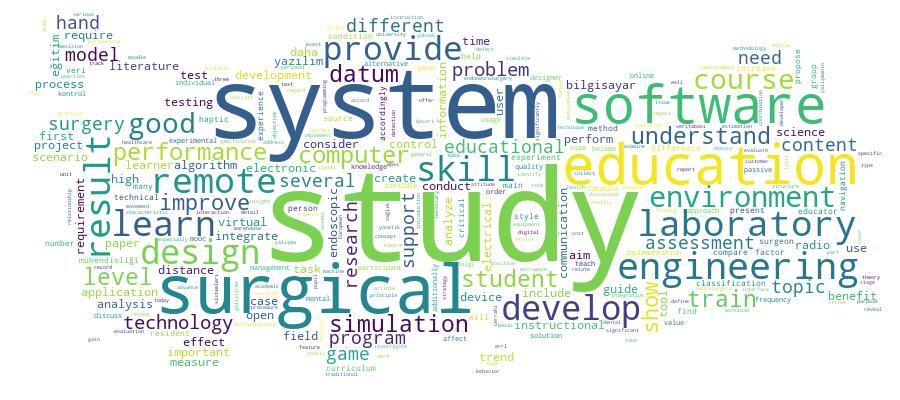
Competency Cloud
29 results
Scholarly Output Search Results
Now showing 1 - 10 of 29
Conference Object An Rfid Based Location Finding and Tracking With Guidance(Ieee, 2008) Oktem, Rusen; Aydin, Elif Uray; Cagiltay, Nergiz ErcilThis paper tackles an RFID based location finding and tracking system. The system is an integral part of a navigation aid being developed for guiding visually disabled people in a store. The aid is composed of a portable hardware interface unit, a standalone RFID unit, and a central processing unit. The units interact via wireless communication to locate the position of the user in a known indoor environment and tracking his/her movement. An active RFID tag helps to estimate the location of a user and the user is guided to follow a route accordingly, via a tactile compass. The system uses RF signal strengths and is based on Bayes Decision Theory. Initial simulation results with the system prove promising for location finding and tracking, especially when the tracked person is guided by a system.Conference Object Citation - Scopus: 1Development of a Digital Communications Course Enriched by Virtual and Remote Laboratory Tools(2011) Kara,A.; Kara, Ali; Cagiltay,N.; Çağıltay, Nergiz; Dalveren,Y.; Dalveren, Yaser; Kara, Ali; Çağıltay, Nergiz; Dalveren, Yaser; Department of Electrical & Electronics Engineering; Software Engineering; Department of Electrical & Electronics Engineering; Software EngineeringDigital communications is a basic concept for rapidly growing fields of Electrical, Computer and Electronics Engineering like wireless and mobile communication systems, radar and electronic warfare, telemetry and many signal processing techniques. A re-designed digital communications course with ICT (Information and Communication Technologies) based diverse tools including matlab assignments, remote experiments and interactive simulators is described in this study. First, the objectives of the course, learning outcomes and evaluation methods are described. The re-designed course is offered in the last semester at Atilim University, and performance increase in students is compared with the previous year's offering, and by evaluating the course on a topic-based approach. © 2011 IEEE.Conference Object Neuronavigation systems and passive usage problem;(Institute of Electrical and Electronics Engineers Inc., 2017) Cagiltay,N.; Topalli,D.; Borcek,A.O.; Tokdemir,G.; Maras,H.; Tonbul,G.; Aydin,E.Nowadays, neuronavigation systems are used in brain surgery procedures, known as a technology to help the surgeon during the operational period. However, the surgeons have faced several problems with the existing systems. Some of these problems are related to the systems software and user interfaces. In this study, such problems are examined and the 'Passive Usage' term is added to the literature by establishing a connection between the problems of endoscopic surgical procedures and similar issues occurred in other domains. The passive usage problem is generalized on different domains for the first time with this study. The results of the study expected to gather up the similar passive usage problems experienced in different domains. Accordingly, the methodologies and studies that are conducted in different research areas may lead to eliminate the Passive Usage problems efficiently. © 2016 IEEE.Conference Object Understanding the Effect of Passive View on Surgical Performance in Simulation-Based Endoscopic Surgery Education(Iated-int Assoc Technology Education A& development, 2016) Topalli, Damla; Cagiltay, Nergiz ErcilWith the improvements of technologies in the field of surgery, minimally invasive surgical (MIS) technique have become the standard of surgical care for many patients which is performed through the camera view of the operational area from small entry points to the patients' body. Unlike open surgery, MIS is, by its nature, a technique that is very suitable for simulation based training. Developing special skills by using surgical simulations before entering an operating room enables more focused and efficient performance, which minimizes time in the operating room and enhances patient safety. Beside the benefits, MIS reveals some drawbacks as well, such as passive view. Passive view occurs when the surgeon needs the help of assistant to control the camera instead of controlling by his own movements. In such cases, performing the operation from the assistant's camera controlled view is considered as passive view. Earlier studies show that this passive view problem affects the surgical performance. Accordingly, the related surgery training programs should consider providing skills on passive view and the surgical tool designers also should consider this problem in their designs. Hence understanding the concept of passive view in general and understanding its possible affects on surgical performance is critical to improve the surgery process. Additionally, understanding the instructional considerations to better provide environments to practice for gaining these skills are critical for the domain of endoscopic surgery education programs. However, in the literature there are not many studies related with the passive view problem in endoscopic surgery procedures. In this study, a literature review is conducted to better understand the problems related with the passive view. Additionally, a pilot experimental study is conducted through a surgical simulation environment. The results of this study aimed to provide guidelines to the surgical training programs and the instructional system designers to improve the skills of the trainees to better deal with passive-view problem in endoscopic surgery.Conference Object Using learning style theory in remote laboratory applications(Ieee, 2007) Tokdemir, Guel; Cagiltay, Nergiz ErcilStudies have shown that, while learning different concepts, people sometimes use different approaches. These different approaches define individual learning styles. Understanding learning style differences is thus an important step in improving performance of the individuals and educational institutions. In this study, a learning style assessment tool was used to examine the relationship between students' learning styles and their performance in engineering education programs of Atilim University. 329 students (55 female) participated in this study. At their first year in the program, students' learning styles are measured by a learning style assessment tool developed by David Kolb. The results show that, at the Atilim University's engineering education program, most of the students are having assimilator type of learning style (45%). Convergers (27%) and divergers (22%) follow the assimilators. The number of accommodators is very limited (5%). This information can be used to create adaptive teaching environments in distance education courses.Conference Object ANALYSIS OF NEUROONCOLOGICAL DATA TO PREDICT SUCCESS OF OPERATION THROUGH CLASSIFICATION(Assoc Computing Machinery, 2016) Bagherzadi, Negin; Borcek, Alp Ozgun; Tokdemir, Gul; Cagiltay, Nergiz; Maras, H. HakanData mining algorithms have been applied in various fields of medicine to get insights about diagnosis and treatment of certain diseases. This gives rise to more research on personalized medicine as patient data can be utilized to predict outcomes of certain treatment procedures. Accordingly, this study aims to create a model to provide decision support for surgeons in Neurooncology surgery. For this purpose, we have analyzed clinical pathology records of Neurooncology patients through various classification algorithms, namely Support Vector Machine, Multi Perceptron and Naive Bayes methods, and compared their performances with the aim of predicting surgery complication. A large number of factors have been considered to classify and predict percentage of patient's complication in surgery. Some of the factors found to be predictive were age, sex, clinical presentation, previous surgery type etc. For classification models built up using Support Vector Machine, Naive Bayes and Multi Perceptron, Classification trials for Support Vector Machine have shown %77.47 generalization accuracy, which was established by 5-fold cross-validation.Conference Object Citation - WoS: 1Haptic User Interface Integration for 3d Game Engines(Springer-verlag Berlin, 2014) Sengul, Gokhan; Cagiltay, Nergiz Ercil; Ozcelik, Erol; Tuner, Emre; Erol, BatuhanTouch and feel senses of human beings provide important information about the environment. When those senses are integrated with the eyesight, we may get all the necessary information about the environment. In terms of human-computer-interaction, the eyesight information is provided by visual displays. On the other hand, touch and feel senses are provided by means of special devices called "haptic" devices. Haptic devices are used in many fields such as computer-aided design, distance-surgery operations, medical simulation environments, training simulators for both military and medical applications, etc. Besides the touch and sense feelings haptic devices also provide force-feedbacks, which allows designing a realistic environment in virtual reality applications. Haptic devices can be categorized into three classes: tactile devices, kinesthetic devices and hybrid devices. Tactile devices simulate skin to create contact sensations. Kinesthetic devices apply forces to guide or inhibit body movement, and hybrid devices attempt to combine tactile and kinesthetic feedback. Among these kinesthetic devices exerts controlled forces on the human body, and it is the most suitable type for the applications such as surgical simulations. The education environments that require skill-based improvements, the touch and feel senses are very important. In some cases providing such educational environment is very expensive, risky and may also consist of some ethical issues. For example, surgical education is one of these fields. The traditional education is provided in operating room on real patients. This type of education is very expensive, requires long time periods, and does not allow any error-and-try type of experiences. It is stressfully for both the educators and the learners. Additionally there are several ethical considerations. Simulation environments supported by such haptic user interfaces provide an alternative and safer educational alternative. There are several studies showing some evidences of educational benefits of this type of education (Tsuda et al 2009; Sutherland et al 2006). Similarly, this technology can also be successfully integrated to the physical rehabilitation process of some diseases requiring motor skill improvements (Kampiopiotis & Theodorakou, 2003). Hence, today simulation environments are providing several opportunities for creating low cost and more effective training and educational environment. Today, combining three dimensional (3D) simulation environments with these haptic interfaces is an important feature for advancing current human-computer interaction. On the other hand haptic devices do not provide a full simulation environment for the interaction and it is necessary to enhance the environment by software environments. Game engines provide high flexibility to create 3-D simulation environments. Unity3D is one of the tools that provides a game engine and physics engine for creating better 3D simulation environments. In the literature there are many studies combining these two technologies to create several educational and training environments. However, in the literature, there are not many researches showing how these two technologies can be integrated to create simulation environment by providing haptic interfaces as well. There are several issues that need to be handled for creating such integration. First of all the haptic devices control libraries need to be integrated to the game engine. Second, the game engine simulation representations and real-time interaction features need to be coordinately represented by the haptic device degree of freedom and force-feedback speed and features. In this study, the integration architecture of Unity 3D game engine and the PHANToM Haptic device for creating a surgical education simulation environment is provided. The methods used for building this integration and handling the synchronization problems are also described. The algorithms developed for creating a better synchronization and user feedback such as providing a smooth feeling and force feedback for the haptic interaction are also provided. We believe that, this study will be helpful for the people who are creating simulation environment by using Unity3D technology and PHANToM haptic interfaces.Conference Object Citation - WoS: 6Simulation-Based Environments for Surgical Practice(Ieee, 2017) Dalveren, Gonca Gokce Menekse; Cagiltay, Nergiz Ercil; Ozcelik, Erol; Maras, HakanModeling and simulation environments provide several insights about the real situations such as endoscopic surgery. Endoscopic surgery requires both hand skills, so, understanding the effect of using dominant or non dominant hand on mental workload is important to better design, develop and implement modeling and simulation environments to support real-life implementations of surgical procedures. This experimental study presents a simulation application of eye-tracking approach to understand mental workload in different hand conditions: dominant hand, non-dominant hand and both hand. The results of the study show that, performing simulated surgical tasks by both hands compared to dominant hand, increases mental workload which is evident by higher pupil size. Accordingly, to manage the mental-load problems of surgeons while performing complex tasks that require both hand usage simulation-based environments can be used. Consequently, collection of detailed information such as eye-data, can give several insights about the behaviors of the surgeons. Also, their required skills can be improved by development of simulation and training environments.Conference Object The Usability Study for the Personal Health Record Systems(Ieee, 2015) Gokay, Gonca; Ercil, Yavuz; Tokdemir, Gul; Cagiltay, Nergiz; Aykac, Y. EvrenWith the emergence of new technologies, there is an increasing number of studies to improve healthcare delivery quality and health services. The studies have shown that the focus should be on integrated, sharable and personalized healthcare solutions which requires usage of patient data as much as possible for fast and correct diagnosis and care. Hence, data related to people when they are healthy and when they are sick become very critical for which many projects have been initiated to increase awareness of people about the importance of data collection all over the world and in our country as well. This requires more active role of the citizens in tracking their healthcare data. In this study, Microsoft Health Vault system that is used for storage of personal health records, has been analyzed in terms of its usability characteristics and the results have been discussed.Conference Object The Borderline Between Serious Games and Simulations(Iated-int Assoc Technology Education & development, 2014) Guney, Sinem; Cagiltay, Nergiz Ercil; Tuner, Emre; Cereci, IbrahimGame and simulation-based environments allow trainees to develop motor and cognitive skills as well as to provide some very detailed measurement values which in turn provide a feedback mechanism. It is a well known fact that games and simulation are potentially creating safer and cheaper active learning environments. Even when several benefits of games and simulations are reported in the literature, there is no exact definition of a game and simulation drawing the borders in between. Hence this causes to some complexities and misunderstandings in the field. Accordingly, in this study a definition for simulations and games is searched by being based on the studies found in the literature. Based on these definitions a borderline for the games and simulations will be provided. Results of study aim to guide the educational technology designers by better defining their education designs and better understanding their affect on the educational environments.

- «
- 1 (current)
- 2
- 3
- »