
This item is non-discoverable
Çağıltay, Nergiz
Loading...

Profile URL
Name Variants
Çağıltay, Nergis E.
Nergiz, Çağıltay
Çağıltay, Nergiz
Nergiz, Cagiltay
Ç.,Nergiz
C.,Nergiz
N., Cagiltay
N.,Çağıltay
Cagiltay, Nergiz
Cagiltay,N.
Çağıltay,N.
N.,Cagiltay
C., Nergiz
Çağıltay, Nergiz Ercil
Cagiltay, Nergiz Ercil
Çağıltay, Nergiz E.
Nergiz, Çağıltay
Çağıltay, Nergiz
Nergiz, Cagiltay
Ç.,Nergiz
C.,Nergiz
N., Cagiltay
N.,Çağıltay
Cagiltay, Nergiz
Cagiltay,N.
Çağıltay,N.
N.,Cagiltay
C., Nergiz
Çağıltay, Nergiz Ercil
Cagiltay, Nergiz Ercil
Çağıltay, Nergiz E.
Job Title
Profesör Doktor
Email Address
nergiz.cagiltay@atilim.edu.tr
Main Affiliation
Software Engineering
Status
Former Staff
Website
ORCID ID
Scopus Author ID
Turkish CoHE Profile ID
Google Scholar ID
WoS Researcher ID
Sustainable Development Goals
4
QUALITY EDUCATION

33
Research Products
7
AFFORDABLE AND CLEAN ENERGY

1
Research Products
9
INDUSTRY, INNOVATION AND INFRASTRUCTURE

1
Research Products
11
SUSTAINABLE CITIES AND COMMUNITIES

1
Research Products
16
PEACE, JUSTICE AND STRONG INSTITUTIONS

3
Research Products
17
PARTNERSHIPS FOR THE GOALS

3
Research Products

This researcher does not have a Scopus ID.

This researcher does not have a WoS ID.

Scholarly Output
137
Articles
79
Views / Downloads
544/3630
Supervised MSc Theses
26
Supervised PhD Theses
3
WoS Citation Count
1157
Scopus Citation Count
1469
WoS h-index
17
Scopus h-index
20
Patents
0
Projects
0
WoS Citations per Publication
8.45
Scopus Citations per Publication
10.72
Open Access Source
17
Supervised Theses
29
Google Analytics Visitor Traffic
| Journal | Count |
|---|---|
| 18th IEEE International Symposium on Personal, Indoor and Mobile Radio Communication -- SEP 03-07, 2007 -- Athens, GREECE | 7 |
| IEEE Access | 5 |
| Computers & Education | 3 |
| International Journal of Human–Computer Interaction | 3 |
| Surgical Innovation | 3 |
Current Page: 1 / 10
Scopus Quartile Distribution
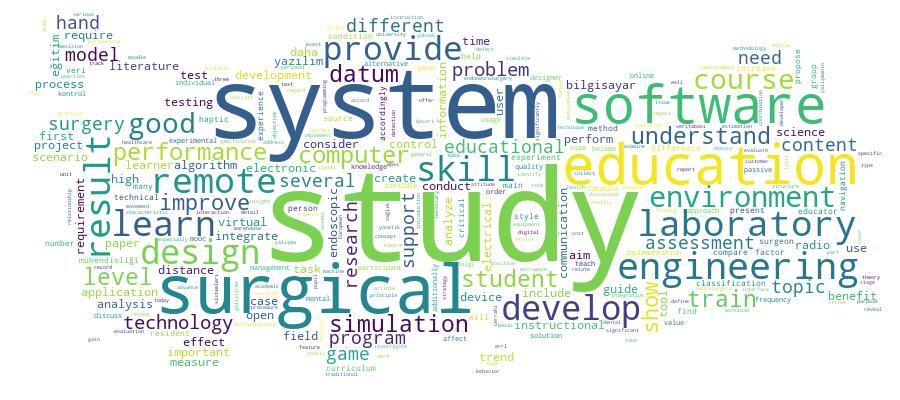
Competency Cloud
74 results
Scholarly Output Search Results
Now showing 1 - 10 of 74
Conference Object Citation - Scopus: 1Development of a Digital Communications Course Enriched by Virtual and Remote Laboratory Tools(2011) Kara,A.; Kara, Ali; Cagiltay,N.; Çağıltay, Nergiz; Dalveren,Y.; Dalveren, Yaser; Kara, Ali; Çağıltay, Nergiz; Dalveren, Yaser; Department of Electrical & Electronics Engineering; Software Engineering; Department of Electrical & Electronics Engineering; Software EngineeringDigital communications is a basic concept for rapidly growing fields of Electrical, Computer and Electronics Engineering like wireless and mobile communication systems, radar and electronic warfare, telemetry and many signal processing techniques. A re-designed digital communications course with ICT (Information and Communication Technologies) based diverse tools including matlab assignments, remote experiments and interactive simulators is described in this study. First, the objectives of the course, learning outcomes and evaluation methods are described. The re-designed course is offered in the last semester at Atilim University, and performance increase in students is compared with the previous year's offering, and by evaluating the course on a topic-based approach. © 2011 IEEE.Article Use of Advanced Technologies in a Rf and Microwave Engineering Course(IEEE, 2010) Aydın, Elif; Çağıltay, NergizIn RF and Microwave Engineering course, usually students struggle to build connections between the theory they have learned and practical applications in the laboratory. The laboratory applications are usually very limited for hands on experience since the high cost and maintenance requirements of the equipment. Additionally, new engineers need to know how to use at least one engineering design tool in order to practice designing RF components, circuits, or antennas. In this study, a curriculum model including recent developments and technologies in the RF and Microwave Engineering field by addressing above problems of the course is proposed. This study covers the description of the content of theoretical and hands on applications, the integration model of the technological tools into the proposed curriculum, and the instructional approaches used in the new course design which covers the use of a remote laboratory environment, Concept Maps and an engineering design tool. The course is structured with a balance between theory and laboratory, including remote and in lab measurement experiments as well as modeling and designing microwave components by means of computer tools and design fabrication. The newly designed course is implemented at the Atilim University. The first semester implementation shows promising results.Conference Object Neuronavigation systems and passive usage problem;(Institute of Electrical and Electronics Engineers Inc., 2017) Cagiltay,N.; Topalli,D.; Borcek,A.O.; Tokdemir,G.; Maras,H.; Tonbul,G.; Aydin,E.Nowadays, neuronavigation systems are used in brain surgery procedures, known as a technology to help the surgeon during the operational period. However, the surgeons have faced several problems with the existing systems. Some of these problems are related to the systems software and user interfaces. In this study, such problems are examined and the 'Passive Usage' term is added to the literature by establishing a connection between the problems of endoscopic surgical procedures and similar issues occurred in other domains. The passive usage problem is generalized on different domains for the first time with this study. The results of the study expected to gather up the similar passive usage problems experienced in different domains. Accordingly, the methodologies and studies that are conducted in different research areas may lead to eliminate the Passive Usage problems efficiently. © 2016 IEEE.Conference Object Understanding the Effect of Passive View on Surgical Performance in Simulation-Based Endoscopic Surgery Education(Iated-int Assoc Technology Education A& development, 2016) Topalli, Damla; Cagiltay, Nergiz ErcilWith the improvements of technologies in the field of surgery, minimally invasive surgical (MIS) technique have become the standard of surgical care for many patients which is performed through the camera view of the operational area from small entry points to the patients' body. Unlike open surgery, MIS is, by its nature, a technique that is very suitable for simulation based training. Developing special skills by using surgical simulations before entering an operating room enables more focused and efficient performance, which minimizes time in the operating room and enhances patient safety. Beside the benefits, MIS reveals some drawbacks as well, such as passive view. Passive view occurs when the surgeon needs the help of assistant to control the camera instead of controlling by his own movements. In such cases, performing the operation from the assistant's camera controlled view is considered as passive view. Earlier studies show that this passive view problem affects the surgical performance. Accordingly, the related surgery training programs should consider providing skills on passive view and the surgical tool designers also should consider this problem in their designs. Hence understanding the concept of passive view in general and understanding its possible affects on surgical performance is critical to improve the surgery process. Additionally, understanding the instructional considerations to better provide environments to practice for gaining these skills are critical for the domain of endoscopic surgery education programs. However, in the literature there are not many studies related with the passive view problem in endoscopic surgery procedures. In this study, a literature review is conducted to better understand the problems related with the passive view. Additionally, a pilot experimental study is conducted through a surgical simulation environment. The results of this study aimed to provide guidelines to the surgical training programs and the instructional system designers to improve the skills of the trainees to better deal with passive-view problem in endoscopic surgery.Article Citation - WoS: 8Citation - Scopus: 8A New Rf and Microwave Engineering Course Enriched With Advanced Technologies(Wiley, 2012) Aydin, Elif; Cagiltay, NergizIn this study, a curriculum model including recent developments and technologies in the Radio Frequency (RF) and Microwave Engineering field by using a blended approach is proposed. This study covers the description of the content of theoretical and hands on applications, the integration model of the technological tools into the proposed curriculum, and the instructional approaches used in the new course design. The main goal of the course is to prepare students for future professional careers in RF and Microwave Engineering by supporting them with new instructional technologies. The secondary goal of the course is to better prepare the students for the sequence of senior courses in the Electrical and Electronics Engineering program of Atilim University. The course is structured with a balance between theory and laboratory, including remote and in lab measurement experiments as well as modeling and designing microwave components by means of computer tools and design fabrication. The newly designed course is implemented at the Atilim University. The study also reports the first semester implementation. (C) 2010 Wiley Periodicals, Inc. Comput Appl Eng Educ 20: 634645, 2012Article Citation - WoS: 8Citation - Scopus: 7The Underlying Reasons of the Navigation Control Effect on Performance in a Virtual Reality Endoscopic Surgery Training Simulator(Taylor & Francis inc, 2019) Cagiltay, Nergiz Ercil; Ozcelik, Erol; Berker, Mustafa; Dalveren, Gonca Gokce MenekseNavigation control skills of surgeons become very critical for surgical procedures. Strategies improving these skills are important for developing higher-quality surgical training programs. In this study, the underlying reasons of the navigation control effect on performance in a virtual reality-based navigation environment are evaluated. The participants' performance is measured in conditions: navigation control display and paper-map display. Performance measures were collected from 45 beginners and experienced residents. The results suggest that navigation display significantly improved performance of the participants. Also, navigation was more beneficial for beginners than experienced participants. The underlying reason of the better performance in the navigation condition was due to lower number of looks to the map, which causes attention shifts between information sources. Accordingly, specific training scenarios and user interfaces can be developed to improve the navigation skills of the beginners considering some strategies to lower their number of references to the information sources.Article Paper-Based Versus Computer-Based Testing in Engineering Education(IEEE EDUCON Education Engineering 2010 – The Future of Global Learning Engineering Education, 2010) Çağıltay, Nergiz; Özalp Yaman, ŞenizUsing computers for assessment can provide several benefits for educators and test-takers. However, in the literature, there is no consensus on the equivalence of paper-and-pencil and computer-based test environments. Accordingly, more evidences are needed especially for the engineering education. In this study, students’ performance on different test modes was evaluated on 209 first year engineering students of a chemistry course. The results of this study showed that, there is no significant performance difference between paper-and-pencil and computer based tests. By comparing results with the previous studies, this study concludes that, personal characteristics of test takers, the features of computer-based testing systems and the test content are all possible confounding factors when comparing test modes and need to be considered by the implementers. The results of this study show that, once these factors are controlled, students’ performance on computer-based tests and paper-and-pencil tests in chemistry courses for the engineering students will not vary. This finding is encouraging the educators to get benefits of computer-based tests without any affect on students’ performance.Article Citation - WoS: 17Citation - Scopus: 22Seven Principles of Instructional Content Design for a Remote Laboratory: a Case Study on Errl(Ieee-inst Electrical Electronics Engineers inc, 2011) Cagiltay, Nergiz Ercil; Aydin, Elif; Aydin, Cansu Cigdem; Kara, Ali; Alexandru, MarianThis paper discusses the results of a study of the requirements for developing a remote radio frequency (RF) laboratory for electrical engineering students. It investigates students' preferred usage of the technical content of a state-of-the-art RF laboratory. The results of this study are compared to previous findings, which dealt with other user groups (technicians in technical colleges and engineers in the RF domain). Based on the results of these analyses, seven essential principles for designing and developing such a laboratory were identified. As a case study, these principles were then implemented into a remote laboratory system. In this paper, the implementation examples are also provided and discussed. The primary aim of this study is to guide remote laboratory platform developers toward the most effective instructional design. This study also determined, from the remote laboratory system case study, what the requirements are of such a laboratory from the students' perspective.Conference Object ANALYSIS OF NEUROONCOLOGICAL DATA TO PREDICT SUCCESS OF OPERATION THROUGH CLASSIFICATION(Assoc Computing Machinery, 2016) Bagherzadi, Negin; Borcek, Alp Ozgun; Tokdemir, Gul; Cagiltay, Nergiz; Maras, H. HakanData mining algorithms have been applied in various fields of medicine to get insights about diagnosis and treatment of certain diseases. This gives rise to more research on personalized medicine as patient data can be utilized to predict outcomes of certain treatment procedures. Accordingly, this study aims to create a model to provide decision support for surgeons in Neurooncology surgery. For this purpose, we have analyzed clinical pathology records of Neurooncology patients through various classification algorithms, namely Support Vector Machine, Multi Perceptron and Naive Bayes methods, and compared their performances with the aim of predicting surgery complication. A large number of factors have been considered to classify and predict percentage of patient's complication in surgery. Some of the factors found to be predictive were age, sex, clinical presentation, previous surgery type etc. For classification models built up using Support Vector Machine, Naive Bayes and Multi Perceptron, Classification trials for Support Vector Machine have shown %77.47 generalization accuracy, which was established by 5-fold cross-validation.Conference Object Citation - WoS: 1Haptic User Interface Integration for 3d Game Engines(Springer-verlag Berlin, 2014) Sengul, Gokhan; Cagiltay, Nergiz Ercil; Ozcelik, Erol; Tuner, Emre; Erol, BatuhanTouch and feel senses of human beings provide important information about the environment. When those senses are integrated with the eyesight, we may get all the necessary information about the environment. In terms of human-computer-interaction, the eyesight information is provided by visual displays. On the other hand, touch and feel senses are provided by means of special devices called "haptic" devices. Haptic devices are used in many fields such as computer-aided design, distance-surgery operations, medical simulation environments, training simulators for both military and medical applications, etc. Besides the touch and sense feelings haptic devices also provide force-feedbacks, which allows designing a realistic environment in virtual reality applications. Haptic devices can be categorized into three classes: tactile devices, kinesthetic devices and hybrid devices. Tactile devices simulate skin to create contact sensations. Kinesthetic devices apply forces to guide or inhibit body movement, and hybrid devices attempt to combine tactile and kinesthetic feedback. Among these kinesthetic devices exerts controlled forces on the human body, and it is the most suitable type for the applications such as surgical simulations. The education environments that require skill-based improvements, the touch and feel senses are very important. In some cases providing such educational environment is very expensive, risky and may also consist of some ethical issues. For example, surgical education is one of these fields. The traditional education is provided in operating room on real patients. This type of education is very expensive, requires long time periods, and does not allow any error-and-try type of experiences. It is stressfully for both the educators and the learners. Additionally there are several ethical considerations. Simulation environments supported by such haptic user interfaces provide an alternative and safer educational alternative. There are several studies showing some evidences of educational benefits of this type of education (Tsuda et al 2009; Sutherland et al 2006). Similarly, this technology can also be successfully integrated to the physical rehabilitation process of some diseases requiring motor skill improvements (Kampiopiotis & Theodorakou, 2003). Hence, today simulation environments are providing several opportunities for creating low cost and more effective training and educational environment. Today, combining three dimensional (3D) simulation environments with these haptic interfaces is an important feature for advancing current human-computer interaction. On the other hand haptic devices do not provide a full simulation environment for the interaction and it is necessary to enhance the environment by software environments. Game engines provide high flexibility to create 3-D simulation environments. Unity3D is one of the tools that provides a game engine and physics engine for creating better 3D simulation environments. In the literature there are many studies combining these two technologies to create several educational and training environments. However, in the literature, there are not many researches showing how these two technologies can be integrated to create simulation environment by providing haptic interfaces as well. There are several issues that need to be handled for creating such integration. First of all the haptic devices control libraries need to be integrated to the game engine. Second, the game engine simulation representations and real-time interaction features need to be coordinately represented by the haptic device degree of freedom and force-feedback speed and features. In this study, the integration architecture of Unity 3D game engine and the PHANToM Haptic device for creating a surgical education simulation environment is provided. The methods used for building this integration and handling the synchronization problems are also described. The algorithms developed for creating a better synchronization and user feedback such as providing a smooth feeling and force feedback for the haptic interaction are also provided. We believe that, this study will be helpful for the people who are creating simulation environment by using Unity3D technology and PHANToM haptic interfaces.
