
Akış, Tolga
Loading...
Profile URL
Name Variants
Akis T.
Akis,Tolga
Tolga, Akış
Akış,T.
Akis,T.
T., Akış
Akis, Tolga
Akış, Tolga
Tolga Akış
T., Akis
T.,Akış
Akış T.
T.,Akis
Akiş T.
A.,Tolga
A., Tolga
Tolga, Akis
Akis, T
Akis,Tolga
Tolga, Akış
Akış,T.
Akis,T.
T., Akış
Akis, Tolga
Akış, Tolga
Tolga Akış
T., Akis
T.,Akış
Akış T.
T.,Akis
Akiş T.
A.,Tolga
A., Tolga
Tolga, Akis
Akis, T
Job Title
Profesör Doktor
Email Address
tolga.akis@atilim.edu.tr
Main Affiliation
Civil Engineering
Status
Website
ORCID ID
Scopus Author ID
Turkish CoHE Profile ID
Google Scholar ID
WoS Researcher ID
Sustainable Development Goals
 1
1NO POVERTY
0
Research Products
 2
2ZERO HUNGER
0
Research Products
 3
3GOOD HEALTH AND WELL-BEING
1
Research Products
 4
4QUALITY EDUCATION
0
Research Products
 5
5GENDER EQUALITY
0
Research Products
 6
6CLEAN WATER AND SANITATION
0
Research Products
 7
7AFFORDABLE AND CLEAN ENERGY
0
Research Products
 8
8DECENT WORK AND ECONOMIC GROWTH
0
Research Products
 9
9INDUSTRY, INNOVATION AND INFRASTRUCTURE
0
Research Products
 10
10REDUCED INEQUALITIES
0
Research Products
 11
11SUSTAINABLE CITIES AND COMMUNITIES
6
Research Products
 12
12RESPONSIBLE CONSUMPTION AND PRODUCTION
2
Research Products
 13
13CLIMATE ACTION
0
Research Products
 14
14LIFE BELOW WATER
0
Research Products
 15
15LIFE ON LAND
0
Research Products
 16
16PEACE, JUSTICE AND STRONG INSTITUTIONS
0
Research Products
 17
17PARTNERSHIPS FOR THE GOALS
0
Research Products

Documents
28
Citations
508
h-index
13

Documents
27
Citations
539

Scholarly Output
53
Articles
34
Views / Downloads
256/2203
Supervised MSc Theses
16
Supervised PhD Theses
0
WoS Citation Count
539
Scopus Citation Count
651
Patents
0
Projects
0
WoS Citations per Publication
10.17
Scopus Citations per Publication
12.28
Open Access Source
10
Supervised Theses
16
| Journal | Count |
|---|---|
| Iranian Journal of Science and Technology, Transactions of Mechanical Engineering | 3 |
| Acta Mechanica | 2 |
| Journal of the Croatian Association of Civil Engineers | 2 |
| Journal of the Faculty of Engineering and Architecture of Gazi University | 2 |
| Mechanics Based Design of Structures and Machines | 2 |
Current Page: 1 / 6
Scopus Quartile Distribution
Competency Cloud
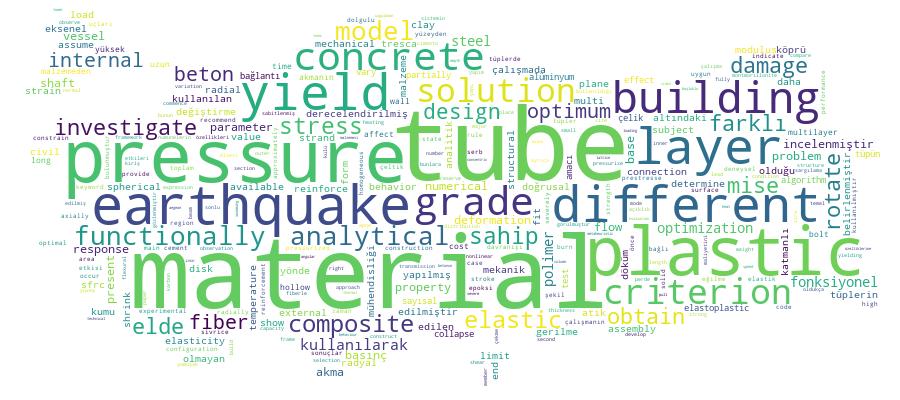
20 results
Scholarly Output Search Results
Now showing 1 - 10 of 20
Article Citation - WoS: 2Citation - Scopus: 2Structural Design Optimization of Multi-Layer Spherical Pressure Vessels: a Metaheuristic Approach(Springer, 2019) Akis, Tolga; Azad, Saeid Kazemzadeh; Kazemzadeh Azad, SaeidThis study addresses the optimum design problem of multi-layer spherical pressure vessels based on von Mises yield criterion. In order to compute the structural responses under internal pressure, analytical solutions for one-, two-, and three-layer spherical pressure vessels are provided. A population-based metaheuristic algorithm is reformulated for optimum material selection as well as thickness optimization of multi-layer spherical pressure vessels. Furthermore, in order to enhance the computational efficiency of the optimization algorithm, upper bound strategy is also integrated with the algorithm for reducing the total number of structural response evaluations during the optimization iterations. The performance of the algorithm is investigated through weight and cost minimization of one-, two- and three-layer spherical pressure vessels and the results are presented in detail. The obtained numerical results, based on different internal pressures as well as vessel sizes, indicate the usefulness and efficiency of the employed methodology in optimum design of multi-layer spherical pressure vessels.Article Citation - WoS: 4Citation - Scopus: 4A Site Survey of Damaged Rc Buildings in Izmir After the Aegean Sea Earthquake on October 30, 2020(Croatian Soc Civil Engineers-hsgi, 2023) Mertol, Halit Cenan; Tunc, Gokhan; Akis, TolgaAn earthquake with a magnitude of Mw = 6.6 and a depth of approximately 16.5 km occurred on 30 October 2020 off the cost of Samos, a Greek island 35 km southwest of Seferihisar, a town in Izmir. The earthquake caused several collapses and severe structural damage in approximately 6,000 buildings, specifically in the Bayrakli District in Izmir Bay. This paper presents the observations and findings of a technical team that visited the earthquake -affected areas immediately after the earthquake. Eleven partially or fully collapsed and several severely damaged reinforced concrete buildings were investigated. Based on the site investigations, we observed that almost all of the collapsed or severely damaged reinforced concrete buildings in the region were built between 1975 and 2000. Site observations also confirmed that the construction of these collapsed or damaged buildings did not conform to the requirements outlined in the Turkish Earthquake Codes used at the time. The failures and severe damage to buildings in earthquake-affected areas are primarily related to inadequate reinforcement configuration, poor material quality, the absence of geotechnical studies, and framing problems related to their lateral load-carrying systems. Therefore, it is recommended that all the buildings located in and around Izmir Bay, particularly those built between 1975 and 2000, be structurally evaluated to prevent any further loss of life and property during future earthquakes.Letter Amendments on "application of Mises Yield Criterion To Rotating Solid Disk Problem" by N. Aleksandrova [int. J. Eng. Sci. 51 (2012) 333-337](Pergamon-elsevier Science Ltd, 2012) Eraslan, Ahmet N.; Akis, Tolga[No Abstract Available]Article Citation - WoS: 50Citation - Scopus: 55Plane Strain Analytical Solutions for a Functionally Graded Elastic-Plastic Pressurized Tube(Elsevier Sci Ltd, 2006) Eraslan, Ahmet N.; Akis, TolgaPlane strain analytical solutions to functionally graded elastic and elastic-plastic pressurized tube problems are obtained in the framework of small deformation theory. The modulus of elasticity and the uniaxial yield limit of the tube material are assumed to vary radially according to two parametric parabolic forms. The analytical plastic model is based on Tresca's yield criterion, its associated flow rule and ideally plastic material behaviour. Elastic, partially plastic and fully plastic stress states are investigated. It is shown that the elastoplastic response of the functionally graded pressurized tube is affected significantly by the material nonhomogeneity. Different modes of plasticization may take place unlike the homogeneous case. It is also shown mathematically that the nonhomogeneous elastoplastic solution presented here reduces to that of a homogeneous one by appropriate choice of the material parameters. (c) 2006 Elsevier Ltd. All rights reserved.Article Citation - WoS: 33Citation - Scopus: 36Exact Solution of Rotating Fgm Shaft Problem in the Elastoplastic State of Stress(Springer, 2007) Akis, Tolga; Eraslan, Ahmet N.Plane strain analytical solutions to estimate purely elastic, partially plastic and fully plastic deformation behavior of rotating functionally graded (FGM) hollow shafts are presented. The modulus of elasticity of the shaft material is assumed to vary nonlinearly in the radial direction. Tresca's yield criterion and its associated flow rule are used to formulate three different plastic regions for an ideal plastic material. By considerina different material compositions as well as a wide range of bore radii, it is demonstrated in this article that both the elastic and the elastoplastic responses of a rotating FGM hollow shaft are affected significantly by the material nonhomogeneity.Article Citation - WoS: 6Citation - Scopus: 10Lessons Learned From Four Recent Turkish Earthquakes: Sivrice-Elazığ, Aegean Sea, and Dual Kahramanmaraş(Springer, 2024) Tunc, Goekhan; Mertol, Halit Cenan; Akis, TolgaT & uuml;rkiye is located in an earthquake-prone region where almost all of its population resides in risky areas. In the past 100 years, there has been a strong earthquake every two years and a major one every 3 years. This study investigates the impact of four recent earthquakes, that occurred between 2020 and 2023, on reinforced concrete (RC) buildings. The first, Sivrice-Elaz & imath;& gbreve;, struck the eastern part of T & uuml;rkiye on January 24, 2020, with a moment magnitude of Mw = 6.8. The second, the Aegean Sea, hit the western part of the country on October 30, 2020, with an Mw of 6.6. The third and fourth are the February 6, 2023 dual Kahramanmara & scedil; earthquakes with Mws of 7.7 and 7.6, which struck the eastern part of T & uuml;rkiye approximately 9 h apart. Immediately following these earthquakes, a technical team investigated each of the damaged areas. This study summarizes their findings on RC buildings. It was discovered that the majority of the collapsed or severely damaged RC buildings were constructed before 2000. The main reasons for this included technological limitations, specifically on producing high-quality concrete, as well as a lack of public policies and enforced laws in the construction sector to maintain an acceptable international standard. Furthermore, the damage patterns of buildings from these four earthquakes indicated poor workmanship, low material quality, improper structural framing, a common appearance of soft and weak stories, the inadequate use of shear walls, and defective reinforcement configuration. The significance of soil studies and the enforcement of building inspections are also discussed, along with the earthquake codes. The study concludes that the maximum peak ground accelerations from the dual Kahramanmara & scedil; earthquakes were almost triple the code-prescribed values. Therefore, it is recommended that the current mapped spectral acceleration values be revised and that buildings constructed before 2000 should be prioritized while determining their structural performances.Article Citation - WoS: 11Citation - Scopus: 13Automated Selection of Optimal Material for Pressurized Multi-Layer Composite Tubes Based on an Evolutionary Approach(Springer London Ltd, 2018) Azad, Saeid Kazemzadeh; Akis, Tolga; Kazemzadeh Azad, SaeidDecision making on the configuration of material layers as well as thickness of each layer in composite assemblies has long been recognized as an optimization problem. Today, on the one hand, abundance of industrial alloys with different material properties and costs facilitates fabrication of more economical or light weight assemblies. On the other hand, in the design stage, availability of different alternative materials apparently increases the complexity of the design optimization problem and arises the need for efficient optimization techniques. In the present study, the well-known big bang-big crunch optimization algorithm is reformulated for optimum design of internally pressurized tightly fitted multi-layer composite tubes with axially constrained ends. An automated material selection and thickness optimization approach is employed for both weight and cost minimization of one-, two-, and three-layer tubes, and the obtained results are compared. The numerical results indicate the efficiency of the proposed approach in practical optimum design of multi-layer composite tubes under internal pressure and quantify the optimality of different composite assemblies compared to one-layer tubes.Article Citation - WoS: 20Citation - Scopus: 20The Stress Response of Partially Plastic Rotating Fgm Hollow Shafts: Analytical Treatment for Axially Constrained Ends(Taylor & Francis inc, 2006) Eraslan, Ahmet N.; Akis, Tolgaanalytical solutions to estimating the elastoplastic response of rotating functionally graded (FGM) hollow shafts with fixed ends are presented. The modulus of elasticity, as well as the uniaxial yield limit of the shaft material, are assumed to vary nonlinearly in the radial direction. The plastic model is based on Tresca's yield criterion, its associated flow rule, and ideal plastic material behaviour. Elastic, partially plastic, fully plastic, and residual stress states are investigated. It is shown that the elastoplastic stress response of a rotating FGM hollow shaft is affected significantly by the nonhomogeneity of the material. Unlike the case of a homogeneous hollow shaft, plastic deformation may commence at the inner surface, at the outer surface, or simultaneously at both surfaces. Accordingly, each case requires different mathematical treatment to arrive at its partially plastic solution. It is also shown that, by taking a numerical limit, the complete FGM solution presented herein converge to the solution of a homogeneous rotating shaft.Article Citation - WoS: 3On the Yielding of Two-Layer Composite Spherical Pressure Vessels(Gazi Univ, 2017) Akis, TolgaThe yielding of two-layer composite spherical pressure vessels under either internal or external pressure is investigated analytically in the framework of small deformations and von Mises yield criterion. It is shown for both pressure cases that depending on the material properties and sphere dimensions, different modes of plasticization may take place. Unlike the deformation behavior of a single layer spherical pressure vessel, yielding may commence at the inner layer or at the outer layer or simultaneously at both layers of the assembly.Letter Discussion of the Article "approximate Solution of Limit Angular Speed for Externally Loaded Rotating Solid Disk" by S. Bhowmick, D. Misra and Nk Saha [int J Mech Sci 2008;50:163-74](Pergamon-elsevier Science Ltd, 2008) Eraslan, Ahmet N.; Akis, Tolga[No Abstract Available]
