Yılmaz, Vadi Su

Loading...
Profile Picture
Name Variants
Y., Vadi Su
Yilmaz,V.S.
Vadi Su, Yılmaz
V. S. Yilmaz
Yılmaz,V.S.
Vadi Su, Yilmaz
V.S.Yilmaz
Yilmaz, Vadi Su
V.,Yilmaz
Y.,Vadi Su
Yilmaz V.
Yılmaz, Vadi Su
V., Yilmaz
V.,Yılmaz
V.S.Yılmaz
V. S. Yılmaz
Job Title
Araştırma Görevlisi
Email Address
vadi.yilmaz@atilim.edu.tr
Main Affiliation
Electrical-Electronics Engineering
Mechatronics Engineering
Status
Website
ORCID ID
Scopus Author ID
Turkish CoHE Profile ID
Google Scholar ID
WoS Researcher ID

Sustainable Development Goals

SDG data is not available
Documents

7

Citations

30

h-index

3

Documents

7

Citations

20

Scholarly Output

11

Articles

4

Views / Downloads

8/22

Supervised MSc Theses

1

Supervised PhD Theses

1

WoS Citation Count

20

Scopus Citation Count

30

Patents

0

Projects

0

WoS Citations per Publication

1.82

Scopus Citations per Publication

2.73

Open Access Source

3

Supervised Theses

2

JournalCount
10th International Conference on Electrical and Electronics Engineering (ELECO) -- NOV 30-DEC 02, 2017 -- Bursa, TURKEY1
2020 28th Signal Processing and Communications Applications Conference, SIU 2020 - Proceedings -- 28th Signal Processing and Communications Applications Conference, SIU 2020 -- 5 October 2020 through 7 October 2020 -- Gaziantep -- 1664131
24th IEEE International Conference on Electronics, Circuits and Systems (ICECS) -- DEC 05-08, 2017 -- Batumi, GEORGIA1
28th Signal Processing and Communications Applications Conference (SIU) -- OCT 05-07, 2020 -- ELECTR NETWORK1
Diagnostics1
Current Page: 1 / 2

Scopus Quartile Distribution

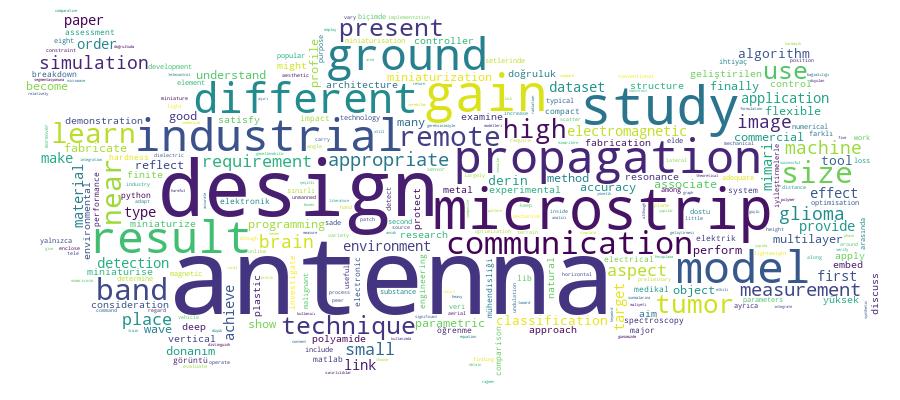
Competency Cloud

GCRIS Competency Cloud

Scholarly Output Search Results

Now showing 1 - 4 of 4
  • Article
    Citation - WoS: 6
    Citation - Scopus: 9
    Comparative Assessment of Electromagnetic Simulation Tools for Use in Microstrip Antenna Design: Experimental Demonstrations
    (Wiley, 2019) Bilgin, Gulsima; Yilmaz, Vadi Su; Kara, Ali; Aydin, Elif
    This paper presents a better understanding of the use of finite integration techniques (FIT) and finite element method (FEM) in different types of microstrip antennas in order to determine which numerical method gives relatively more accurate results. Although the theoretical formulation based on Maxwell's equations of both FEM and FIT are approached from different aspects in the literature, there is still a lack of comparison of the same antenna type using different numerical methods employing FEM and FIT. Therefore, in this study, FEM and FIT were applied to two different types of microstrip antennas, and their simulation and experimental results was compared. For the first antenna demonstration, a multilayer structure was chosen to achieve one of the significant parameters. Then, a microstrip antenna with a compact structure was used in the second demonstration. Using these two antennas, the accuracy of FEM and FIT in different structures were compared and all simulated return loss and gain results were verified by the measured results. The experimental demonstrations show that FEM performs better for both types of microstrip antennas while FIT provides an adequate result for two-layer microstrip antennas.
  • Article
    Citation - WoS: 3
    Citation - Scopus: 3
    Classification of Different Recycled Rubber-Epoxy Composite Based on Their Hardness Using Laser-Induced Breakdown Spectroscopy (libs) With Comparison Machine Learning Algorithms
    (Mdpi, 2023) Yilmaz, Vadi Su; Yılmaz, Vadi Su; Eseller, Kemal Efe; Aslan, Ozgur; Aslan, Özgür; Bayraktar, Emin; Eseller, Kemal Efe; Yılmaz, Vadi Su; Aslan, Özgür; Eseller, Kemal Efe; Electrical-Electronics Engineering; Department of Electrical & Electronics Engineering; Mechanical Engineering; Electrical-Electronics Engineering; Mechanical Engineering; Department of Electrical & Electronics Engineering
    This paper aims toward the successful detection of harmful materials in a substance by integrating machine learning (ML) into laser-induced breakdown spectroscopy (LIBS). LIBS is used to distinguish five different synthetic polymers where eight different heavy material contents are also detected by LIBS. Each material intensity-wavelength graph is obtained and the dataset is constructed for classification by a machine learning (ML) algorithm. Seven popular machine learning algorithms are applied to the dataset which include eight different substances with their wavelength-intensity value. Machine learning algorithms are used to train the dataset, results are discussed and which classification algorithm is appropriate for this dataset is determined.
  • Article
    Citation - WoS: 5
    Citation - Scopus: 6
    Miniaturised Antenna at a Sub-Ghz Band for Industrial Remote Controllers
    (inst Engineering Technology-iet, 2019) Yilmaz, Vadi Su; Bilgin, Gulsima; Aydin, Elif; Kara, Ali
    This study presents the design and the fabrication of a miniaturised sub-GHz antenna for remote control applications. Miniaturisation techniques were examined to identify the most appropriate topology for sub-GHz band requirements. First, the design parameters of the antenna were determined, and then, a commercial electromagnetic simulation tool was used for the design and optimisation phases. Then, measurements of the fabricated antenna were undertaken. Parametric studies with several iterations were performed to achieve the best possible results. Second, the effects of the box in which the antenna could be placed were examined as most of such antennas are enclosed by plastic boxes. For this purpose, material properties of a typical industrial box available in the market were studied initially, and the most appropriate material of the box was used in simulations. Finally, a polyamide box with appropriate size was fabricated, and the designed antenna was placed inside the box and the measurements were conducted. The measurement results show that the designed antenna provides resonance at the targeted license-free band with adequate size for industrial remote controllers.
  • Article
    Citation - WoS: 4
    Citation - Scopus: 7
    Investigating the Impact of Two Major Programming Environments on the Accuracy of Deep Learning-Based Glioma Detection From Mri Images
    (Mdpi, 2023) Yilmaz, Vadi Su; Akdag, Metehan; Dalveren, Yaser; Doruk, Resat Ozgur; Kara, Ali; Soylu, Ahmet
    Brain tumors have been the subject of research for many years. Brain tumors are typically classified into two main groups: benign and malignant tumors. The most common tumor type among malignant brain tumors is known as glioma. In the diagnosis of glioma, different imaging technologies could be used. Among these techniques, MRI is the most preferred imaging technology due to its high-resolution image data. However, the detection of gliomas from a huge set of MRI data could be challenging for the practitioners. In order to solve this concern, many Deep Learning (DL) models based on Convolutional Neural Networks (CNNs) have been proposed to be used in detecting glioma. However, understanding which CNN architecture would work efficiently under various conditions including development environment or programming aspects as well as performance analysis has not been studied so far. In this research work, therefore, the purpose is to investigate the impact of two major programming environments (namely, MATLAB and Python) on the accuracy of CNN-based glioma detection from Magnetic Resonance Imaging (MRI) images. To this end, experiments on the Brain Tumor Segmentation (BraTS) dataset (2016 and 2017) consisting of multiparametric magnetic MRI images are performed by implementing two popular CNN architectures, the three-dimensional (3D) U-Net and the V-Net in the programming environments. From the results, it is concluded that the use of Python with Google Colaboratory (Colab) might be highly useful in the implementation of CNN-based models for glioma detection. Moreover, the 3D U-Net model is found to perform better, attaining a high accuracy on the dataset. The authors believe that the results achieved from this study would provide useful information to the research community in their appropriate implementation of DL approaches for brain tumor detection.