
Mıshra, Deepti
Loading...

Profile URL
Name Variants
Deepti, Mıshra
Deepti, Mishra
M.,Deepti
M., Deepti
Mishra,D.
D.,Mıshra
Mishra, Deepti
Mıshra, Deepti
Mıshra,D.
D.,Mishra
D., Mishra
Mıshra, Deeptı
Mishra, D
Deepti, Mishra
M.,Deepti
M., Deepti
Mishra,D.
D.,Mıshra
Mishra, Deepti
Mıshra, Deepti
Mıshra,D.
D.,Mishra
D., Mishra
Mıshra, Deeptı
Mishra, D
Job Title
Doktor Öğretim Üyesi
Email Address
Main Affiliation
Computer Engineering
Status
Former Staff
Website
ORCID ID
Scopus Author ID
Turkish CoHE Profile ID
Google Scholar ID
WoS Researcher ID
Sustainable Development Goals
 1
1NO POVERTY
0
Research Products
 2
2ZERO HUNGER
0
Research Products
 3
3GOOD HEALTH AND WELL-BEING
8
Research Products
 4
4QUALITY EDUCATION
4
Research Products
 5
5GENDER EQUALITY
1
Research Products
 6
6CLEAN WATER AND SANITATION
0
Research Products
 7
7AFFORDABLE AND CLEAN ENERGY
0
Research Products
 8
8DECENT WORK AND ECONOMIC GROWTH
0
Research Products
 9
9INDUSTRY, INNOVATION AND INFRASTRUCTURE
2
Research Products
 10
10REDUCED INEQUALITIES
0
Research Products
 11
11SUSTAINABLE CITIES AND COMMUNITIES
0
Research Products
 12
12RESPONSIBLE CONSUMPTION AND PRODUCTION
3
Research Products
 13
13CLIMATE ACTION
4
Research Products
 14
14LIFE BELOW WATER
4
Research Products
 15
15LIFE ON LAND
0
Research Products
 16
16PEACE, JUSTICE AND STRONG INSTITUTIONS
3
Research Products
 17
17PARTNERSHIPS FOR THE GOALS
1
Research Products

This researcher does not have a Scopus ID.

This researcher does not have a WoS ID.

Scholarly Output
102
Articles
41
Views / Downloads
52/56
Supervised MSc Theses
4
Supervised PhD Theses
1
WoS Citation Count
930
Scopus Citation Count
1312
Patents
0
Projects
0
WoS Citations per Publication
9.12
Scopus Citations per Publication
12.86
Open Access Source
13
Supervised Theses
5
| Journal | Count |
|---|---|
| Acta Polytechnica Hungarica | 4 |
| Computer Standards & Interfaces | 3 |
| Confederated International Workshops and Posters: EI2N plus NSF ICE, ICSP plus INBAST, ISDE, ORM, OTMA, SWWS plus MONET plus SeDeS, and VADER -- OCT 17-21, 2011 -- Hersonissos, GREECE | 3 |
| Tehnicki Vjesnik | 3 |
| Journal of Universal Computer Science | 3 |
Current Page: 1 / 14
Scopus Quartile Distribution
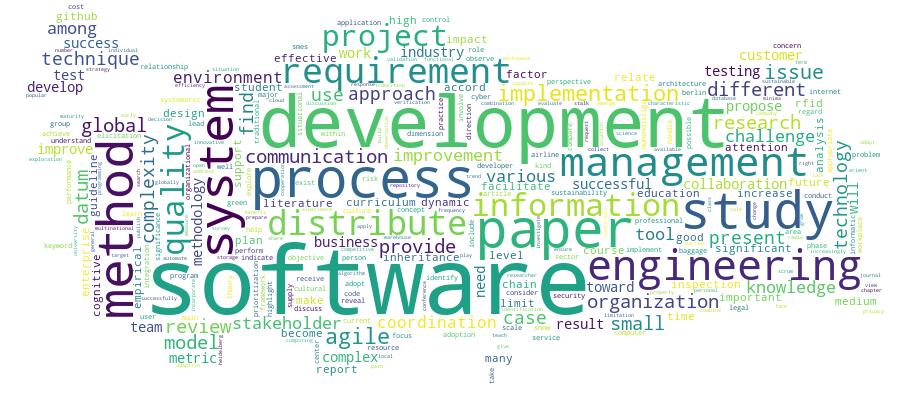
Competency Cloud
93 results
Scholarly Output Search Results
Now showing 1 - 10 of 93
Conference Object Citation - WoS: 2Object-Oriented Inheritance Metrics: Cognitive Complexity Perspective(Springer-verlag Berlin, 2009) Mishra, Deepti; Mishra, AlokIdentifying high cognitive complexity modules can lead to a better quality software system and can help during maintenance also. It has been found that inheritance has an impact on cognitive complexity of a software system. In this paper, two inheritance metrics based on cognitive complexity, one at class level CCI (Class Complexity due to Inheritance) and another at program level ACI (Average Complexity of a program due to Inheritance), have been proposed for object-oriented software systems. These metrics are also compared with other well known object-oriented inheritance metrics.Conference Object Citation - WoS: 6Software Architecture in Distributed Software Development: a Review(Springer-verlag Berlin, 2013) Mishra, Alok; Mishra, DeeptiThis paper presents a literature review of distributed software development (DSD) or global software development (GSD) and software architecture. The main focus is to highlight the current researches, observations, as well as practice directions in these areas. The results have been limited to peer-reviewed conference papers and journal articles, and analysis reports that major studies have been performed in software architecture and global software development, while the empirical studies of interfacing distributed/global software development and software architecture has only received very little attention among researchers up to now. This indicates the need for future research in these areas.Book Part Citation - Scopus: 1Web Privacy: Issues, Legislations, and Technological Challenges(IGI Global, 2008) Mishra,A.; Mishra,D.People all over the world increasingly are concerned about the privacy issues surrounding the personal information collected by private organizations, governments and employers. Privacy relates to issues regarding collection, secure transmission, storage, authorized access, usage, and disclosure of personal information. This information is used for commercial gain by many organizations. Individual privacy concerns significantly affects consumer willingness to engage in electronic commerce over the Internet. The increased use of the Internet and Web for everyday activities is bringing new threats to personal privacy. This chapter assessed various issues related to individual privacy on the Web, growing concerns among the Web users, technologies employed for collecting and protecting information on the Web, privacy-enhancing technologies and the legal provisions to curb the Web privacy. This chapter also reported detailed discussion about Platform for Privacy Preferences (P3P), its structure, present scenario of its implementation and its future success. Global consistency on Internet privacy protection is important to promote the growth of electronic commerce. To protect consumers in a globally consistent manner, legislation, self-regulation, technical solutions and combination solutions are different ways that can be implemented. © 2008, IGI Global.Article Citation - WoS: 20Citation - Scopus: 26Simplified software inspection process in compliance with international standards(Elsevier Science Bv, 2009) Mishra, Deepti; Mishra, AlokA significant amount of software is developed all over the world by small and medium size software organizations. These organizations do not have enough infrastructures and resources to implement an austere quality plan. Software inspection is a fundamental component of the software quality assurance process. Formal review methods are rigorous and their implementation is cumbersome for small and medium enterprises. In this paper, we have presented a new simplified inspection process which is easy to implement. requires fewer resource and almost no documentation. Also, people who are conducting this inspection need not be present at the same place during most stages of the inspection process. We have also compared this process with IEEE and NASA standards for software inspection and found that it meets almost 99% of both standards. While there has been much research on inspection, little attention is paid towards compliance with international standards. These results could be used as a basis for further research in software inspection and process towards aligning with international standards. This process has been successfully implemented in a CMM level 3 software development organization which is striving to accomplish higher maturity levels to establish at the international level. (C) 2008 Elsevier B.V. All rights reserved.Article Citation - WoS: 12Citation - Scopus: 13Assessing Team Work in Engineering Projects(Tempus Publications, 2015) Mishra, Deepti; Ostrovska, Sofiya; Hacaloglu, Tuna; Mathematics; Computer Engineering; Information Systems EngineeringTeam work is considered a valuable teaching technique in higher education. However, the assessment of an individual's work in teams has proved to be a challenging task. Consequently, self-and peer-evaluations are becoming increasingly popular for the assessment of individuals in a team work, though it is essential to determine whether students can judge their own as well as their peer's performance effectively. Self-and peer-evaluations have been applied in different disciplines and their authenticity with regard to teacher's assessment has been evaluated in the literature but this issue has not been investigated in the field of engineering education so far. In this study, a peer-and self-assessment procedure is applied to the evaluation of a project work conducted in teams of 3 or 4 students. The participants were engineering students taking two similar courses related with database design and development. It is found that a majority of the students were unable to assess themselves as objectively as their instructor. Further, it is observed that successful students tend to under-estimate, whereas unsuccessful students tend to over-estimate, their own performance. The paper also establishes that the results of self-assessments are independent from the gender factor.Article Citation - WoS: 44Citation - Scopus: 61Impact of Physical Ambiance on Communication, Collaboration and Coordination in Agile Software Development: an Empirical Evaluation(Elsevier, 2012) Mishra, Deepti; Mishra, Alok; Ostrovska, SofiyaContext: Communication, collaboration and coordination are key enablers of software development and even more so in agile methods. The physical environment of the workspace plays a significant role in effective communication, collaboration, and coordination among people while developing software. Objective: In this paper, we have studied and further evaluated empirically the effect of different constituents of physical environment on communication, coordination, and collaboration, respectively. The study aims to provide a guideline for prospective agile software developers. Method: A survey was conducted among software developers at a software development organization. To collect data, a survey was carried out along with observations, and interviews. Results: It has been found that half cubicles are 'very effective' for the frequency of communication. Further, half cubicles were discovered 'effective' but not 'very effective' for the quality/effectiveness of communication. It is found that half-height cubicles and status boards are 'very effective' for the coordination among team members according to the survey. Communal/discussion space is found to be 'effective' but not 'very effective' for coordination among team members. Our analysis also reveals that half-height glass barriers are 'very effective' during the individuals problem-solving activities while working together as a team. Infact, such a physically open environment appears to improve communication, coordination, and collaboration. Conclusion: According to this study, an open working environment with only half-height glass barriers and communal space plays a major role in communication among team members. The presence of status boards significantly help in reducing unnecessary communication by providing the required information to individuals and therefore, in turn reduce distractions a team member may confront in their absence. As communication plays a significant role in improving coordination and collaboration, it is not surprising to find the effect of open working environment and status boards in improving coordination and collaboration. An open working environment increases the awareness among software developers e.g. who is doing what, what is on the agenda, what is taking place, etc. That in turn, improves coordination among them. A communal/discussion space helps in collaboration immensely. (C) 2012 Elsevier B.V. All rights reserved.Conference Object Scale Up Internet-Based Business Through Distributed Data Centers(Springer international Publishing Ag, 2015) Yu, Liguo; Mishra, Alok; Mishra, DeeptiDistributed data centers are becoming more and more important for internet-based companies. Without distributed data centers, it will be hard for internet companies to scale up their business. The traditional centralized data center suffers the drawback of bottle neck and single failure problem. Therefore, more and more internet companies are building distributed data centers, and more and more business are moved onto distributed Web services. This paper reviews the history of distributed Web services and studies their current status through examining the distributed data centers of several top Internet companies. Based on the study, we conclude that distributed services, including distributed data centers, are the key factors to scale up the business of a company, especially, an internet-based company.Article Citation - WoS: 11Citation - Scopus: 13Exploring and Expanding Students' Success in Software Testing(Emerald Group Publishing Ltd, 2017) Mishra, Deepti; Ostrovska, Sofiya; Hacaloglu, TunaPurpose - Testing is one of the indispensable activities in software development and is being adopted as an independent course by software engineering (SE) departments at universities worldwide. The purpose of this paper is to carry out an investigation of the performance of learners about testing, given the tendencies in the industry and motivation caused by the unavailability of similar studies in software testing field. Design/methodology/approach - This study is based on the data collected over three years (between 2012 and 2014) from students taking the software testing course. The course is included in the second year of undergraduate curriculum for the bachelor of engineering (SE). Findings - It has been observed that, from the performance perspective, automated testing outperforms structural and functional testing techniques, and that a strong correlation exists among these three approaches. Moreover, a strong programming background does help toward further success in structural and automated testing, but has no effect on functional testing. The results of different teaching styles within the course are also presented together with an analysis exploring the relationship between students' gender and success in the software testing course, revealing that there is no difference in terms of performance between male and female students in the course. Moreover, it is advisable to introduce teaching concepts one at a time because students find it difficult to grasp the ideas otherwise. Research limitations/implications - These findings are based on the analysis conducted using three years of data collected while teaching a course in testing. Obviously, there are some limitations to this study. For example, student's strength in programming is calculated using the score of C programming courses taken in previous year/semester. Such scores may not reflect their current level of programming knowledge. Furthermore, attempt was made to ensure that the exercises given for different testing techniques have similar difficulty level to guarantee that the difference in success between these testing techniques is due to the inherent complexity of the technique itself and not because of different exercises. Still, there is small probability that a certain degree of change in success may be due to the difference in the difficulty levels of the exercises. As such, it is obviously premature to consider the present results as final since there is a lack of similar type of studies, with which the authors can compare the results. Therefore, more work needs to be done in different settings to draw sound conclusions in this respect. Originality/value - Although there are few studies (see e.g. Chan et al., 2005; Garousi and Zhi, 2013; Ng et al., 2004) exploring the preference of testers over distinct software testing techniques in the industry, there appears to be no paper comparing the preferences and performances of learners in terms of different testing techniques.Conference Object Citation - WoS: 9Citation - Scopus: 57Successful Requirement Elicitation by Combining Requirement Engineering Techniques(IEEE, 2008) Mishra,D.; Mishra,A.; Yazici,A.The role of customers and other stakeholders is becoming increasingly significant during requirement engineering activities. Methods of eliciting requirements are now more co-operative. There are many techniques to obtain requirements from customers. Selecting the right techniques according to the characteristics of the project is very important. In some complex problems, combination of requirement engineering techniques should be applied for efficient and successful requirement engineering process. In this paper, we have presented the application of combination of requirement engineering techniques for a real life complex project (Supply Chain Management) with higher requirements volatility developed in a small scale software development organization.This will help in understanding requirements elicitation for such kind of complex software and facilitate in selecting the appropriate techniques towards getting the consistent and complete requirements. ©2008 IEEE.Article Citation - WoS: 9Citation - Scopus: 11Industry Oriented Advanced Software Engineering Education Curriculum(Fac Teacher Education, 2012) Mishra, Alok; Mishra, Deepti; Computer Engineering; Software EngineeringSoftware engineering is the fastest-evolving engineering discipline and most of the tasks of software development organizations are diverse in nature. Various studies have shown that there is a wide gap between software industry needs and education for prospective software engineers. It is the responsibility of Software engineering education to prepare SE professionals by providing them with the skills to meet the expectations of the software industry. SE curriculum should correspond to the industry needs, and only then can Universities produce highly skilled professionals, who can meet the needs of software industry. During the last decade, software engineering education (SEE) has been emerging as an independent and mature discipline. Accordingly, various studies are being conducted to provide guidelines for SEE curriculum design. This paper summarizes the need for software industry related courses and discusses the significance of industry oriented software engineering education to meet the educational objectives of all stakeholders. The software industry oriented curriculum for undergraduate and graduate levels is discussed. An industry oriented graduate level (master's level) software engineering course which includes foundational and applied courses to provide effective training for future software engineers is also proposed. This will lead to an increase in their employment prospects in the industrial and allied sectors.
