
Mıshra, Deepti
Loading...

Profile URL
Name Variants
Deepti, Mıshra
Deepti, Mishra
M.,Deepti
M., Deepti
Mishra,D.
D.,Mıshra
Mishra, Deepti
Mıshra, Deepti
Mıshra,D.
D.,Mishra
D., Mishra
Mıshra, Deeptı
Mishra, D
Deepti, Mishra
M.,Deepti
M., Deepti
Mishra,D.
D.,Mıshra
Mishra, Deepti
Mıshra, Deepti
Mıshra,D.
D.,Mishra
D., Mishra
Mıshra, Deeptı
Mishra, D
Job Title
Doktor Öğretim Üyesi
Email Address
Main Affiliation
Computer Engineering
Status
Former Staff
Website
ORCID ID
Scopus Author ID
Turkish CoHE Profile ID
Google Scholar ID
WoS Researcher ID
Sustainable Development Goals
 1
1NO POVERTY
0
Research Products
 2
2ZERO HUNGER
0
Research Products
 3
3GOOD HEALTH AND WELL-BEING
8
Research Products
 4
4QUALITY EDUCATION
4
Research Products
 5
5GENDER EQUALITY
1
Research Products
 6
6CLEAN WATER AND SANITATION
0
Research Products
 7
7AFFORDABLE AND CLEAN ENERGY
0
Research Products
 8
8DECENT WORK AND ECONOMIC GROWTH
0
Research Products
 9
9INDUSTRY, INNOVATION AND INFRASTRUCTURE
2
Research Products
 10
10REDUCED INEQUALITIES
0
Research Products
 11
11SUSTAINABLE CITIES AND COMMUNITIES
0
Research Products
 12
12RESPONSIBLE CONSUMPTION AND PRODUCTION
3
Research Products
 13
13CLIMATE ACTION
4
Research Products
 14
14LIFE BELOW WATER
4
Research Products
 15
15LIFE ON LAND
0
Research Products
 16
16PEACE, JUSTICE AND STRONG INSTITUTIONS
3
Research Products
 17
17PARTNERSHIPS FOR THE GOALS
1
Research Products

This researcher does not have a Scopus ID.

This researcher does not have a WoS ID.

Scholarly Output
102
Articles
41
Views / Downloads
54/58
Supervised MSc Theses
4
Supervised PhD Theses
1
WoS Citation Count
930
Scopus Citation Count
1312
Patents
0
Projects
0
WoS Citations per Publication
9.12
Scopus Citations per Publication
12.86
Open Access Source
13
Supervised Theses
5
| Journal | Count |
|---|---|
| Acta Polytechnica Hungarica | 4 |
| Computer Standards & Interfaces | 3 |
| Confederated International Workshops and Posters: EI2N plus NSF ICE, ICSP plus INBAST, ISDE, ORM, OTMA, SWWS plus MONET plus SeDeS, and VADER -- OCT 17-21, 2011 -- Hersonissos, GREECE | 3 |
| Tehnicki Vjesnik | 3 |
| Journal of Universal Computer Science | 3 |
Current Page: 1 / 14
Scopus Quartile Distribution
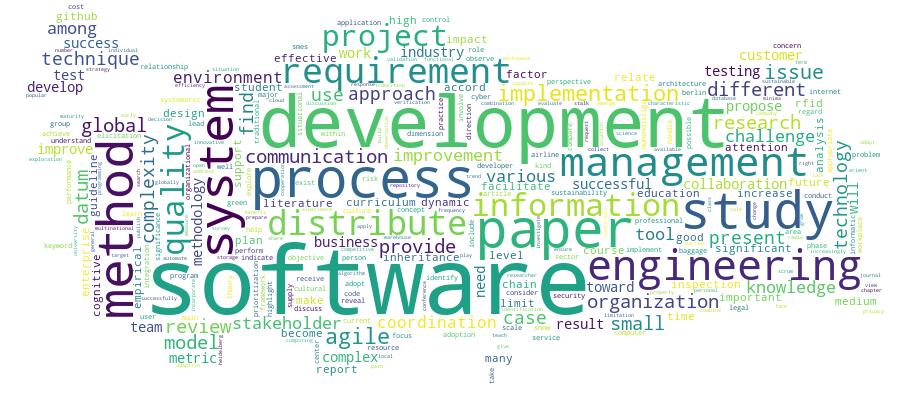
Competency Cloud
38 results
Scholarly Output Search Results
Now showing 1 - 10 of 38
Conference Object Citation - WoS: 2Citation - Scopus: 3Object-oriented inheritance metrics: Cognitive complexity perspective(Springer-Verlag Berlin, 2009) Mishra,D.; Mishra,A.Identifying high cognitive complexity modules can lead to a better quality software system and can help during maintenance also. It has been found that inheritance has an impact on cognitive complexity of a software system. In this paper, two inheritance metrics based on cognitive complexity, one at class level CCI (Class Complexity due to Inheritance) and another at program level ACI (Average Complexity of a program due to Inheritance), have been proposed for object-oriented software systems. These metrics are also compared with other well known object-oriented inheritance metrics. © 2009 Springer Berlin Heidelberg.Conference Object Citation - WoS: 9Citation - Scopus: 57Successful Requirement Elicitation by Combining Requirement Engineering Techniques(IEEE, 2008) Mishra,D.; Mishra,A.; Yazici,A.The role of customers and other stakeholders is becoming increasingly significant during requirement engineering activities. Methods of eliciting requirements are now more co-operative. There are many techniques to obtain requirements from customers. Selecting the right techniques according to the characteristics of the project is very important. In some complex problems, combination of requirement engineering techniques should be applied for efficient and successful requirement engineering process. In this paper, we have presented the application of combination of requirement engineering techniques for a real life complex project (Supply Chain Management) with higher requirements volatility developed in a small scale software development organization.This will help in understanding requirements elicitation for such kind of complex software and facilitate in selecting the appropriate techniques towards getting the consistent and complete requirements. ©2008 IEEE.Conference Object Citation - WoS: 2Object-Oriented Inheritance Metrics: Cognitive Complexity Perspective(Springer-verlag Berlin, 2009) Mishra, Deepti; Mishra, AlokIdentifying high cognitive complexity modules can lead to a better quality software system and can help during maintenance also. It has been found that inheritance has an impact on cognitive complexity of a software system. In this paper, two inheritance metrics based on cognitive complexity, one at class level CCI (Class Complexity due to Inheritance) and another at program level ACI (Average Complexity of a program due to Inheritance), have been proposed for object-oriented software systems. These metrics are also compared with other well known object-oriented inheritance metrics.Book Part Citation - Scopus: 1Web Privacy: Issues, Legislations, and Technological Challenges(IGI Global, 2008) Mishra,A.; Mishra,D.People all over the world increasingly are concerned about the privacy issues surrounding the personal information collected by private organizations, governments and employers. Privacy relates to issues regarding collection, secure transmission, storage, authorized access, usage, and disclosure of personal information. This information is used for commercial gain by many organizations. Individual privacy concerns significantly affects consumer willingness to engage in electronic commerce over the Internet. The increased use of the Internet and Web for everyday activities is bringing new threats to personal privacy. This chapter assessed various issues related to individual privacy on the Web, growing concerns among the Web users, technologies employed for collecting and protecting information on the Web, privacy-enhancing technologies and the legal provisions to curb the Web privacy. This chapter also reported detailed discussion about Platform for Privacy Preferences (P3P), its structure, present scenario of its implementation and its future success. Global consistency on Internet privacy protection is important to promote the growth of electronic commerce. To protect consumers in a globally consistent manner, legislation, self-regulation, technical solutions and combination solutions are different ways that can be implemented. © 2008, IGI Global.Book Part Citation - Scopus: 2A Study of Software Process Improvement in Small and Medium Organizations(IGI Global, 2008) Mishra,D.; Mishra,A.Presently, the majority of software development, including outsourcing, is carried out by small and medium size software development organizations all over the world. These organizations are not capable to bear the cost of implementing available software process improvement models like CMMI, SPICE, ISO, and so forth. Therefore, there is a need to address this problem. In this chapter, various software process assessment and software process improvement models for small and medium scale organizations are discussed and compared. This will lead towards development of standardized software process improvement model for small and medium sized software development organizations in the future. © 2008, IGI Global.Conference Object Citation - WoS: 9Successful Requirement Elicitation by Combining Requirement Engineering Techniques(Ieee, 2008) Mishra, Deepti; Mishra, Alok; Yazici, AliThe role of customers and other stakeholders is becoming increasingly significant during requirement engineering activities. Methods of eliciting requirements are now more co-operative. There are many techniques to obtain requirements from customers. Selecting the right techniques according to the characteristics of the project is very important. In some complex problems, combination of requirement engineering techniques should be applied for efficient and successful requirement engineering process. In this paper, we have presented the application of combination of requirement engineering techniques for a real life complex project (Supply Chain Management) with higher requirements volatility developed in a small scale software development organization, This will help in understanding requirements elicitation for such kind of complex software and facilitate in selecting the appropriate techniques towards getting the consistent and complete requirements.Article Citation - Scopus: 15Software Quality Assurance Models in Small and Medium Organisations: a Comparison(Inderscience Publishers, 2006) Mishra,A.; Mishra,D.Presently, the majority of software development including outsourcing is carried out by small- and medium-sized software development organisations all over the world. These organisations are not capable of bearing the cost of implementing available software quality models like CMM, SPICE, ISO, etc. Therefore, there is a need to address this problem. In this paper, we have tried to compare the main characteristics, benefits, and limitations of the models for small and medium software development organisations. We believe that this effort will contribute towards the development of a standardised quality improvement model for small- and medium-sized software development organisations. Copyright © 2006 Inderscience Enterprises Ltd.Conference Object Citation - Scopus: 2A Tool To Enhance Cooperation and Knowledge Transfer Among Software Developers(2009) Aydin,S.; Mishra,D.Software developers have been successfully tailoring software development methods according to the project situation and more so in small scale software development organizations. There is a need to share this knowledge with other developers who may be facing the same project situation so that they can benefit from other people experiences. In this paper, an approach to enhance cooperation among software developers, in terms of sharing the knowledge that was used successfully in past projects, is proposed. A web-based tool is developed that can assist in creation, storage and extraction of methods related with requirement elicitation phase. These methods are categorized according to certain criteria which helps in searching a method that will be most appropriate in a given project situation. This approach and tool can also be used for other software development activities. © 2009 Springer Berlin Heidelberg.Conference Object Citation - Scopus: 1Crm System Implementation in a Multinational Enterprise(2009) Mishra,A.; Mishra,D.The concept of customer relationship management (CRM) resonates with managers in today's competitive economy. As more and more organizations realize the significance of becoming customer-centric in today's competitive era, they embrace CRM as a core business strategy. CRM an integration of information technology and relationship marketing provides the infrastructure that facilitates long-term relationship building with customers at an enterprise-wide level. Successful CRM implementation is a complex, expensive and rarely technical projects. This paper presents the successful implementation of CRM in a multinational organization. This study will facilitate in understanding transition, constraints and implementation of CRM in multinational enterprises. © Springer-Verlag 2009.Book Part A Study of Software Process Improvement in Small and Medium Organizations(IGI Global, 2009) Mishra, Deepti; Mishra, Alok
