
Mıshra, Deepti
Loading...

Profile URL
Name Variants
Deepti, Mıshra
Deepti, Mishra
M.,Deepti
M., Deepti
Mishra,D.
D.,Mıshra
Mishra, Deepti
Mıshra, Deepti
Mıshra,D.
D.,Mishra
D., Mishra
Mıshra, Deeptı
Mishra, D
Deepti, Mishra
M.,Deepti
M., Deepti
Mishra,D.
D.,Mıshra
Mishra, Deepti
Mıshra, Deepti
Mıshra,D.
D.,Mishra
D., Mishra
Mıshra, Deeptı
Mishra, D
Job Title
Doktor Öğretim Üyesi
Email Address
Main Affiliation
Computer Engineering
Status
Former Staff
Website
ORCID ID
Scopus Author ID
Turkish CoHE Profile ID
Google Scholar ID
WoS Researcher ID
Sustainable Development Goals
 1
1NO POVERTY
0
Research Products
 2
2ZERO HUNGER
0
Research Products
 3
3GOOD HEALTH AND WELL-BEING
8
Research Products
 4
4QUALITY EDUCATION
4
Research Products
 5
5GENDER EQUALITY
1
Research Products
 6
6CLEAN WATER AND SANITATION
0
Research Products
 7
7AFFORDABLE AND CLEAN ENERGY
0
Research Products
 8
8DECENT WORK AND ECONOMIC GROWTH
0
Research Products
 9
9INDUSTRY, INNOVATION AND INFRASTRUCTURE
2
Research Products
 10
10REDUCED INEQUALITIES
0
Research Products
 11
11SUSTAINABLE CITIES AND COMMUNITIES
0
Research Products
 12
12RESPONSIBLE CONSUMPTION AND PRODUCTION
3
Research Products
 13
13CLIMATE ACTION
4
Research Products
 14
14LIFE BELOW WATER
4
Research Products
 15
15LIFE ON LAND
0
Research Products
 16
16PEACE, JUSTICE AND STRONG INSTITUTIONS
3
Research Products
 17
17PARTNERSHIPS FOR THE GOALS
1
Research Products

This researcher does not have a Scopus ID.

This researcher does not have a WoS ID.

Scholarly Output
102
Articles
41
Views / Downloads
54/60
Supervised MSc Theses
4
Supervised PhD Theses
1
WoS Citation Count
930
Scopus Citation Count
1312
Patents
0
Projects
0
WoS Citations per Publication
9.12
Scopus Citations per Publication
12.86
Open Access Source
13
Supervised Theses
5
| Journal | Count |
|---|---|
| Acta Polytechnica Hungarica | 4 |
| Computer Standards & Interfaces | 3 |
| Confederated International Workshops and Posters: EI2N plus NSF ICE, ICSP plus INBAST, ISDE, ORM, OTMA, SWWS plus MONET plus SeDeS, and VADER -- OCT 17-21, 2011 -- Hersonissos, GREECE | 3 |
| Tehnicki Vjesnik | 3 |
| Journal of Universal Computer Science | 3 |
Current Page: 1 / 14
Scopus Quartile Distribution
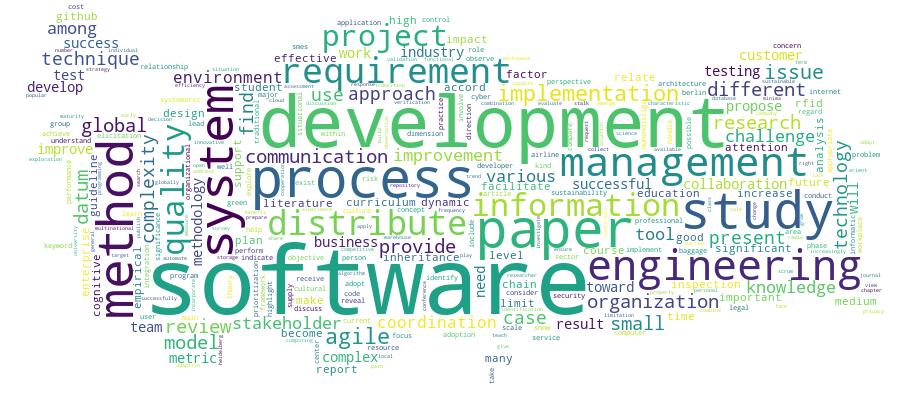
Competency Cloud
53 results
Scholarly Output Search Results
Now showing 1 - 10 of 53
Article Citation - WoS: 4Citation - Scopus: 5Object-Oriented Inheritance Metrics in the Context of Cognitive Complexity(Ios Press, 2011) Mishra, Deepti; Mishra, AlokIt is important to identify modules that are fault prone or exhibit evidence of high cognitive complexity as these modules require corrective actions such as increased source code inspection, refactoring or performing more exhaustive testing. This can lead to a better quality software system. It has been found that inheritance has an impact on the cognitive complexity of a software system. In this paper, two inheritance metrics based on cognitive complexity, one at class level CCI (Class Complexity due to Inheritance) and another at program level ACI (Average Complexity of a program due to Inheritance), have been proposed for object-oriented software systems. Additionally, one more metric MC (Method Complexity) has been proposed to calculate the complexity of a method. These proposed metrics are compared with some well known object-oriented inheritance metrics by calculating their values for three random C++ programs. It has been observed that CCI and ACT are better to represent cognitive complexity due to inheritance than other well known class level and program level inheritance metrics.Conference Object Citation - WoS: 1Citation - Scopus: 3A Software Development Process Model for Cloud by Combining Traditional Approaches(Springer international Publishing Ag, 2015) Hacaloglu, Tuna; Eren, P. Erhan; Mishra, Deepti; Mishra, AlokEven though cloud computing is a technological paradigm that has been adopted more and more in various domains, there are few studies investigating the software development lifecycle in cloud computing applications and there is still not a comprehensive software development process model developed for cloud computing yet. Due to the nature of cloud computing that is completely different from the traditional software development, there is a need of suggesting process models to perform the software development systematically to create high quality software. In this study, we propose a new conceptual Software Development Life Cycle Model for Cloud Software Development that incorporates characteristics of different process models for traditional software development. The proposed model takes traditional model's specific characteristics into account and also considers cloud's specific nature i.e. advantages and challenges as well.Conference Object Citation - WoS: 1Use Cases and Object Modelling Using Argouml(Springer-verlag Berlin, 2011) Complak, Wojciech; Wojciechowski, Adam; Mishra, Alok; Mishra, DeeptiThe key factor in the process of good quality software development is using proper techniques for requirements elicitation, representation and modelling providing foundations to build a logical model of the projected system. One of the most popular functional requirements description methods is use cases and scenarios approach introduced by Jacobson in 1993. Use case diagrams and analysis of functionality necessary for future users of the system allows precise definition of object model of target software system. However there are few fully functional free CASE tools supporting system designer at this software development stage. The article describes process of creating guidelines and formal requirements for design of a software system supporting storage and analysis of data concerning regulatory duties of Polish Telecom (Polish name: Telekomunikacja Polska) in the range of RIO framework agreement regarding collocation with the free UML modelling ArgoUML tool.Article Citation - WoS: 5Citation - Scopus: 11Erp Project Implementation: Evidence From the Oil and Gas Sector(Budapest Tech, 2011) Mishra, Alok; Mishra, Deepti; Computer Engineering; Software EngineeringEnterprise Resource Planning (ERP) systems provide integration and optimization of various business processes, which can lead to improved planning and decision quality, and a smoother coordination between business units, resulting in higher efficiency and a quicker response time to customer demands and inquiries. This paper reports the challenges and opportunities and the outcome of an ERP implementation process in the Oil & Gas exploration sector. This study will facilitate the understanding of the transition, constraints, and implementation process of ERP in this sector and will also provide guidelines from lessons learned in this regard.Article Citation - WoS: 2Citation - Scopus: 5E-Learning Experience at Various Universities: Academics Perspective(Univ Osijek, Tech Fac, 2011) Mishra, Alok; Mishra, Deepti; Computer Engineering; Software EngineeringE-learning has become an increasingly popular mode of instruction in higher education all over the world. In spite of proliferation of e-learning, few studies/cases have attempted to investigate the differences in e-learning processes from faculty perspective. This paper presents observations on e-learning experiences at three premier universities which provide online courses for students and professionals. Based on some important characteristics supported by literature review, a comparative view is presented and discussed. Furthermore, suggestions based on the outcome of our study are made for further reference. The objective of this paper is to discuss significant e-learning experiences as current practices at different universities from the perspective of the faculty.Article Citation - WoS: 21Citation - Scopus: 48Customer Relationship Management: Implementation Process Perspective(Budapest Tech, 2009) Mishra, Alok; Mishra, Deepti; Computer Engineering; Software EngineeringCustomer relationship management (CRM) can help organizations manage customer interactions more effectively to maintain competitiveness in the present economy. As more and more organizations realize the significance of becoming customer-centric in today's competitive era, they adopted CRM as a core business strategy and invested heavily. CRM, an integration of information technology and relationship marketing, provides the infrastructure that facilitates long-term relationship building with customers at an enterprise-wide level. Successful CRM implementation is a complex, expensive and rarely technical projects. This paper presents the successful implementation of CRM from process perspective in a trans-national organization with operations in different segments. This study will aid in understanding transition, constraints and the implementation process of CRM in such organizations.Conference Object Citation - WoS: 12Software Process Improvement Methodologies for Small and Medium Enterprises(Springer-verlag Berlin, 2008) Mishra, Deepti; Mishra, AlokToday, the software industry is one of the most rapidly growing sectors and small software development companies play an important role in economy. Many such organizations have been interested in Software Process Improvement (SPI). It has been observed that the successful implementation of SPI methodologies is generally not possible within the context of small and medium-sized software enterprises (SMEs) because they are not capable of bearing the cost of implementing these software process improvement programs. Further the proper implementation of software engineering techniques is difficult task for SMEs as they often operate on limited resources and with strict time constraints. There are number of methodologies to address these issues. In this paper, various SPI methodologies for SMEs are discussed and compared. This will lead towards maturity of software process improvement in SMEs and also facilitates in development of automation tools for SPIs in future.Book Part Citation - WoS: 2Citation - Scopus: 5Curriculum Issues in Industry Oriented Software Engineering Education(Igi Global, 2012) Mishra, Alok; Mishra, DeeptiSoftware engineering education has been emerging as an independent and mature discipline. Accordingly, various studies are being done to provide guidelines for the software engineering education curriculum design. This chapter summarizes the case for the need for software industry related courses and discusses the significance of industry oriented software engineering education to meet the educational objectives of all stakeholders. Software industry oriented curricula for the undergraduate and postgraduate levels are discussed. An industry oriented postgraduate level (Master's degree level) software engineering course is also proposed which includes foundational and applied courses to provide effective training to future software engineers. This will lead to the enhancement of their employment prospects in industrial and allied sectors.Article Citation - WoS: 21E-Government - Exploring the Different Dimensions of Challenges, Implementation, and Success Factors(Assoc Computing Machinery, 2011) Mishra, Alok; Mishra, DeeptiThis paper explores the different dimensions of e-government significant issues Challenges, Implementation, and Success Factors. The main objective is to highlight the current research and practice direction in these important areas of e-government. The results were limited to peer-reviewed conference papers and journal articles, published from 2001 up to and including early 2011. The analysis revealed that most research has been done in formulating challenges and barriers, implementation plan, evaluation/assessment and success factors of e-government while studies on knowledge management in e-government, readiness for e-government, e-Gov. process and security/privacy issues could get only limited attention. This indicates the need for future research (quantitative and qualitative) in these areas. Further it also reports a summary of the research in these e-government areas.Article Citation - WoS: 11Citation - Scopus: 14Sustainability Inclusion in Informatics Curriculum Development(Mdpi, 2020) Mishra, Deepti; Mishra, Alok(1) Background: Presently, sustainability is a crucial issue for human beings due to many disasters owing to climate change. Information Technology (IT) is now part of everyday life in society due to the proliferation of gadgets such as mobile phones, apps, computers, information systems, web-based systems, etc. (2) Methods: The analysis is based on recent ACM/IEEE curriculum guidelines for IT, a rigorous literature review as well as various viewpoints and their relevance for sustainability-oriented curriculum development; it also includes an assessment of key competencies in sustainability for proposed units in the IT curriculum. (3) Results: Sustainability is a critical subject for prospective IT professionals. Therefore, it is imperative to motivate and raise awareness among students and the faculty community regarding sustainability through its inclusion in the Informatics curriculum. This paper focuses on how sustainability can be included in various courses of the Informatics curriculum. It also considers recent ACM/IEEE curriculum guidelines for IT professionals, which assert that IT students should explore IT strategies required for developing a culture of green and sustainable IT. (4) Conclusions: This paper provides guidelines for IT curriculum development by incorporating sustainable elements in courses, so that future IT professionals can learn and practice sustainability in order to develop a sustainable society.
