Baranoğlu, Besim

Loading...
Profile Picture
Name Variants
Besim, Baranoğlu
Baranoğlu, Besim
B.,Besim
Baranoğlu,B.
B., Besim
B.,Baranoğlu
Baranoglu, Besim
Baranoglu,B.
B., Baranoglu
Besim, Baranoglu
B.,Baranoglu
Job Title
Doktor Öğretim Üyesi
Email Address
besim.baranoglu@atilim.edu.tr
Main Affiliation
Manufacturing Engineering
Status
Former Staff
Website
ORCID ID
Scopus Author ID
Turkish CoHE Profile ID
Google Scholar ID
WoS Researcher ID

Sustainable Development Goals

NO POVERTY1
NO POVERTY
0
Research Products
ZERO HUNGER2
ZERO HUNGER
0
Research Products
GOOD HEALTH AND WELL-BEING3
GOOD HEALTH AND WELL-BEING
0
Research Products
QUALITY EDUCATION4
QUALITY EDUCATION
0
Research Products
GENDER EQUALITY5
GENDER EQUALITY
0
Research Products
CLEAN WATER AND SANITATION6
CLEAN WATER AND SANITATION
0
Research Products
AFFORDABLE AND CLEAN ENERGY7
AFFORDABLE AND CLEAN ENERGY
1
Research Products
DECENT WORK AND ECONOMIC GROWTH8
DECENT WORK AND ECONOMIC GROWTH
0
Research Products
INDUSTRY, INNOVATION AND INFRASTRUCTURE9
INDUSTRY, INNOVATION AND INFRASTRUCTURE
0
Research Products
REDUCED INEQUALITIES10
REDUCED INEQUALITIES
0
Research Products
SUSTAINABLE CITIES AND COMMUNITIES11
SUSTAINABLE CITIES AND COMMUNITIES
0
Research Products
RESPONSIBLE CONSUMPTION AND PRODUCTION12
RESPONSIBLE CONSUMPTION AND PRODUCTION
0
Research Products
CLIMATE ACTION13
CLIMATE ACTION
0
Research Products
LIFE BELOW WATER14
LIFE BELOW WATER
0
Research Products
LIFE ON LAND15
LIFE ON LAND
0
Research Products
PEACE, JUSTICE AND STRONG INSTITUTIONS16
PEACE, JUSTICE AND STRONG INSTITUTIONS
0
Research Products
PARTNERSHIPS FOR THE GOALS17
PARTNERSHIPS FOR THE GOALS
0
Research Products
This researcher does not have a Scopus ID.
This researcher does not have a WoS ID.
Scholarly Output

28

Articles

13

Views / Downloads

49/116

Supervised MSc Theses

8

Supervised PhD Theses

2

WoS Citation Count

65

Scopus Citation Count

76

Patents

0

Projects

0

WoS Citations per Publication

2.32

Scopus Citations per Publication

2.71

Open Access Source

6

Supervised Theses

10

JournalCount
Engineering Analysis with Boundary Elements2
Isı Bilimi ve Tekniği Dergisi2
Advances in Materials and Processing Technologies1
CMES - Computer Modeling in Engineering and Sciences1
Conference on Optical Trapping and Optical Micromanipulation XII -- AUG 09-12, 2015 -- San Diego, CA1
Current Page: 1 / 4

Scopus Quartile Distribution

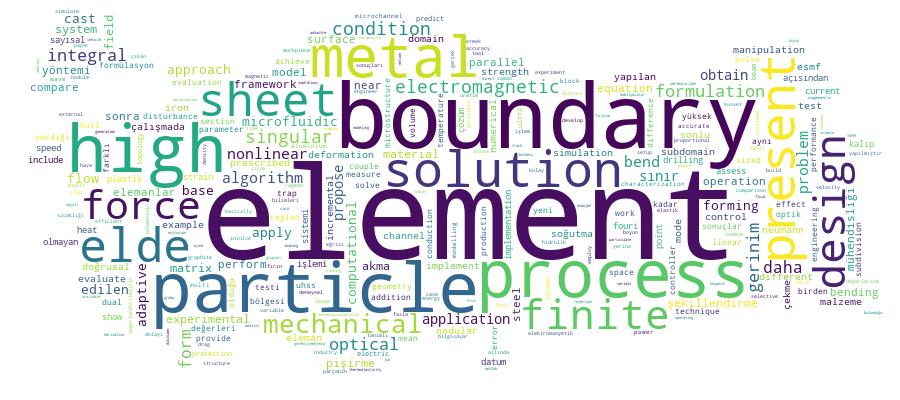
Competency Cloud

GCRIS Competency Cloud

Scholarly Output Search Results

Now showing 1 - 4 of 4
  • Conference Object
    Citation - WoS: 1
    Citation - Scopus: 3
    Boundary Element Method for Optical Force Calibration in Microfluidic Dual-Beam Optical Trap
    (Spie-int Soc Optical Engineering, 2015) Solmaz, Mehmet E.; Cetin, Barbaros; Baranoglu, Besim; Serhathoglu, Murat; Biyikh, Neemi; Serhatloglu, Murat; Biyikli, Necmi
    The potential use of optical forces in microfluidic environment enables highly selective bio-particle manipulation. Manipulation could be accomplished via trapping or pushing a particle due to optical field. Empirical determination of optical force is often needed to ensure efficient operation of manipulation. The external force applied to a trapped particle in a microfluidic channel is a combination of optical and drag forces. The optical force can be found by measuring the particle velocity for a certain laser power level and a multiplicative correction factor is applied for the proximity of the particle to the channel surface. This method is not accurate especially for small microfluidic geometries where the particle size is in Mie regime and is comparable to channel cross section. In this work, we propose to use Boundary Element Method (BEM) to simulate fluid flow within the micro-channel with the presence of the particle to predict drag force. Pushing experiments were performed in a dual-beam optical trap and particle's position information was extracted. The drag force acting on the particle was then obtained using BEM and other analytical expressions, and was compared to the calculated optical force. BEM was able to predict the behavior of the optical force due to the inclusion of all the channel walls.
  • Conference Object
    Citation - WoS: 3
    Citation - Scopus: 5
    An Application of High-Power Electromagnetic Pulse: Forming of Sheet Metal Using Electromagnetic Waves
    (Institute of Electrical and Electronics Engineers Inc., 2016) Inanan,G.; Baranoglu,B.; Aydin,E.
    In this study, the application of high velocity metal forming process by means of electromagnetic field is proposed. Electromagnetic Sheet Metal Forming (ESMF) is a process of forming sheet metal with very high speed (in milliseconds) without mechanical contact using the energy density of a pulsed magnetic field. In this process, deformation of the workpiece is driven by a transient electric current that is induced in a coil using a capacitor bank and discharge switch. This study presents some experiments and their results by examining the effects of different parameters in the proposed ESMF setup. The analysis and modelling of Electromagnetic sheet metal forming (ESMF) process is presented, as well. It has been seen that, it is possible to design a new system using the outcomes of this study. © 2015 Chamber of Electrical Engineers of Turkey.
  • Conference Object
    Citation - WoS: 3
    An Application of High-Power Electromagnetic Pulse: Forming of Sheet Metal Using Electromagnetic Waves
    (Ieee, 2015) Inanan, Gokhan; Baranoglu, Besim; Aydin, Elif
    In this study, the application of high velocity metal forming process by means of electromagnetic field is proposed. Electromagnetic Sheet Metal Forming (ESMF) is a process of forming sheet metal with very high speed (in milliseconds) without mechanical contact using the energy density of a pulsed magnetic field. In this process, deformation of the workpiece is driven by a transient electric current that is induced in a coil using a capacitor bank and discharge switch. This study presents some experiments and their results by examining the effects of different parameters in the proposed ESMF setup. The analysis and modelling of Electromagnetic sheet metal forming (ESMF) process is presented, as well. It has been seen that, it is possible to design a new system using the outcomes of this study.
  • Conference Object
    Predicting the Topology of the Bending Corner in Bending of Ultra High Strength Steels Through Finite Element Analysis
    (Tanger Ltd, 2019) Cetin, Baris; Billur, Eren; Baranoglu, Besim; Toptas, Ugur; Alic, Ozgur; Manufacturing Engineering; Automotive Engineering
    In bending of plates, unlike the case of sheet metal forming, a 3-D stress state is valid. Moreover, apart from the some very specific cases, the plane strain assumption is not appropriate either. Therefore; bending of thick ultra-high strength steel (UHSS) plates is a deformation process where 3-D stress and strain states exist in general. This study basically focuses on the prediction of the bending corner topology with non-linear finite element analysis method, since the laser-cut edges of the UHSS are particularly prone to edge cracking during bending operation. Within the scope of this study, an experimental set-up is designed which consists of bending tools and a servo mechanical press. The samples were bent by means of this set-up in an air-bending operation up to 90 degrees. This experimental work was followed by optical scanning measurements. And finally, the FEA results and the scanning data were compared in 3-D space. The results showed good correlation. As a future study, the 3-D strain field of the bending corner will be tried to be measured by a professional digital image correlation (DIC) system which could probably give more precise data when combined with the data from FEA.