
Azad, Saeıd Kazemzadeh
Loading...

Profile URL
Name Variants
Azad, S. Kazemzadeh
Saeid Kazemzadeh, Azad
S.K.Azad
Azad, Saeid Kazemzadeh
S., Azad
Azad, Saeıd Kazemzadeh
A., Saeid Kazemzadeh
S.,Azad
Azad,S.K.
A.,Saeid Kazemzadeh
Saeıd Kazemzadeh, Azad
A.,Saeıd Kazemzadeh
Saeid Kazemzadeh, Azad
S.K.Azad
Azad, Saeid Kazemzadeh
S., Azad
Azad, Saeıd Kazemzadeh
A., Saeid Kazemzadeh
S.,Azad
Azad,S.K.
A.,Saeid Kazemzadeh
Saeıd Kazemzadeh, Azad
A.,Saeıd Kazemzadeh
Job Title
Doçent Doktor
Email Address
saeid.azad@atilim.edu.tr
Main Affiliation
Department of Civil Engineering
Status
Former Staff
Website
ORCID ID
Scopus Author ID
Turkish CoHE Profile ID
Google Scholar ID
WoS Researcher ID
Sustainable Development Goals
SDG data is not available

This researcher does not have a Scopus ID.

This researcher does not have a WoS ID.

Scholarly Output
23
Articles
21
Views / Downloads
23/41
Supervised MSc Theses
2
Supervised PhD Theses
0
WoS Citation Count
469
Scopus Citation Count
524
Patents
0
Projects
0
WoS Citations per Publication
20.39
Scopus Citations per Publication
22.78
Open Access Source
3
Supervised Theses
2
| Journal | Count |
|---|---|
| Structural and Multidisciplinary Optimization | 6 |
| Structures | 4 |
| Iranian Journal of Science and Technology, Transactions of Mechanical Engineering | 3 |
| Computers & Structures | 2 |
| Periodica Polytechnica Civil Engineering | 1 |
Current Page: 1 / 2
Scopus Quartile Distribution
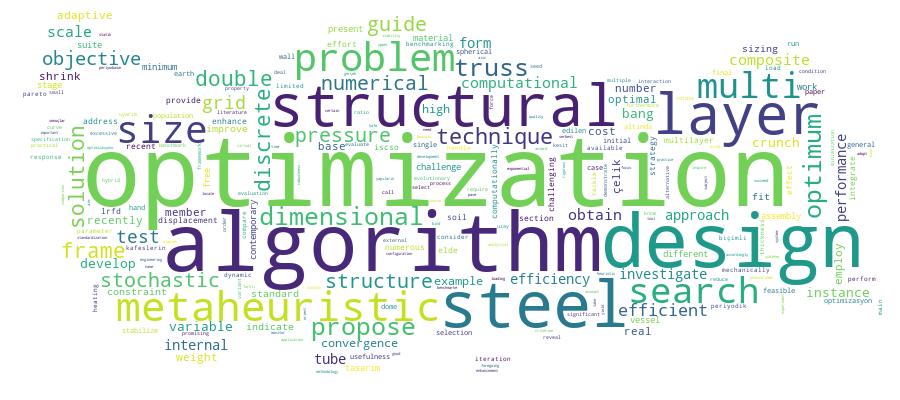
Competency Cloud
21 results
Scholarly Output Search Results
Now showing 1 - 10 of 21
Article Citation - WoS: 1Citation - Scopus: 1Metaheuristic Optimization of Rotating Multilayer Composite Tubes Under Internal Heating and Pressure(Springer, 2022) Azad, Saeid Kazemzadeh; Akis, Tolga; Kazemzadeh Azad, SaeidAlthough analysis/design of multilayer assemblies has been always an active field of research, works on the optimal design of rotating multilayer composite tubes are very limited. This paper addresses the design optimization of rotating multilayer composite tubes under internal heating and pressure. For determining the structural responses, analytical solutions are provided based on different boundary conditions. The automated selection of optimal material as well as thickness optimization of pressurized multilayer assemblies is carried out under different angular speed and internal heating conditions using a metaheuristic algorithm. The corresponding optimum design for each angular speed as well as internal heating condition is sought, and the numerical results are discussed. The study provides general guidelines for conceptual design of rotating multilayer composite tubes subjected to internal heating and pressure.Article Citation - WoS: 1Citation - Scopus: 1MO-ISCSO: A Challenging Benchmark Test Suite for Large-Scale Multi-Objective Structural Optimization(Elsevier Science inc, 2025) Azad, Saeid Kazemzadeh; Azad, Sina Kazemzadeh; Kazemzadeh Azad, SaeidCurrent studies on the development of multi-objective algorithms for optimization of truss structures mainly depend on small-scale classic benchmark instances. This paper highlights the importance of establishing standard large-scale multi-objective structural optimization benchmarking suites for accurate validation of the proposed algorithms. A new benchmark test suite, called MO-ISCSO, is proposed for large-scale multi-objective structural optimization, based on the most recent optimization problems of the international student competition in structural optimization (ISCSO). Owing to the very small feasibility ratios of the MO-ISCSO instances, the effect of presence of feasible designs in the initial population of NSGA-II, GDE3, and AR-MOEA multi-objective optimization algorithms is investigated using the proposed test suite. The obtained numerical results indicate that seeding the initial population with feasible solutions helps the foregoing algorithms maintain a better balance between convergence and diversity. The statistical results form a baseline for future studies on developing efficient multi-objective structural optimization techniques.Article Citation - WoS: 34Citation - Scopus: 37Monitored Convergence Curve: a New Framework for Metaheuristic Structural Optimization Algorithms(Springer, 2019) Azad, Saeid KazemzadehMetaheuristic optimization algorithms, by nature, depend on random processes, and therefore, performing numerous algorithm runs is inevitable to locate a reasonably good solution. Although executing the algorithms for small-size or trivial structural optimization problems could be computationally affordable, when dealing with challenging optimization problems, there is almost no chance of performing numerous independent runs of metaheuristics in a timely manner. This difficulty is basically due to the limitations in computational technologies as well as the excessive computational cost of such problems. In such cases that the number of independent runs is limited to a small number, each optimization run becomes highly valuable and, therefore, the stability of results becomes much more significant. In the present study, it is attempted to monitor the convergence curve of each succeeding run of the algorithm with respect to the information obtained in the previous runs. An easy-to-implement yet efficient framework is proposed for metaheuristic structural optimization algorithms where every succeeding run is monitored at certain intervals named as solution monitoring period. The solution monitoring period is selected such that, at each run, on the one hand, the algorithm could explore the search space to improve the solution quality, and on the other hand, the algorithm is occasionally forced to return to the previously visited more promising solutions if it is not able to improve the solution after a certain number of iterations. The numerical experiments using challenging test instances with up to 354 design variables indicate that, in general, the proposed approach helps to improve the solution quality as well as the robustness or stability of results in metaheuristic structural optimization.Article Citation - WoS: 25Citation - Scopus: 29Optimum Design of Steel Braced Frames Considering Dynamic Soil-Structure Interaction(Springer, 2019) Bybordiani, Milad; Azad, Saeid Kazemzadeh; Kazemzadeh Azad, SaeidRecent studies on design optimization of steel frames considering soil-structure interaction have focused on static loading scenarios, and limited work has been conducted to address the design optimization under dynamic soil-structure interaction. In the present work, first, a platform is developed to perform optimization of steel frames under seismic loading considering dynamic soil-structure interaction (SSI) in order to quantify the effects of earthquake records on the optimum design. Next, verification of the adopted modeling technique is conducted using comparison of the results with the reference solution counterparts in frequency domain. For time history analyses, records from past events are selected and scaled to a target spectrum using simple scaling approach as well as spectrum matching technique. For sizing of the steel frames, a recently developed metaheuristic optimization algorithm, namely exponential big bang-big crunch optimization method, is employed. To alleviate the computational burden of the optimization process, the metaheuristic algorithm is integrated with the so-called upper bound strategy. Effects of factors such as the building height, presence of soil domain, and the utilized ground motion scaling technique are investigated and discussed. The numerical results obtained based on 5- and 10-story steel braced frame dual systems reveal that, although dynamic SSI reduced the seismic demands to some extent, given the final design pertains to different load combinations, the optimum weight difference is not considerable.Article Citation - WoS: 11Citation - Scopus: 10Multi-Stage Guided Stochastic Search for Optimization and Standardization of Free-Form Steel Double-Layer Grids(Elsevier Science inc, 2021) Azad, Saeid Kazemzadeh; Aminbakhsh, Saman; Shaban, Samer S. S.; Kazemzadeh Azad, SaeidThere has been a growing interest in the use of free-form structures with irregularly curved yet aesthetically pleasing configurations in the recent decades. Although design optimization of regular steel grids has been well addressed in the literature of structural optimization, still limited work has been devoted to optimum design of real-size free-form grid structures. On the one hand, a main obstacle when dealing with real-size free-form steel grids is the excessive computational effort associated with contemporary evolutionary optimization algorithms. On the other hand, it is generally perceived that the obtained final designs using conventional optimization algorithms may not necessarily be favored in practice if certain provisions are not stipulated by the algorithm to preclude an abundance of distinct steel section sizes in the final design. Hence, instead of offering a single optimum or near optimum design, it would be more desirable to provide the designer or decision maker with a Pareto front set of non-dominated design alternatives taking into account both the minimum weight as well as the assortment of available steel section sizes in the final design. Accordingly, in this paper, a computationally efficient multi-stage guided stochastic search algorithm is proposed for optimization and standardization of realsize free-form steel double-layer grids. A gradual design-oriented section elimination approach is followed where in the first optimization stage, a complete set of commercially available steel sections is introduced to the algorithm and in the succeeding stages, the size of section list is reduced by eliminating the redundant sizes. Two variants of the algorithm are employed to demonstrate the usefulness of the proposed technique in challenging test examples of free-form steel double-layer grids, and the obtained Pareto fronts are plotted to illustrate the trade-off between minimum weight and assortment of steel section sizes in the final design.Article Citation - WoS: 45Citation - Scopus: 51Computationally Efficient Discrete Sizing of Steel Frames Via Guided Stochastic Search Heuristic(Pergamon-elsevier Science Ltd, 2015) Azad, S. Kazemzadeh; Hasancebi, O.; Kazemzadeh Azad, S.Recently a design-driven heuristic approach named guided stochastic search (GSS) technique has been developed by the authors as a computationally efficient method for discrete sizing optimization of steel trusses. In this study, an extension and reformulation of the GSS technique are proposed for its application to problems from discrete sizing optimization of steel frames. In the GSS, the well-known principle of virtual work as well as the information attained in the structural analysis and design stages are used together to guide the optimization process. A design wise strategy is employed in the technique where resizing of members is performed with respect to their role in satisfying strength and displacement constraints. The performance of the GSS is investigated through optimum design of four steel frame structures according to AISC-LRFD specifications. The numerical results obtained demonstrate that the GSS can be employed as a computationally efficient design optimization tool for practical sizing optimization of steel frames. (C) 2015 Elsevier Ltd. All rights reserved.Article Citation - WoS: 11Citation - Scopus: 13Automated Selection of Optimal Material for Pressurized Multi-Layer Composite Tubes Based on an Evolutionary Approach(Springer London Ltd, 2018) Azad, Saeid Kazemzadeh; Akis, Tolga; Kazemzadeh Azad, SaeidDecision making on the configuration of material layers as well as thickness of each layer in composite assemblies has long been recognized as an optimization problem. Today, on the one hand, abundance of industrial alloys with different material properties and costs facilitates fabrication of more economical or light weight assemblies. On the other hand, in the design stage, availability of different alternative materials apparently increases the complexity of the design optimization problem and arises the need for efficient optimization techniques. In the present study, the well-known big bang-big crunch optimization algorithm is reformulated for optimum design of internally pressurized tightly fitted multi-layer composite tubes with axially constrained ends. An automated material selection and thickness optimization approach is employed for both weight and cost minimization of one-, two-, and three-layer tubes, and the obtained results are compared. The numerical results indicate the efficiency of the proposed approach in practical optimum design of multi-layer composite tubes under internal pressure and quantify the optimality of different composite assemblies compared to one-layer tubes.Article Citation - WoS: 60Citation - Scopus: 64Seeding the Initial Population With Feasible Solutions in Metaheuristic Optimization of Steel Trusses(Taylor & Francis Ltd, 2018) Azad, Saeid Kazemzadeh; Kazemzadeh Azad, SaeidIn spite of considerable research work on the development of efficient algorithms for discrete sizing optimization of steel truss structures, only a few studies have addressed non-algorithmic issues affecting the general performance of algorithms. For instance, an important question is whether starting the design optimization from a feasible solution is fruitful or not. This study is an attempt to investigate the effect of seeding the initial population with feasible solutions on the general performance of metaheuristic techniques. To this end, the sensitivity of recently proposed metaheuristic algorithms to the feasibility of initial candidate designs is evaluated through practical discrete sizing of real-size steel truss structures. The numerical experiments indicate that seeding the initial population with feasible solutions can improve the computational efficiency of metaheuristic structural optimization algorithms, especially in the early stages of the optimization. This paves the way for efficient metaheuristic optimization of large-scale structural systems.Article Citation - WoS: 47Citation - Scopus: 46Enhanced Hybrid Metaheuristic Algorithms for Optimal Sizing of Steel Truss Structures With Numerous Discrete Variables(Springer, 2017) Azad, Saeid Kazemzadeh; Kazemzadeh Azad, SaeidThe advent of modern computing technologies paved the way for development of numerous efficient structural design optimization tools in the recent decades. In the present study sizing optimization problem of steel truss structures having numerous discrete variables is tackled using combined forms of recently proposed metaheuristic techniques. Three guided, and three guided hybrid metaheuristic algorithms are developed by integrating a design oriented strategy to the stochastic search properties of three recently proposed metaheuristic optimization techniques, namely adaptive dimensional search, modified big bang-big crunch, and exponential big bang-big crunch algorithms. The performances of the proposed guided, and guided hybrid metaheuristic algorithms are compared to those of standard variants through optimum design of real-size steel truss structures with up to 728 design variables according to AISC-LRFD specification. The numerical results reveal that the hybrid form of adaptive dimensional search and exponential big bang-big crunch algorithm is the most promising algorithm amongst the other investigated techniques.Article Citation - WoS: 17Citation - Scopus: 17Discrete Sizing of Steel Frames Using Adaptive Dimensional Search Algorithm(Budapest Univ Technology Economics, 2019) Hasancebi, Oguzhan; Azad, Saeid KazemzadehAdaptive dimensional search (ADS) algorithm is a recently proposed metaheuristic optimization technique for discrete structural optimization problems. In this study, discrete sizing optimization problem of steel frames is tackled using the ADS algorithm. An important feature of the algorithm is that it does not use any metaphor as an underlying principle for its implementation. Instead, the algorithm employs an efficient performance-oriented methodology at each iteration for convergence to the optimum or a near optimum solution. The performance of the ADS is investigated through optimum design of five real-size steel frame structures and the results are compared versus several contemporary metaheuristic techniques. The comparison of the obtained numerical results with those of available designs in the literature reveals the reliability and efficiency of the ADS in optimum design of steel frames.

- «
- 1 (current)
- 2
- 3
- »