Davut, Kemal

Loading...
Profile Picture
Name Variants
Davut, K.
K.,Davut
K., Davut
Davut,K.
D., Kemal
Davut, Kemal
D.,Kemal
Kemal, Davut
Job Title
Doktor Öğretim Üyesi
Email Address
kemal.davut@atilim.edu.tr
Main Affiliation
Department of Metallurgical and Materials Engineering
Status
Former Staff
Website
ORCID ID
Scopus Author ID
Turkish CoHE Profile ID
Google Scholar ID
WoS Researcher ID

Sustainable Development Goals

NO POVERTY1
NO POVERTY
0
Research Products
ZERO HUNGER2
ZERO HUNGER
0
Research Products
GOOD HEALTH AND WELL-BEING3
GOOD HEALTH AND WELL-BEING
1
Research Products
QUALITY EDUCATION4
QUALITY EDUCATION
0
Research Products
GENDER EQUALITY5
GENDER EQUALITY
0
Research Products
CLEAN WATER AND SANITATION6
CLEAN WATER AND SANITATION
0
Research Products
AFFORDABLE AND CLEAN ENERGY7
AFFORDABLE AND CLEAN ENERGY
0
Research Products
DECENT WORK AND ECONOMIC GROWTH8
DECENT WORK AND ECONOMIC GROWTH
0
Research Products
INDUSTRY, INNOVATION AND INFRASTRUCTURE9
INDUSTRY, INNOVATION AND INFRASTRUCTURE
11
Research Products
REDUCED INEQUALITIES10
REDUCED INEQUALITIES
0
Research Products
SUSTAINABLE CITIES AND COMMUNITIES11
SUSTAINABLE CITIES AND COMMUNITIES
0
Research Products
RESPONSIBLE CONSUMPTION AND PRODUCTION12
RESPONSIBLE CONSUMPTION AND PRODUCTION
0
Research Products
CLIMATE ACTION13
CLIMATE ACTION
0
Research Products
LIFE BELOW WATER14
LIFE BELOW WATER
0
Research Products
LIFE ON LAND15
LIFE ON LAND
0
Research Products
PEACE, JUSTICE AND STRONG INSTITUTIONS16
PEACE, JUSTICE AND STRONG INSTITUTIONS
0
Research Products
PARTNERSHIPS FOR THE GOALS17
PARTNERSHIPS FOR THE GOALS
0
Research Products
This researcher does not have a Scopus ID.
This researcher does not have a WoS ID.
Scholarly Output

32

Articles

21

Views / Downloads

54/98

Supervised MSc Theses

6

Supervised PhD Theses

0

WoS Citation Count

433

Scopus Citation Count

467

Patents

0

Projects

0

WoS Citations per Publication

13.53

Scopus Citations per Publication

14.59

Open Access Source

14

Supervised Theses

6

JournalCount
Journal of Materials Research and Technology4
Materials Testing2
Hittite Journal of Science and Engineering2
8th International Advances in Applied Physics and Materials Science Congress and Exhibition (APMAS) -- APR 24-30, 2018 -- Fethiye, TURKEY2
Materials Characterization2
Current Page: 1 / 4

Scopus Quartile Distribution

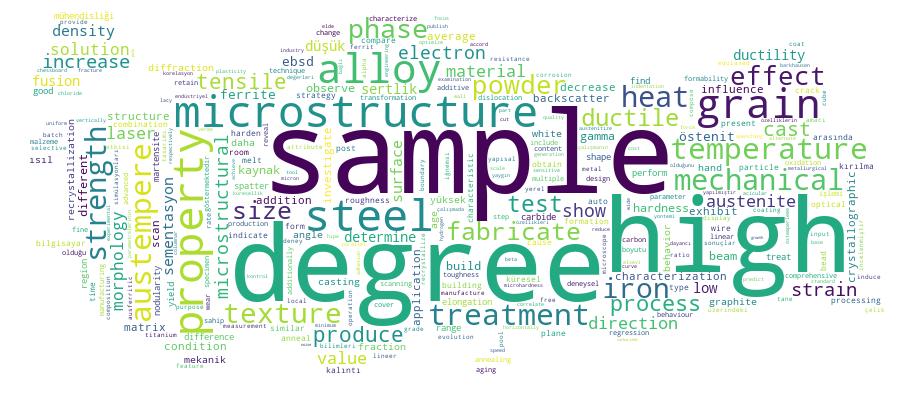
Competency Cloud

GCRIS Competency Cloud

Scholarly Output Search Results

Now showing 1 - 3 of 3
  • Article
    Citation - WoS: 25
    Citation - Scopus: 28
    Effect of Solution Heat Treatment on the Microstructure and Crystallographic Texture of In939 Fabricated by Powder Bed Fusion-Laser Beam
    (Elsevier, 2023) Dogu, Merve Nur; Ozer, Seren; Yalcin, Mustafa Alp; Davut, Kemal; Bilgin, Guney Mert; Obeidi, Muhannad Ahmed; Brabazon, Dermot
    The effect of various solution heat treatment temperatures (i.e., 1120, 1160, 1200 and 1240 & DEG;C) on the microstructure, grain morphology and crystallographic texture of IN939 fabricated by powder bed fusion-laser beam (PBF-LB) was investigated. Microstructural analyses showed that the high-temperature gradient and rapid solidification of the PBF-LB processing caused different resulting microstructures compared to conventionally pro-duced counterparts. The melt pool morphologies and laser scanning paths were examined in the as-fabricated samples in the XZ-and XY-planes, respectively. After the application of solution heat treatment at 1120 & DEG;C, the as-fabricated PBF-LB initial microstructure was still apparent. For solution heat treatments of 1200 & DEG;C and above, the melt pool and scanning path morphologies disappeared and converted into a mixture of columnar grains in the XZ-plane and equiaxed grains in the XY-plane. On the other hand, large equiaxed grains were observed when the samples were solutionized at 1240 & DEG;C. Additionally, g' phase precipitated within the matrix after all solution heat treatment conditions, which led to increase in the microhardness values. According to electron backscatter diffraction (EBSD) analyses, both as-fabricated and solution heat-treated samples had intense texture with {001} plane normal parallel to the building direction. The first recrystallized grains began to appear when the samples were subjected to the solution heat treatment at 1160 & DEG;C and the fraction of the recrystallized grains increased with increasing temperature, as supported by kernel average misorientation (KAM) and grain spread orientation (GOS) analyses.& COPY; 2023 The Author(s). Published by Elsevier B.V. This is an open access article under the CC BY license (http://creativecommons.org/licenses/by/4.0/).
  • Article
    Citation - WoS: 14
    Citation - Scopus: 13
    A Comprehensive Characterization of the Effect of Spatter Powder on In939 Parts Fabricated by Laser Powder Bed Fusion
    (Elsevier Sci Ltd, 2023) Dogu, Merve Nur; Mussatto, Andre; Yalcin, Mustafa Alp; Ozer, Seren; Davut, Kemal; Obeidi, Muhannad Ahmed; Brabazon, Dermot
    This study is focused on a comprehensive characterization of virgin and spatter IN939 powders and the effects of a certain amount of spatter powder on the part quality of IN939 fabricated by the L-PBF process. A brown tint coloration formed Al2O3 oxide, pores, a 124.4% increase in the average particle size, a 10.2% decrease in the powder circularity, and a 7.5% decrease in the powder aspect ratio were observed in the spatter powder. Additionally, higher average grain size and lower nanohardness were obtained for the spatter powder. In order to understand the effect of a certain amount of spatter powder on the part quality, 10 wt% spatter powder was mixed with the virgin powder. This addition was found to decrease the flowability of the powder. Moreover, this addition decreased relative density by around 0.3% and increased surface roughness by around 80.8% in the fabricated samples (termed as V and SV). On the other hand, there was no considerable microstructural, texture, microhardness, and nanohardness difference between V and SV samples, although the spatter powder addition caused a 30.2% increase in the average grain size of SV. The overall texture for both V and SV samples exhibit (00 1)//BD.
  • Master Thesis
    Coating of Titanium (tial6v4)) Alloy by Electrospun Poly (ε-Caprolactone) (pcl)
    (2020) Gelal, Hasan Mohammed Alı Abdullah Al; Şaşmazel, Hilal Türkoğlu; Davut, Kemal
    Çalışmanın amacı, elekroeğirme mekanizması kullanılarak poli (ε-kaprolakton) (PCL) ile kaplanmış titanyum alaşımı TiAl6V4'ten oluşan bir biyomateryal implant üretmektir. Ayrıca, titanyum alaşımı için yüzey işleminin kaplama üzerindeki etkisi de incelenirken, kaplama kalınlığı bir mikrometre kullanılarak belirlenmiştir. Örneklerin morfolojik karakterizasyonu Taramalı Elektron Mikroskopisi (SEM) kullanılarak gerçekleştirilmiştir. Yüzey ıslanabilirliği, temas açısı (CA) kullanılarak tayin edilmiştir ve titanyum alaşımlı mikroyapının optik mikrografları, optik mikroskopi kullanılarak elde edilmiştir. Substratlarda kompozisyon ve elementlerin tayini Enerji dağılımlı spektroskopisi (EDS) ile yapılmıştır. Yüzey morfolojisinin daha detaylı nicel analizi ve implantların yüzeyindeki pürüzlülüğü değerlendirmek için AFM ve pürüzlülük ölçümleri kullanılmıştır. PCL'nin TiAl6V4'e yapışmasını belirlemek için yapışma testi yapılmıştır. EDS ile sonuçlarına göre elde edilen örneklerin işlendikten sonra diğer elementlerden arınmış olduğu görülmüştür. Optik mikroskopi, alaşımların ön işlemden geçirilmesinden sonra optik mikrograflar vasıtasıyla mikro yapıdaki değişiklikleri gözlemlemek için kullanılmıştır. SEM ile taşlama, parlatma ve dağlamadan sonra yüzey morfolojisindeki değişim de kaydedilmiştir. Pürüzlülük ölçümleri, 3 mikron parlatma TiAl6V4 numunesinde 0.005 mikrondan, 120 öğütme TiAl6V4 numunesinde 0.56 mikrona kadar olan ortalama pürüzlülük değerlerini kantitatif olarak göstermiştir. Ölçümlerden sonra, kaplamanın kalınlığı 0.01 mm olarak belirlenmiştir. Temas açısı ölçümleri sonucunda en iyi hidrofilikliğe sahip numunenin 58.63° temas açısı ile PCL ile kaplanmış kazınmış alaşım olduğu görüşmüştür. Ayrıca yapışma testi, kaplama yapışması için en iyi iki adayın kazınmış ve 1200 öğütme numuneleri olduğunu göstermiştir: kaplamanın %99'undan fazlası, bandın çıkarılmasından sonra kaplamadan çıkmaz. Anahtar kelimeler: Electrospinning, TiAl6V4 alloy, Poly (𝜀-caprolactone)