
Park, Jongee
Loading...
Profile URL
Name Variants
Jongee Park
P.,Jongee
P., Jongee
J.,Park
Park J.
Park, Jongee
Park,J.
J., Park
Park,Jongee
Jongee, Park
Park, J
P.,Jongee
P., Jongee
J.,Park
Park J.
Park, Jongee
Park,J.
J., Park
Park,Jongee
Jongee, Park
Park, J
Job Title
Profesör Doktor
Email Address
jongee.park@atilim.edu.tr
Main Affiliation
Metallurgical and Materials Engineering
Status
Website
ORCID ID
Scopus Author ID
Turkish CoHE Profile ID
Google Scholar ID
WoS Researcher ID
Sustainable Development Goals
2
ZERO HUNGER

0
Research Products
14
LIFE BELOW WATER

0
Research Products
17
PARTNERSHIPS FOR THE GOALS

0
Research Products
5
GENDER EQUALITY

0
Research Products
16
PEACE, JUSTICE AND STRONG INSTITUTIONS

0
Research Products
8
DECENT WORK AND ECONOMIC GROWTH

0
Research Products
4
QUALITY EDUCATION

0
Research Products
6
CLEAN WATER AND SANITATION

0
Research Products
7
AFFORDABLE AND CLEAN ENERGY

12
Research Products
10
REDUCED INEQUALITIES

0
Research Products
11
SUSTAINABLE CITIES AND COMMUNITIES

1
Research Products
9
INDUSTRY, INNOVATION AND INFRASTRUCTURE

0
Research Products
1
NO POVERTY

0
Research Products
3
GOOD HEALTH AND WELL-BEING

2
Research Products
12
RESPONSIBLE CONSUMPTION AND PRODUCTION

0
Research Products
13
CLIMATE ACTION

0
Research Products
15
LIFE ON LAND

0
Research Products

Documents
53
Citations
927
h-index
19

Documents
50
Citations
891

Scholarly Output
57
Articles
45
Views / Downloads
21/0
Supervised MSc Theses
3
Supervised PhD Theses
0
WoS Citation Count
819
Scopus Citation Count
855
WoS h-index
19
Scopus h-index
19
Patents
0
Projects
1
WoS Citations per Publication
14.37
Scopus Citations per Publication
15.00
Open Access Source
7
Supervised Theses
3
Google Analytics Visitor Traffic
| Journal | Count |
|---|---|
| Ceramics International | 10 |
| Journal of Nanoscience and Nanotechnology | 3 |
| Applied Surface Science | 2 |
| 3rd International Conference on NANOCON -- SEP 21-23, 2011 -- Brno, CZECH REPUBLIC | 2 |
| Advanced Materials Research -- 2012 International Conference on Advances in Materials Science and Engineering, AMSE 2012 -- 9 December 2012 through 10 December 2012 -- Seoul -- 95488 | 2 |
Current Page: 1 / 7
Scopus Quartile Distribution
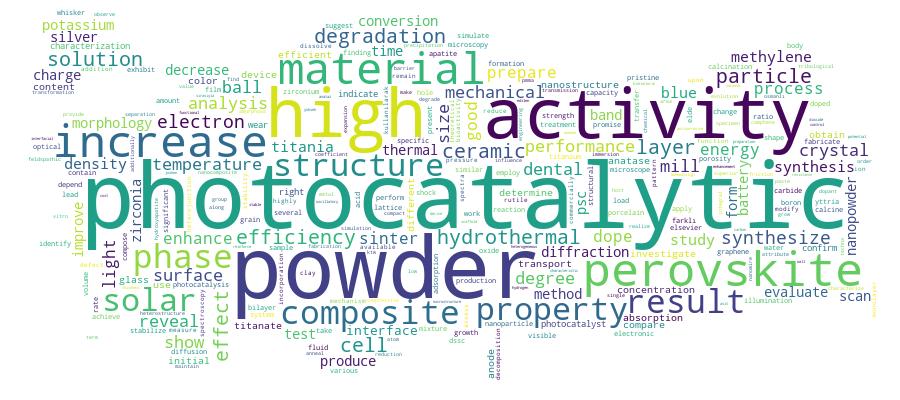
Competency Cloud
28 results
Scholarly Output Search Results
Now showing 1 - 10 of 28
Article Citation - WoS: 10Alkaline Hydrothermal Synthesis, Characterization, and Photocatalytic Activity of Tio2 Nanostructures: the Effect of Initial Tio2 Phase(Amer Scientific Publishers, 2019) Erdogan, Nursev; Park, Jongee; Choi, Woohyuk; Kim, Soo Young; Ozturk, AbdullahOne-dimensional (1D) titanate nanostructures were synthesized by hydrothermal route, using commercially available TiO2 (P25) and anatase powders as precursor materials and strong NaOH solution as catalyzer. The prepared titanates were calcined, followed by protonation to produce TiO2 nanostructures having enhanced photocatalytic and photovoltaic properties. The synthesized TiO2 1D nanostructures were characterized using field-emission scanning electron microscope, high-resolution electron microscope, X-ray diffraction analysis, and UV-Vis photospectroscopy to understand the effect of initial TiO2 phase on morphological and crystallographic features, and bandgap. Methylene blue degradation test was applied to evaluate the photoactivity of the products obtained after different stages of the process. The findings indicate that 1D TiO2 nanostructures form by different mechanisms from dissolved aggregates during hydrothermal process, depending on the crystal structure of the initial precursor used. Photocatalytic test results reveal that protonated titanates have considerable adsorption capability, while photocatalytic degradation depends on TiO2 transformation.Article Citation - WoS: 31Citation - Scopus: 37Effect of Initial Water Content and Calcination Temperature on Photocatalytic Properties of Tio2 Nanopowders Synthesized by the Sol-Gel Process(Elsevier Sci Ltd, 2015) Agartan, Lutfi; Kapusuz, Derya; Park, Jongee; Ozturk, AbdullahThe effects of initial water content and calcination temperature on sol gel synthesized TiO2 powders were studied. Mother solutions had water/Ti-precursor mole ratios (R ratio) of 1, 5, 10, and 50. Dried aerogels were calcined for 3 h at temperatures of 300, 400, and 500 degrees C to obtain crystallized TiO2 nanopowders in the range of 15-30 nm. PE-scanning electron microscopy and X-ray diffraction techniques were employed to investigate the morphological and structural properties of the nanopowders synthesized. Profound effect of gel viscosity was observed on the formation mechanism and extent of crystallinity in the powders. Methylene blue degradation test results suggest, photocatalytic performance is enhanced as initial water content and calcination temperature increased. Band-gap energy of the powders ranged from 3.09 to 3.27 eV. Overall, this study shows that initial water content and calcination regime have a profound effect on the phase assembly, crystallite size, band-gap energy, and photocatalytic performance of sol gel synthesized TiO2 nanopowders. (C) 2015 Elsevier Ltd and Techna Group S.r.l. All rights reserved.Conference Object Citation - WoS: 2Citation - Scopus: 4Influence of Boron And/Or Zirconium Doping on Morphology and Optical Properties of Titania(Tanger Ltd, 2011) Kapusuz, Derya; Park, Jongee; Ozturk, Abdullah; Metallurgical and Materials EngineeringSol-gel derived B (boron) and Zr (zirconium) doped TiO2 (Titania) nanoparticles were synthesized. Microstructural, photocatalytic and crystallographic properties of the doped particles were investigated. Highest photocatalytic activity was achieved by 10 wt% Zr doping. 5 wt% doping was the optimum value for effective B doping. B ions were found to form oxygen vacancies behaving as interstitial defects whereas Zr ions substituted Ti4+ ions in the lattice.Article Citation - WoS: 23Citation - Scopus: 27Facile synthesis of CsPbBr3/PbSe composite clusters(Taylor & Francis Ltd, 2018) Thang Phan Nguyen; Ozturk, Abdullah; Park, Jongee; Sohn, Woonbae; Tae Hyung Lee; Jang, Ho Won; Kim, Soo YoungIn this work, CsPbBr3 and PbSe nanocomposites were synthesized to protect perovskite material from self-enlargement during reaction. UV absorption and photoluminescence (PL) spectra indicate that the addition of Se into CsPbBr3 quantum dots modified the electronic structure of CsPbBr3, increasing the band gap from 2.38 to 2.48 eV as the Cs:Se ratio increased to 1:3. Thus, the emission color of CsPbBr3 perovskite quantum dots was modified from green to blue by increasing the Se ratio in composites. According to X-ray diffraction patterns, the structure of CsPbBr3 quantum dots changed from cubic to orthorhombic due to the introduction of PbSe at the surface. Transmission electron microscopy and X-ray photoemission spectroscopy confirmed that the atomic distribution in CsPbBr3/PbSe composite clusters is uniform and the composite materials were well formed. The PL intensity of a CsPbBr3/PbSe sample with a 1:1 Cs: Se ratio maintained 50% of its initial intensity after keeping the sample for 81 h in air, while the PL intensity of CsPbBr3 reduced to 20% of its initial intensity. Therefore, it is considered that low amounts of Se could improve the stability of CsPbBr3 quantum dots.Article Citation - WoS: 48Citation - Scopus: 55Synthesis of Α-fe2o3< Heterogeneous Composites by the Sol-Gel Process and Their Photocatalytic Activity(Elsevier Science Sa, 2020) Bouziani, Asmae; Park, Jongee; Ozturk, Abdullahalpha-Fe2O3/TiO2 heterogeneous composites were synthesized by the sol-gel process to increase the photocatalytic activity of TiO2. The structural, morphological, and optical characteristics of the composites were determined by X-ray diffraction, scanning electron microscope, and UV-vis diffuse reflectance spectroscopy. Results revealed that the incorporation of alpha-Fe2O3 to TiO2 widened the visible light absorption ability of TiO2. It was realized that the calcination temperature plays a crucial role in morphology development hence photocatalytic activity of the alpha-Fe2O3/TiO2 heterogeneous composites. The photocatalytic activity of the composites calcined at various temperatures was evaluated for the degradation of Methylene Blue (MB) and Phenol (Ph) in aqueous medium under UV and sun-like illuminations. The alpha-Fe2O3-TiO2 composites exhibits superior photocatalytic efficiency to degrade both MB and Ph as compared to both pristine TiO2 and pristine alpha-Fe2O3 under sun-like illumination. The alpha-Fe2O3/TiO2 composite degraded approximately 90 % of MB and 50 % of Ph in 180 min sun-like illumination. Improvement in photocatalytic activity is attributed to the separation of photogenerated electron/hole pairs through the interaction of alpha-Fe(2)O(3 )and TiO2.Article Citation - WoS: 44Citation - Scopus: 54Preparation and Photocatalytic Activity of G-c3n4< Heterojunctions Under Solar Light Illumination(Elsevier Sci Ltd, 2020) Gundogmus, Pelin; Park, Jongee; Ozturk, AbdullahThe solar light sensitive g-C3N4/TiO2 heterojunction photocatalysts containing 20, 50, 80, and 90 wt% graphitic carbon nitride (g-C3N4) were prepared by growing Titania (TiO2) nanoparticles on the surfaces of g-C3N4 particles via one step hydrothermal process. The hydrothermal reactions were allowed to take place at 110 degrees C at autogenous pressure for 1 h. Raman spectroscopy analyses confirmed that an interface developed between the surfaces of TiO2 and g-C3N4 nanoparticles. The photocatalyst containing 80 wt% g-C3N4 was subsequently heat treated 1 h at temperatures between 350 and 500 degrees C to improve the photocatalytic efficiency. Structural and optical properties of the prepared g-C3N4/TiO2 heterojunction nanocomposites were compared with those of the pristine TiO2 and pristine g-C(3)N(4 )powders. Photocatalytic activity of all the nanocomposites and the pristine TiO2 andg-C3N4 powders were assessed by the Methylene Blue (MB) degradation test under solar light illumination. g-C3N4/TiO2 heterojunction photocatalysts exhibited better photocatalytic activity for the degradation of MB than both pristine TiO2 and g-C3N4. The photocatalytic efficiency of the g-C3N4/TiO2 heterojunction photocatalyst heat treated at 400 degrees C for 1 his 1.45 times better than that of the pristine TiO2 powder, 2.20 times better than that of the pristine g-C3N4 powder, and 1.24 times better than that of the commercially available TiO2 powder (Degussa P25). The improvement in photocatalytic efficiency was related to i) the generation of reactive oxidation species induced by photogenerated electrons, ii) the reduced recombination rate for electron-hole pairs, and iii) large specific surface area.Conference Object Citation - WoS: 3Synthesis of Tio2 Nanostructures Via Hydrothermal Method(John Wiley & Sons inc, 2015) Bilgin, Nursev; Agartan, Lutfi; Park, Jongee; Ozturk, AbdullahTitania (TiO2) nanostructures were produced via hydrothermal method using amorphous TiO2 powders synthesized by the sol-gel precipitation process. The hydrothermal system was isolated from the environment and hydrothermal reactions were allowed to execute at 130 degrees C for 36 h at autogeneous pressure, and at a stirring rate of 250 rpm. Scanning electron microscopy (SEM) analysis revealed that TiO2 nanofibers formed instead of nanotubes upon utilization of amorphous TiO2 precursor. After hydrothermal synthesis, the powders were acid treated by HCl several times. X-ray diffraction (XRD) analysis identified that the synthesized powders were Na-titanate and remained Na-titanate even after subjecting to acidic treatments several times. The photocatalytic performance of the powders was evaluated by degradation of methylene blue (MB) solution in UV illumination. Results were compared with nanotubes which were synthesized previously using P25 commercial titania powder and have shown that TiO2 in tubular structure offers better photocatalytic performance for the degradation of MB solution under UV illumination as compared to fiber-like structure.Article Citation - WoS: 12Citation - Scopus: 11Enhanced Bioactivity and Low Temperature Degradation Resistance of Yttria Stabilized Zirconia/Clay Composites for Dental Applications(Elsevier Sci Ltd, 2022) Tufan, Yigithan; Park, Jongee; Ozturk, Abdullah; Ercan, BaturYttria stabilized zirconia (YSZ)/clay composites were produced to improve osseointegration and undesired tetragonal-to-monoclinic phase transformation (low temperature degradation, LTD) of YSZ ceramics so that long-term clinical success of YSZ implants is achieved. Various amounts (0.5,1,2, and 4 wt%) of clay was incorporated to YSZ. Predetermined amounts of clay and YSZ were mixed and pressed uniaxially at 15 MPa into compacts that were subsequently pressureless sintered at 1450 degrees C. Density, compressive strength, hardness and indentation crack resistance of 4 wt% clay incorporated YSZ/clay composite were 5.77 +/- 0.01 g/cm3, 1188 +/- 121 MPa, 1223 +/- 9 HV, and 4.4 +/- 0.1 MPa root m, respectively. Additionally, biological properties of YSZ/clay composites were assessed in vitro using bone cells. Incorporation of 4 wt% clay significantly enhanced bone cell prolifer-ation, spreading, and functions. Moreover, a significant increase in the LTD resistance of YSZ was achieved upon 4 wt% clay incorporation. The findings collectively suggest that YSZ/clay composites have a potential to be used as an alternative material for dental applications.Article Citation - WoS: 11Citation - Scopus: 10Synthesis and Characterization of Hydrothermally Grown Potassium Titanate Nanowires(Korean Assoc Crystal Growth, inc, 2015) Kapusuz, Derya; Kalay, Y. Eren; Park, Jongee; Ozturk, Abdullah; Metallurgical and Materials EngineeringPotassium titanate (KT) nanowires were synthesized by a one-step hydrothermal reaction between TiO2 and aqueous KOH solution. The effects of KOH concentration and reaction time on hydrothermal formation and KT nanowire growth were investigated. The nanowire growth mechanism was elucidated using a combined study of powder X-ray diffraction, and scanning and transmission electron microscopy. The results revealed that hydrothermal growth was initiated by the formation of amorphous-like Ti-O-K sheets in anatase. Increasing hydrothermal reaction time caused the transformation of anatase to Ti-O-K sheets, from which potassium hexa-titanate (K2Ti6O13) nuclei formed and grew to establish one-dimensional morphology through preferential growth along the b-axis. It was revealed that the hydrothermal reactions followed a quite different mechanism than the well-known calcination route. Potassium tetra-titanate (K2Ti4O9) crystals formed in the amorphous region using the hexa-titanate phase as a nucleation site for heterogeneous crystallization. Increasing the KOH concentration in the solution accelerated the hydrothermal reaction rate.Article Citation - WoS: 25Citation - Scopus: 26Production and Properties of Tooth-Colored Yttria Stabilized Zirconia Ceramics for Dental Applications(Elsevier Sci Ltd, 2018) Kaplan, Melis; Park, Jongee; Kim, Soo Young; Ozturk, AbdullahDense zirconia stabilized with 3 mol% yttria ceramics were produced in disc shape by first cold isostatically pressing at 100 MPa and then sintering at 1450 degrees C at ambient laboratory conditions. Coloring was accomplished by immersion the discs in NiCl2, MoCl3, and NiCl2 + MoCl3 solutions for 5, 30, and 60 s. Different concentrations (0.1, 0.25, and 0.5 wt%) were applied to get the color of natural tooth. The density, color, microhardness, fracture toughness, compressive strength, and wear rate of the discs were measured to evaluate the suitability of the colored discs for dental applications. Color assessments were made by measuring CIE Lab L*, a*, b, and Delta E* values. Low temperature degradation of the samples was evaluated by aging sensitivity tests in autoclave for 2, 4, and 6 h. Results have shown that color produced depends on the kind and concentration of the colorant solution while time of immersion has no significant effect on coloring process. Coloring solutions containing 0.1 and 0.25 wt% MoCl3 provided clinically acceptable color with the Delta E* value ranging from 5.16 to 6.42 for dental applications.

- «
- 1 (current)
- 2
- 3
- »