Park, Jongee

Loading...
Profile Picture
Name Variants
Jongee Park
P.,Jongee
P., Jongee
J.,Park
Park J.
Park, Jongee
Park,J.
J., Park
Park,Jongee
Jongee, Park
Park, J
Job Title
Profesör Doktor
Email Address
jongee.park@atilim.edu.tr
Main Affiliation
Metallurgical and Materials Engineering
Status
Website
Scopus Author ID
Turkish CoHE Profile ID
Google Scholar ID
WoS Researcher ID

Sustainable Development Goals

14

LIFE BELOW WATER
LIFE BELOW WATER Logo

0

Research Products

2

ZERO HUNGER
ZERO HUNGER Logo

0

Research Products

11

SUSTAINABLE CITIES AND COMMUNITIES
SUSTAINABLE CITIES AND COMMUNITIES Logo

1

Research Products

1

NO POVERTY
NO POVERTY Logo

0

Research Products

12

RESPONSIBLE CONSUMPTION AND PRODUCTION
RESPONSIBLE CONSUMPTION AND PRODUCTION Logo

0

Research Products

7

AFFORDABLE AND CLEAN ENERGY
AFFORDABLE AND CLEAN ENERGY Logo

12

Research Products

5

GENDER EQUALITY
GENDER EQUALITY Logo

0

Research Products

3

GOOD HEALTH AND WELL-BEING
GOOD HEALTH AND WELL-BEING Logo

2

Research Products

9

INDUSTRY, INNOVATION AND INFRASTRUCTURE
INDUSTRY, INNOVATION AND INFRASTRUCTURE Logo

0

Research Products

13

CLIMATE ACTION
CLIMATE ACTION Logo

0

Research Products

6

CLEAN WATER AND SANITATION
CLEAN WATER AND SANITATION Logo

0

Research Products

10

REDUCED INEQUALITIES
REDUCED INEQUALITIES Logo

0

Research Products

4

QUALITY EDUCATION
QUALITY EDUCATION Logo

0

Research Products

15

LIFE ON LAND
LIFE ON LAND Logo

0

Research Products

16

PEACE, JUSTICE AND STRONG INSTITUTIONS
PEACE, JUSTICE AND STRONG INSTITUTIONS Logo

0

Research Products

17

PARTNERSHIPS FOR THE GOALS
PARTNERSHIPS FOR THE GOALS Logo

0

Research Products

8

DECENT WORK AND ECONOMIC GROWTH
DECENT WORK AND ECONOMIC GROWTH Logo

0

Research Products
Documents

53

Citations

927

h-index

19

Documents

50

Citations

890

Scholarly Output

57

Articles

45

Views / Downloads

21/0

Supervised MSc Theses

3

Supervised PhD Theses

0

WoS Citation Count

819

Scopus Citation Count

855

WoS h-index

19

Scopus h-index

19

Patents

0

Projects

1

WoS Citations per Publication

14.37

Scopus Citations per Publication

15.00

Open Access Source

7

Supervised Theses

3

Google Analytics Visitor Traffic

JournalCount
Ceramics International10
Journal of Nanoscience and Nanotechnology3
Applied Surface Science2
3rd International Conference on NANOCON -- SEP 21-23, 2011 -- Brno, CZECH REPUBLIC2
Advanced Materials Research -- 2012 International Conference on Advances in Materials Science and Engineering, AMSE 2012 -- 9 December 2012 through 10 December 2012 -- Seoul -- 954882
Current Page: 1 / 7

Scopus Quartile Distribution

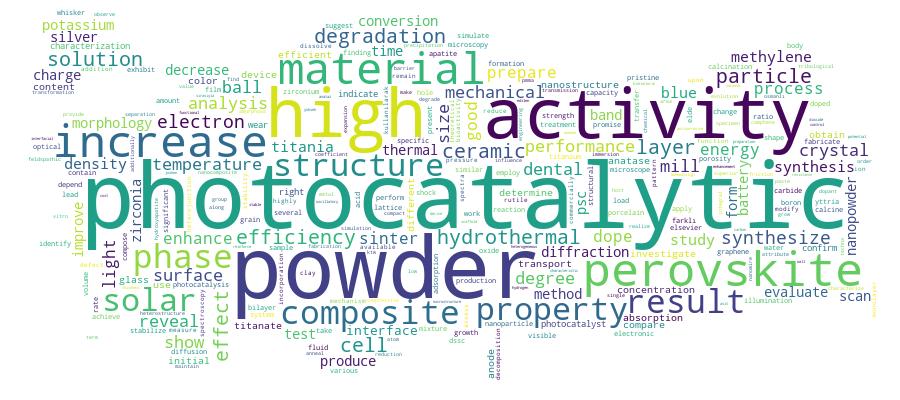
Competency Cloud

GCRIS Competency Cloud

Scholarly Output Search Results

Now showing 1 - 3 of 3
  • Article
    Citation - WoS: 6
    Citation - Scopus: 6
    Diethanolamine Modified Perovskite-Substrate Interface for Realizing Efficient Esl-Free Pscs
    (Mdpi, 2023) Sajid, Sajid; Alzahmi, Salem; Wei, Dong; Ben Salem, Imen; Park, Jongee; Obaidat, Ihab M.
    Simplifying device layout, particularly avoiding the complex fabrication steps and multiple high-temperature treatment requirements for electron-selective layers (ESLs) have made ESL-free perovskite solar cells (PSCs) attractive. However, the poor perovskite/substrate interface and inadequate quality of solution-processed perovskite thin films induce inefficient interfacial-charge extraction, limiting the power conversion efficiency (PCEs) of ESL-free PSCs. A highly compact and homogenous perovskite thin film with large grains was formed here by inserting an interfacial monolayer of diethanolamine (DEA) molecules between the perovskite and ITO substrate. In addition, the DEA created a favorable dipole layer at the interface of perovskite and ITO substrate by molecular adsorption, which suppressed charge recombination. Comparatively, PSCs based on DEA-treated ITO substrates delivered PCEs of up to 20.77%, one of the highest among ESL-free PSCs. Additionally, this technique successfully elongates the lifespan of ESL-free PSCs as 80% of the initial PCE was maintained after 550 h under AM 1.5 G irradiation at ambient temperature.
  • Article
    Citation - WoS: 21
    Citation - Scopus: 25
    Inorganic Hole Transport Materials in Perovskite Solar Cells Are Catching Up
    (Elsevier Sci Ltd, 2023) Sajid, Sajid; Alzahmi, Salem; Ben Salem, Imen; Park, Jongee; Obaidat, Ihab M.
    More research is required to further optimize device efficiency, stability, and reduce the materials cost as perovskite solar cells (PSCs) approach to industrialization. Modulating the optoelectronic features and chemical coupling of the hole transport materials (HTMs) remains a prominent field of study in PSCs due to the significant impact these materials have on the device performance and stability. In order to speed up the commercialization of these cells, it is also important to use cost-effective HTMs in PSCs. InorganicHTMs are superior to other types of HTMs in terms of their advantages in boosting device performance and producing PSCs at a reasonable cost, in addition to their superior charge transport capabilities, desired energy levels, and intrinsic thermal and chemical stability. A detailed overview of inorganicHTMs, including metal oxides, cyanates, phthalocyanines, chalcogenides, nitrides, and carbides, is presented in this review. After briefly discussing the primary physical and optoelectronic characteristics of inorganic-HTMs, the critical functions of the above-mentioned materials as HTMs in PSCs are addressed. This review concludes by offering suggestions for future research that could considerably boost the performance of the PSCs with cost-effective inorganic-HTMs.
  • Article
    Citation - WoS: 20
    Citation - Scopus: 24
    Lead-Free Perovskite Homojunction-Based Htm-Free Perovskite Solar Cells: Theoretical and Experimental Viewpoints
    (Mdpi, 2023) Sajid, Sajid; Alzahmi, Salem; Salem, Imen Ben; Park, Jongee; Obaidat, Ihab M.
    Simplifying the design of lead-free perovskite solar cells (PSCs) has drawn a lot of interest due to their low manufacturing cost and relative non-toxic nature. Focus has been placed mostly on reducing the toxic lead element and eliminating the requirement for expensive hole transport materials (HTMs). However, in terms of power conversion efficiency (PCE), the PSCs using all charge transport materials surpass the environmentally beneficial HTM-free PSCs. The low PCEs of the lead-free HTM-free PSCs could be linked to poorer hole transport and extraction as well as lower light harvesting. In this context, a lead-free perovskite homojunction-based HTM-free PSC was investigated, and the performance was then assessed using a Solar Cell Capacitance Simulator (SCAPS). A two-step method was employed to fabricate lead-free perovskite homojunction-based HTM-free PSCs in order to validate the simulation results. The simulation results show that high hole mobility and a narrow band gap of cesium tin iodide (CsSnI3) boosted the hole collection and absorption spectrum, respectively. Additionally, the homojunction's built-in electric field, which was identified using SCAPS simulations, promoted the directed transport of the photo-induced charges, lowering carrier recombination losses. Homojunction-based HTM-free PSCs having a CsSnI3 layer with a thickness of 100 nm, defect density of 10(15) cm(-3), and interface defect density of 10(18) cm(-3) were found to be capable of delivering high PCEs under a working temperature of 300 K. When compared to formamidinium tin iodide (FASnI(3))-based devices, the open-circuit voltage (V-oc), short-circuit density (J(sc)), fill factor (FF), and PCE of FASnI(3)/CsSnI3 homojunction-based HTM-free PSCs were all improved from 0.66 to 0.78 V, 26.07 to 27.65 mA cm(-2), 76.37 to 79.74%, and 14.62 to 19.03%, respectively. In comparison to a FASnI(3)-based device (PCE = 8.94%), an experimentally fabricated device using homojunction of FASnI(3)/CsSnI3 performs better with V-oc of 0.84 V, J(sc) of 22.06 mA cm(-2), FF of 63.50%, and PCE of 11.77%. Moreover, FASnI(3)/CsSnI3-based PSC is more stable over time than its FASnI(3)-based counterpart, preserving 89% of its initial PCE. These findings provide promising guidelines for developing highly efficient and environmentally friendly HTM-free PSCs based on perovskite homojunction.