
Erden, Zühal
Loading...
Profile URL
Name Variants
E.,Zuhal
E., Zühal
E., Zuhal
Zuhal, Erden
Zühal Erden
Erden,Zuhal
E.,Zühal
Erden, Zuhal
Z., Erden
Erden Z.
Erden, Zühal
Zühal, Erden
Erden,Z.
Z.,Erden
E., Zühal
E., Zuhal
Zuhal, Erden
Zühal Erden
Erden,Zuhal
E.,Zühal
Erden, Zuhal
Z., Erden
Erden Z.
Erden, Zühal
Zühal, Erden
Erden,Z.
Z.,Erden
Job Title
Doçent Doktor
Email Address
zuhal.erden@atilim.edu.tr
Main Affiliation
Mechatronics Engineering
Status
Website
ORCID ID
Scopus Author ID
Turkish CoHE Profile ID
Google Scholar ID
WoS Researcher ID
Sustainable Development Goals
 1
1NO POVERTY
0
Research Products
 2
2ZERO HUNGER
0
Research Products
 3
3GOOD HEALTH AND WELL-BEING
0
Research Products
 4
4QUALITY EDUCATION
1
Research Products
 5
5GENDER EQUALITY
0
Research Products
 6
6CLEAN WATER AND SANITATION
0
Research Products
 7
7AFFORDABLE AND CLEAN ENERGY
0
Research Products
 8
8DECENT WORK AND ECONOMIC GROWTH
0
Research Products
 9
9INDUSTRY, INNOVATION AND INFRASTRUCTURE
5
Research Products
 10
10REDUCED INEQUALITIES
0
Research Products
 11
11SUSTAINABLE CITIES AND COMMUNITIES
0
Research Products
 12
12RESPONSIBLE CONSUMPTION AND PRODUCTION
0
Research Products
 13
13CLIMATE ACTION
0
Research Products
 14
14LIFE BELOW WATER
0
Research Products
 15
15LIFE ON LAND
0
Research Products
 16
16PEACE, JUSTICE AND STRONG INSTITUTIONS
0
Research Products
 17
17PARTNERSHIPS FOR THE GOALS
0
Research Products

This researcher does not have a Scopus ID.

This researcher does not have a WoS ID.

Scholarly Output
29
Articles
13
Views / Downloads
137/4243
Supervised MSc Theses
7
Supervised PhD Theses
1
WoS Citation Count
36
Scopus Citation Count
52
Patents
0
Projects
2
WoS Citations per Publication
1.24
Scopus Citations per Publication
1.79
Open Access Source
6
Supervised Theses
8
| Journal | Count |
|---|---|
| Makina Tasarım ve Imalat Dergisi | 2 |
| Control Engineering and Applied Informatics | 2 |
| 20th Annual International Conference on Mechatronics and Machine Vision in Practice, M2VIP 2013 -- 20th Annual International Conference on Mechatronics and Machine Vision in Practice, M2VIP 2013 -- 20 September 2013 through 20 September 2013 -- Ankara -- 102276 | 1 |
| ASME 2010 10th Biennial Conference on Engineering Systems Design and Analysis, ESDA2010 -- ASME 2010 10th Biennial Conference on Engineering Systems Design and Analysis, ESDA2010 -- 12 July 2010 through 14 July 2010 -- Istanbul -- 84828 | 1 |
| Computer Applications in Engineering Education | 1 |
Current Page: 1 / 4
Scopus Quartile Distribution
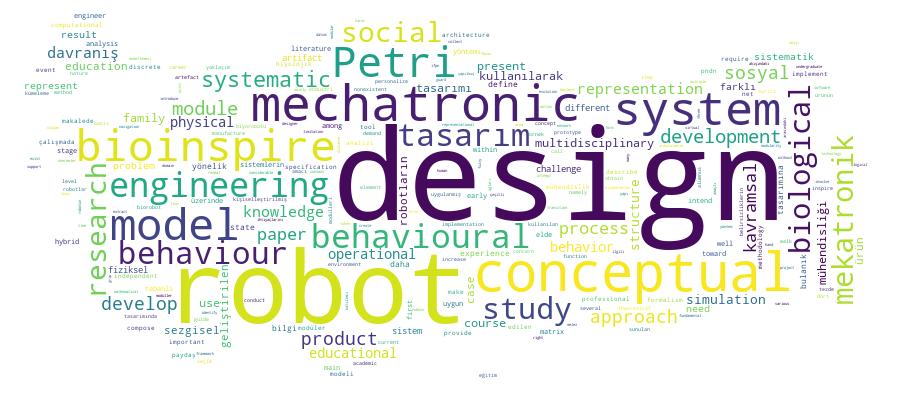
Competency Cloud
20 results
Scholarly Output Search Results
Now showing 1 - 10 of 20
Article Citation - WoS: 2Citation - Scopus: 4State-Based Conceptual Design in Mechatronics Via Petri Nets: a Case Study for an Educational Robot(Romanian Soc Control Tech informatics, 2011) Erden, Zuhal; Mechatronics EngineeringUse of state-based models to represent artifact behaviors at conceptual design is a challenging area for design research. Conceptual design of mechatronic systems needs a multi-domain approach in which the "logical behavior" of a mechatronic design artifact is described without any physical realization. This paper presents a case study on state-based representation for the intended behavior of a non-existent robot at early conceptual level. The behavior is defined through a demonstrative scenario and represented as states and state transitions independent of any physical embodiment. Discrete Event System Specification (DEVS) and Petri Net formalism are used for the model. This representational model is first step towards the development of a virtual prototype for the logical behavior of robot design.Article Citation - WoS: 5Citation - Scopus: 8Biological System Analysis in Bioinspired Conceptual Design (bicd) for Bioinspired Robots(Romanian Soc Control Tech informatics, 2011) Eroglu, Aylin Konez; Eroğlu, Aylin Konez; Erden, Zuhal; Erden, Zühal; Erden, Abdulkadir; Erden, Abdulkadir; Eroğlu, Aylin Konez; Erden, Zühal; Erden, Abdulkadir; Department of Mechatronics Engineering; Department of Mechatronics Engineering; Mechatronics Engineering; Mechatronics Engineering; Department of Mechatronics Engineering; Mechatronics EngineeringBioinspired design (BID) provides a systematic way for bioinspired applications. Although several BID approaches as well as some tools and databases are available in the literature, the studies on BID are still challenging for designers and/or engineers because of limitations of current BID approaches. There are mainly two directions related with these limitations. One of them is the representation of knowledge on biological systems and the second is the problem of transforming this knowledge into engineering domain. These limitations expose two questions; firstly, "What knowledge is required to describe biological systems?" and "How this knowledge is represented?" and secondly, "How this knowledge is transformed into the engineering domain?". This paper presents a study which aims to answer the first question about knowledge required to represent biological systems. This knowledge is obtained during "Analysis of Biological Systems" stage of a new suggested bioinspired conceptual design (BICD) procedure.Conference Object Petri Net Modeling and Simulation of Walking Behaviour for Design of a Bioinspired Robot Dog(SciTePress, 2016) Erden,Z.; Araz,M.Research in behavior-based design faces many challenges regarding the AIDS in conceptual design of biorobots, representation of a biological system,s behavior in a well formed modeling tool and therefore providing systematic transformation of this behavior into robot design. This paper reports a research that focuses on the development of a Petri Net model to represent a biological system,s behavior. The model is based on real time data collected from an experiment in which a dog is walking on a treadmill with a speed of 1km/h. The model has the ability of simulating the real time rhythm of dog's walking behavior utilizing colors and numbers as well as the step-by-step simulation. The aim is to observe the behavior of a walking dog in time domain as an early stage of conceptual design of a bioinspired robot dog. Main challenge is to develop a methodology to guide designer towards more creative designs based on bioinspired design ideas. The presented work is an early attempt to initiate a systematic approach towards the stated goal. © Copyright 2016 by SCITEPRESS - Science and Technology Publications, Lda. All rights reserved.Article Citation - WoS: 6Citation - Scopus: 5A Petri Net Approach To Behavioural Simulation of Design Artefacts With Application To Mechatronic Design(Springer Heidelberg, 2003) Erden, Z; Erden, A; Erkmen, AMA Petri net-based design inference network (PNDN) architecture is presented in this paper. The network models the logical behaviour of any design artefact developed by designers at the conceptual design level by representing the subfunctions and their inter-relationships to perform a required overall function. The theoretical framework in developing the PNDN is based on the improved theory of Petri nets and hybrid automata. The theoretical PNDN architecture was implemented in a C++ based software called the design network simulator (DNS). The logical behaviour of a design artefact is modelled through the token flow within the PNDN. The token flow model is developed both for deterministic and nondeterministic PNDN, which involves uncertainties. In this paper we present the mathematical formalism of the deterministic token flow through the PNDN. We also provide a conceptual design example in order to explain the application of our theoretical architecture for structuring the PNDN.Article A New Perspective To Design Education in Industrial Engineering: Product Design Projects at Freshman(2008) Erden, ZühalTasarım felsefesinin mühendislik eğitiminin ilk yıllarında verilmesi, öğrencilerin lisans programında gördükleri çeşitli kavramların/yöntemlerin mühendislik tasarımı ile ilgili problemlere nasıl çözüm getirdiğini anlamaları bakımından büyük önem taşımaktadır. Bir sistem ve insan mühendisliği olan endüstri mühendisliği, profesyonel anlamda fiziksel ürün tasarımından çok sistem tasarımına yönelik çalışmalar yapmaktadır. Bu nedenle endüstri mühendisliğinde tasarım eğitimi daha çok sistem tasarımına yönelik projeler/uygulamalar ile gerçekleştirilmektedir. Bu makalede yenilikçi bir yaklaşımla geliştirilen ve endüstri mühendisliği bölümü birinci sınıf öğrencilerinin ürün tasarımına yönelik açık uçlu projeler yaptığı tasarım dersi anlatılmakta ve bu dersin yedi yıllık uygulaması ile ilgili değerlendirmeler sunulmaktadırArticle Ürün Tasarımında Bilgi Akışındaki Belirsizliklerin Sezgisel Bulanık Önermeler Yaklaşımı ile Modellenmesi(2006) Erden, ZühalBu makalede kavramsal ürün tasarımında ortaya çıkan belirsizliklerin sezgisel bulanık önermeler kullanılarak modellenmesi anlatılmaktadır. Bu yaklaşım kavramsal tasarım seçeneklerinin mantıksal modellemesi için geliştirilmiş olan Petri Ağı tabanlı tasarım ağındaki (PNDN-Petri Net Based Design Network) bilgi akışı modeline entegre edilerek bir Sezgisel Bulanık Petri Ağı (IFPN-Intuitionistic Fuzzy Petri Net) yapısı elde edilmiştir. IFPN modeli, bilgi akışındaki belirsizliklerin kavramsal tasarım seçenekleri üzerindeki etkilerinin değerlendirilerek karşılaştırma yapılabilmesini ve böylece belirsizlik altında tasarım sürecinin devamını sağlamaktadır. IFPN modelinde ayrıca çelişkili bilginin denetimine yönelik olarak Sezgisel Bulanık Küme teorisinde yer alan ve hatalı sezgisel bulanık tahminlerin (intuitionistic fuzzy estimations) doğru sezgisel bulanık biçime (correct intuitionistic fuzzy form)' dönüştürülmesi yöntemine dayanan bir yaklaşım geliştirilmiştir. IFPN modelinin uygulaması bir kavramsal tasarım örneği üzerinde anlatılmıştır.Doctoral Thesis Biyorobotlar için Biyoesinlenmiş Kavramsal Tasarım Metodolojisi(2013) Eroğlu, Aylin Konez; Erden, Abdulkadir; Erden, ZühalBu tezin ana amacı biyorobot tasarımlarına yönelik olarak Biyoesinlenmiş Kavramsal Tasarım (BİKT) metodolojisi geliştirmektir. Tez kapsamında, varolan Biyobenzetim Tasarım (BİT) yaklaşımlara ve sistematik mühendislik tasarım adımlarına dayanarak yeni bir BİKT prosedürü geliştirilmiştir. Geliştirilen prosedür, köpek biyorobotu (BioDog) üzerinde yürüme ve tırısa gitme, hamamböceği biyorobotu (BioCoc) üzerinde tırmanma, sıçrama (çekirge) biyorobotu üzerinde zıplama ve melez (köpek- ıstakoz) biyorobotu üzerinde yürüme hareketleri için uygulanmıştır. Örnek çalışmalardan elde edilen geri bildirimler kullanılarak bir BİKT süreci oluşturulmuştur. Hedeflenen BİKT metodolojisini oluşturmak için geliştirilen BİKT süreci, Klasik Ayrık Olay Sistem Spesifikasyonu (AOSS) modeli ile modellenmiştir.Önerilen BİKT metodolojisi, açık ve tam olarak tanımlanmış altı adım ile müşteri ihtiyaçlarını biyorobotun kavramsal tasarımına dönüştürmektedir. Varolan BİT'lerin eksik olan taraflarının giderilmesi amacı ile biyolojik sistem analizi ve biyobenzetim dönüşüm tasarım adımları bu tez çalışması kapsamında detaylı olarak incelenmiştir.Tez çalışmaları sırasında BİKT metodolojisinin tüm adımları tam olarak her ne kadar dört örnek çalışma üzerinde uygulanmış olsa da, on dört farklı biyolojik sistem ve yirmi dört hareket tipi içerik analizi yöntemi ve/veya gözlem yöntemi kullanılarak incelenmiştir. İçerik analizi için literatür taraması yapılmış, biyolojik sistemlerin gözlemlenmesi için ise bir deney düzeneği kurulmuştur. Deneyler sırasında biyolojik sistemlerin morfoloji, işlev ve davranışları hakkında gerekli bilgiyi edinmek için hızlı kamera kullanılmıştır. Biyobenzetim dönüşüm adımında, biyolojik sistem hakkındaki bu bilgi sistematik olarak biyorobotun kavramsal tasarımı için gerekli olan biyorobot hakkındaki bilgiye dönüştürülmektedir.Conference Object Citation - Scopus: 3Representation of the Operational Behaviour of an Educational Robot at Conceptual Design Using Petri Nets(Amer Soc Mechanical Engineers, 2010) Erden,Z.Increasing demand for computational support at conceptual design makes behavioural modeling a challenging area for design research. This is mainly because a behavioural model of a nonexistent design artifact at conceptual level is the basis for behavioural simulation and resulting computational design support. Behavioural models are particularly important for top-down design of multidisciplinary products such as mechatronic systems. During the conceptual design of such systems, intended "operational behavior" of the artifact is described without any physical realization. As design stages become more concrete, operational behaviour can be refined so as to represent well defined mathematical descriptions of corresponding physical behaviors. In this study, a model for representing the intended operational behaviour of a nonexistent educational robot, namely a rabbit robot, is presented for conceptual design. The operational behaviour of the robot is defined as composed of states and state transitions independent of any physical embodiment. Discrete Event System Specification (DEVS) and Petri Net formalism are used for the model. This representational model is the first step towards the development of a virtual prototype for the operational behaviour of an educational robot. © 2010 by ASME.Article Citation - WoS: 13Citation - Scopus: 15Behavioural Representation and Simulation of Design Concepts for Systematic Conceptual Design of Mechatronic Systems Using Petri Nets(Taylor & Francis Ltd, 2014) Araz, Macit; Erden, ZuhalThe systematic representation of design concepts is an important requirement for computational support during the conceptual design stage within the process of product development. Behavioural simulation of design concepts is used as a systematic representation framework, and behavioural representation is based on modelling and simulating the behaviour of a design artefact at the conceptual level to perform an overall function, leading to behaviour-based conceptual design. The behaviour-based conceptual design approach is critical for mechatronic systems since they require synergistic integration starting from the initial conceptual design phase. The present study is focused on behavioural representation and simulation of design concepts via discrete event system specification formalism and Petri Nets so as to contribute to systematic conceptual design in mechatronic systems. The paper introduces a representation framework for the behaviour-based conceptual design of mechatronic systems and its implementation on five selected case studies, among laboratory-level educational robots. In addition to Petri Net modelling and computer simulations, the implementation also includes physical simulations of the intended operational behaviours for educational robots on a distributed physical structure called the desktop design model'. In this paper, implementation on one of these case studies, namely the frog robot', is presented in detail.Master Thesis Mekatronik Mühendisliği Bölüm Laboratuvarları için Rehber – Bekci Robot Sistem Tasarımı ve Prototip Geliştirilmesi(2015) Sadeghı, Amir Nobahar; Erden, Abdulkadir; Erden, ZühalBu tez çalışmasının amacı Atılım Üniversitesi Mekatronik Mühendisliği laboratuvarlarında 'Rehber-Bekçi Robot' olarak görev yapacak olan akıllı bir hareketli robotun tasarlanması, üretilmesi ve laboratuvar ortamında dolaşmasının sağlanmasıdır. Bu amacı gerçekleştirmek üzere tümleşik bir sistem tasarlanmıştır. Robotun laboratuvarlarda dolaşması için geliştirilen kontrol mimarisi konumlandırma, engelden kaçınma, yol planlaması ve verilen bir başlangıç pozisyonundan rastgele belirlenen bir başka pozisyona gidişin yönetilmesini sağlamaktadır. Bu çalışmada, robota yüklenmiş bir haritaya dayalı olmayan davranış-temelli bir navigasyon algoritması kullanılmıştır. Buna göre robot, içinde bulunduğu laboratuvar ortamının çeşitli özelliklerini, üzerindeki sensörler yardımıyla algılayarak kendi konumunu belirlemekte ve böylece laboratuvar ortamında dolaşmaktadır. Bu çalışma kapsamında robotun tasarımı, imalatı, sistem entegrasyonu gerçekleştirilmiş ve laboratuvar ortamında dolaşması test edilmiştir.
