
Şahin, Sümer
Loading...

Profile URL
Name Variants
Sahin, Suemer
S.,Sumer
Sahin, Sumer
S., Sahin
S., Sumer
S.,Sahin
Sumer, Sahin
S.,Şahin
Ş.,Sümer
Sahin,S.
Şahin, Sümer
Şahin,S.
Sümer, Şahin
S.,Sumer
Sahin, Sumer
S., Sahin
S., Sumer
S.,Sahin
Sumer, Sahin
S.,Şahin
Ş.,Sümer
Sahin,S.
Şahin, Sümer
Şahin,S.
Sümer, Şahin
Job Title
Profesör Doktor
Email Address
Main Affiliation
Department of Mechanical Engineering
Status
Former Staff
Website
ORCID ID
Scopus Author ID
Turkish CoHE Profile ID
Google Scholar ID
WoS Researcher ID
Sustainable Development Goals
 1
1NO POVERTY
0
Research Products
 2
2ZERO HUNGER
0
Research Products
 3
3GOOD HEALTH AND WELL-BEING
3
Research Products
 4
4QUALITY EDUCATION
0
Research Products
 5
5GENDER EQUALITY
0
Research Products
 6
6CLEAN WATER AND SANITATION
5
Research Products
 7
7AFFORDABLE AND CLEAN ENERGY
18
Research Products
 8
8DECENT WORK AND ECONOMIC GROWTH
2
Research Products
 9
9INDUSTRY, INNOVATION AND INFRASTRUCTURE
0
Research Products
 10
10REDUCED INEQUALITIES
0
Research Products
 11
11SUSTAINABLE CITIES AND COMMUNITIES
2
Research Products
 12
12RESPONSIBLE CONSUMPTION AND PRODUCTION
1
Research Products
 13
13CLIMATE ACTION
0
Research Products
 14
14LIFE BELOW WATER
0
Research Products
 15
15LIFE ON LAND
0
Research Products
 16
16PEACE, JUSTICE AND STRONG INSTITUTIONS
0
Research Products
 17
17PARTNERSHIPS FOR THE GOALS
0
Research Products

This researcher does not have a Scopus ID.

This researcher does not have a WoS ID.

Scholarly Output
45
Articles
24
Views / Downloads
34/14
Supervised MSc Theses
0
Supervised PhD Theses
0
WoS Citation Count
275
Scopus Citation Count
350
Patents
0
Projects
0
WoS Citations per Publication
6.11
Scopus Citations per Publication
7.78
Open Access Source
4
Supervised Theses
0
| Journal | Count |
|---|---|
| Energy Conversion and Management | 8 |
| Progress in Nuclear Energy | 4 |
| 15th International Conference on Emerging Nuclear Energy Systems -- MAY 15-19, 2011 -- San Francisco, CA | 3 |
| International Journal of Energy Research | 3 |
| International Journal of Hydrogen Energy | 3 |
Current Page: 1 / 4
Scopus Quartile Distribution
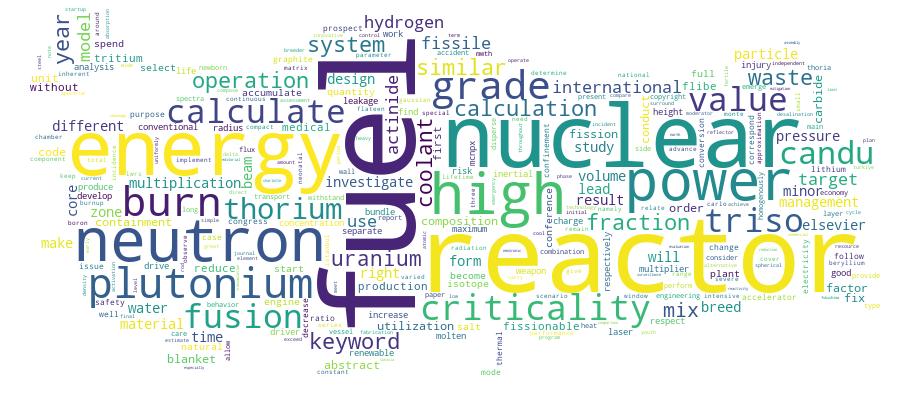
Competency Cloud
24 results
Scholarly Output Search Results
Now showing 1 - 10 of 24
Article Citation - WoS: 11Citation - Scopus: 15Energy Multiplication and Fissile Fuel Breeding Limits of Accelerator-Driven Systems With Uranium and Thorium Targets(Pergamon-elsevier Science Ltd, 2015) Sahin, Sumer; Sarer, Basar; Celik, YurdunazThe study analyses the integral U-233 and Pu-239 breeding rates, neutron multiplication ratio through (n,xn)- and fission-reactions, heat release, energy multiplication and consequently the energy gain factor in infinite size thorium and uranium as breeder material in an accelerator driven systems (ADS), irradiated by a 1-GeV proton source. Energy gain factor has been calculated as M-energy = 1.67, 4.03 and 5.45 for thorium, depleted uranium (100% U-238) and natural uranium, respectively, where the infinite criticality values are k(infinity) = 0.40, 0.752 and 0.816. Fissile fuel material production is calculated as 53 Th-232(n,gamma)U-233, 80.24 and 90.65 U-238(n,gamma)Pu-239 atoms per incident proton, respectively. The neutron spectrum maximum is by similar to 1 MeV. Lower energy neutrons E < 1 MeV have major contribution on fissile fuel material breeding (>97.5%), whereas their share on energy multiplication is negligible (0.2%) for thorium, depleted uranium. Major fission events occur in the energy interval 1MeV < E < 50 MeV. Copyright (C) 2015, Hydrogen Energy Publications, LLC. Published by Elsevier Ltd. All rights reserved.Article Citation - WoS: 3Citation - Scopus: 3Incidence of Medical Device-Related Pressure Injuries and Identification of Risk Factors in the Neonatal Unit(Elsevier Sci Ltd, 2024) Yarkiner, Zalihe; Bahar, Arzu; Sonmez, Munevver; Kapan, Emine; Sahin, Simge; Kostekci, Ezgi; Erdeve, OmerAim: This study was conducted to investigate the incidence of medical device-related pressure injuries (MDRPIs) and the risk factors influencing their occurrence in the neonatal intensive care unit (NICU). Method: This study is a prospective, descriptive study. The research was conducted with 116 newborns between June 1, 2022, and June 1, 2023. Newborns who stayed in the neonatal intensive care unit for at least 24 h were observed daily for medical device-related pressure injuries under and around each medical device throughout their stay in the intensive care unit. The "Case Report Form," "MDRPIs Monitoring Form," "Braden Q scale for children," National Pressure Injury Advisory Panel (NPIAP) Pressure Grading, and Glasgow Coma Scale were used in the research. Results: The incidence of medical device-related pressure injuries is 35.3 % (41/116). It was found that 38.1 % (16/42) of medical device-related pressure injuries developed due to Near-Infrared Spectroscopy (NIRS) probes, and 33.5 % (14/42) developed due to medical devices related to the respiratory system. In terms of anatomical location, 38.1 % occurred on the forehead, and 23.8 % on the arm/leg. The difference between birth weight, gestational age, development of MDRPIs in newborns receiving sedation and inotropes was found to be statistically significant. Regression analysis identified gestational age (p = 0.040, OR = 0.795, 95%CI = [0.632-1.000]) as an independent risk factor for the occurrence of medical device-related pressure injuries. Conclusions: The incidence of medical device-related pressure injuries in newborns was relatively high in this study, with gestational age being the most significant risk factor for MDRPIs formation. It is crucial for neonatal intensive care nurses to consider associated risk factors while providing newborn care and implement appropriate preventive measures to reduce the incidence of MDRPIs.Article Citation - WoS: 10Citation - Scopus: 14Emergency Planning Zones Estimation for Karachi-2 and Karachi-3 Nuclear Power Plants using Gaussian Puff Model(Hindawi Ltd, 2016) Sahin, Sumer; Ali, MuhammadEmergency planning zones (PAZ and UPZ) around the Karachi-2 and Karachi-3 nuclear power plants (K-2/K-3 NPPs) have been realistically determined by employing Gaussian puff model and Gaussian plume model together for atmospheric transport, diffusion, and deposition of radioactive material using onsite and regional data related to meteorology, topography, and land-use along with latest IAEA Post-Fukushima Guidelines. The analysis work has been carried out using U.S. NRC computer code RASCAL 4.2. The assumed environmental radioactive releases provide the sound theoretical and practical bases for the estimation of emergency planning zones covering most expected scenario of severe accident and most recent multiunit Fukushima Accident. Sheltering could be used as protective action for longer period of about 04 days. The area about 3 km of K-2/K-3 NPPs site should be evacuated and an iodine thyroid blocking agent should be taken before release up to about 14 km to prevent severe deterministic effects. Stochastic effects may be avoided or minimized by evacuating the area within about 8 km of the K-2/K-3 NPPs site. Protective actions may become more effective and cost beneficial by using current methodology as Gaussian puff model realistically represents atmospheric transport, dispersion, and disposition processes in contrast to straight-line Gaussian plume model explicitly in study area. The estimated PAZ and UPZ were found 3 km and 8 km, respectively, around K-2/K-3 NPPs which are in well agreement with IAEA Post-Fukushima Study. Therefore, current study results could be used in the establishment of emergency planning zones around K-2/K-3 NPPs.Article Citation - WoS: 22Citation - Scopus: 26Hydrogen Hazard and Mitigation Analysis in Pwr Containment(Pergamon-elsevier Science Ltd, 2013) Sahin, Sumer; Sarwar, Mohammad SohailThis paper describes the analytical results for the estimation of hydrogen concentration in the containment atmosphere based on zirconium oxidation reaction following a severe accident. The analysis provides useful information about the potential challenge of local hydrogen accumulation in the containment, which may be used to reduce the hydrogen detonation risk and to design the capacity and arrangements of mitigation measures. The containment analysis has been performed using computer code COGAP which uses the scenario of loss of coolant accident. The behavior of pressure and hydrogen concentrations in containment as a function of time under the severe accident condition is presented in graphical form. The mitigation measures (recombiners) are essential to maintain containment atmosphere in the safe stable conditions. A hydrogen control system is to mitigate the hydrogen risk by comparing results from a reference accident sequence with and without recombiners. This comparison show that combustible gas occur in few local areas in the containment for a limited time span and hydrogen concentration is reduced significantly with the use of recombiners. (C) 2013 Elsevier Ltd. All rights reserved.Article Editorial Notes on the 2012 International Youth Nuclear Congress (iync), Charlotte, North Carolina, Usa (5–11 August 2012)(Energy Conversion and Management, 2012) Şahin, SümerPrimary purpose of the International Youth Nuclear Congress (IYNC) series is to transfer knowledge from the current generation of leading scientists and engineers to the next generation. Scien tific, political, public and corporate views regarding the develop ment of different nuclear issues are presented to provide comprehensive discussions on all sides of the subject. With this aim, The 2012 International Youth Nuclear Congress has been held in Charlotte, North Carolina. IYNC2012 was focused on the use of nuclear energy more than ever after the accident at Fukushima power plant and also in the framework of the nuclear renaissance in many developing countries and world powers as well. IYNC2012 offered the opportunity to share knowledge, experience, best prac tices and information about nuclear energy between generations and also between peers in the ongoing mission to promote the peaceful use of nuclear power.Article Citation - WoS: 3Citation - Scopus: 4Experimental Evaluation of Surveillance Capsule Assemblies for Life Assessment of Chasnupp Unit-1 Reactor Pressure Vessel(Pergamon-elsevier Science Ltd, 2016) Sahin, Sumer; Saeed, AsimNeutron flux and energy spectrum were determined at the surface of three in-vessel Surveillance Capsule Assemblies (SCAs) removed from CHASNUPP Unit-1 after 2nd, 4th, and 9th fuel cycles for the life assessment of reactor pressure vessel belt line region. Dosimetry data were measured from radiometric sensors irradiated in base material section of SCAs. Fast neutron flux (E > 1.0 MeV) was best estimated at the surface of three SCAs corresponding to the center of C-1 core using the least square method by employing LSL-M2 package. These results were compared with fast neutron flux calculated using DOT3.5 code and both results are within good agreement of +/- 20% acceptance criteria as described in Regulatory Guide 1.190. Therefore, calculational model was validated by dosimetry evaluation and these results can be used in the life assessment of CHASNUPP Unit-1 pressure vessel belt line region. (C) 2015 Elsevier Ltd. All rights reserved.Article Citation - WoS: 21Citation - Scopus: 27LIFE hybrid reactor as reactor grade plutonium burner(Pergamon-elsevier Science Ltd, 2012) Sahin, Sumer; Sahin, Haci Mehmet; Acir, AdemThe early version of the conceptual modified design of the Laser Inertial Confinement Fusion Fission Energy (LIFE) engine consists of a spherical fusion chamber of 5 m diameter, surrounded by a multi-layered blanket. The first wall is made of 2 cm thick ODS and followed by a Li17Pb83 zone (2 cm), acting as neutron multiplier, tritium breeding and front coolant zone. It is separated by an ODS layer (2 cm) from the FLIBE molten salt zone (50 cm), containing fissionable fuel. A 3rd ODS layer (2 cm) separates the molten salt zone on the right side from the graphite reflector (30 cm). Calculations have been conducted for a constant fusion driver power of 500 MWth, in S-8-P-3 approximation using 238-neutron groups. Reactor grade (RG) plutonium carbide fuel in form of TRISO particles with volume fractions of 2%, 3%, 4%, 5% and 6% have been dispersed homogenously in the FLIBE coolant. Tritium breeding ratio (TBR) values per incident fusion neutron for the above cited cases start with TBR = 1.35, 1.52, 1.73, 2.02 and 2.47, respectively. With the depletion of fissionable RG-Pu isotopes, TBR decreases gradually. At startup, higher fissionable fuel content in the molten salt leads to higher blanket energy multiplication, namely M-0 = 3.8, 5.5, 7.7, 10.8 and 15.4 with 2%, 3%, 4%, 5% and 6% TRISO volume fraction, respectively. Calculations have led to very high burn up values (>400,000 MD.D/MT). TRISO particles can withstand such high burn ups. Such high burn ups would lead to drastic reduction of final nuclear waste per unit energy production. (C) 2012 Elsevier Ltd. All rights reserved.Article Editor’s Report on Nurer2012, the Iii. International Conference on Nuclear and Renewable Energy Resources, _ Istanbul, Türkiye (20–23rd May 2012)(Energy Conversion and Management, 2012) Şahin, SümerThe Journal of Energy Conversion and Management covers a wide range of topics related to energy such as the energy efficiency and management; heat pipes; thermo-siphons and capillary pumped loops; thermal management of spacecraft; space and terrestrial power systems; hydrogen production and storage; renewable energy; nuclear power; conventional power; single and combined cycles; miniaturized energy conversion and power systems; fuel cells and advanced batteries; biomass, and water management and desalinationArticle Citation - WoS: 6Citation - Scopus: 17Investigation of a Gas Turbine-Modular Helium Reactor Using Reactor Grade Plutonium With 232th and 238u(Pergamon-elsevier Science Ltd, 2016) Sahin, Sumer; Erol, Ozgur; Sahin, Haci Mehmet; Mehmet Şahin, HacıUtilization of natural uranium (nat-U) and thorium as fertile fuels has been investigated by in a Gas Turbine - Modular Helium Reactor (GTMHR) using reactor grade plutonium as driver fuel. A neutronic analysis for the full core reactor was performed by using MCNP5 with ENDF/B-VI cross-section library. Different mixture ratios were tested in order to find the appropriate mixture ratio of fertile and fissile fuel particles that gives a comparable k(eff) value of the reference uranium fuel. Time dependent calculations were performed by using MONTEBURN2.0 with ORIGEN2.2 for each selected mixture. Different parameters (operation time, burnup value, fissile isotope change, etc.) were subject of performance comparison. The operation time and burnup values were close to each other with nat-U and thorium, namely 3205 days and 176 GWd/MTU for the former and 3175 days 181 GWd/MTU for the latter fertile fuel. In addition, the fissile isotope amount changed from initially 6940.1 kg-4579.2 kg at the end of its operation time for nat-U. These values were obtained for thorium as 6603.3 kg-4250.2 kg, respectively. (C) 2016 Elsevier Ltd. All rights reserved.Article Citation - WoS: 6Citation - Scopus: 11Performance Analysis of 233u for Fixed Bed Nuclear Reactors(Carl Hanser Verlag, 2010) Şahin,S.; Acir,A.; Şahin,H.M.Criticality and burn up behavior of the Fixed Bed Nuclear Reactor (FBNR) are investigated for the mixed fuel 233UO2/ThO2 as an alternative to low enriched 235UO2 fuel. CERMET fuel with a zirconium matrix and cladding has been used throughout the study. The main results of the study can be summarized as follows: Reactor criticality is already achieved by ∼2% 233UO2 with the mixed 233UO2/ThO2 fuel. At higher 233U fractions, reactor criticality rises rapidly and exceeds keff > 1.5 already by 9% 233UO2. With 100% 233UO 2, start up criticality can reach keff = 2.0975. Time dependent reactor criticality keff and fuel burn up have been investigated for two different mixed fuel 233UO2/ThO 2 compositions, namely: 4 % 233UO2 + 96 % ThO2 for a reactor power of 40 MWel (120 MWth) and 9 % thUO2 + 91 % ThO2 for a reactor power of 70 MWel (210 MWth). Sufficient reactor criticality (keff > 1.06) for continuous operation without fuel change can be sustained during ∼5 and 12 years with 4 % and 9 % 233UO 2 fractions in the mixed fuel, leading to burn ups of ∼36000 and > 105000 MWD/t, respectively. Thorium based fuel produces no prolific uranium. Plutonium production remains negligible. © Carl Hanser Verlag, München.

- «
- 1 (current)
- 2
- 3
- »