
Mısra, Sanjay
Loading...

Profile URL
Name Variants
M.,Sanjay
Misra, Sanjay
Mısra,S.
Mısra, Sanjay
Misra,S.
S.,Misra
Sanjay, Mısra
Sanjay, Misra
S., Misra
S.,Mısra
M., Sanjay
Misra, S.
Misra, Sanjay
Mısra,S.
Mısra, Sanjay
Misra,S.
S.,Misra
Sanjay, Mısra
Sanjay, Misra
S., Misra
S.,Mısra
M., Sanjay
Misra, S.
Job Title
Profesör Doktor
Email Address
sanjay.misra@atilim.edu.tr
Main Affiliation
Computer Engineering
Status
Website
ORCID ID
Scopus Author ID
Turkish CoHE Profile ID
Google Scholar ID
WoS Researcher ID
Sustainable Development Goals
 1
1NO POVERTY
3
Research Products
 2
2ZERO HUNGER
5
Research Products
 3
3GOOD HEALTH AND WELL-BEING
2
Research Products
 4
4QUALITY EDUCATION
6
Research Products
 5
5GENDER EQUALITY
2
Research Products
 6
6CLEAN WATER AND SANITATION
1
Research Products
 7
7AFFORDABLE AND CLEAN ENERGY
8
Research Products
 8
8DECENT WORK AND ECONOMIC GROWTH
11
Research Products
 9
9INDUSTRY, INNOVATION AND INFRASTRUCTURE
11
Research Products
 10
10REDUCED INEQUALITIES
2
Research Products
 11
11SUSTAINABLE CITIES AND COMMUNITIES
1
Research Products
 12
12RESPONSIBLE CONSUMPTION AND PRODUCTION
3
Research Products
 13
13CLIMATE ACTION
7
Research Products
 14
14LIFE BELOW WATER
10
Research Products
 15
15LIFE ON LAND
0
Research Products
 16
16PEACE, JUSTICE AND STRONG INSTITUTIONS
4
Research Products
 17
17PARTNERSHIPS FOR THE GOALS
9
Research Products

This researcher does not have a Scopus ID.

This researcher does not have a WoS ID.

Scholarly Output
199
Articles
133
Views / Downloads
686/271
Supervised MSc Theses
3
Supervised PhD Theses
0
WoS Citation Count
2629
Scopus Citation Count
3894
Patents
0
Projects
0
WoS Citations per Publication
13.21
Scopus Citations per Publication
19.57
Open Access Source
53
Supervised Theses
3
| Journal | Count |
|---|---|
| Acta Polytechnica Hungarica | 12 |
| Tehnicki Vjesnik | 8 |
| Lecture Notes in Computer Science (including subseries Lecture Notes in Artificial Intelligence and Lecture Notes in Bioinformatics) -- 2011 International Conference on Computational Science and Its Applications, ICCSA 2011 -- 20 June 2011 through 23 June 2011 -- Santander -- 85480 | 5 |
| Journal of Physics: Conference Series -- 3rd International Conference on Computing and Applied Informatics 2018, ICCAI 2018 -- 18 September 2018 through 19 September 2018 -- Medan, Sumatera Utara -- 149865 | 4 |
| Lecture Notes in Computer Science (including subseries Lecture Notes in Artificial Intelligence and Lecture Notes in Bioinformatics) -- 12th International Conference on Computational Science and Its Applications, ICCSA 2012 -- 18 June 2012 through 21 June 2012 -- Salvador de Bahia -- 90945 | 4 |
Current Page: 1 / 22
Scopus Quartile Distribution
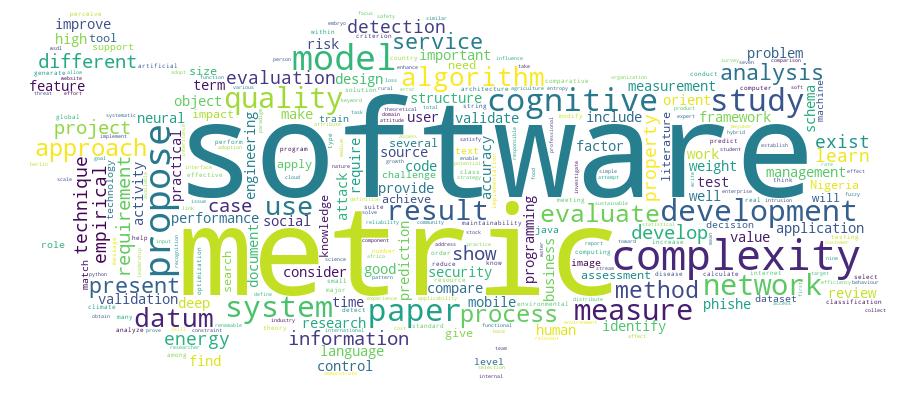
Competency Cloud
126 results
Scholarly Output Search Results
Now showing 1 - 10 of 126
Article Citation - WoS: 20Citation - Scopus: 25A Study on the Key Soft Skills for Successful Participation of Students in Multinational Engineering Education(Tempus Publications, 2017) Fernandez-Sanz, Luis; Teresa Villalba, Maria; Amelio Medina, Jose; Misra, Sanjay; Villalba, Maria Teresa; Medina, José Amelio; Computer EngineeringSoft-skills have proved to be a necessary complement to technical skills in today's multinational workplaces. As universities are facing the challenge of promoting internationalization and mobility in students and teachers, they have to decide how to help their students in developing these skills as well as increase their awareness on the cultural differences in multinational settings. After a long trajectory of participation in multinational educational experiences, the authors launched a survey to check if their previous findings on the preferred soft skills by educational experts and managers still remain valid after 5 years. Another goal of the study was the analysis of the link between preference for specific soft skills and cultural background in each country as characterized by Hofstede's indicators. The data collected from 123 experts from 45 different countries have confirmed the existence of a stable core set of preferred soft skills at global level and also for European countries. Results have also shown links between specific cultural indicators and preference for some soft skills.Article Citation - Scopus: 1Maintaining Software Through Bit-Parallelism and Hashing the Parameterized q-grams(Univ Osijek, Tech Fac, 2012) Prasad, Rajesh; Agarwal, Suneeta; Misra, Sanjay; Sharma, Anuj Kumar; Singh, Alok; Computer EngineeringIn the software maintenance, it is often required to find duplicity present in the codes. Two code fragments are equivalent, if one can be transformed into the other via consistent renaming of identifiers, literals and variables. This equivalency can be detected by parameterized string matching. In this matching, a given pattern is said to match with a substring of the text, if there exists a one-to-one correspondence between symbols of and symbols of. In this paper, we propose an efficient algorithm for this problem by using both the overlapping and non-overlapping q-gram. We show the effect of running time of the algorithm on increasing the duplicity present in the code.Article Citation - WoS: 19Software Development Outsourcing: Challenges and Opportunities in Nigeria(Taylor & Francis inc, 2014) Casado-Lumbreras, Cristina; Colomo-Palacios, Ricardo; Ogwueleka, Francisca N.; Misra, SanjayIn recent years, several emergent regions have become software development sourcing countries. This article investigates the possibilities of sub-Saharan Africa as a sourcing destination in the software field. To find out the reasons why sub-Saharan Africa countries, in general, and Nigeria, in particular, are not considered a destination for global software development projects, the authors interviewed a set of professionals from Europe and Africa. Results indicate that there are many disadvantages and difficulties impeding Nigeria from becoming a preferred sourcing destination, mainly the absence of a strong software industry and the concerns about legislative, fiscal, and commercial premises. On the other hand, it is observed that there are also relevant added values and competitive advantages in Nigeria (English-speaking country, same time zone, and cost); therefore, it can become a potential target for software development outsourcing in the medium and long terms.Article Citation - WoS: 17Citation - Scopus: 30Analysis of Cultural and Gender Influences on Teamwork Performance for Software Requirements Analysis in Multinational Environments(Wiley, 2012) Fernandez-Sanz, L.; Misra, SanjaySoftware development is mainly a social activity where teams of developers should work as a coordinated unit to fulfill the needs of customers. Studies have shown the importance of teamwork ability as the main skill for software professionals both in local settings and in global software development. Teamwork performance can be evaluated according to different approaches but we need deeper analysis within software teams of differences in individuals' performance related to culture, nationality or even gender. We applied a simple evaluation experience named teamwork benefits awareness (TBA) to groups of last-year students of computing degrees with experience as junior IT professionals during intensive multinational workshops based on international software projects. TBA allowed to measure individual and team performance during a requirements analysis session based on a real project. Results segmented by nationality and gender are presented and analysed in comparison with the data collected from computing professionals in local settings. In general, no significant differences have been found out although interesting relations are suggested with two Hofstede's country indicators. TBA is also perceived as a good technique for highlighting both teamwork benefits as well as the nature of real situations of software requirements analysis and orientation to customer needs.Article Citation - WoS: 1Citation - Scopus: 2Potential of Support-Vector Regression for Forecasting Stream Flow(Univ Osijek, Tech Fac, 2014) Radzi, Mohd Rashid Bin Mohd; Shamshirband, Shahaboddin; Aghabozorgi, Saeed; Misra, Sanjay; Akib, Shatirah; Kiah, Laiha Mat; Kiah, Miss Laiha Mat; Computer EngineeringStream flow is an important input for hydrology studies because it determines the water variability and magnitude of a river. Water resources engineering always deals with historical data and tries to estimate the forecasting records in order to give a better prediction for any water resources applications, such as designing the water potential of hydroelectric dams, estimating low flow, and maintaining the water supply. This paper presents three soft-computing approaches for dealing with these issues, i.e. artificial neural networks (ANNs), adaptive-neuro-fuzzy inference systems (ANFISs), and support vector machines (SVMs). Telom River, located in the Cameron Highlands district of Pahang, Malaysia, was used in making the estimation. The Telom River's daily mean discharge records, such as rainfall and river-level data, were used for the period of March 1984-January 2013 for training, testing, and validating the selected models. The SVM approach provided better results than ANFIS and ANNs in estimating the daily mean fluctuation of the stream's flow.Article An Evaluation of ICT Infrastructure and Application in Nigeria Universities(Budapest Tech Polytechnical Institution, 2014) Egoeze, Fidelis; Misra, Sanjay; Akman, Ibrahim; Colomo-Palacios, RicardoArticle Citation - WoS: 3Citation - Scopus: 5Particle Swarm Optimization of the Spectral and Energy Efficiency of an Scma-Based Heterogeneous Cellular Network(Wiley, 2022) Noma-Osaghae, Etinosa; Misra, Sanjay; Ahuja, Ravin; Koyuncu, MuratBackground The effect of stochastic small base station (SBS) deployment on the energy efficiency (EE) and spectral efficiency (SE) of sparse code multiple access (SCMA)-based heterogeneous cellular networks (HCNs) is still mostly unknown. Aim This research study seeks to provide insight into the interaction between SE and EE in SBS sleep-mode enabled SCMA-based HCNs. Methodology A model that characterizes the energy-spectral-efficiency (ESE) of a two-tier SBS sleep-mode enabled SCMA-based HCN was derived. A multiobjective optimization problem was formulated to maximize the SE and EE of the SCMA-based HCN simultaneously. The multiobjective optimization problem was solved using a proposed weighted sum modified particle swarm optimization algorithm (PSO). A comparison was made between the performance of the proposed weighted sum modified PSO algorithm and the genetic algorithm (GA) and the case where the SCMA-based HCN is unoptimized. Results The Pareto-optimal front generated showed a simultaneous maximization of the SE and EE of the SCMA-based HCN at high traffic levels and a convex front that allows network operators to select the SE-EE tradeoff at low traffic levels flexibly. The proposed PSO algorithm offers a higher SBS density, and a higher SBS transmit power at high traffic levels than at low traffic levels. The unoptimized SCMA-based HCN achieves an 80% lower SE and a 51% lower EE than the proposed PSO optimized SCMA-based HCN. The optimum SE and EE achieved by the SCMA-based HCN using the proposed PSO algorithm or the GA are comparable, but the proposed PSO uses a 51.85% lower SBS density and a 35.96% lower SBS transmit power to achieve the optimal SE and EE at moderate traffic levels. Conclusion In sleep-mode enabled SCMA-based HCNs, network engineers have to decide the balance of SBS density and SBS transmit power that helps achieve the desired SE and EE.Article Citation - WoS: 17Citation - Scopus: 26Toward Ontology-Based Risk Management Framework for Software Projects: an Empirical Study(Wiley, 2020) Abioye, Temitope Elizabeth; Arogundade, Oluwasefunmi Tale; Misra, Sanjay; Akinwale, Adio T.; Adeniran, Olusola JohnSoftware risk management is a proactive decision-making practice with processes, methods, and tools for managing risks in a software project. Many existing techniques for software project risk management are textual documentation with varying perspectives that are nonreusable and cannot be shared. In this paper, a life-cycle approach to ontology-based risk management framework for software projects is presented. A dataset from literature, domain experts, and practitioners is used. The identified risks are refined by 19 software experts; risks are conceptualized, modeled, and developed using Protege. The risks are qualitatively analyzed and prioritized, and aversion methods are provided. The framework is adopted in real-life software projects. Precision recall and F-measure metrics are used to validate the performance of the extraction tool while performance and perception evaluation are carried out using the performance appraisal form and technology acceptance model, respectively. Mean scores from performance and perception evaluation are compared with evaluation concept scale. Results showed that cost is reduced, high-quality projects are delivered on time, and software developers found this framework a potent tool needed for their day-to-day activities in software development.Article Citation - WoS: 3Citation - Scopus: 4Predictive Rental Values Model for Low-Income Earners in Slums: the Case of Ijora, Nigeria(Taylor & Francis Ltd, 2023) Iroham, Chukwuemeka O.; Misra, Sanjay; Emebo, Onyeka C.; Okagbue, Hilary, IIt is well known most often that values of properties tend to hike at the effluxion of time. This has necessitated the adoption of predictive models in interpreting outcomes in the property market in the future. Earlier studies have been oblivious of such models' outcomes as it affects any focal group, particularly the vulnerable. This present study focuses on the low-income earners found in the slum. The Ijora community in Lagos was the highlight of this study, particularly Ijora Badia and Ijora Oloye, regarded as slums according to the UNDP report. The entire fifty-two (52) local agents in the Ijora community were surveyed in cross-sectional survey research that entailed the questionnaire's issuance. The nexus of data collection, pre-processing, data analysis, algorithm application, and model evaluation resulted in retrieving rental values within the years 2010 and 2019 on two predominant residential property types of self-contain and one-bedroom flats found within the community. Three selected algorithms, Artificial Neural Network (ANN), Support Vector Machine, and Logistic Regression, were essentially used as classifiers but trained to predict the continuous values. These algorithms were implemented through the use of Python's SciKit-learn Library and RapidMiner. The findings revealed that though all three models gave accurate predictions, Logistic Regression was the highest with low error values. It was recommended that Logistic Regression be applied but with much data set of property values of low-income earners over much more period. This study will contribute to the Sustainable development goals(SDG) 11(Sustainable cities and communities) of the United Nations to benefit developing countries, especially in sub-Saharan Africa.Article Citation - WoS: 11Citation - Scopus: 17Software Measurement Activities in Small and Medium Enterprises: an Empirical Assessment(Budapest Tech, 2011) Pusatli, O. Tolga; Misra, Sanjay; Tolga Pusatli, O.; Computer EngineeringAn empirical study for evaluating the proper implementation of measurement/metric programs in software companies in one area of Turkey is presented. The research questions are discussed and validated with the help of senior software managers (more than 15 years' experience) and then used for interviewing a variety of medium and small scale software companies in Ankara. Observations show that there is a common reluctance/lack of interest in utilizing measurements/metrics despite the fact that they are well known in the industry. A side product of this research is that internationally recognized standards such as ISO and CMMI are pursued if they are a part of project/job requirements; without these requirements, introducing those standards to the companies remains as a long-term target to increase quality.
