
Mısra, Sanjay
Loading...

Profile URL
Name Variants
M.,Sanjay
Misra, Sanjay
Mısra,S.
Mısra, Sanjay
Misra,S.
S.,Misra
Sanjay, Mısra
Sanjay, Misra
S., Misra
S.,Mısra
M., Sanjay
Misra, S.
Misra, Sanjay
Mısra,S.
Mısra, Sanjay
Misra,S.
S.,Misra
Sanjay, Mısra
Sanjay, Misra
S., Misra
S.,Mısra
M., Sanjay
Misra, S.
Job Title
Profesör Doktor
Email Address
sanjay.misra@atilim.edu.tr
Main Affiliation
Computer Engineering
Status
Former Staff
Website
ORCID ID
Scopus Author ID
Turkish CoHE Profile ID
Google Scholar ID
WoS Researcher ID
Sustainable Development Goals
 1
1NO POVERTY
3
Research Products
 2
2ZERO HUNGER
5
Research Products
 3
3GOOD HEALTH AND WELL-BEING
2
Research Products
 4
4QUALITY EDUCATION
6
Research Products
 5
5GENDER EQUALITY
2
Research Products
 6
6CLEAN WATER AND SANITATION
1
Research Products
 7
7AFFORDABLE AND CLEAN ENERGY
8
Research Products
 8
8DECENT WORK AND ECONOMIC GROWTH
11
Research Products
 9
9INDUSTRY, INNOVATION AND INFRASTRUCTURE
11
Research Products
 10
10REDUCED INEQUALITIES
2
Research Products
 11
11SUSTAINABLE CITIES AND COMMUNITIES
1
Research Products
 12
12RESPONSIBLE CONSUMPTION AND PRODUCTION
3
Research Products
 13
13CLIMATE ACTION
7
Research Products
 14
14LIFE BELOW WATER
10
Research Products
 15
15LIFE ON LAND
0
Research Products
 16
16PEACE, JUSTICE AND STRONG INSTITUTIONS
4
Research Products
 17
17PARTNERSHIPS FOR THE GOALS
9
Research Products

This researcher does not have a Scopus ID.

This researcher does not have a WoS ID.

Scholarly Output
199
Articles
133
Views / Downloads
120/29
Supervised MSc Theses
3
Supervised PhD Theses
0
WoS Citation Count
2810
Scopus Citation Count
4104
Patents
0
Projects
0
WoS Citations per Publication
14.12
Scopus Citations per Publication
20.62
Open Access Source
53
Supervised Theses
3
| Journal | Count |
|---|---|
| Acta Polytechnica Hungarica | 12 |
| Tehnicki Vjesnik | 8 |
| Lecture Notes in Computer Science (including subseries Lecture Notes in Artificial Intelligence and Lecture Notes in Bioinformatics) -- 2011 International Conference on Computational Science and Its Applications, ICCSA 2011 -- 20 June 2011 through 23 June 2011 -- Santander -- 85480 | 5 |
| Journal of Physics: Conference Series -- 3rd International Conference on Computing and Applied Informatics 2018, ICCAI 2018 -- 18 September 2018 through 19 September 2018 -- Medan, Sumatera Utara -- 149865 | 4 |
| Lecture Notes in Computer Science (including subseries Lecture Notes in Artificial Intelligence and Lecture Notes in Bioinformatics) -- 12th International Conference on Computational Science and Its Applications, ICCSA 2012 -- 18 June 2012 through 21 June 2012 -- Salvador de Bahia -- 90945 | 4 |
Current Page: 1 / 22
Scopus Quartile Distribution
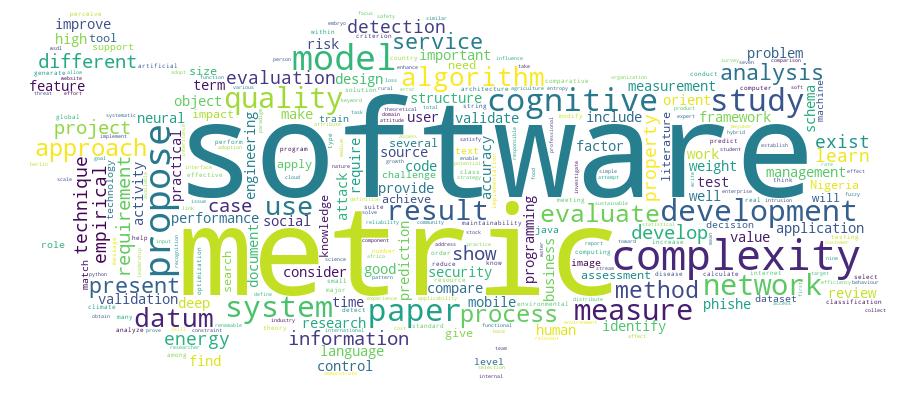
Competency Cloud
14 results
Scholarly Output Search Results
Now showing 1 - 10 of 14
Review Citation - WoS: 22Citation - Scopus: 39Cybersecurity Deep: Approaches, Attacks Dataset, and Comparative Study(Taylor & Francis inc, 2022) Barik, Kousik; Misra, Sanjay; Konar, Karabi; Fernandez-Sanz, Luis; Murat, Koyuncu; Koyuncu, MuratCyber attacks are increasing rapidly due to advanced digital technologies used by hackers. In addition, cybercriminals are conducting cyber attacks, making cyber security a rapidly growing field. Although machine learning techniques worked well in solving large-scale cybersecurity problems, an emerging concept of deep learning (DL) that caught on during this period caused information security specialists to improvise the result. The deep learning techniques analyzed in this study are convolution neural networks, recurrent neural networks, and deep neural networks in the context of cybersecurity.A framework is proposed, and a real-time laboratory setup is performed to capture network packets and examine this captured data using various DL techniques. A comparable interpretation is presented under the DL techniques with essential parameters, particularly accuracy, false alarm rate, precision, and detection rate. The DL techniques experimental output projects improvise the performance of various real-time cybersecurity applications on a real-time dataset. CNN model provides the highest accuracy of 98.64% with a precision of 98% with binary class. The RNN model offers the second-highest accuracy of 97.75%. CNN model provides the highest accuracy of 98.42 with multiclass class. The study shows that DL techniques can be effectively used in cybersecurity applications. Future research areas are being elaborated, including the potential research topics to improve several DL methodologies for cybersecurity applications.Conference Object Citation - Scopus: 4An Improved Feature Selection Method for Short Text Classification(Institute of Physics Publishing, 2019) Abayomi-Alli,O.; Misra,S.; Matthews,V.O.; Odusami,M.; Abayomi-Alli,A.; Ahuja,R.; Maskeliunas,R.Text has become one of the widest means of communication on mobile devices due to cheap rate and convenience for instance short text, web document, emails, instant messages. The exponential growth of text documents shared among users globally has increased the threat of misclassification associated with mobile devices such as Spam, Phishing, License to kill, Malware and privacy issues. Existing studies have shown that the major problem associated with text message classification is the poor representation of feature thus reducing accuracy and increasing f-measure rate. Thus, a modified Genetic Algorithm (GA) for improve feature selection and Artificial Immune System (AIS) algorithm was proposed for effective text classification in mobile short messages. The system will be deployed on an Android OS. © 2019 Published under licence by IOP Publishing Ltd.Article Citation - WoS: 3Citation - Scopus: 5Particle Swarm Optimization of the Spectral and Energy Efficiency of an Scma-Based Heterogeneous Cellular Network(Wiley, 2022) Noma-Osaghae, Etinosa; Misra, Sanjay; Ahuja, Ravin; Koyuncu, MuratBackground The effect of stochastic small base station (SBS) deployment on the energy efficiency (EE) and spectral efficiency (SE) of sparse code multiple access (SCMA)-based heterogeneous cellular networks (HCNs) is still mostly unknown. Aim This research study seeks to provide insight into the interaction between SE and EE in SBS sleep-mode enabled SCMA-based HCNs. Methodology A model that characterizes the energy-spectral-efficiency (ESE) of a two-tier SBS sleep-mode enabled SCMA-based HCN was derived. A multiobjective optimization problem was formulated to maximize the SE and EE of the SCMA-based HCN simultaneously. The multiobjective optimization problem was solved using a proposed weighted sum modified particle swarm optimization algorithm (PSO). A comparison was made between the performance of the proposed weighted sum modified PSO algorithm and the genetic algorithm (GA) and the case where the SCMA-based HCN is unoptimized. Results The Pareto-optimal front generated showed a simultaneous maximization of the SE and EE of the SCMA-based HCN at high traffic levels and a convex front that allows network operators to select the SE-EE tradeoff at low traffic levels flexibly. The proposed PSO algorithm offers a higher SBS density, and a higher SBS transmit power at high traffic levels than at low traffic levels. The unoptimized SCMA-based HCN achieves an 80% lower SE and a 51% lower EE than the proposed PSO optimized SCMA-based HCN. The optimum SE and EE achieved by the SCMA-based HCN using the proposed PSO algorithm or the GA are comparable, but the proposed PSO uses a 51.85% lower SBS density and a 35.96% lower SBS transmit power to achieve the optimal SE and EE at moderate traffic levels. Conclusion In sleep-mode enabled SCMA-based HCNs, network engineers have to decide the balance of SBS density and SBS transmit power that helps achieve the desired SE and EE.Article Citation - WoS: 6Citation - Scopus: 9Experimental Simulation-Based Performance Evaluation of an Sms-Based Emergency Geolocation Notification System(Hindawi Ltd, 2017) Osebor, Isibor; Misra, Sanjay; Omoregbe, Nicholas; Adewumi, Adewole; Fernandez-Sanz, LuisIn an emergency, a prompt response can save the lives of victims. This statement generates an imperative issue in emergency medical services (EMS). Designing a system that brings simplicity in locating emergency scenes is a step towards improving response time. This paper therefore implemented and evaluated the performance of an SMS-based emergency geolocation notification system with emphasis on its SMS delivery time and the system's geolocation and dispatch time. Using the RAS metrics recommended by IEEE for evaluation, the designed system was found to be efficient and effective as its reliability stood within 62.7% to 70.0% while its availability stood at 99% with a downtime of 3.65 days/year.Conference Object Citation - Scopus: 22An Improved Model for Alleviating Layer Seven Distributed Denial of Service Intrusion on Webserver(Institute of Physics Publishing, 2019) Odusami,M.; Misra,S.; Adetiba,E.; Abayomi-Alli,O.; Damasevicius,R.; Ahuja,R.Application layer or Layer Seven Distributed Denial of service (L7DDoS) intrusion is one of the greatest threats that intrusion a webserver. The hackers have different motives which could be for Extortion, Exfiltration e.t.c Researchers have employed several methods to prevent L7DDoS intrusion especially using machine learning. Although Machine learning techniques has proven to be very effective with high detection accuracy, the approach still find it difficult to detect Hyper Text Transfer Protocol (HTTP) based botnet traffic on web server with high false positive rate. The adoption of deep learning based technique using Long Short Term Memory (LSTM) will alleviate this problem. © 2019 Published under licence by IOP Publishing Ltd.Conference Object Citation - Scopus: 12Design and Implementation of a Mobile Webcast Application With Google Analytics and Cloud Messaging Functionality(Institute of Physics Publishing, 2019) Jonathan,O.; Misra,S.; Ibanga,E.; Maskeliunas,R.; Damasevicius,R.; Ahuja,R.Church cast is an application developed to bring the messages of ministries closer to their members by harnessing the Internet and mobile devices. Due to the very busy schedules of people and religious restrictions in some countries, people are not usually able to be physically present at their locations of worship to listen to or watch their ministers. Existing applications developed in the past like DOMI radio and Redemption TV Media were limited to only audio, poor and unintuitive user interfaces and not providing the administrator any interactions with the users of the application. In this work, we develop an Android-based application that makes it possible for users to watch live streams and on-demand videos from their ministries using their mobile devices. The application also incorporates sharing and analytics functionalities to enable users to share videos messages with loved ones and help the administrator monitor users' activities on the application respectively. The cloud messaging functionality enables the administrator to send messages such as announcements to user devices as push notifications. This would eventually increase user knowledge and interaction with the activities going on in their respective places of worship. © 2019 Published under licence by IOP Publishing Ltd.Conference Object Citation - Scopus: 3Conflict resolution via emerging technologies?(Institute of Physics Publishing, 2019) Yinka-Banjo,C.; Ugot,O.-A.; Misra,S.; Adewumi,A.; Damasevicius,R.; Maskeliunas,R.This paper presents a review of the current techniques and approaches adopted in conflict resolution in Multi-Agent Systems (MAS). The review highlights the strength and weaknesses, and thus, their success in fostering cooperation and collaboration in multi-agent systems. We survey alternative approaches to conflict resolution that rely on emerging technologies such as deep learning. From the survey, we discuss the benefits of using these emerging technologies in the conflict resolution process. © 2019 Published under licence by IOP Publishing Ltd.Article Citation - WoS: 44Citation - Scopus: 83Text Messaging-Based Medical Diagnosis Using Natural Language Processing and Fuzzy Logic(Hindawi Ltd, 2020) Omoregbe, Nicholas A. I.; Ndaman, Israel O.; Misra, Sanjay; Abayomi-Alli, Olusola O.; Damasevicius, RobertasThe use of natural language processing (NLP) methods and their application to developing conversational systems for health diagnosis increases patients' access to medical knowledge. In this study, a chatbot service was developed for the Covenant University Doctor (CUDoctor) telehealth system based on fuzzy logic rules and fuzzy inference. The service focuses on assessing the symptoms of tropical diseases in Nigeria. Telegram Bot Application Programming Interface (API) was used to create the interconnection between the chatbot and the system, while Twilio API was used for interconnectivity between the system and a short messaging service (SMS) subscriber. The service uses the knowledge base consisting of known facts on diseases and symptoms acquired from medical ontologies. A fuzzy support vector machine (SVM) is used to effectively predict the disease based on the symptoms inputted. The inputs of the users are recognized by NLP and are forwarded to the CUDoctor for decision support. Finally, a notification message displaying the end of the diagnosis process is sent to the user. The result is a medical diagnosis system which provides a personalized diagnosis utilizing self-input from users to effectively diagnose diseases. The usability of the developed system was evaluated using the system usability scale (SUS), yielding a mean SUS score of 80.4, which indicates the overall positive evaluation.Article Citation - WoS: 18Citation - Scopus: 30Analysis of Cultural and Gender Influences on Teamwork Performance for Software Requirements Analysis in Multinational Environments(Wiley, 2012) Fernandez-Sanz, L.; Misra, SanjaySoftware development is mainly a social activity where teams of developers should work as a coordinated unit to fulfill the needs of customers. Studies have shown the importance of teamwork ability as the main skill for software professionals both in local settings and in global software development. Teamwork performance can be evaluated according to different approaches but we need deeper analysis within software teams of differences in individuals' performance related to culture, nationality or even gender. We applied a simple evaluation experience named teamwork benefits awareness (TBA) to groups of last-year students of computing degrees with experience as junior IT professionals during intensive multinational workshops based on international software projects. TBA allowed to measure individual and team performance during a requirements analysis session based on a real project. Results segmented by nationality and gender are presented and analysed in comparison with the data collected from computing professionals in local settings. In general, no significant differences have been found out although interesting relations are suggested with two Hofstede's country indicators. TBA is also perceived as a good technique for highlighting both teamwork benefits as well as the nature of real situations of software requirements analysis and orientation to customer needs.Article Citation - WoS: 29Citation - Scopus: 37Metrics Suite for Maintainability of Extensible Markup Language Web Services(inst Engineering Technology-iet, 2011) Baski, D.; Misra, S.The eXtensible Markup Language (XML) web services are emerging as the de-facto mechanism for exchanging structured information between applications. The large popularity and acceptance of web services led the developers to adopt the best practices of web service implementation and to find the ways for managing and maintaining web services more effectively. Maintainability, one of the important factors, which affects the quality of XML web services, can be controlled by the proper software metrics that are specifically designed and developed for it. In this paper, we present a suite of metrics to evaluate the quality of the XML web service in terms of its maintainability. The present suite of metrics includes: data weight of a web service description language, distinct message ratio metric, message entropy metric and message repetition scale metric. All the proposed metrics have been evaluated theoretically and validated empirically. A comparative study with similar measures proves the worth of the metric suite.
