
Mısra, Sanjay
Loading...

Profile URL
Name Variants
M.,Sanjay
Misra, Sanjay
Mısra,S.
Mısra, Sanjay
Misra,S.
S.,Misra
Sanjay, Mısra
Sanjay, Misra
S., Misra
S.,Mısra
M., Sanjay
Misra, S.
Misra, Sanjay
Mısra,S.
Mısra, Sanjay
Misra,S.
S.,Misra
Sanjay, Mısra
Sanjay, Misra
S., Misra
S.,Mısra
M., Sanjay
Misra, S.
Job Title
Profesör Doktor
Email Address
sanjay.misra@atilim.edu.tr
Main Affiliation
Computer Engineering
Status
Website
ORCID ID
Scopus Author ID
Turkish CoHE Profile ID
Google Scholar ID
WoS Researcher ID
Sustainable Development Goals
 1
1NO POVERTY
3
Research Products
 2
2ZERO HUNGER
5
Research Products
 3
3GOOD HEALTH AND WELL-BEING
2
Research Products
 4
4QUALITY EDUCATION
6
Research Products
 5
5GENDER EQUALITY
2
Research Products
 6
6CLEAN WATER AND SANITATION
1
Research Products
 7
7AFFORDABLE AND CLEAN ENERGY
8
Research Products
 8
8DECENT WORK AND ECONOMIC GROWTH
11
Research Products
 9
9INDUSTRY, INNOVATION AND INFRASTRUCTURE
11
Research Products
 10
10REDUCED INEQUALITIES
2
Research Products
 11
11SUSTAINABLE CITIES AND COMMUNITIES
1
Research Products
 12
12RESPONSIBLE CONSUMPTION AND PRODUCTION
3
Research Products
 13
13CLIMATE ACTION
7
Research Products
 14
14LIFE BELOW WATER
10
Research Products
 15
15LIFE ON LAND
0
Research Products
 16
16PEACE, JUSTICE AND STRONG INSTITUTIONS
4
Research Products
 17
17PARTNERSHIPS FOR THE GOALS
9
Research Products

This researcher does not have a Scopus ID.

This researcher does not have a WoS ID.

Scholarly Output
199
Articles
133
Views / Downloads
719/275
Supervised MSc Theses
3
Supervised PhD Theses
0
WoS Citation Count
2781
Scopus Citation Count
4091
Patents
0
Projects
0
WoS Citations per Publication
13.97
Scopus Citations per Publication
20.56
Open Access Source
53
Supervised Theses
3
| Journal | Count |
|---|---|
| Acta Polytechnica Hungarica | 12 |
| Tehnicki Vjesnik | 8 |
| Lecture Notes in Computer Science (including subseries Lecture Notes in Artificial Intelligence and Lecture Notes in Bioinformatics) -- 2011 International Conference on Computational Science and Its Applications, ICCSA 2011 -- 20 June 2011 through 23 June 2011 -- Santander -- 85480 | 5 |
| Journal of Physics: Conference Series -- 3rd International Conference on Computing and Applied Informatics 2018, ICCAI 2018 -- 18 September 2018 through 19 September 2018 -- Medan, Sumatera Utara -- 149865 | 4 |
| Lecture Notes in Computer Science (including subseries Lecture Notes in Artificial Intelligence and Lecture Notes in Bioinformatics) -- 12th International Conference on Computational Science and Its Applications, ICCSA 2012 -- 18 June 2012 through 21 June 2012 -- Salvador de Bahia -- 90945 | 4 |
Current Page: 1 / 22
Scopus Quartile Distribution
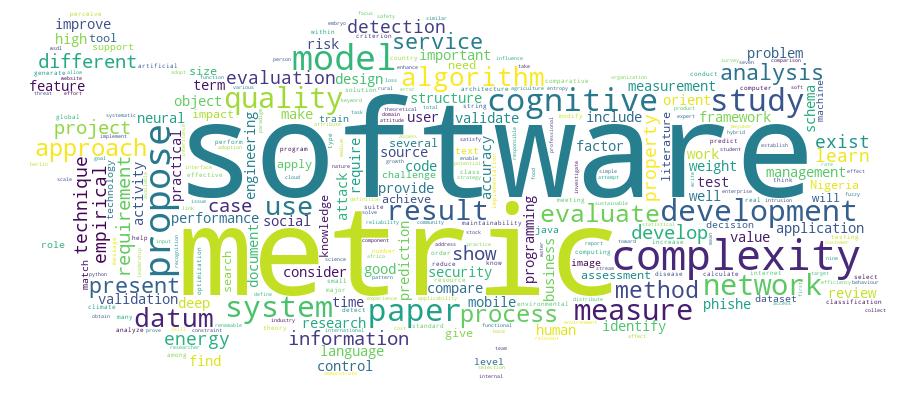
Competency Cloud
196 results
Scholarly Output Search Results
Now showing 1 - 10 of 196
Article Citation - Scopus: 48Identifying Phishing Attacks in Communication Networks Using Url Consistency Features(Inderscience Publishers, 2020) Azeez,N.A.; Salaudeen,B.B.; Misra,S.; Damasevicius,R.; Maskeliunas,R.Phishing is a fraudulent attempt by cybercriminals, where the target audience is addressed by a text message, phone call or e-mail, requesting classified and sensitive information after presenting himself/herself as a legitimate agent. Successful phishing attack may result into financial loss and identity theft. Identifying forensic characteristics of phishing attack can help to detect the attack and its perpetuators and as well as to enable defence against it. To shield internet users from phishing assaults, numerous anti-phishing models have been proposed. Currently employed techniques to handle these challenges are not sufficient and capable enough. We aim at identifying phishing sites in order to guard internet users from being vulnerable to any form of phishing attacks by verifying the conceptual and literal consistency between the uniform resource locator (URL) and the web content. The implementation of the proposed PhishDetect method achieves an accuracy of 99.1%; indicating that it is effective in detecting various forms of phishing attacks. © 2020 Inderscience Enterprises Ltd.. All rights reserved.Article Citation - WoS: 31Citation - Scopus: 51Neural Network and Classification Approach in Identifying Customer Behavior in the Banking Sector: a Case Study of an International Bank(Wiley, 2015) Ogwueleka, Francisca Nonyelum; Misra, Sanjay; Colomo-Palacios, Ricardo; Fernandez, LuisThe customer relationship focus for banks is in development of main competencies and strategies of building strong profitable customer relationships through considering and managing the customer impression, influence on the culture of the bank, satisfactory treatment, and assessment of valued relationship building. Artificial neural networks (ANNs) are used after data segmentation and classification, where the designed model register records into two class sets, that is, the training and testing sets. ANN predicts new customer behavior from previously observed customer behavior after executing the process of learning from existing data. This article proposes an ANN model, which is developed using a six-step procedure. The back-propagation algorithm is used to train the ANN by adjusting its weights to minimize the difference between the current ANN output and the desired output. An evaluation process is conducted to determine whether the ANN has learned how to perform. The training process is halted periodically, and its performance is tested until an acceptable result is obtained. The principles underlying detection software are grounded in classical statistical decision theory.Conference Object An Evaluation on Developer's Perception of Xml Schema Complexity Metrics for Web Services(Springer-verlag Berlin, 2013) Crasso, Marco; Mateos, Cristian; Coscia, Jose Luis Ordiales; Zunino, Alejandro; Misra, SanjayUndoubtedly, the Service-Oriented Computing (SOC) is not an incipient computing paradigm anymore, while Web Services technologies is now a very mature stack of technologies. Both have been steadily gaining maturity as their adoption in the software industry grew. Accordingly, several metric suites for assessing different quality attributes of Web Services have been recently proposed. In particular, researchers have focused on measuring services interfaces descriptions, which like any other software artifact, have a measurable size, complexity and quality. This paper presents a study that assesses human perception of some recent services interfaces complexity metrics (Basci and Misra's metrics suite). Empirical evidence suggests that a service interface that it is not complex for a software application, in terms of time and space required to analyze it, will not be necessarily well designed, in terms of best practices for designing Web Services. A Likert-based questionnaire was used to gather individuals opinions about this topic.Conference Object Citation - Scopus: 8Comparative Study of Cognitive Complexity Measures(2008) Misra,S.; Akman,I.Complexity metrics are used to predict critical information about reliability and maintainability of software systems. Cognitive complexity measure based on cognitive informatics, plays an important role in understanding the fundamental characteristics of software, therefore directly affects the understandability and maintainability of software systems. In this paper, we compared available cognitive complexity measures and evaluated cognitive weight complexity measure in terms of Weyuker's properties. © 2008 IEEE.Article Citation - WoS: 20Citation - Scopus: 25A Study on the Key Soft Skills for Successful Participation of Students in Multinational Engineering Education(Tempus Publications, 2017) Fernandez-Sanz, Luis; Teresa Villalba, Maria; Amelio Medina, Jose; Misra, Sanjay; Villalba, Maria Teresa; Medina, José Amelio; Computer EngineeringSoft-skills have proved to be a necessary complement to technical skills in today's multinational workplaces. As universities are facing the challenge of promoting internationalization and mobility in students and teachers, they have to decide how to help their students in developing these skills as well as increase their awareness on the cultural differences in multinational settings. After a long trajectory of participation in multinational educational experiences, the authors launched a survey to check if their previous findings on the preferred soft skills by educational experts and managers still remain valid after 5 years. Another goal of the study was the analysis of the link between preference for specific soft skills and cultural background in each country as characterized by Hofstede's indicators. The data collected from 123 experts from 45 different countries have confirmed the existence of a stable core set of preferred soft skills at global level and also for European countries. Results have also shown links between specific cultural indicators and preference for some soft skills.Article Citation - Scopus: 1Maintaining Software Through Bit-Parallelism and Hashing the Parameterized q-grams(Univ Osijek, Tech Fac, 2012) Prasad, Rajesh; Agarwal, Suneeta; Misra, Sanjay; Sharma, Anuj Kumar; Singh, Alok; Computer EngineeringIn the software maintenance, it is often required to find duplicity present in the codes. Two code fragments are equivalent, if one can be transformed into the other via consistent renaming of identifiers, literals and variables. This equivalency can be detected by parameterized string matching. In this matching, a given pattern is said to match with a substring of the text, if there exists a one-to-one correspondence between symbols of and symbols of. In this paper, we propose an efficient algorithm for this problem by using both the overlapping and non-overlapping q-gram. We show the effect of running time of the algorithm on increasing the duplicity present in the code.Article Citation - WoS: 19Software Development Outsourcing: Challenges and Opportunities in Nigeria(Taylor & Francis inc, 2014) Casado-Lumbreras, Cristina; Colomo-Palacios, Ricardo; Ogwueleka, Francisca N.; Misra, SanjayIn recent years, several emergent regions have become software development sourcing countries. This article investigates the possibilities of sub-Saharan Africa as a sourcing destination in the software field. To find out the reasons why sub-Saharan Africa countries, in general, and Nigeria, in particular, are not considered a destination for global software development projects, the authors interviewed a set of professionals from Europe and Africa. Results indicate that there are many disadvantages and difficulties impeding Nigeria from becoming a preferred sourcing destination, mainly the absence of a strong software industry and the concerns about legislative, fiscal, and commercial premises. On the other hand, it is observed that there are also relevant added values and competitive advantages in Nigeria (English-speaking country, same time zone, and cost); therefore, it can become a potential target for software development outsourcing in the medium and long terms.Article Citation - WoS: 18Citation - Scopus: 30Analysis of Cultural and Gender Influences on Teamwork Performance for Software Requirements Analysis in Multinational Environments(Wiley, 2012) Fernandez-Sanz, L.; Misra, SanjaySoftware development is mainly a social activity where teams of developers should work as a coordinated unit to fulfill the needs of customers. Studies have shown the importance of teamwork ability as the main skill for software professionals both in local settings and in global software development. Teamwork performance can be evaluated according to different approaches but we need deeper analysis within software teams of differences in individuals' performance related to culture, nationality or even gender. We applied a simple evaluation experience named teamwork benefits awareness (TBA) to groups of last-year students of computing degrees with experience as junior IT professionals during intensive multinational workshops based on international software projects. TBA allowed to measure individual and team performance during a requirements analysis session based on a real project. Results segmented by nationality and gender are presented and analysed in comparison with the data collected from computing professionals in local settings. In general, no significant differences have been found out although interesting relations are suggested with two Hofstede's country indicators. TBA is also perceived as a good technique for highlighting both teamwork benefits as well as the nature of real situations of software requirements analysis and orientation to customer needs.Article Citation - WoS: 1Citation - Scopus: 2Potential of Support-Vector Regression for Forecasting Stream Flow(Univ Osijek, Tech Fac, 2014) Radzi, Mohd Rashid Bin Mohd; Shamshirband, Shahaboddin; Aghabozorgi, Saeed; Misra, Sanjay; Akib, Shatirah; Kiah, Laiha Mat; Kiah, Miss Laiha Mat; Computer EngineeringStream flow is an important input for hydrology studies because it determines the water variability and magnitude of a river. Water resources engineering always deals with historical data and tries to estimate the forecasting records in order to give a better prediction for any water resources applications, such as designing the water potential of hydroelectric dams, estimating low flow, and maintaining the water supply. This paper presents three soft-computing approaches for dealing with these issues, i.e. artificial neural networks (ANNs), adaptive-neuro-fuzzy inference systems (ANFISs), and support vector machines (SVMs). Telom River, located in the Cameron Highlands district of Pahang, Malaysia, was used in making the estimation. The Telom River's daily mean discharge records, such as rainfall and river-level data, were used for the period of March 1984-January 2013 for training, testing, and validating the selected models. The SVM approach provided better results than ANFIS and ANNs in estimating the daily mean fluctuation of the stream's flow.Conference Object Citation - WoS: 1A Cognitive Evaluation for Meetings in Software Development Process(Springer-verlag Berlin, 2009) Misra, Sanjay; Akman, IbrahimSoftware development; includes number of different type of meetings in the whole development process. The cognitive activities also play an important role in decision making activities in these meetings since they are carried out, by human being. In this paper, we evaluated the relevance of meetings in different phases of the software development process with reference to cognitive aspects.
