Gökdoğan, Bengisu Yalçınkaya

Loading...
Profile Picture
Name Variants
Gökdoğan,B.Y.
G., Bengisu Yalçınkaya
G.,Bengisu Yalçınkaya
Gökdoğan B.
G., Bengisu Yalcinkaya
Gokdogan B.
B.,Gökdoğan
G.,Bengisu Yalcinkaya
Bengisu Yalcinkaya, Gokdogan
Gokdogan, Bengisu Yalcinkaya
B. Y. Gokdogan
Bengisu Yalçınkaya, Gökdoğan
B. Y. Gökdoğan
B.Y.Gökdoğan
Yalcinkaya B.
Gökdoğan, Bengisu Yalçınkaya
Gokdogan,B.Y.
B.Y.Gokdogan
Yalcinkaya, Bengisu
B., Gokdogan
Job Title
Araştırma Görevlisi
Email Address
bengisu.yalcinkaya@atilim.edu.tr
Main Affiliation
Electrical-Electronics Engineering
Status
Website
Scopus Author ID
Turkish CoHE Profile ID
Google Scholar ID
WoS Researcher ID

Sustainable Development Goals

SDG data is not available
Documents

14

Citations

37

h-index

4

Documents

14

Citations

28

Scholarly Output

14

Articles

9

Views / Downloads

100/388

Supervised MSc Theses

0

Supervised PhD Theses

0

WoS Citation Count

27

Scopus Citation Count

37

Patents

0

Projects

0

WoS Citations per Publication

1.93

Scopus Citations per Publication

2.64

Open Access Source

4

Supervised Theses

0

JournalCount
30th IEEE Signal Processing and Communications Applications Conference (SIU) -- MAY 15-18, 2022 -- Safranbolu, TURKEY2
Wireless Personal Communications2
Computer Applications in Engineering Education1
Electronics1
IEEE International Black Sea Conference on Communications and Networking (IEEE BlackSeaCom) -- MAY 24-28, 2021 -- ELECTR NETWORK1
Current Page: 1 / 3

Scopus Quartile Distribution

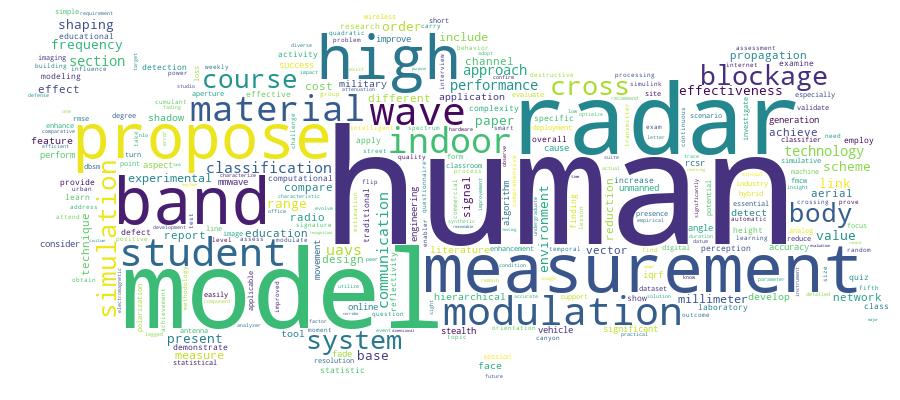
Competency Cloud

GCRIS Competency Cloud

Scholarly Output Search Results

Now showing 1 - 5 of 5
  • Conference Object
    Citation - WoS: 2
    Citation - Scopus: 3
    An Experimental Study on the Influence of Human Movement in Indoor Radio Channel at 28ghz
    (Ieee, 2021) Benzaghta, Mohamed; Coruk, Remziye Busra; Yalcinkaya, Bengisu; Kara, Ali
    Human activities around the communication link in an indoor environment have a significant impact on millimeter-wave (mmWave) communication systems, which are used for the new generation of communication networks (5G). Therefore, it is essential to evaluate short range indoor links from the link blockage point of view. This paper presents the propagation measurements in the presence of human activity, for a short range indoor office environment communication link at 28 GHz. During the experimental measurements, the human activity of three and six persons were observed for three different antenna height combinations. The human blockage (shadowing effect) is characterized in terms of the shadowing event duration, temporal fading, as well as overall attenuation. The results reported by this experimental study is believed to be vital in designing future mmWave communication systems that can overcome the deep fades caused by human blockage in short indoor communication links. Yet, this paper constitutes a part of an ongoing research study, further detailed results will be foreseen to present the precise effect of human movements around the propagation link at 28GHz.
  • Conference Object
    Citation - WoS: 2
    Citation - Scopus: 5
    Low Radar Cross Section Uav Design in X-Band
    (Ieee, 2022) Unalir, Dizdar; Sezgin, Sila; Yuva, Cansu Sena; Yalcinkaya Gokdogan, Bengisu; Aydin, Elif; Gokdogan, Bengisu Yalcinkaya
    As Unmanned Aerial Vehicles (UAVs) have become widespread in defense industry, the radar technology that can detect them has also improved. These improvements cause UAVs to be detected more easily, which limits their effectiveness in military usage. Although the reduction of the radar cross-section (RCS) can provide a solution to this issue, the studies regarding that is insufficient in the literature. In this study, a shaping method is recommended to reduce the RCS of UAVs, and it is shown the method is effective to address the problem. Firstly, using a simulation tool, an UAV model is designed from simple shapes and the model is validated by comparing it with the ones in literature. Secondly, RCS values are measured using vertical and horizontal polarization throughout 360 degrees by incrementing the aspect angle by one degree in X-Band using the CST Studio Suite environment. Then, considering the hardware and aerodynamic requirements as well as limitations of the UAV model, a shaping technique is applied to the body, legs and the hollow parts of the UAV model with parametric simulations. The results show that the recommended shaping technique can provide a significant reduction in the RCS of an UAV.
  • Conference Object
    Citation - Scopus: 2
    Uav Detection and Ranging With 77-81 Ghz Fmcw Radar
    (Ieee, 2022) Doganay, Bengisu; Arslan, Mustafa; Demir, Efe Can; Coruk, Remziye Busra; Gokdogan, Bengisu Yalcinkaya; Aydin, Elif
    In this study, detection of unmanned aerial vehicles (UAV), determination of radar cross-section (RCS) values, and range estimation were performed using a commercial off-the-shelf (COTS) millimeter-wave Frequency Modulated Continuous Wave (mmWave FMCW) radar system in the 77-81 GHz frequency band. The measurements were carried out in a laboratory environment using a single transceiver antenna without the need for an anechoic chamber. RCS values of different vertically and horizontally positioned UAVs were measured experimentally along the 360 degrees aspect angle, and the simulated results obtained from computational tool were compared with the experimental results. The measurement and simulation results, together with the range estimation, matched with high accuracy.
  • Conference Object
    Model Enhancement for UAV Stealth in X-Band
    (IEEE, 2025) Unalir, Dizdar; Yalcinkaya, Bengisu; Aydin, Elif
    With the rapid advancement of technology, radar detection techniques continue to evolve, challenging the effectiveness of traditional unmanned aerial vehicles (UAVs) stealth techniques. As the usage of UAVs in military applications expands, the need for effective radar cross section reduction (RCSR) methods to enhance their stealth capabilities has grown significantly. In this study, we propose an enhancement of a previously developed Low-RCS UAV model, focusing on RCSR with shaping technique in the X-band. For the identification and optimization of the UAV model's highly reflective components, a detailed simulative analysis of the RCS was performed using CST Studio Suite Environment. The modifications are applied to the body and leg components to minimize radar reflections. Simulation results demonstrated that the proposed enhancements significantly reduced RCS values compared to the original Low-RCS UAV model. A total of 13 dBsm reduction in RCS was observed compared to the traditional UAV models. Comparative analysis for different frequencies in X-Band and various aspect angles confirmed the effectiveness of the improved design, validating its potential for stealth applications. The findings can contribute to the research in UAV stealth technology and provide insights into future low-visibility UAV designs.
  • Conference Object
    Citation - WoS: 2
    Citation - Scopus: 2
    Radar Cross Section Studies of Low Signature UAVs in X-Band: Simulation, Measurement and Performance Evaluation
    (IEEE, 2024) Unalir, Dizdar; Gokdogan, Bengisu Yalcinkaya; Aydin, Elif
    In this study, the effectiveness of a radar cross section (RCS) reduction method based on a proposed shaping technique for four-legged unmanned aerial vehicles (UAV) has been proven with simulation tools and experimental measurements in X-Band. Simulative RCS values were obtained with CST and HFSS electromagnetic calculation tools, and the advantages of these tools compared to each other were examined. Experimental measurements were carried out in a laboratory environment with a vector network analyzer (VNA) and confirmed with simulation results. The effects of frequency, polarization and aspect angle factors on RCS were examined. It has been shown that with the proposed measurement method, low-cost and easily applicable RCS analysis can be performed in X-Band, one of the frequency bands frequently used in the defense industry. With the proposed shaping method, RCS reduction in the range of 5-10 dBsm was achieved.