
Gökdoğan, Bengisu Yalçınkaya
Loading...
Profile URL
Name Variants
Gökdoğan,B.Y.
G., Bengisu Yalçınkaya
G.,Bengisu Yalçınkaya
Gökdoğan B.
G., Bengisu Yalcinkaya
Gokdogan B.
B.,Gökdoğan
G.,Bengisu Yalcinkaya
Bengisu Yalcinkaya, Gokdogan
Gokdogan, Bengisu Yalcinkaya
B. Y. Gokdogan
Bengisu Yalçınkaya, Gökdoğan
B. Y. Gökdoğan
B.Y.Gökdoğan
Yalcinkaya B.
Gökdoğan, Bengisu Yalçınkaya
Gokdogan,B.Y.
B.Y.Gokdogan
Yalcinkaya, Bengisu
B., Gokdogan
G., Bengisu Yalçınkaya
G.,Bengisu Yalçınkaya
Gökdoğan B.
G., Bengisu Yalcinkaya
Gokdogan B.
B.,Gökdoğan
G.,Bengisu Yalcinkaya
Bengisu Yalcinkaya, Gokdogan
Gokdogan, Bengisu Yalcinkaya
B. Y. Gokdogan
Bengisu Yalçınkaya, Gökdoğan
B. Y. Gökdoğan
B.Y.Gökdoğan
Yalcinkaya B.
Gökdoğan, Bengisu Yalçınkaya
Gokdogan,B.Y.
B.Y.Gokdogan
Yalcinkaya, Bengisu
B., Gokdogan
Job Title
Araştırma Görevlisi
Email Address
bengisu.yalcinkaya@atilim.edu.tr
Main Affiliation
Electrical-Electronics Engineering
Status
Website
ORCID ID
Scopus Author ID
Turkish CoHE Profile ID
Google Scholar ID
WoS Researcher ID
Sustainable Development Goals
SDG data is not available

Documents
14
Citations
37
h-index
4

Documents
14
Citations
30

Scholarly Output
14
Articles
9
Views / Downloads
64/46
Supervised MSc Theses
0
Supervised PhD Theses
0
WoS Citation Count
30
Scopus Citation Count
39
Patents
0
Projects
0
WoS Citations per Publication
2.14
Scopus Citations per Publication
2.79
Open Access Source
4
Supervised Theses
0
| Journal | Count |
|---|---|
| 30th IEEE Signal Processing and Communications Applications Conference (SIU) -- MAY 15-18, 2022 -- Safranbolu, TURKEY | 2 |
| Wireless Personal Communications | 2 |
| Computer Applications in Engineering Education | 1 |
| Electronics | 1 |
| IEEE International Black Sea Conference on Communications and Networking (IEEE BlackSeaCom) -- MAY 24-28, 2021 -- ELECTR NETWORK | 1 |
Current Page: 1 / 3
Scopus Quartile Distribution
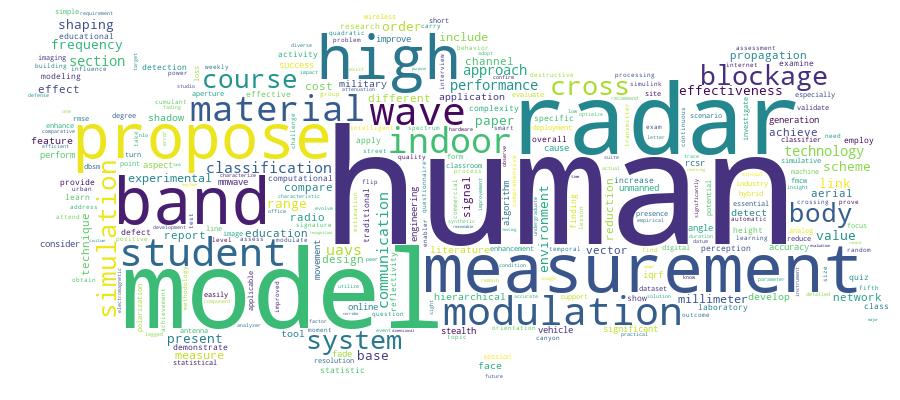
Competency Cloud
9 results
Scholarly Output Search Results
Now showing 1 - 9 of 9
Article Citation - WoS: 5Citation - Scopus: 6On the Design and Effectiveness of Simulink-Based Educational Material for a Communication Systems Course(Wiley, 2020) Coruk, R. Busra; Yalcinkaya, Bengisu; Kara, AliThe methods used in engineering education have gained diversity in parallel with rapidly evolving technology. New technological methods along with the traditional methods have been adopted for undergraduate education. Today, Simulink-based educational materials are used in many fields in engineering education. However, in the literature, the contribution of such educational materials to the learning process has not been measured thoroughly. This study presents a comprehensive measurement method to improve the created course material and show the effectiveness of developed course material in students' success. First, educational material was developed for an undergraduate electrical engineering course: communication systems. A feedback group made up of diverse student learners was employed extensively in the material development phase. Next, the impact of the developed material on the success of the students was examined using both qualitative and quantitative measurement tools including questionnaires, one-to-one interviews, and class and university level anonymous surveys. This also included students' performance regarding laboratory quizzes and achievement of course learning outcomes. Overall, the measurement results show that the course material increased students' success in the course. Moreover, students' general perception of the course material was positive.Article Citation - WoS: 1Citation - Scopus: 1From Street Canyons To Corridors: Adapting Urban Propagation Models for an Indoor IQRF Network(MDPI, 2025) Doyan, Talip Eren; Yalcinkaya, Bengisu; Dogan, Deren; Dalveren, Yaser; Derawi, MohammadAmong wireless communication technologies underlying Internet of Things (IoT)-based smart buildings, IQRF (Intelligent Connectivity Using Radio Frequency) technology is a promising candidate due to its low power consumption, cost-effectiveness, and wide coverage. However, effectively modeling the propagation characteristics of IQRF in complex indoor environments for simple and accurate network deployment remains challenging, as architectural elements like walls and corners cause substantial signal attenuation and unpredictable propagation behavior. This study investigates the applicability of a site-specific modeling approach, originally developed for urban street canyons, to characterize peer-to-peer (P2P) IQRF links operating at 868 MHz in typical indoor scenarios, including line-of-sight (LoS), one-turn, and two-turn non-line-of-sight (NLoS) configurations. The received signal powers are compared with well-known empirical models, including international telecommunication union radio communication sector (ITU-R) P.1238-9 and WINNER II, and ray-tracing simulations. The results show that while ITU-R P.1238-9 achieves lower prediction error under LoS conditions with a root mean square error (RMSE) of 5.694 dB, the site-specific approach achieves substantially higher accuracy in NLoS scenarios, maintaining RMSE values below 3.9 dB for one- and two-turn links. Furthermore, ray-tracing simulations exhibited notably larger deviations, with RMSE values ranging from 7.522 dB to 16.267 dB and lower correlation with measurements. These results demonstrate the potential of site-specific modeling to provide practical, computationally efficient, and accurate insights for IQRF network deployment planning in smart building environments.Article Citation - WoS: 4Citation - Scopus: 4Modeling and Measurement of Human Body Blockage Loss at 28 Ghz(Taylor & Francis Ltd, 2023) Benzaghta, Mohamed; Gokdogan, Bengisu Yalcinkaya; Coruk, Remziye Busra; Kara, AliMillimeter-wave (mm-Wave) spectrum is an essential enabler to the fifth generation (5G) wireless technology. Humans are one of the most noticeable blockers that cause temporal variation in indoor radio channels. This paper presents human blockage measurements at 28 GHz, with several humans of different sizes. The effect of the crossing orientations of the human bodies is investigated for three different transmitter heights. A human blockage model based on the Fresnel diffraction scheme is shown to be applicable in estimating the human blockage loss in indoor radio links considering various body sizes, different crossing orientations, and different transmitter heights. The findings reported in this paper could help improve indoor radio channel models at 28 GHz bands for 5G technologies considering the presence of human body blockages.Article Citation - WoS: 5Citation - Scopus: 7On the Classification of Modulation Schemes Using Higher Order Statistics and Support Vector Machines(Springer, 2022) Coruk, Remziye Busra; Gokdogan, Bengisu Yalcinkaya; Benzaghta, Mohamed; Kara, AliThe recognition of modulation schemes in military and civilian applications is a major task for intelligent receiving systems. Various Automatic Modulation Classification (AMC) algorithms have been developed for this purpose in the literature. However, classification with low computational complexity as well as reasonable processing time is still a challenge. In this paper, a feature-based approach along with various classifiers is employed based on statistical features as well as higher-order moments and cumulants. An over-the-air (OTA) recorded dataset consisting of four analog and ten digital modulation schemes are used for testing the proposed method at 0-20 dB SNR. The overall accuracy for quadratic Support Vector Machine (SVM) is found to be as high as 98% at 10 dB. The comparison of the results with other AMC papers published in the literature indicates that the proposed method present higher accuracy, especially for realistic channel induced OTA dataset.Article Low Signature UAVs: Radar Cross Section Analysis, Simulation, and Measurement in X-Band(Springer London Ltd, 2025) Unalir, Dizdar; Yalcinkaya, Bengisu; Aydin, ElifThe increasing prevalence of unmanned aerial vehicles (UAVs) is driving the development of radar systems capable of detecting them. This hampers the deployment of UAVs in military operations. While radar cross section reduction (RCSR) can be a valuable solution, the research on this subject is inadequate. This paper presents an RCSR approach adopting a shaping technique for UAVs, demonstrating the proposed approach's efficacy through simulations and actual experimental measurements performed in X-Band on a four-legged UAV model. Using electromagnetic computational instruments, the shaping is applied to the designed UAV model with parameter-based simulations, the simulated radar cross section (RCS) values are derived, and the comparative analysis of these instruments is conducted. Experimental measurements are performed in laboratory conditions using a vector network analyzer. Actual measurement results are validated by simulative findings with the examination of the influence of frequency, polarization, and aspect angle on RCS. The demonstrated measuring approach allows cost-effective and easily applicable research on RCS in X-Band, a commonly utilized frequency range in military. An average RCSR of 10 dBsm has been accomplished with the presented shaping approach.Article Citation - WoS: 2Citation - Scopus: 2Millimeter-Wave Sar Imaging for Sub-Millimeter Defect Detection With Non-Destructive Testing(Mdpi, 2025) Yalcinkaya, Bengisu; Aydin, Elif; Kara, AliThis paper introduces a high-resolution 77-81 GHz mmWave Synthetic Aperture Radar (SAR) imaging methodology integrating low-cost hardware with modified radar signal characteristics specifically for NDT applications. The system is optimized to detect minimal defects in materials, including low-reflectivity ones. In contrast to the existing studies, by optimizing key system parameters, including frequency slope, sampling interval, and scanning aperture, high-resolution SAR images are achieved with reduced computational complexity and storage requirements. The experiments demonstrate the effectiveness of the system in detecting optically undetectable minimal surface defects down to 0.4 mm, such as bonded adhesive lines on low-reflectivity materials with 2500 measurement points and sub-millimeter features on metallic targets at a distance of 30 cm. The results show that the proposed system achieves comparable or superior image quality to existing high-cost setups while requiring fewer data points and simpler signal processing. Low-cost, low-complexity, and easy-to-build mmWave SAR imaging is constructed for high-resolution SAR imagery of targets with a focus on detecting defects in low-reflectivity materials. This approach has significant potential for practical NDT applications with a unique emphasis on scalability, cost-effectiveness, and enhanced performance on low-reflectivity materials for industries such as manufacturing, civil engineering, and 3D printing.Article Citation - WoS: 1Citation - Scopus: 1Blockage Loss and Shadow Fading Behavior of Millimeter-Wave Signals Due To Human Bodies at 28 Ghz(Wiley, 2024) Benzaghta, Mohamed; Gokdogan, Bengisu Yalcinkaya; Coruk, Remziye Busra; Kara, AliAs the millimeter-wave (mm-Wave) spectrum is considered to be an essential enabler to the fifth generation (5G) wireless communication systems. Human movements are one of the most significant factors that cause transient blockage in indoor mm-wave channels. In this letter, human blockage measurements and shadow fading statistics due to human body movements in an indoor office environment are reported for the 28 GHz band. The effect of human bodies on the channel is measured for several scenarios including a variety of population and using diverse antenna heights. The reported shadow fading statistics include both the duration and the depth of the blockage fade, and accordingly, we propose several empirical models that cater for such blockage events. The findings reported in this letter could improve the modeling of indoor radio channels at 28 GHz bands by considering the presence of humans, as well as their movements.Article Citation - Scopus: 1A Hybrid-Flipped Classroom Approach: Students' Perception and Performance Assessment(Univ Nac Colombia, Fac ingenieria, 2023) Gokdogan, Bengisu Yalcinkaya; Coruk, Remziye Busra; Benzaghta, Mohamed; Kara, AliThis study presents an improved hybrid-flipped classroom (hybrid-FC) education method based on technology-enhanced learning (TEL) along with diluted classes for a course on probability and random processes in engineering. The proposed system was implemented with the participation of two student groups who alternated weekly between attending face-to-face activities and fully online classes as a sanitary measure during the pandemic. The education model was combined with the flipped classroom (FC) approach in order to improve the quality of learning and address the negative effects of remote education. Before the lessons, the students studied the course material, filled a question form, and then took a low- stake online quiz. Then, the students attended a session where the questions reported in the forms were discussed, and they took an online problem-solving session followed by an individual quiz. Class sessions were available to both online and face-to-face students, as well as in the form of video recordings for anyone who missed lessons. Qualitatively and quantitatively, the proposed education method proved to be more effective and comprehensive than conventional online methodologies. The students' performances were evaluated via quizzes and exams measuring the achievement of the course learning outcomes ( CLOs). Weekly pre/post-tests were applied to examine the students' progress in each topic. Midterm and final exams were planned to measure the level of success for all course topics. Additionally, the students' perception was assessed with questionnaires and face-to-face interviews. A performance assessment showed an apparent increase in the success rate, and the students' perception was found to be positive.Article Citation - WoS: 5Citation - Scopus: 5Hierarchical Classification of Analog and Digital Modulation Schemes Using Higher-Order Statistics and Support Vector Machines(Springer, 2024) Yalcinkaya, Bengisu; Coruk, Remziye Busra; Kara, Ali; Tora, HakanAutomatic modulation classification (AMC) algorithms are crucial for various military and commercial applications. There have been numerous AMC algorithms reported in the literature, most of which focus on synthetic signals with a limited number of modulation types having distinctive constellations. The efficient classification of high-order modulation schemes under real propagation effects using models with low complexity still remains difficult. In this paper, employing quadratic SVM, a feature-based hierarchical classification method is proposed to accurately classify especially higher-order modulation schemes and its performance is investigated using over the air (OTA) collected data. Statistical features, higher-order moments, and higher-order cumulants are utilized as features. Then, the performances of some well-known classifiers are evaluated, and the classifier presenting the best performance is employed in the proposed hierarchical classification model. An OTA dataset containing 17 analog and digital modulation schemes is used to assess the performance of the proposed classification model. With the proposed hierarchical classification algorithm, a significant improvement has been achieved, especially in higher-order modulation schemes. The overall accuracy with the proposed hierarchical structure is 96% after 5 dB signal-to-noise ratio value, approximately a 10% increase is achieved compared to the traditional classification algorithm.
