Samut, Pınar Kaya
Loading...

Profile URL
Name Variants
Samut, Pinar Kaya
S., Pinar Kaya
P.K.Samut
S.,Pinar Kaya
P., Samut
P.,Samut
Samut, Pınar Kaya
Samut,P.K.
S.,Pınar Kaya
Pinar Kaya, Samut
Pınar Kaya, Samut
Kaya Samut, Pinar
Kaya Samut, Pinar
S., Pinar Kaya
P.K.Samut
S.,Pinar Kaya
P., Samut
P.,Samut
Samut, Pınar Kaya
Samut,P.K.
S.,Pınar Kaya
Pinar Kaya, Samut
Pınar Kaya, Samut
Kaya Samut, Pinar
Kaya Samut, Pinar
Job Title
Doktor Öğretim Üyesi
Email Address
pinar.samut@atilim.edu.tr
Main Affiliation
Department of Business
Status
Former Staff
Website
ORCID ID
Scopus Author ID
Turkish CoHE Profile ID
Google Scholar ID
WoS Researcher ID
Sustainable Development Goals
1NO POVERTY
1
Research Products
2ZERO HUNGER
0
Research Products
3GOOD HEALTH AND WELL-BEING
1
Research Products
4QUALITY EDUCATION
0
Research Products
5GENDER EQUALITY
0
Research Products
6CLEAN WATER AND SANITATION
0
Research Products
7AFFORDABLE AND CLEAN ENERGY
1
Research Products
8DECENT WORK AND ECONOMIC GROWTH
2
Research Products
9INDUSTRY, INNOVATION AND INFRASTRUCTURE
1
Research Products
10REDUCED INEQUALITIES
0
Research Products
11SUSTAINABLE CITIES AND COMMUNITIES
1
Research Products
12RESPONSIBLE CONSUMPTION AND PRODUCTION
1
Research Products
13CLIMATE ACTION
1
Research Products
14LIFE BELOW WATER
1
Research Products
15LIFE ON LAND
0
Research Products
16PEACE, JUSTICE AND STRONG INSTITUTIONS
0
Research Products
17PARTNERSHIPS FOR THE GOALS
0
Research Products

This researcher does not have a Scopus ID.

This researcher does not have a WoS ID.

Scholarly Output
11
Articles
4
Views / Downloads
65/955
Supervised MSc Theses
5
Supervised PhD Theses
1
WoS Citation Count
124
Scopus Citation Count
123
Patents
0
Projects
0
WoS Citations per Publication
11.27
Scopus Citations per Publication
11.18
Open Access Source
3
Supervised Theses
6
| Journal | Count |
|---|---|
| Anadolu Üniversitesi Sosyal Bilimler Dergisi | 1 |
| Atatürk Üniversitesi İktisadi ve İdari Bilimler Dergisi | 1 |
| Journal of Business Economics and Management | 1 |
| Research Anthology on Environmental and Societal Impacts of Climate Change | 1 |
| Social Indicators Research | 1 |
Current Page: 1 / 1
Scopus Quartile Distribution
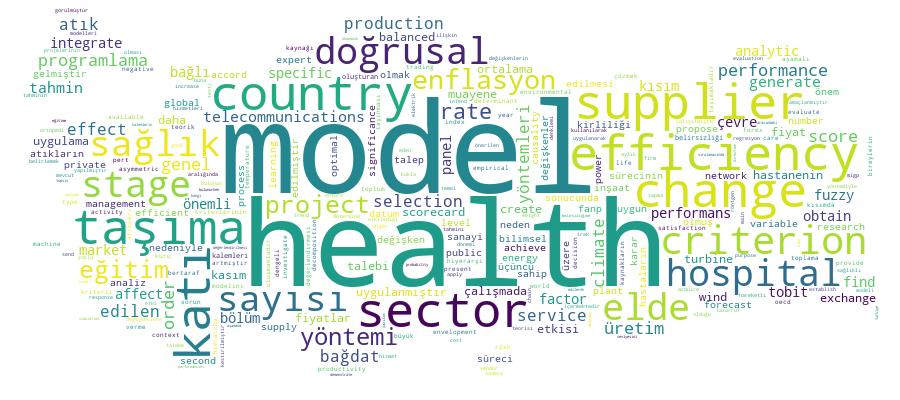
Competency Cloud

4 results
Scholarly Output Search Results
Now showing 1 - 4 of 4
Article İki Aşamalı Çok Kriterli Karar Verme ile Performans Değerlendirmesi: Ahp ve Topsıs Yöntemlerinin Entegrasyonu(2014) Samut, Pınar KayaPerformans değerlendirmesi ve buna bağlı olarak dahaetkin ve verimli karar süreçlerinin tanımlanması, iş - letmelerin sürdürülebilirliği ve rekabeti için önem arzetmektedir. Bir hizmet sektörü olan eğitimde de per- formansın değerlendirilmesi, iyileştirilmesi ve uluslararası düzeyde analiz edilerek diğer ülkelerle rekabetedilebilir hale gelinmesi için eksikliklerin tartışılmasıgerekmektedir. Uluslar arası düzeyde eğitim perfor- manslarının değerlendirilmesinin amaçlandığı bu çalış - mada iki aşamalı çok kriterli bir karar verme yöntemikullanılmıştır. İlk aşamada AHP (Analytic HierarchyProcess-Analitik Hiyerarşi Süreci) yöntemi kullanılarakeğitim performans kriterlerinin ağırlıkları bulunmuş - tur. İkinci aşamada ise TOPSIS (Technique for Order ofPreference by Similarity to Ideal Solution) yöntemi ileOECD (Organisation for Economic Co-operation andDevelopment- Ekonomik Kalkınma ve İşbirliği Örgütü)ülkelerinin eğitim performansları analiz edilerek, ülkesıralamaları elde edilmiştir. AHP yöntemiyle elde edilenperformans kriterleri sıralamasında, eğitime yapılanharcamalar ve maaşlar eğitim performansını etkileyenen önemli kriterler olarak bulunurken, okullaşma oranıise en düşük ağırlığa sahip performans kriteri olmuştur.İlköğretime ilişkin kriterlerin orta öğretime nazaraneğitim performansını daha çok etkilediği yine bulgulararasındadır. TOPSIS yöntemi ile elde edilen, eğitimperformans sıralamasında en başarılı ülke Lüksemburgolarak bulunurken, en başarısız ülke ise Türkiye olmuş - tur. Lüksemburgu, İsviçre ve Kanada izlemektedir. Buülkelerin öğretmen maaşlarının ve GSYH (GayrisafiYurtiçi Hasıla)dan eğitime ayırdıkları payın oldukçayüksek olduğu göze çarpmaktadır.Article Citation - WoS: 119Citation - Scopus: 117Analysis of the Efficiency Determinants of Health Systems in Oecd Countries by Dea and Panel Tobit(Springer, 2016) Samut, Pinar Kaya; Cafri, Reyhan; Kaya Samut, PınarIn recent years, almost all countries around the world face budget cuts in health spending, which force public and private hospitals in these countries to use their resources effectively and to provide more efficient health care. In this context, the present study evaluates hospital efficiency across 29 OECD countries between 2000 and 2010 and investigates the determinants affecting hospitals' activities. In the first stage of the two-stage performance analysis, efficiency scores of the hospitals were measured by data envelopment analysis (DEA) while, in the second stage, Panel Tobit Analysis was used to identify the environmental factors that affect the efficiency scores obtained in the first stage. The paper also explores the changes in the factor efficiency compared to the previous years by decomposition through the Malmquist Productivity Index. In the first stage, it was found that the efficiency scores achieved after 2000 began to decline in 2004 and reached their lowest levels between 2009 and 2010. The highest slack values were found in the figures regarding tomography, MR, and nurses, respectively. In the second stage, due to the censored nature of the dependent variable obtained by DEA, in order to achieve consistent and unbiased estimators, the use of Panel Tobit Analysis was proposed. Estimations showed that, among the environmental factors that secondarily affect hospital efficiency, income, education and number of private hospitals affect efficiency in a positive way, while the effects of public and private health expenses and the number of public hospitals on such efficiency was negative.Article The effect of ınflatıon uncertaınty on prıce components: The case of Turkey(2014) Samut, Pınar KayaBu çalışmada, enflasyon belirsizliği ile fiyatlar genel düzeyini oluşturan fiyat alt kalemleri arasındaki ilişki incelenmiştir. Enflasyon belirsizliğine, fiyatlar genel seviyesindeki hangi alt kalemlerin neden olduğunun ve belirsizliğin hangi alt kalemlerin fiyatlarını daha çok etkilediğinin ortaya çıkarılması amaçlanmıştır. 2003:01-2011:09 dönemi Türkiye ekonomisinin incelendiği çalışmada, enflasyon belirsizliği, enflasyon sürecinin koşullu varyansı olarak tanımlanarak elde edilmiştir. Enflasyon süreci sadece kendi geçmiş değerlerinin bir fonksiyonu olarak değil, para arzı (money supply), sanayi üretim endeksi(industrial production index), döviz kuru (exchange rate) ve faiz oranı (interest rate) değişkenlerinden oluşan bir bilgi kümesine bağlı olarak kestirilmiştir. Granger causality testi, Impulse Response ve Variance Decompositions Analysis kullanılarak fiyat alt kalemleri ile enflasyon belirsizliği arasındaki ilişkiler araştırılmıştır. Bulgulara göre, enflasyon belirsizliğinin, fiyatlar genel seviyesini oluşturan fiyat alt kalemleri üzerindeki etkisi ve benzer şekilde fiyatlar genel seviyesini oluşturan fiyat alt kalemlerinin de enflasyon belirsizliğine etkisi farklılık göstermektedir.Article Citation - WoS: 5Citation - Scopus: 6Integrated Fanp-F Model for Supplier Selection in the Renewable Energy Sector(Vilnius Gediminas Tech Univ, 2017) Kaya Samut, Pinar; Department of BusinessThe available integrated models for choosing efficient suppliers developed so far are mostly specific to companies with mass production capabilities. However, in some sectors involved in project-type manufacturing, the same decision-making criteria cannot be applied and, plus, there is no point in determining the quantity of orders. For instance, in wind power plant projects, a single turbine supplier needs to be selected for each project. This study proposes an integrated FANP-f-MIGP model that ensures the selection of the optimal supplier for each project by applying the model to an energy firm. The criteria specific to the selection of wind power plant turbine suppliers are established, and the criteria weights are obtained by fuzzy analytic network process (FANP). As a result of the analysis, the most important criterion of all is cost. These weights constitute the coefficients of the f-MIGP model's objective function. Under the defined constraints, by minimizing cost and risk and maximizing quality and services of the firm, the selection of an optimal wind turbine supplier from three suppliers for each of three projects is ensured. This study contributes to the literature both by the specific criteria it establishes and its proposed integrated model which allows for the selection of the best supplier in wind turbine and similar project-based productions.