Aktaş, Zeynep

Loading...
Profile Picture
Name Variants
Aktaş Z.
Z., Aktaş
A., Zeynep
Aktaş,Z.
Aktas Z.
Aktaş, Zeynep
Zeynep, Aktaş
Z.,Aktas
Z.,Aktaş
Aktas, Z.
A.,Zeynep
Zeynep, Aktas
Z., Aktas
Aktas, Zeynep
Aktas,Z.
Job Title
Profesor Doktor
Email Address
zeynep.aktas@atilim.edu.tr
Main Affiliation
Surgical Sciences
Status
Website
ORCID ID
Scopus Author ID
Turkish CoHE Profile ID
Google Scholar ID
WoS Researcher ID

Sustainable Development Goals

NO POVERTY1
NO POVERTY
0
Research Products
ZERO HUNGER2
ZERO HUNGER
0
Research Products
GOOD HEALTH AND WELL-BEING3
GOOD HEALTH AND WELL-BEING
0
Research Products
QUALITY EDUCATION4
QUALITY EDUCATION
0
Research Products
GENDER EQUALITY5
GENDER EQUALITY
0
Research Products
CLEAN WATER AND SANITATION6
CLEAN WATER AND SANITATION
0
Research Products
AFFORDABLE AND CLEAN ENERGY7
AFFORDABLE AND CLEAN ENERGY
1
Research Products
DECENT WORK AND ECONOMIC GROWTH8
DECENT WORK AND ECONOMIC GROWTH
0
Research Products
INDUSTRY, INNOVATION AND INFRASTRUCTURE9
INDUSTRY, INNOVATION AND INFRASTRUCTURE
0
Research Products
REDUCED INEQUALITIES10
REDUCED INEQUALITIES
0
Research Products
SUSTAINABLE CITIES AND COMMUNITIES11
SUSTAINABLE CITIES AND COMMUNITIES
0
Research Products
RESPONSIBLE CONSUMPTION AND PRODUCTION12
RESPONSIBLE CONSUMPTION AND PRODUCTION
0
Research Products
CLIMATE ACTION13
CLIMATE ACTION
0
Research Products
LIFE BELOW WATER14
LIFE BELOW WATER
0
Research Products
LIFE ON LAND15
LIFE ON LAND
0
Research Products
PEACE, JUSTICE AND STRONG INSTITUTIONS16
PEACE, JUSTICE AND STRONG INSTITUTIONS
0
Research Products
PARTNERSHIPS FOR THE GOALS17
PARTNERSHIPS FOR THE GOALS
1
Research Products
Documents

93

Citations

1017

h-index

18

Documents

78

Citations

743

Scholarly Output

16

Articles

13

Views / Downloads

84/0

Supervised MSc Theses

0

Supervised PhD Theses

0

WoS Citation Count

74

Scopus Citation Count

98

Patents

0

Projects

0

WoS Citations per Publication

4.63

Scopus Citations per Publication

6.13

Open Access Source

9

Supervised Theses

0

JournalCount
Journal of Glaucoma3
Turkish Journal of Ophthalmology2
Graefe's Archive for Clinical and Experimental Ophthalmology2
Turkish Journal of Clinical and Experimental Ophthalmology2
Frontiers in Ophthalmology1
Current Page: 1 / 3

Scopus Quartile Distribution

Competency Cloud

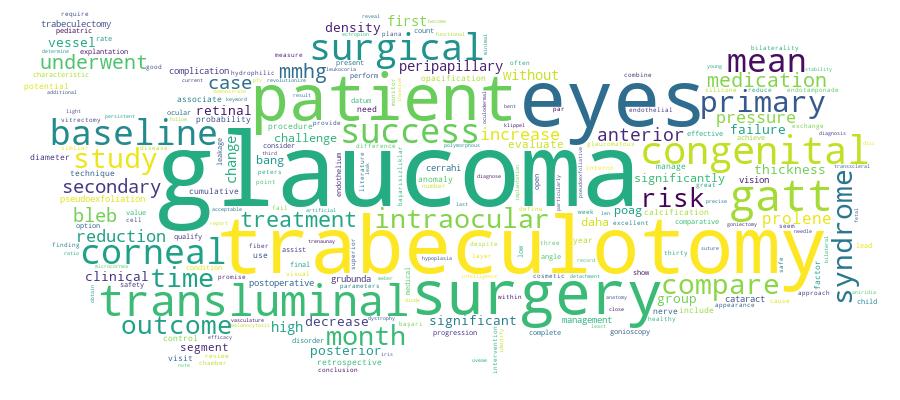
GCRIS Competency Cloud

Scholarly Output Search Results

Now showing 1 - 1 of 1
  • Book Part
    Glaucoma Associated With Non-Acquired Ocular Disorders
    (Springer International Publishing, 2024) Aktas, Z.; Ucgul, A.Y.; Ikiz, G.D.
    Congenital ocular disorders with a significant potential to develop glaucoma include Axenfeld-Rieger syndrome, Peters anomaly, and aniridia. Other ocular conditions such as microcornea, congenital ectropion uveae, oculodermal melanocytosis, posterior polymorphous dystrophy, congenital iris hypoplasia, and various congenital retinal diseases can also be complicated by glaucoma development. The risk of developing glaucoma in Axenfeld-Rieger syndrome, Peters anomaly, and aniridia is notably high (50-75%) compared to the other condition where this risk is relatively lower (10-15%). Glaucoma secondary to these congenital disorders tends to have a severe clinical course and be more resistant to anti-glaucomatous therapies compared to primary congenital glaucoma. Managing intraocular pressure (IOP) can be challenging after treating concomitant anomalies such as cataract and corneal opacity. Furthermore, IOP-lowering procedures, such as drainage tube implantation, may lead to corneal decompensation and cataract development. Given the complexity of these conditions, a multidisciplinary approach is essential for effective treatment of these diseases. Long-term follow-up is crucial to monitor for the development of glaucoma. While topical anti-glaucoma medications are mostly used as the first-line therapy, many cases ultimately require surgical interventions, such as trabeculectomy and tube implant surgery. Transscleral diode cyclophotocoagulation can be an appropriate treatment option for patients with limited or no visual potential. Often, multiple interventions are necessary to achieve adequate IOP control. In addition to managing IOP, amblyopia rehabilitation is a critical component of the lifelong treatment of these challenging cases. This comprehensive approach ensures that both the ocular and visual development needs of individuals with these challenging conditions are addressed effectively. © The Editor(s) (if applicable) and The Author(s), under exclusive license to Springer Nature Switzerland AG 2024.