Aktaş, Zeynep

Loading...
Profile Picture
Name Variants
Aktaş Z.
Z., Aktaş
A., Zeynep
Aktaş,Z.
Aktas Z.
Aktaş, Zeynep
Zeynep, Aktaş
Z.,Aktas
Z.,Aktaş
Aktas, Z.
A.,Zeynep
Zeynep, Aktas
Z., Aktas
Aktas, Zeynep
Aktas,Z.
Job Title
Profesor Doktor
Email Address
zeynep.aktas@atilim.edu.tr
Main Affiliation
Surgical Sciences
Status
Website
ORCID ID
Scopus Author ID
Turkish CoHE Profile ID
Google Scholar ID
WoS Researcher ID

Sustainable Development Goals

NO POVERTY1
NO POVERTY
0
Research Products
ZERO HUNGER2
ZERO HUNGER
0
Research Products
GOOD HEALTH AND WELL-BEING3
GOOD HEALTH AND WELL-BEING
0
Research Products
QUALITY EDUCATION4
QUALITY EDUCATION
0
Research Products
GENDER EQUALITY5
GENDER EQUALITY
0
Research Products
CLEAN WATER AND SANITATION6
CLEAN WATER AND SANITATION
0
Research Products
AFFORDABLE AND CLEAN ENERGY7
AFFORDABLE AND CLEAN ENERGY
1
Research Products
DECENT WORK AND ECONOMIC GROWTH8
DECENT WORK AND ECONOMIC GROWTH
0
Research Products
INDUSTRY, INNOVATION AND INFRASTRUCTURE9
INDUSTRY, INNOVATION AND INFRASTRUCTURE
0
Research Products
REDUCED INEQUALITIES10
REDUCED INEQUALITIES
0
Research Products
SUSTAINABLE CITIES AND COMMUNITIES11
SUSTAINABLE CITIES AND COMMUNITIES
0
Research Products
RESPONSIBLE CONSUMPTION AND PRODUCTION12
RESPONSIBLE CONSUMPTION AND PRODUCTION
0
Research Products
CLIMATE ACTION13
CLIMATE ACTION
0
Research Products
LIFE BELOW WATER14
LIFE BELOW WATER
0
Research Products
LIFE ON LAND15
LIFE ON LAND
0
Research Products
PEACE, JUSTICE AND STRONG INSTITUTIONS16
PEACE, JUSTICE AND STRONG INSTITUTIONS
0
Research Products
PARTNERSHIPS FOR THE GOALS17
PARTNERSHIPS FOR THE GOALS
1
Research Products
Documents

93

Citations

1017

h-index

18

Documents

78

Citations

743

Scholarly Output

16

Articles

13

Views / Downloads

84/0

Supervised MSc Theses

0

Supervised PhD Theses

0

WoS Citation Count

74

Scopus Citation Count

98

Patents

0

Projects

0

WoS Citations per Publication

4.63

Scopus Citations per Publication

6.13

Open Access Source

9

Supervised Theses

0

JournalCount
Journal of Glaucoma3
Turkish Journal of Ophthalmology2
Graefe's Archive for Clinical and Experimental Ophthalmology2
Turkish Journal of Clinical and Experimental Ophthalmology2
Frontiers in Ophthalmology1
Current Page: 1 / 3

Scopus Quartile Distribution

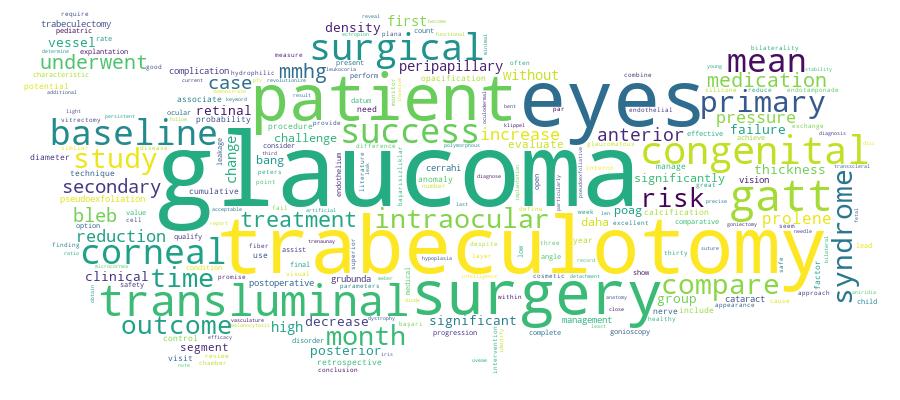
Competency Cloud

GCRIS Competency Cloud

Scholarly Output Search Results

Now showing 1 - 2 of 2
  • Article
    Revolutionizing Glaucoma Care: Harnessing Artificial Intelligence for Precise Diagnosis and Management
    (Gazi Eye Foundation, 2025) Ucgul, A.Y.; Aktaş, Z.
    Glaucoma is a leading cause of irreversible blindness worldwide, necessitating early detection and effective management to prevent vision loss. Recent advancements in artificial intelligence (AI) have revolutionized glaucoma care by enhancing diagnostic accuracy, monitoring disease progression, and personalizing treatment strategies. AI models, including machine learning and deep learning algorithms, have demonstrated exceptional performance in analyzing fundus photography, optical coherence tomography, and visual field data, surpassing traditional diagnostic methods. Convolutional neural networks have shown high sensitivity and specificity in detecting glaucomatous changes, while vision transformers and hybrid AI models further refine risk assessment and prognosis. Additionally, AI-powered monitoring systems utilizing multi-modal data integration allow for more precise prediction of disease progression and the need for surgical intervention. The incorporation of AI into telemedicine and wearable intraocular pressure sensors extends glaucoma management to remote and underserved populations. Despite these advancements, challenges remain, including issues related to algorithm generalizability, data standardization, bias, and ethical concerns regarding AI-driven clinical decision-making. To maximize AI’s potential in glaucoma care, further interdisciplinary research, regulatory oversight, and multi-center validation studies are needed. By addressing these challenges, AI can be effectively integrated into clinical practice, leading to improved early detection, enhanced treatment strategies, and more personalized patient care. The future of AI in glaucoma management holds great promise, paving the way for a more data-driven and patient-centered approach to combating this sight-threatening disease. © 2024 The author(s).
  • Article
    Evaluating Peripapillary Vessel Density and Retinal Nerve Fiber Layer Thickness in Pseudoexfoliation Syndrome: A Comparative Study
    (Gazi Eye Foundation, 2025) Aribas, Y.K.; Aktaş, Z.; Segewa, A.; Segawa, Asadu
    Purpose: To evaluate the changes in the peripapillary vessel density and retinal nerve fiber layer thickness changes in pseudoexfoliation syndrome compared to healthy controls. Methods: The changes were studied in thirty eyes of thirty patients with pseudoexfoliation syndrome using optical coherence tomography angiography. Peripapillary vessel densities and peripapillary nerve fiber layer thicknesses were used to compare the optic nerve head characteristics in eyes with PSX and twenty-five healthy control eyes. Results: Average, superior, and inferior RNFL thicknesses were similar in both groups (p:0.055, p:0.052, p:0.116 respectively). Eyes with PSX had lower VD values compared to healthy control groups in peripapillary, superior, and inferior segments. (p:0.011, p:0.013, p:0.017 respectively). There were significant positive correlations between RNFL thickness and peripapillary vessel density in their corresponding sectors except for inferotemporal and temporal superior sectors. (p<0.05 except inferotemporal and temporal-superior sectors) Conclusion: In this study, peripapillary vessel density was found lower in eyes with pseudoexfoliation syndrome compared to age and systemic co-morbidity matched control group. These findings suggest that reduced peripapillary vessel density which may lead to ischemia might cause vulnerability to glaucomatous damage at the optic nerve head. However, further research needs to be done to establish whether the reduction of vessel density is associated with the progression to the pseudoexfoliation glaucoma and increased vulnerability to the glaucomatous damage. © 2024 The author(s).