Sezen, Arda

Loading...
Profile Picture
Name Variants
A., Sezen
A.,Sezen
Sezen,A.
S.,Arda
S., Arda
Arda Sezen
Sezen,Arda
Sezen, Arda
Arda, Sezen
Job Title
Yardımcı Doçent
Email Address
arda.sezen@atilim.edu.tr
Main Affiliation
Computer Engineering
Status
Website
Scopus Author ID
Turkish CoHE Profile ID
Google Scholar ID
WoS Researcher ID

Sustainable Development Goals

SDG data is not available
This researcher does not have a Scopus ID.
This researcher does not have a WoS ID.
Scholarly Output

11

Articles

6

Views / Downloads

58/532

Supervised MSc Theses

4

Supervised PhD Theses

1

WoS Citation Count

7

Scopus Citation Count

36

Patents

0

Projects

1

WoS Citations per Publication

0.64

Scopus Citations per Publication

3.27

Open Access Source

5

Supervised Theses

5

JournalCount
International Journal of Computational and Experimental Science and Engineering3
Bilişim Teknolojileri Dergisi1
Evolutionary Intelligence1
IEEE Access1
Current Page: 1 / 1

Scopus Quartile Distribution

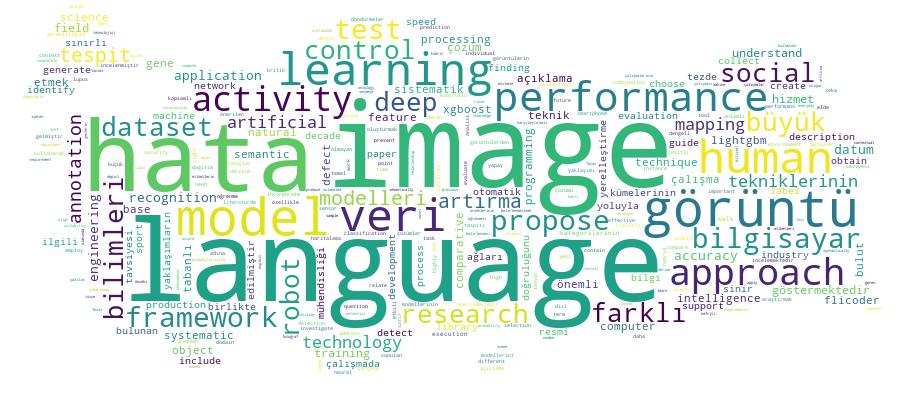
Competency Cloud

GCRIS Competency Cloud

Scholarly Output Search Results

Now showing 1 - 1 of 1
  • Review
    Citation - WoS: 5
    Citation - Scopus: 6
    Research on Pcb Defect Detection Using Artificial Intelligence: a Systematic Mapping Study
    (Springer Heidelberg, 2024) Ural, Dogan Irmak; Sezen, Arda
    SMT (Surface Mount Technology) has been the backbone of PCB (Printed Circuit Board) production for the last couple of decades. Even though the speed and accuracy of SMT have been drastically improved in the last decade, errors during production are still a very valid problem for the PCB industry. With the exponential rise of Artificial Intelligence in the last decade, the SMT industry was one of the most eager industries to use this new technology to detect possible defects during production. Lately, traditional image processing techniques started to lag behind methods such as machine learning and deep learning when the discussion came to the need of high accuracy. In this paper, we screen academic libraries to understand which of the latest methods and techniques are used in the domain and to deduce a general process for detecting defects in PCBs. During the research we have investigated research questions related to state-of-the-art methods, highly mentioned datasets, and sought after PCB defects. All findings and answers are mapped to be able to understand where this pursuit might point towards. From a total of 270 papers, 90 of them were addressed in detail and 78 papers were chosen for this systematic mapping.