Özer, Seren

Loading...
Profile Picture
Name Variants
S.,Ozer
S., Özer
Ozer, Seren
Seren, Özer
Özer,S.
O., Seren
S., Ozer
O.,Seren
Ö.,Seren
Seren, Ozer
Ö., Seren
Ozer,S.
Özer, Seren
S.,Özer
Job Title
Araştırma Görevlisi
Email Address
seren.ozer@atilim.edu.tr
Main Affiliation
Metallurgical and Materials Engineering
Status
Former Staff
Website
ORCID ID
Scopus Author ID
Turkish CoHE Profile ID
Google Scholar ID
WoS Researcher ID

Sustainable Development Goals

9

INDUSTRY, INNOVATION AND INFRASTRUCTURE
INDUSTRY, INNOVATION AND INFRASTRUCTURE Logo

7

Research Products

5

GENDER EQUALITY
GENDER EQUALITY Logo

0

Research Products

2

ZERO HUNGER
ZERO HUNGER Logo

0

Research Products

4

QUALITY EDUCATION
QUALITY EDUCATION Logo

0

Research Products

11

SUSTAINABLE CITIES AND COMMUNITIES
SUSTAINABLE CITIES AND COMMUNITIES Logo

0

Research Products

17

PARTNERSHIPS FOR THE GOALS
PARTNERSHIPS FOR THE GOALS Logo

0

Research Products

16

PEACE, JUSTICE AND STRONG INSTITUTIONS
PEACE, JUSTICE AND STRONG INSTITUTIONS Logo

0

Research Products

3

GOOD HEALTH AND WELL-BEING
GOOD HEALTH AND WELL-BEING Logo

0

Research Products

12

RESPONSIBLE CONSUMPTION AND PRODUCTION
RESPONSIBLE CONSUMPTION AND PRODUCTION Logo

0

Research Products

15

LIFE ON LAND
LIFE ON LAND Logo

0

Research Products

8

DECENT WORK AND ECONOMIC GROWTH
DECENT WORK AND ECONOMIC GROWTH Logo

0

Research Products

14

LIFE BELOW WATER
LIFE BELOW WATER Logo

0

Research Products

10

REDUCED INEQUALITIES
REDUCED INEQUALITIES Logo

0

Research Products

7

AFFORDABLE AND CLEAN ENERGY
AFFORDABLE AND CLEAN ENERGY Logo

0

Research Products

1

NO POVERTY
NO POVERTY Logo

0

Research Products

6

CLEAN WATER AND SANITATION
CLEAN WATER AND SANITATION Logo

0

Research Products

13

CLIMATE ACTION
CLIMATE ACTION Logo

0

Research Products
Documents

7

Citations

122

h-index

6

Documents

7

Citations

113

Scholarly Output

8

Articles

8

Views / Downloads

6/0

Supervised MSc Theses

0

Supervised PhD Theses

0

WoS Citation Count

113

Scopus Citation Count

122

WoS h-index

6

Scopus h-index

6

Patents

0

Projects

0

WoS Citations per Publication

14.13

Scopus Citations per Publication

15.25

Open Access Source

5

Supervised Theses

0

Google Analytics Visitor Traffic

JournalCount
Journal of Materials Research and Technology2
Journal of Alloys and Compounds1
Journal of Materials Processing Technology1
Intermetallics1
Materials & Design1
Current Page: 1 / 2

Scopus Quartile Distribution

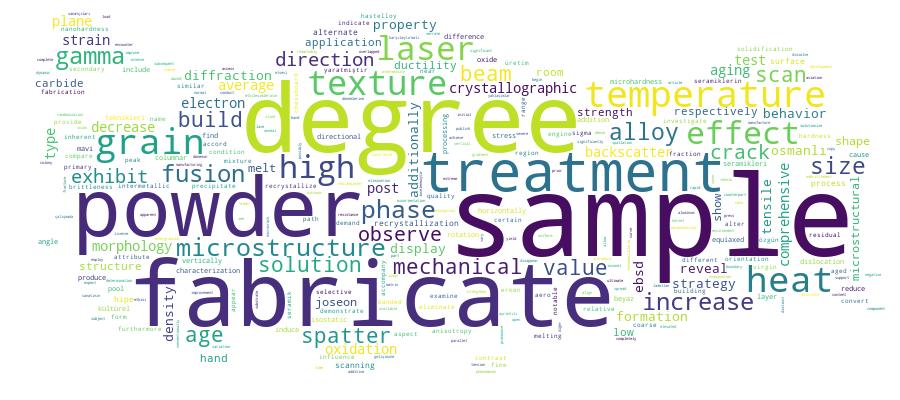
Competency Cloud

GCRIS Competency Cloud

Scholarly Output Search Results

Now showing 1 - 1 of 1
  • Article
    Investigations on the Effect of Secondary Treatments on Ti48Al2Cr2Nb Alloy Manufactured by Electron Beam Powder Bed Fusion Method
    (Elsevier Sci Ltd, 2025) Bilgin, Guney Mert; Ozer, Seren; Davut, Kemal; Esen, Ziya; Dericioglu, Arcan F.
    As-built Ti48Al2Cr2Nb alloy samples produced by electron beam powder bed fusion (PBF-EB) exhibited notable brittleness. The low ductility was attributed to coarse gamma bands aligned perpendicular to the building and tensile direction. Additionally, variations in aluminum content and hardness between the coarse colonies and fine gamma/alpha(2) lamellae contribute to this phenomenon. Electron backscattered diffraction (EBSD) studies revealed a higher amount of dislocation density and inherent strain after PBF-EB manufacturing. Hence, usage of Ti48Al2Cr2Nb alloy in the as-built condition in aviation applications with high loads and demanding environments is not found to be viable. To eliminate these negative aspects and make PBF-EB produced Ti48Al2Cr2Nb alloy available for demanding applications, two distinct post-processing heat treatments; namely, hot isostatic pressing (HIP) and annealing heat treatment (HT) were employed at 1200 degrees C. A comprehensive characterization covering microstructure analysis, EBSD, fracture surface examination, as well as room and high-temperature tensile tests allowed determination of the effect of post-processes. HIPing altered the banded structure observed in the as-built samples by increasing the amount of alpha(2) phase and grain size. On the other hand, HT made the banded structure more pronounced without significantly increasing the amount of alpha(2) phase. HT also strengthened the <001> texture, while HIPing introduced randomization of grains. On the other hand, complete recrystallization is achieved as a result of HT at 1200 degrees C for 2 h, whereas HIPing at the same temperature for 2 h induced only 80.5 % recrystallization. In both post-processes, dislocation density and inherent strain were reduced. Room temperature and high-temperature tensile tests demonstrated that both HIPing and HT eliminated the extreme brittleness of the as-built samples.