Köse, Merve

Loading...
Profile Picture
Name Variants
Köse,M.
Kose,M.
M., Kose
M.,Kose
Köse, Merve
Kose, Merve
Merve, Kose
Merve Köse
M.,Köse
K.,Merve
Köse A.
Kose,Merve
Kose A.
K., Merve
M., Köse
Merve, Köse
Job Title
Araştırma Görevlisi
Email Address
merve.kose@atilim.edu.tr
Main Affiliation
Fine Arts and Elective Courses
Status
Website
Scopus Author ID
Turkish CoHE Profile ID
Google Scholar ID
WoS Researcher ID

Sustainable Development Goals

NO POVERTY1
NO POVERTY
0
Research Products
ZERO HUNGER2
ZERO HUNGER
0
Research Products
GOOD HEALTH AND WELL-BEING3
GOOD HEALTH AND WELL-BEING
0
Research Products
QUALITY EDUCATION4
QUALITY EDUCATION
0
Research Products
GENDER EQUALITY5
GENDER EQUALITY
0
Research Products
CLEAN WATER AND SANITATION6
CLEAN WATER AND SANITATION
0
Research Products
AFFORDABLE AND CLEAN ENERGY7
AFFORDABLE AND CLEAN ENERGY
0
Research Products
DECENT WORK AND ECONOMIC GROWTH8
DECENT WORK AND ECONOMIC GROWTH
0
Research Products
INDUSTRY, INNOVATION AND INFRASTRUCTURE9
INDUSTRY, INNOVATION AND INFRASTRUCTURE
1
Research Products
REDUCED INEQUALITIES10
REDUCED INEQUALITIES
0
Research Products
SUSTAINABLE CITIES AND COMMUNITIES11
SUSTAINABLE CITIES AND COMMUNITIES
0
Research Products
RESPONSIBLE CONSUMPTION AND PRODUCTION12
RESPONSIBLE CONSUMPTION AND PRODUCTION
0
Research Products
CLIMATE ACTION13
CLIMATE ACTION
0
Research Products
LIFE BELOW WATER14
LIFE BELOW WATER
0
Research Products
LIFE ON LAND15
LIFE ON LAND
0
Research Products
PEACE, JUSTICE AND STRONG INSTITUTIONS16
PEACE, JUSTICE AND STRONG INSTITUTIONS
0
Research Products
PARTNERSHIPS FOR THE GOALS17
PARTNERSHIPS FOR THE GOALS
0
Research Products
This researcher does not have a Scopus ID.
This researcher does not have a WoS ID.
Scholarly Output

4

Articles

3

Views / Downloads

8/0

Supervised MSc Theses

1

Supervised PhD Theses

0

WoS Citation Count

0

Scopus Citation Count

0

Patents

0

Projects

0

WoS Citations per Publication

0.00

Scopus Citations per Publication

0.00

Open Access Source

2

Supervised Theses

1

JournalCount
Grid - architecture, planning and design journal (Online)1
IDA: International Design and Art Journal1
IDA: International Design and Art Journal (Online)1
Current Page: 1 / 1

Scopus Quartile Distribution

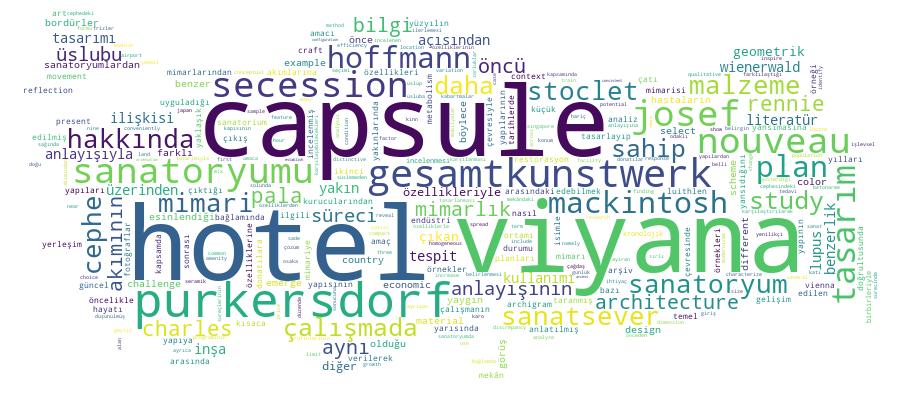
Competency Cloud

GCRIS Competency Cloud

Scholarly Output Search Results

Now showing 1 - 3 of 3
  • Article
    20. Yüzyıl Teknolojik Ütopyalarının günümüze Yansıması: Kapsül Oteller
    (2025) Memikoğlu, İpek; Köse, Merve
    Several factors, such as population growth, increasing land prices, and challenging economic conditions, have led to a change in hotel design. In response to these challenges, capsule hotels have emerged as a potential solution. These hotels are designed to be compact, cost-effective, and conveniently located near airports or train stations. Inspired by the 20th-century techno-utopias and first emerging in Japan during the 1970s, these capsule hotels have spread to many countries in the 21st-century. The aim of this study is to identify the common and distinctive features of capsule hotels in different countries. Three capsule hotel examples were selected, namely the Nine Hours Capsule Hotel in Osaka, the KINN Capsule Hotel in Singapore, and the Capsule Hotel-Sydney in Sydney. The study used a mixed qualitative research method, including conceptual analysis and case study, and the selected hotel examples were analyzed using the homogeneous sampling technique. The design of these hotels, characterized by economic efficiency and limited facilities, shows variations across different countries in terms of capsule dimensions, color schemes, materials, and furnishings. The findings reveal discrepancies in location, color schemes, material choices, and amenities; however, the size, configuration, and access orientations of the capsules remain consistent with the established capsule hotel concept as defined in the literature.
  • Article
    Charles Rennie Mackintosh ve Josef Hoffmann Arasındaki Tasarım Etkileşimleri: Sanatsever Evi ve Stoclet Palas Örneği
    (2024) Taş, Şule Pfeıffer; Köse, Merve
    Art Nouveau akımı, kıvrımlı, eğrisel, bitkisel gibi genel tasarım özelliklerinden farklı olarak Glasgow’dan Charles Rennie Mackintosh ve Viyana’dan Josef Hoffmann tarafından doğrusal-geometrik şekilde yorumlanmıştır. Mackintosh ve Hoffmann’ın benzer tasarım diline sahip olmaları nedeniyle aralarındaki etkileşim hakkında birçok farklı görüş bulunmaktadır. En yaygın görüş Hoffmann’ın Mackintosh’tan esinlendiği üzerinedir. Bu görüşün doğruluğu, cephe ve plan açısından birçok benzerlik bulunduran Mackintosh’un Sanatsever Evi (1901) ve Hoffmann’ın Stoclet Palas (1905-11) yapısı üzerinden incelenmiştir. Çalışmada, literatür taramasına ek olarak görsel ve plan karşılaştırmalarıyla sonuca varılmaya çalışılmıştır. Sanatsever Evi, Stoclet Palas’tan daha önce inşa edilmesine rağmen bulgulara göre Mackintosh’un yapısındaki birçok benzer özellik Hoffmann tarafından daha önceki yıllarda kullanılmıştır. Mackintosh tasarım stilini 1900’lerin ilk yıllarında değiştirmeye başlayarak Viyana Secession stiline yakınlaşmıştır. Böylece yaygın görüşlerin aksine esinlenme önce Viyana’dan Glasgow’a ardından Glasgow’dan Viyana’ya gerçekleşmiştir. Fakat Viyana’nın etkisinin daha fazla olduğu; Mackintosh’un Viyana Secession’dan ve Hoffmann’dan esinlendiği görülmektedir.
  • Article
    Reflection of 20th-Century Techno-Utopias To the Present Day: Capsule Hotels
    (Nilay Ozsavas Ulucay, 2025) Kose, Merve; Memikoglu, Ipek
    Several factors, such as population growth, increasing land prices, and challenging economic conditions, have led to a change in hotel design. In response to these challenges, capsule hotels have emerged as a potential solution. These hotels are designed to be compact, cost-effective, and conveniently located near airports or train stations. Inspired by the 20th-century techno-utopias and first emerging in Japan during the 1970s, these capsule hotels have spread to many countries in the 21st-century. The aim of this study is to identify the common and distinctive features of capsule hotels in different countries. Three capsule hotel examples were selected, namely the Nine Hours Capsule Hotel in Osaka, the KINN Capsule Hotel in Singapore, and the Capsule Hotel-Sydney in Sydney. The study used a mixed qualitative research method, including conceptual analysis and case study, and the selected hotel examples were analyzed using the homogeneous sampling technique. The design of these hotels, characterized by economic efficiency and limited facilities, shows variations across different countries in terms of capsule dimensions, color schemes, materials, and furnishings. The findings reveal discrepancies in location, color schemes, material choices, and amenities; however, the size, configuration, and access orientations of the capsules remain consistent with the established capsule hotel concept as defined in the literature.