
Boztepe, Handan
Loading...

Profile URL
Name Variants
H., Boztepe
Boztepe,H.
H.,Boztepe
Handan, Boztepe
Boztepe, Handan
B., Handan
B.,Handan
Boztepe,H.
H.,Boztepe
Handan, Boztepe
Boztepe, Handan
B., Handan
B.,Handan
Job Title
Doçent Doktor
Email Address
handan.boztepe@atilim.edu.tr
Main Affiliation
Nursing
Status
Former Staff
Website
ORCID ID
Scopus Author ID
Turkish CoHE Profile ID
Google Scholar ID
WoS Researcher ID
Sustainable Development Goals
 1
1NO POVERTY
0
Research Products
 2
2ZERO HUNGER
0
Research Products
 3
3GOOD HEALTH AND WELL-BEING
7
Research Products
 4
4QUALITY EDUCATION
3
Research Products
 5
5GENDER EQUALITY
0
Research Products
 6
6CLEAN WATER AND SANITATION
0
Research Products
 7
7AFFORDABLE AND CLEAN ENERGY
1
Research Products
 8
8DECENT WORK AND ECONOMIC GROWTH
0
Research Products
 9
9INDUSTRY, INNOVATION AND INFRASTRUCTURE
0
Research Products
 10
10REDUCED INEQUALITIES
0
Research Products
 11
11SUSTAINABLE CITIES AND COMMUNITIES
0
Research Products
 12
12RESPONSIBLE CONSUMPTION AND PRODUCTION
0
Research Products
 13
13CLIMATE ACTION
0
Research Products
 14
14LIFE BELOW WATER
0
Research Products
 15
15LIFE ON LAND
0
Research Products
 16
16PEACE, JUSTICE AND STRONG INSTITUTIONS
1
Research Products
 17
17PARTNERSHIPS FOR THE GOALS
3
Research Products

This researcher does not have a Scopus ID.

This researcher does not have a WoS ID.

Scholarly Output
37
Articles
33
Views / Downloads
116/84
Supervised MSc Theses
4
Supervised PhD Theses
0
WoS Citation Count
105
Scopus Citation Count
107
Patents
0
Projects
0
WoS Citations per Publication
2.84
Scopus Citations per Publication
2.89
Open Access Source
16
Supervised Theses
4
| Journal | Count |
|---|---|
| Journal of Pediatric Nursing | 4 |
| Sağlık ve Toplum | 3 |
| Comprehensive Child and Adolescent Nursing | 2 |
| Acıbadem Üniversitesi Sağlık Bilimleri Dergisi | 2 |
| Balıkesir Sağlık Bilimleri Dergisi (BSBD) | 2 |
Current Page: 1 / 5
Scopus Quartile Distribution
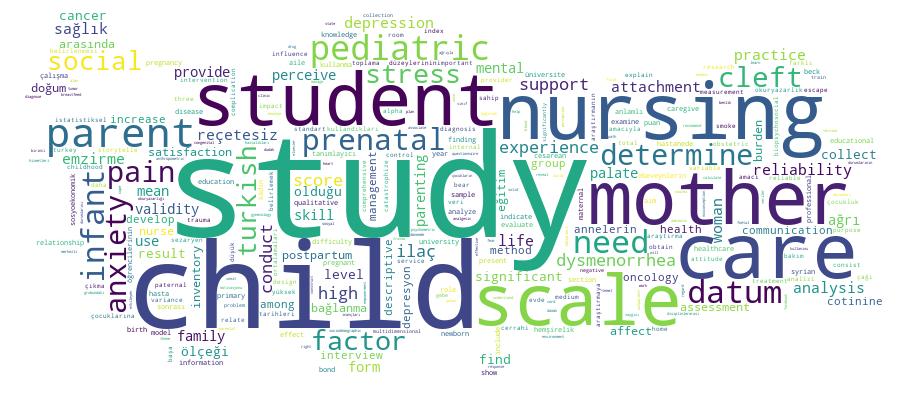
Competency Cloud
5 results
Scholarly Output Search Results
Now showing 1 - 5 of 5
Article Citation - WoS: 6Citation - Scopus: 6Maternal Pain Management at Home in Children with Cancer: A Turkish Sample(Elsevier Science inc, 2020) Boztepe, Handan; Ay, Ayse; Akyuz, CananPurpose: The purpose of the present study was to examine maternal pain management in children with cancer and the associated factors. Design and methods: The present work is a descriptive and cross-sectional study. Data for the study were obtained from mothers of children in the age group of 0 to 18 years undergoing treatment for solid tumors in Pediatric Oncology Service and Outpatient Clinics (n = 112 ). We used a questionnaire on parental pain management practices at home, the knowledge about pain and analgesic drugs, Spielberger State-Trait Anxiety Inventory (STAI), and Pain Catastrophizing Scale (PCS) to collect the data. Results: Several mothers taking part in the study reported various misconceptions about the assessment of children's pain, analgesic drugs, and usage of limited non-pharmacological methods for managing pain in children with cancer. No significant relationships were found between mothers' pain management practices, knowledge of pain assessment and analgesic drugs, and mothers' and children's sociodemographic characteristics or mothers' pain catastrophizing and anxiety about their own pain. Conclusions: The findings of the study revealed that the majority of mothers of children with cancer had misconceptions regarding knowledge of pain assessment and analgesic drugs; these misconceptions potentially lead to manage children's pain associated with cancer ineffectively. Findings indicate mothers' information and support needs for children's cancer pain management in the home settings. Practice implications: A further understanding of barriers to parental pain management in children with cancer in the home setting will contribute immensely in developing appropriate management practices. (C) 2019 Elsevier Inc. All rights reserved.Article Citation - WoS: 8Unexpected Event: Having an Infants With Cleft Lip And/Or Palate(Wiley, 2021) Cinar, Sevil; Ay, Ayse; Boztepe, Handan; Gurlen, EdaThis study aimed to determine the difficulties that the mothers of infants with a cleft lip and/or palate (CL/P) go through, the problems they encounter in this process, and how they perceive the support of healthcare professionals, families, and friends. The study used a phenomenological approach from qualitative research methods. The study sample included 18 mothers of 0 to 3-month-old infants with CL/P. The data were collected using socio-demographic information form and semi-structured interview form. The data obtained from the interviews were evaluated using content and thematic analysis approaches. On the basis of the interviews conducted with mothers of infants with CL/P, the following themes emerged: (a) "unexpected event: having an infant with CL/P," (b) "using social media," (c) "stigma," and (d) "uncertainty of long-term treatment." In this study, it was determined that mothers experienced shock, confusion, sadness, and disappointment in this process; therefore, they used social media to seek support from the families as well as conducted research on the disease that involved a lot of uncertainty due to long-term treatments. The present study can help healthcare professionals, who play a role in the care and treatment of infants with CL/P, to understand and know what mothers need in the preoperative period.Article Citation - WoS: 5Citation - Scopus: 5Development and Psychometric Analysis of a Pediatric Oncology Nurses' Educational Needs Scale(Wiley, 2023) Kudubes, Asli Akdeniz; Semerci, Remziye; Ozbay, Sevil Cinar; Ay, Ayse; Boztepe, HandanBackground/objectivesIt is important to determine the educational needs of pediatric oncology nurses in order to maximize and implement nursing care interventions. Therefore, this study aims to develop a valid and reliable measurement tool to determine pediatric oncology nurses' educational needs and examine its psychometric properties. Design/methodsThis methodological study was conducted with 215 pediatric oncology nurses in Turkey between December 2021 and July 2022. Data were collected with the "Nurse Information Form" and "Pediatric Oncology Nurses' Educational Needs Scale." IBM SPSS 21.0 and IBM AMOS 25.0 software programs were used for data analysis, and descriptive statistics were used to analyze numeric variables. Exploration and confirmatory factor analyses were performed to determine the scale's factorial structure. ResultsThe factorial analysis was used to test the structural validity of the scale. A five-factor structure consisting of 42 items was developed. The Cronbach's alpha coefficient for "Illness" was .978, "Chemotherapy and Side Effect" was .978, "Another Therapy and Side Effect" was .974, "Palliative Care" was .967, "Supportive Care" was .985, and the total score was .990. Fit indices resulting from the study were chi(2)/SD: 3.961, root mean square error of approximation (RMSEA): 0.072, goodness-of-fit index (GFI): 0.95, comparative-of-fit index (CFI): 0.96, and normed fit index (NFI): 0.95. ConclusionThe Pediatric Oncology Nurses' Educational Needs Scale is a valid and reliable scale for pediatric oncology nurses to determine their educational needs.Article Citation - WoS: 7Citation - Scopus: 5"all in One: Fear, Happiness, Faith" a Qualitative Study on Experiences and Needs of Turkish Mothers of Infants With Congenital Heart Disease(Taylor & Francis inc, 2023) Ay, Ayse; Ozbay, Sevil Cinar; Boztepe, Handan; Gurlen, Eda; Çınar Özbay, SevilHaving an infant with congenital heart disease (CHD) may cause difficulties and changes in mothers' life. This study was aim to explore the experiences and needs of Turkish mothers of infants with CHD. The study was carried out with the descriptive phenomenological method from qualitative research. The study sample included 18 mothers having infants in the age range of 0 to 2 years with CHD. The data were collected using a sociodemographic data form and a semi-structured interview form. The data obtained from the interviews were evaluated using the content and thematic analysis methods. Four main themes and sub-themes emerged from the qualitative data. "Effect of getting a diagnosis" with two sub-themes (emotional changes and a protective mother-infant relationship), "All emotions in one" with two sub-themes (fearing of death and torn between fear and hope), "Influences on a mother's life" with three sub-themes (forgetting herself, getting away from siblings' lives and relations with spouse), and stressors with three sub-themes (loss of control, physical care and unfulfilled needs). The results of the study provide insight into how Turkish mothers subjectively experience life after CHD. Mothers expected healthcare professionals to support and understand their experiences and needs. Healthcare professionals need to create an environment for mothers to cope with emotional difficulties, gain knowledge and care skills, and adapt to their lives.Article Citation - WoS: 8Citation - Scopus: 9Predictors of Parenting Stress in Parents of Children With Cancer(Elsevier Sci Ltd, 2021) cinar, Sevil; Boztepe, Handan; Ay, Ayse; Yilmaz, Pinar; Gullu, Hafize; Karadavut, Burcu; Akyuz, CananPurpose: In the present study, we investigated the parenting stress experienced by parents of children with cancer and the influencing factors. Method: This was a cross-sectional and descriptive correlational study that consisted of parents of 136 children in the age group of 0-18 years who were followed up for cancer in the outpatient clinics and services of a university hospital in Turkey. Parenting Stress Index, Burden Interview, Multidimensional Scale of Perceived Social Support, Marital Life Satisfaction Scale, and Ways of Coping Questionnaire were used to collect the data. Results: No statistically significant difference was found between the parenting stress mean scores and gender of the parents of children with cancer (t = -0.350; P = 0.727). The results of the present study showed that the economic status (t = -4.16; P = 0.000), parents' physical (t = 3.606; P = 0.000) and mental health status after the child is diagnosed (t = 5.647; P = 0.000), accompanying mental health problems of the child (t = 2.567; P = 0.011), and diagnosis of children at a young age (t = -2.776; P = 0.006) increased the parenting stress of the parents. Conclusions: Nursing interventions can reduce parental stress by providing sufficient care and support during the disease process.
