
Topallı, Damla
Loading...

Profile URL
Name Variants
D.,Topallı
Topallı,D.
Damla, Topalli
Topalli, D.
D., Topalli
Topallı, Damla
D.,Topalli
T.,Damla
Topalli,D.
Damla, Topallı
D., Topallı
Topalli, Damla
T., Damla
Topallı,D.
Damla, Topalli
Topalli, D.
D., Topalli
Topallı, Damla
D.,Topalli
T.,Damla
Topalli,D.
Damla, Topallı
D., Topallı
Topalli, Damla
T., Damla
Job Title
Doktor Öğretim Üyesi
Email Address
damla.topalli@atilim.edu.tr
Main Affiliation
Information Systems Engineering
Status
Website
ORCID ID
Scopus Author ID
Turkish CoHE Profile ID
Google Scholar ID
WoS Researcher ID
Sustainable Development Goals
 1
1NO POVERTY
0
Research Products
 2
2ZERO HUNGER
0
Research Products
 3
3GOOD HEALTH AND WELL-BEING
0
Research Products
 4
4QUALITY EDUCATION
11
Research Products
 5
5GENDER EQUALITY
0
Research Products
 6
6CLEAN WATER AND SANITATION
0
Research Products
 7
7AFFORDABLE AND CLEAN ENERGY
0
Research Products
 8
8DECENT WORK AND ECONOMIC GROWTH
1
Research Products
 9
9INDUSTRY, INNOVATION AND INFRASTRUCTURE
0
Research Products
 10
10REDUCED INEQUALITIES
0
Research Products
 11
11SUSTAINABLE CITIES AND COMMUNITIES
0
Research Products
 12
12RESPONSIBLE CONSUMPTION AND PRODUCTION
0
Research Products
 13
13CLIMATE ACTION
0
Research Products
 14
14LIFE BELOW WATER
0
Research Products
 15
15LIFE ON LAND
0
Research Products
 16
16PEACE, JUSTICE AND STRONG INSTITUTIONS
0
Research Products
 17
17PARTNERSHIPS FOR THE GOALS
1
Research Products

Documents
14
Citations
266
h-index
6

Documents
0
Citations
0

Scholarly Output
39
Articles
12
Views / Downloads
233/1774
Supervised MSc Theses
12
Supervised PhD Theses
4
WoS Citation Count
193
Scopus Citation Count
263
Patents
0
Projects
0
WoS Citations per Publication
4.95
Scopus Citations per Publication
6.74
Open Access Source
5
Supervised Theses
16
| Journal | Count |
|---|---|
| 9th Annual International Conference of Education, Research and Innovation (iCERi) -- NOV 14-16, 2016 -- Seville, SPAIN | 4 |
| 9th International Conference on Education and New Learning Technologies (EDULEARN) -- JUL 03-05, 2017 -- Barcelona, SPAIN | 2 |
| 2016 Medical Technologies National Conference, TIPTEKNO 2016 -- 2016 Medical Technologies National Conference, TIPTEKNO 2016 -- 27 October 2016 through 29 October 2016 -- Antalya -- 126633 | 2 |
| Journal of Eye Movement Research | 2 |
| Medical Technologies National Conference (TIPTEKNO) -- OCT 27-29, 2016 -- Antalya, TURKEY | 2 |
Current Page: 1 / 3
Scopus Quartile Distribution
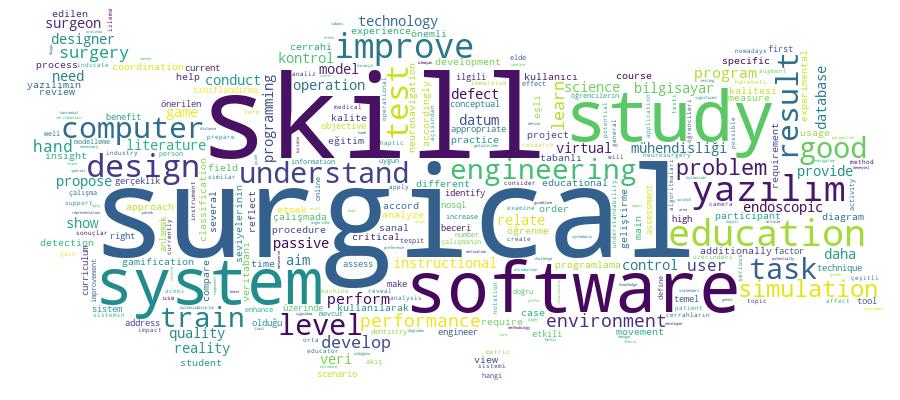
Competency Cloud
24 results
Scholarly Output Search Results
Now showing 1 - 10 of 24
Article Citation - WoS: 137Citation - Scopus: 187Improving Programming Skills in Engineering Education Through Problem-Based Game Projects With Scratch(Pergamon-elsevier Science Ltd, 2018) Topalli, Damla; Cagiltay, Nergiz ErcilNowadays, programming skills are receiving widespread attention for different age groups alongside occupational education programs to better prepare individuals for their future careers. However, introducing programming concepts in an appropriate manner is a challenge in higher education. The main assumption of this study is that enhancing the classical introduction to programming courses through real-life problem-based game development with Scratch programming environment potentially improves the learners' programming skills and motivation. Accordingly, in this study, during one academic semester period, the Introduction to Programming course for engineering students is enriched up to a certain level through real-life game development projects with Scratch. The students are followed within a four-year period starting from freshman until their graduation. The progress of the students who have taken the Introduction to Programming course in enriched or classical form in the fourth year Senior-project course are evaluated. The results show that by slightly improving the course curriculum through real-life game development projects in the Scratch environment, students' performance on the graduation projects improved significantly. As a conclusion, game-based learning, problem-based learning, visual programming and projects are technologies that can potentially help learners to perform better in the introduction to programming course, in turn affecting their performances in projects.Article Citation - Scopus: 1A User Task Design Notation for Improved Software Design(PeerJ Inc., 2021) Ozcan,E.; Topalli,D.; Tokdemir,G.; Cagiltay,N.E.System design is recognized as one of the most critical components of a software system that bridges system requirements and coding. System design also has a significant impact on testing and maintenance activities, and on further improvements during the lifespan of the software system. Software design should reflect all necessary components of the requirements in a clear and understandable manner by all stakeholders of the software system. To distinguish system elements, separation of concerns in software design is suggested. In this respect, identification of the user tasks, i.e., the tasks that need to be performed by the user, is not currently reflected explicitly in system design documents. Our main assumption in this study is that software quality can be improved significantly by clearly identifying the user tasks from those that need to be performed by the computer system itself. Additionally, what we propose has the potential to better reflect the user requirements and main objectives of the system on the software design and thereby to improve software quality. The main aim of this study is to introduce a novel notation for software developers in the frame of UML Activity Diagram (UMLAD) that enables designers to identify the user tasks and define them separately from the system tasks. For this purpose, an extension of UML-AD, named UML-ADE (UML-Activity Diagram Extended) was proposed. Afterwards, it was implemented in a serious game case for which the specification of user tasks is extremely important. Finally, its effectiveness was analyzed and compared to UML-AD experimentally with 72 participants. The defect detection performance of the participants on both diagrams with two real-life serious game scenarios was evaluated. Results show a higher level of understandability for those using UML-ADE, which in turn may indicate a better design and higher software quality. The results encourage researchers to develop specific design representations dedicated to task design to improve system quality and to conduct further evaluations of the impact of these design on each of the above mentioned potential benefits for the software systems. © Copyright 2021 Ozcan et al.Conference Object Citation - Scopus: 4Abstract conceptual database model approach(2013) Çaĝiltay,N.E.; Topalli,D.; Aykaç,Y.E.; Tokdemir,G.One of the main objectives of the software engineers is to provide software related solutions for social problems and to increase the availability of social welfare. In that sense, the quality of the software is directly related to address the users' needs and their level of satisfaction. To reflect user requirements to the software processes, the correct design of the database model provides a critical stage during software development. Database design is a fundamental tool for modeling all the requirements related to users' data. The possible faulty conditions in database design have adverse effects on all of the software development processes. The possible faulty conditions can also cause continuous changes in the software and the desired functionality of the targeted system which may result in user dissatisfaction. In this context, reflecting the user requirements accurately in the database model and understanding of the database model correctly by every person involved in the software development process is the factor that directly affects the success of software systems' development. In this study, a two-stage conceptual data modeling approach is proposed to reduce the level of complexity, to improve the understandability of database models and to improve the quality of the software. This study first describes the proposed two-stage conceptual data modeling. Than the proposed method's impact on software engineers' comprehension is also investigated and the results are compared with the degree of complexity of the related conceptual data models. Results of this study show that, the proposed two-stage conceptual modeling approach improves the understanding levels of software engineers and eliminated possible defects in this stage. © 2013 The Science and Information Organization.Conference Object Neuronavigation systems and passive usage problem;(Institute of Electrical and Electronics Engineers Inc., 2017) Cagiltay,N.; Topalli,D.; Borcek,A.O.; Tokdemir,G.; Maras,H.; Tonbul,G.; Aydin,E.Nowadays, neuronavigation systems are used in brain surgery procedures, known as a technology to help the surgeon during the operational period. However, the surgeons have faced several problems with the existing systems. Some of these problems are related to the systems software and user interfaces. In this study, such problems are examined and the 'Passive Usage' term is added to the literature by establishing a connection between the problems of endoscopic surgical procedures and similar issues occurred in other domains. The passive usage problem is generalized on different domains for the first time with this study. The results of the study expected to gather up the similar passive usage problems experienced in different domains. Accordingly, the methodologies and studies that are conducted in different research areas may lead to eliminate the Passive Usage problems efficiently. © 2016 IEEE.Conference Object Understanding the Effect of Passive View on Surgical Performance in Simulation-Based Endoscopic Surgery Education(Iated-int Assoc Technology Education A& development, 2016) Topalli, Damla; Cagiltay, Nergiz ErcilWith the improvements of technologies in the field of surgery, minimally invasive surgical (MIS) technique have become the standard of surgical care for many patients which is performed through the camera view of the operational area from small entry points to the patients' body. Unlike open surgery, MIS is, by its nature, a technique that is very suitable for simulation based training. Developing special skills by using surgical simulations before entering an operating room enables more focused and efficient performance, which minimizes time in the operating room and enhances patient safety. Beside the benefits, MIS reveals some drawbacks as well, such as passive view. Passive view occurs when the surgeon needs the help of assistant to control the camera instead of controlling by his own movements. In such cases, performing the operation from the assistant's camera controlled view is considered as passive view. Earlier studies show that this passive view problem affects the surgical performance. Accordingly, the related surgery training programs should consider providing skills on passive view and the surgical tool designers also should consider this problem in their designs. Hence understanding the concept of passive view in general and understanding its possible affects on surgical performance is critical to improve the surgery process. Additionally, understanding the instructional considerations to better provide environments to practice for gaining these skills are critical for the domain of endoscopic surgery education programs. However, in the literature there are not many studies related with the passive view problem in endoscopic surgery procedures. In this study, a literature review is conducted to better understand the problems related with the passive view. Additionally, a pilot experimental study is conducted through a surgical simulation environment. The results of this study aimed to provide guidelines to the surgical training programs and the instructional system designers to improve the skills of the trainees to better deal with passive-view problem in endoscopic surgery.Doctoral Thesis Doğal Dil İşleme ile Arapça ve İngilizcede Duygu Analizi(2024) Aljamel, Yousra Alhadı; Turhan, Çiğdem; Topallı, DamlaIn previous research, the Arabic-language emotion text classification received less attention than the English-language emotion text classification. Therefore, this study addresses the problem of emotion analysis in English and Arabic using the supervised machine learning approach. The subsequent steps were followed: data collection, processing, feature extraction, and emotion classification. Three datasets were used, SemEval18: task 1(in two versions), the English and Arabic datasets, and the ArabicNewsHeadline dataset. Seven machine learning algorithms were applied: NB, SVM, KNN, RFC, LGR, QDA, and SGD.Conference Object Neuronavigation Skill Training Through Simulation: Insights From Eye Data(Iated-int Assoc Technology Education A& development, 2016) Cagiltay, N. E.; Topalli, D.; Borcek, A. O.; Tokdemir, G.; Maras, H. H.; Tonbul, G.; Aydin, E.Neuronavigation systems are developed to support the brain surgery operations. Because of its complex anatomical structure, the neurosurgery is a risky and critical operation. The surgeon is required to perform the operation in a very small area with very restricted movements. The neuronavigation systems are developed to help the surgeon during the operation to show the current position of the surgery with respect to the 3D virtual model of the patient. In these systems, the 3D virtual model of the patient is created according to the medical data (MRI/BT) of the patient. Hence these systems work like navigations systems that are used in driving a car. The surgeon uses this system by controlling the system through a software interface and its user interface and correlates the current position of the operation with the 3D patient virtual model. In this way the surgeon checks the critical anatomical structures through this system and eliminates possible risks. Hence surgeons who will perform such operations are required to develop several skills to manage this very complicated environment. They are required to perform the operation according to the information coming from the navigation display. Additionally, in order to reach relevant information from the navigation display they have to control the navigation panel. In order to prepare surgeons to manage this very complicated environment, their required skills need to be improved during the training period. In this study, to better understand the surgeons' behaviours while managing the tasks related to the surgical navigation procedures, a simulation based environment is developed and an experimental study is conducted with 10 people. Their eye data and their performance data is recorded based on the simulated tasks. The results of the study is analysed statistically and descriptively. The results show that it is possible to control a neuronavigation display through eye movements which could be an alternative human-computer interaction option for designing the neuronavigation systems' user interfaces. Secondly, it is shown that performing a task according to the results of a second information source (neuronavigation system) lowers the general performance in terms of travelled distance with the operation tool and camera (endoscope). However the success level while performing each task and the time spent values are similar in both cases. On the other hand the number of errors is higher in the first scenario. Hence, the surgical education programs need to provide appropriate solutions to better understand and measure the skill levels of trainees on such tasks and to improve their skills through virtual practice systems.Conference Object Citation - WoS: 1Gamification in Neurosurgery Education(Iated-int Assoc Technology Education & development, 2017) Topalli, Damla; Cagiltay, Nergiz ErcilNowadays, gamification is becoming popular as a new form of education in healthcare applications, due to the need of creating more effective educational practices. Educators in healthcare field are currently applying strategies used in popular games to create more engaging learning environments. Studies in the literature show that, creating learning environments by using gamification leads to better improved learning. The main goal of this approach is to increase the motivation of the participant. Accordingly, this study aims to examine the effect of gamification on learning in neurosurgery education. In order to better understand this effect of gamification on learning, a surgical simulation game "Wire Haptic in Dark" is developed in two versions by applying gamification techniques as a part of Endoneurosurgery Education Project (ECE). The scenario is developed in two versions: one containing some gamification attributes and the other one not including any gamification attributes. The gamification version of the scenario is designed by showing the time passed to perform the task successful, the score of the participant on the screen while playing the game and including sounds in case of the collision during the game, whereas the other version is created without sound, time and score information. The experimental results of this study reveal that gamification enhances the performance as well as the motivation of the participant. As motivation increases, participant performance in a given game task becomes more effective. The results of this study aimed to help the surgical educators and the instructional system designers to improve the benefits of using gamification in learning environments for the surgical education programs.Conference Object Simulation Based Surgical Education Programs and Hand Performance;(Institute of Electrical and Electronics Engineers Inc., 2017) Eyuboglu,B.G.; Topalli,D.; Cagiltay,N.E.; Tonbul,G.The performance of the left- and right-hands of a person may be different from each other. In general, people use one hand with a superior performance compared to the other hand where that hand is preferred for performing daily activities. It is critical to understand their preference for right or left hand use, especially in cases where the skills should be improved to use both hands precisely in activities required special abilities such as endoscopic surgical operations. A better understanding of these cases will improve the quality of existing surgical education programs, and make a major contribution specifically in designing, improving and managing of simulation-based instructional technologies. In this study, the right- and left-hand preferences (handedness) of people are analyzed from the literature and a simulation-based experimental study is conducted in order to examine the performance differences of the participants while using their right and left hands. The results of this study aimed to guide the curriculum designers and instructional system developers for better designing and developing simulation-based surgical education programs. © 2016 IEEE.Article Citation - WoS: 6Citation - Scopus: 6Understanding the Effect of Handedness on Both-Handed Task Performance: an Experimental Study Based on a Haptic-Controlled, Simulation-Based Surgical Skill Training Scenario(Taylor & Francis inc, 2019) Topalli, Damla; Eyuboglu, Burak Gokberk; Cagiltay, Nergiz ErcilUnderstanding the performance on both-handed tasks, such as endoscopic surgery, is critical to better organize and develop appropriate instructional systems to improve the necessary skills of surgeons. However, in the literature, only a limited number of studies have investigated the effect of handedness on both-handed task performance. This study aimed to provide an understanding of the participants' performance differences while performing both-handed tasks through a haptic user interface in a simulated virtual environment specifically developed for surgical training purposes. Twenty-four surgeons attending a medical school in Turkey voluntarily participated in the study. The duration, accuracy, and collision measures were automatically recorded by software. The results revealed that the left-handed participants performed the both-handed tasks (camera: nondominant hand, tool: dominant-hand) in a significantly shorter time than the right-handed participants. This study also showed that haptic-controlled simulation-based surgical skill training systems can potentially provide measures for better understanding the individual behaviors and deliver alternative training environments specific to individual requirements.

- «
- 1 (current)
- 2
- 3
- »