Sürücü, Özge

Loading...
Profile Picture
Name Variants
Bayrakll Ö.
O., Surucu
Bayrakli O.
Bayrakli, Ozge
O.,Surucu
Surucu, Ozge
Ö.,Sürücü
Ozge, Surucu
Sürücü, Özge
Ö., Sürücü
Bayraklı Sürücü Ö.
Özge, Sürücü
Sürücü,Ö.
Surucu, O. Bayrakli
Bayrakli Sürücü O.
Bayraklı Ö.
Surucu,O.
Bayrakli Surucu O.
Bayrakli Ö.
Sürücü Ö.
S.,Ozge
Bayrakli, O.
S., Özge
S., Ozge
S.,Özge
Bayrakli Surucu, Ozge
Surucu O.
Surucu, O.
Bayrakli Sürücü Ö.
Job Title
Doçent Doktor
Email Address
ozge.surucu@atilim.edu.tr
Main Affiliation
Electrical-Electronics Engineering
Status
Website
Scopus Author ID
Turkish CoHE Profile ID
Google Scholar ID
WoS Researcher ID

Sustainable Development Goals

14

LIFE BELOW WATER
LIFE BELOW WATER Logo

0

Research Products

2

ZERO HUNGER
ZERO HUNGER Logo

0

Research Products

11

SUSTAINABLE CITIES AND COMMUNITIES
SUSTAINABLE CITIES AND COMMUNITIES Logo

0

Research Products

1

NO POVERTY
NO POVERTY Logo

0

Research Products

12

RESPONSIBLE CONSUMPTION AND PRODUCTION
RESPONSIBLE CONSUMPTION AND PRODUCTION Logo

0

Research Products

7

AFFORDABLE AND CLEAN ENERGY
AFFORDABLE AND CLEAN ENERGY Logo

13

Research Products

5

GENDER EQUALITY
GENDER EQUALITY Logo

0

Research Products

3

GOOD HEALTH AND WELL-BEING
GOOD HEALTH AND WELL-BEING Logo

0

Research Products

9

INDUSTRY, INNOVATION AND INFRASTRUCTURE
INDUSTRY, INNOVATION AND INFRASTRUCTURE Logo

0

Research Products

13

CLIMATE ACTION
CLIMATE ACTION Logo

0

Research Products

6

CLEAN WATER AND SANITATION
CLEAN WATER AND SANITATION Logo

0

Research Products

10

REDUCED INEQUALITIES
REDUCED INEQUALITIES Logo

0

Research Products

4

QUALITY EDUCATION
QUALITY EDUCATION Logo

0

Research Products

15

LIFE ON LAND
LIFE ON LAND Logo

0

Research Products

16

PEACE, JUSTICE AND STRONG INSTITUTIONS
PEACE, JUSTICE AND STRONG INSTITUTIONS Logo

0

Research Products

17

PARTNERSHIPS FOR THE GOALS
PARTNERSHIPS FOR THE GOALS Logo

0

Research Products

8

DECENT WORK AND ECONOMIC GROWTH
DECENT WORK AND ECONOMIC GROWTH Logo

0

Research Products
This researcher does not have a Scopus ID.
Documents

55

Citations

822

Scholarly Output

44

Articles

41

Views / Downloads

14/0

Supervised MSc Theses

1

Supervised PhD Theses

0

WoS Citation Count

605

Scopus Citation Count

613

WoS h-index

15

Scopus h-index

15

Patents

0

Projects

0

WoS Citations per Publication

13.75

Scopus Citations per Publication

13.93

Open Access Source

5

Supervised Theses

1

Google Analytics Visitor Traffic

JournalCount
Journal of Materials Science: Materials in Electronics7
Applied Physics A4
Materials Letters3
Materials Science in Semiconductor Processing3
Physica Scripta3
Current Page: 1 / 5

Scopus Quartile Distribution

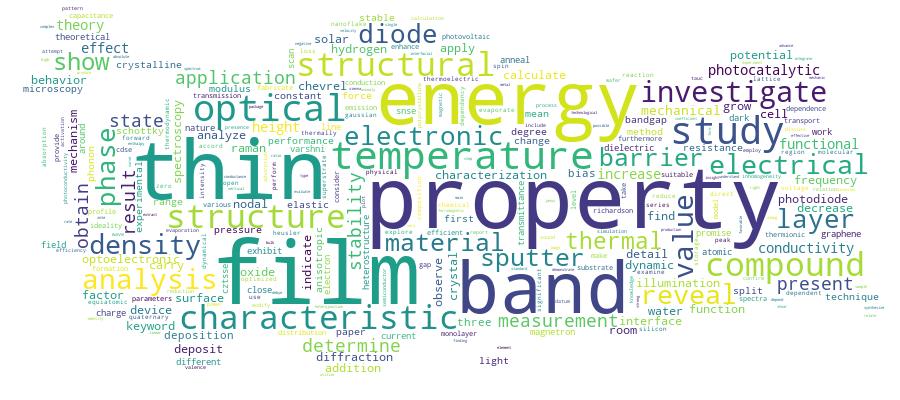
Competency Cloud

GCRIS Competency Cloud

Scholarly Output Search Results

Now showing 1 - 10 of 10
  • Article
    Citation - WoS: 8
    Citation - Scopus: 8
    Complex Nodal Structure Phonons Formed by Open and Closed Nodal Lines in Coass and Na2cup Solids
    (Royal Soc Chemistry, 2022) Ding, Guangqian; Sun, Tingting; Surucu, Gokhan; Surucu, Ozge; Gencer, Aysenur; Wang, Xiaotian
    Topological phononic states with nodal lines not only have updated our knowledge of the phases of matter in a fundamental way, but also have become a major frontier research direction in condensed matter physics. From a mathematical perspective, nodal line phonons can be divided into open and closed types. The present attempt is a report on the coexistence of such open and closed nodal line phonons in two realistic solids, CoAsS and Na2CuP, based on first-principles calculations. Furthermore, it is shown that the closed and the open nodal line states in CoAsS and Na2CuP have touching points and can form a complex nodal structure phonon in a momentum space. Due to the topologically non-trivial behavior of the complex nodal structure in both phonons, evident phononic surface states occur in the projected surfaces of both materials. In this way, these states, arising from the projected crossing points, can benefit experimental detection in follow-up studies. It has been stated that the open and closed nodal line states are formed by the crossings of two phonon branches and, hence, these two types of nodal line phonons are coupled with each other. The results obtained here could be considered as a breakthrough in clearly demonstrating the coexistence of the open and closed nodal line states in phonons and, for this reason, may inspire researchers seeking materials with such topological states in other bosons, such as photons.
  • Article
    Citation - WoS: 28
    Citation - Scopus: 29
    The investigation of electronic, anisotropic elastic and lattice dynamical properties of MAB phase nanolaminated ternary borides: M 2 AlB 2 ( M = Mn , Fe and Co ) under spin effects
    (Elsevier Science Sa, 2020) Surucu, Gokhan; Yildiz, Bugra; Erkisi, Aytac; Wang, Xiaotian; Surucu, Ozge
    [No Abstract Available]
  • Article
    Citation - WoS: 11
    Citation - Scopus: 12
    Structural and Temperature-Tuned Bandgap Characteristics of Thermally Evaporated β-in2< Thin Films
    (Springer, 2021) Surucu, O.; Isik, M.; Terlemezoglu, M.; Gasanly, N. M.; Parlak, M.
    In2S3 is one of the attractive compounds taking remarkable interest in optoelectronic device applications. The present study reports the structural and optical characteristics of thermally evaporated beta-In2S3 thin films. The crystalline structure of the thin films was found as cubic taking into account the observed diffraction peaks in the X-ray diffraction pattern. The atomic compositional ratio of constituent elements was obtained as consistent with chemical formula of In2S3. Three peaks around 275, 309 and 369 cm(-1) were observed in the Raman spectrum. Temperature-tuned bandgap energy characteristics of the In2S3 thin films were revealed from the investigation of transmittance spectra obtained at various temperatures between 10 and 300 K. The analyses of the transmittance spectra indicated that direct bandgap energy of the In2S3 thin films decreases from 2.40 eV (at 10 K) to 2.37 eV (at 300 K) with the increase of measurement temperature. The bandgap energy vs. temperature relation was investigated by means of Varshni optical model. The fitting of the experimental data under the light of theoretical expression revealed the absolute zero bandgap energy, the rate of change of bandgap energy and Debye temperature.
  • Article
    Citation - WoS: 13
    Citation - Scopus: 15
    Investigation of electrical characteristics of Ag/ZnO/Si sandwich structure
    (Springer, 2019) Gullu, H. H.; Surucu, O. Bayrakli; Terlemezoglu, M.; Yildiz, D. E.; Parlak, M.
    In this study, temperature-dependent current-voltage (I-V), frequency-dependent capacitance-voltage (C-V) and conductance-voltage (G/omega-V) measurements are carried out for the electrical characterization of a zinc oxide (ZnO) thin film-based diode. The sandwich structure in the form of Ag/ZnO/Si/Al is investigated at temperatures between 220 and 360 K and in the frequency region of 1 kHz-1 MHz. ZnO thin film layer is deposited on a p-Si wafer substrate as a transparent conductive oxide layer by taking into consideration possible electronic applications with intrinsic attractive material properties. At each temperature step, the I-V curves showed about two orders of magnitude rectifying behavior and, according to the Schottky diode relation, the saturation current, zero-bias barrier height and ideality factor were extracted as a function of the temperature. In the case of non-ideal diode characteristics due to the inhomogeneties in the diode as observed from the characteristics of the calculated parameters, effective barrier height values are evaluated. In addition, based on the existence of the interface layer, density of interface states in the band gap region and parasitic resistances were determined by the capacitance measurements.
  • Article
    Citation - WoS: 17
    Citation - Scopus: 18
    Investigation of Band Gap Energy Versus Temperature for Sns 2 Thin Films Grown by Rf-Magnetron Sputtering
    (Elsevier, 2020) Isik, M.; Gullu, H. H.; Terlemezoglu, M.; Surucu, O. Bayrakli; Parlak, M.; Gasanly, N. M.
    [No Abstract Available]
  • Article
    Citation - WoS: 12
    Citation - Scopus: 12
    Material and Si-based diode analyses of sputtered ZnTe thin films
    (Springer, 2020) Gullu, H. H.; Surucu, O. Bayrakli; Isik, M.; Terlemezoglu, M.; Parlak, M.
    Structural, optical, and electrical properties ZnTe thin films grown by magnetron sputtering technique were studied by X-ray diffraction, atomic force microscopy, Raman spectroscopy, and electrical conductivity measurements. Structural analyses showed that ZnTe thin films grown on soda-lime glass substrates have a cubic crystalline structure. This crystalline nature of the films was also discussed in terms of Raman active modes. From atomic force microscopy images, the smooth and dense surface profile was observed. The conductivity of the film at room temperature was measured as 2.45 x 10(-4)(omega cm)(-1)and the temperature dependency of conductivity showed Arrhenius behavior. The dark conductivity profile was modeled by thermionic emission mechanism and activation energies were extracted. In addition, the conductivity values indicated an increasing behavior with illumination intensity applied between 20 and 115 mW/cm(2). The heterojunction diode was generated by sputtering ZnTe film on n-Si wafer substrate and the rectification behavior was evaluated to determine the main diode parameters.
  • Article
    Citation - WoS: 39
    Citation - Scopus: 39
    Illumination and Voltage Effects on the Forward and Reverse Bias Current-Voltage (i-V) Characteristics in In/In2< Photodiodes
    (Springer, 2021) Yukselturk, Esra; Surucu, Ozge; Terlemezoglu, Makbule; Parlak, Mehmet; Altindal, Semsettin
    The illumination and voltage effects on the I-V measurements of the fabricated In/In2S3/p-Si photodiode were investigated in dark and under various illumination intensities (20-100 mW/cm(2)) between +/- 2 V. Two linear regions in the forward-bias ln(I)-V plots were observed. The value of diode ideality factor (n) had an increasing trend with increasing illumination intensity while the barrier height (phi(Bo)) had a decreasing trend due to the increase of photocurrent. The photodiode properties were also investigated, and the value of linear-dynamic value range (LDR) was found to be 20.56 dB. The photoresponse (I-ph/I-dark), the photoresponsivity (R), and specific detectivity (D*) of the photodiode were calculated as a function of the illumination. The open-circuit voltage (V-oc) and short-current (I-sc) were found to be 0.36 V and 2.87 mA under 100 mW.cm(-2) illumination intensity, respectively. The possible conduction mechanisms (CMs) were investigated using the forward ln(I)-V and reverse ln(I)-V-0.5 plots. The energy-dependent surface states (N-ss) profile was extracted from the positive I-V data by considering voltage-dependent barrier height (BH) and ideality factor (n) in dark and illumination at 100 mW/cm(2).
  • Article
    Citation - WoS: 31
    Citation - Scopus: 31
    Frequency Effect on Electrical and Dielectric Characteristics of Hfo2-interlayered Si-Based Schottky Barrier Diode
    (Springer, 2020) Gullu, H. H.; Yildiz, D. E.; Surucu, O.; Parlak, M.
    This study reveals the electrical properties of In/HfO2/n-Si structure with atomic layer-deposited interfacial oxide layer, HfO2 thin film between In top metal contact and monocrystalline Si wafer substrate. From the dark current-voltage measurements, the diode structure showed good rectifying behavior and low saturation current of about two order of magnitude and 1.2 x 10(- 9) A, respectively. According to the conventional thermionic emission model, zero-bias barrier height and ideality factor were calculated from the forward bias current-voltage curve at room temperature under dark conditions as 0.79 eV and 4.22 eV, respectively. In order to get detailed information about density of interface states and series resistance of this structure, capacitance-voltage and conductance-voltage measurements in the frequency range of 10-1000 kHz were performed. As a result, a decreasing capacitance profile with increasing frequency was obtained. In addition, peak-like behavior in the capacitance profiles was observed and these were found to be the indication of density of states. Further analysis was performed on the evaluation of density of interface states values and these values were calculated by using two different methods: Hill-Coleman and high-low frequency capacitance. These profiles were also analyzed by eliminating the effect of series resistance values on the measured capacitance and conductance; then the values of corrected capacitance and conductance as a function of applied voltage were discussed. Based on these analyses on the capacitive characteristics of the diode, dielectric constant, dielectric loss, loss tangent, electrical conductivity, and the real and imaginary part of electric modulus were investigated for complete understanding on the diode characteristics.
  • Article
    Citation - WoS: 16
    Citation - Scopus: 16
    Frequency Effect on Electrical and Dielectric Characteristics of In/Cu2< Diode Structure
    (Springer, 2019) Gullu, H. H.; Surucu, O. Bayrakli; Terlemezoglu, M.; Yildiz, D. E.; Parlak, M.
    In/Cu2ZnSnTe4/Si/Ag diode structure was fabricated by sputtering Cu2ZnSnTe4 (CZTTe) thin film layer on the Si layer with In front contact. The frequency dependent room temperature capacitance and conductance measurements were carried out to obtain detailed information of its electrical characteristics. Admittance spectra of the diode exhibited strong frequency dependence and the obtained values showed decreasing behavior with the increase in the applied frequency. The effect of interfacial film layer with series resistance values and density of interface states were investigated by taking into consideration of non-ideal electrical characteristics of the diode. The distribution profile of the interface states was extracted by Hill-Coleman and high-low frequency capacitance methods. As a function of frequency, they were in proportionality with the inverse of applied frequency. Dielectric constant and dielectric loss parameters were calculated from the maximum value of the diode capacitance at the strong accumulation region. The loss tangent showed a characteristic peak behavior at each frequency. Based on the time-dependent response of the interfacial charges to the applied ac field, the values of ac electrical conductivity and complex electric modulus were calculated and discussed as a function of frequency and bias voltage.
  • Article
    Citation - WoS: 10
    Citation - Scopus: 10
    Cztsse Thin Films Fabricated by Single Step Deposition for Superstrate Solar Cell Applications
    (Springer, 2019) Terlemezoglu, M.; Surucu, O. Bayrakli; Dogru, C.; Gullu, H. H.; Ciftpinar, E. H.; Ercelebi, C.; Parlak, M.
    The focus of this study is the characterization of Cu2ZnSn(S,Se)(4) (CZTSSe) thin films and fabrication of CZTSSe solar cell in superstrate configuration. In this work, superstrate-type configuration of glass/ITO/CdS/CZTSSe/Au was entirely fabricated by totally vacuum-based process. CZTSSe absorber layers were grown by RF magnetron sputtering technique using stacked layer procedure. SnS, CuSe and ZnSe solid targets were used as precursors and no additional step like the selenization process was applied. The structural and morphological properties of deposited CZTSSe layers were analyzed using X-ray diffraction (XRD), Raman scattering, scanning electron microscopy (SEM) and energy dispersive X-ray spectroscopy analysis (EDS) measurements. The optical and electrical properties of the CZTSSe thin films were investigated by UV-Vis spectroscopy, Hall-Effect and photoconductivity measurements. In addition, the device performance of the fabricated superstrate solar cell was examined.